Filing Chapter 7 bankruptcy in Florida doesn’t mean losing everything. Federal and state laws protect certain assets, and understanding Florida Chapter Seven exemptions is the first step toward rebuilding your financial life.
We at Harnage Law, PLLC help clients navigate these protections so they keep what matters most-their home, vehicle, and retirement savings.
How Exemptions Protect Your Assets in Chapter 7
Understanding the Role of Exemptions
When you file Chapter 7 bankruptcy in Florida, a trustee is appointed to review your assets and determine what can be liquidated to pay creditors. Exemptions are state and federal laws that shield specific property from this liquidation process. Florida uses its own exemption system rather than federal exemptions, which means the assets you protect depend entirely on Florida Statutes.
Why Florida’s System Differs from Federal Rules
This distinction matters significantly because Florida’s exemptions are generally more favorable to homeowners than federal rules. Under Florida law, your primary residence receives unlimited equity protection if you meet the ownership and occupancy requirements. Your retirement accounts, including 401(k)s and IRAs, are fully exempt up to approximately 1.5 million dollars per person under federal law. Social Security benefits, disability payments, workers’ compensation, and veterans benefits are completely protected from creditors. Personal property like household items, clothing, and furniture up to 1,000 dollars per person is shielded.
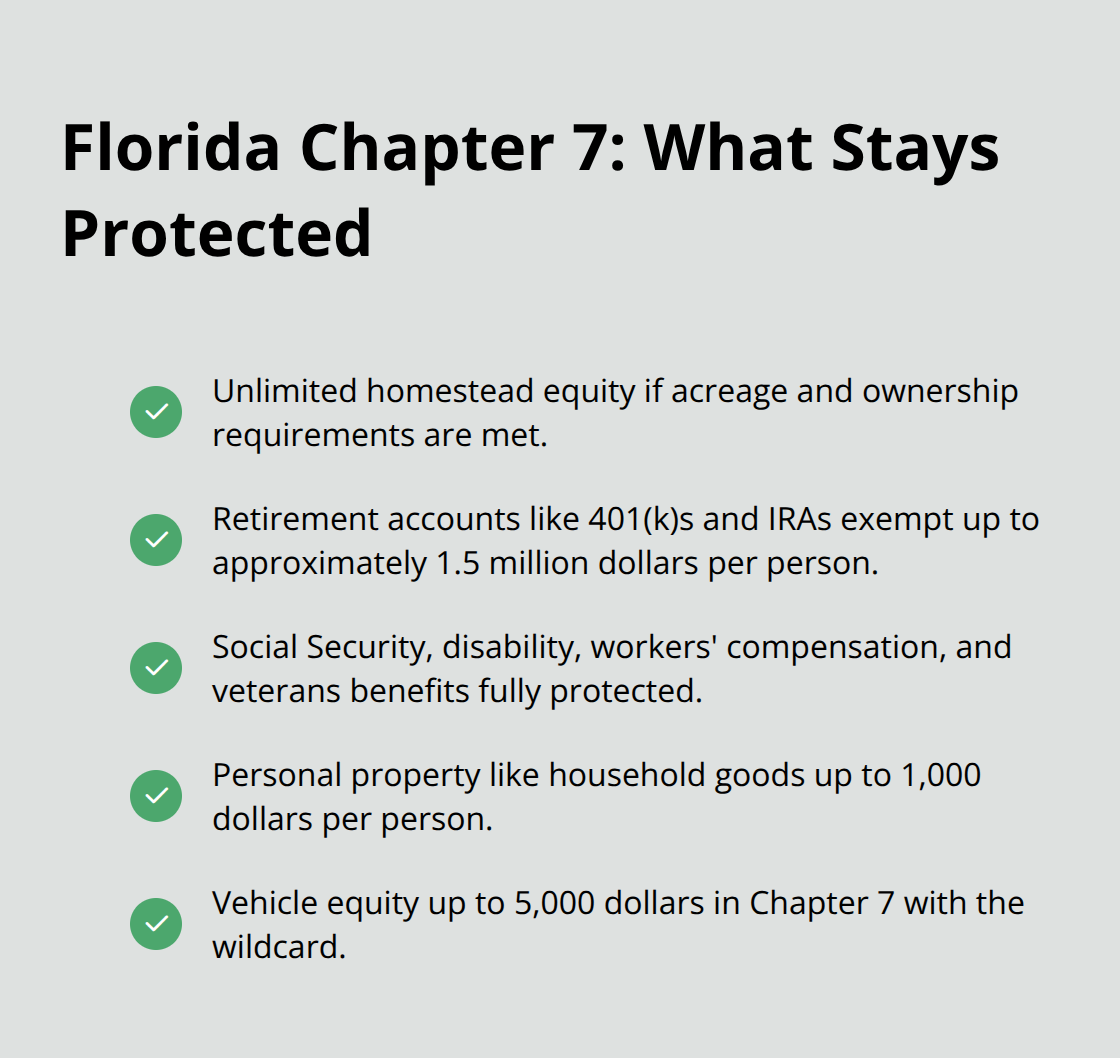
Vehicle equity up to 5,000 dollars is protected when you combine the standard motor vehicle exemption with the wildcard exemption available in Chapter 7.
Comparing Florida and Federal Homestead Protection
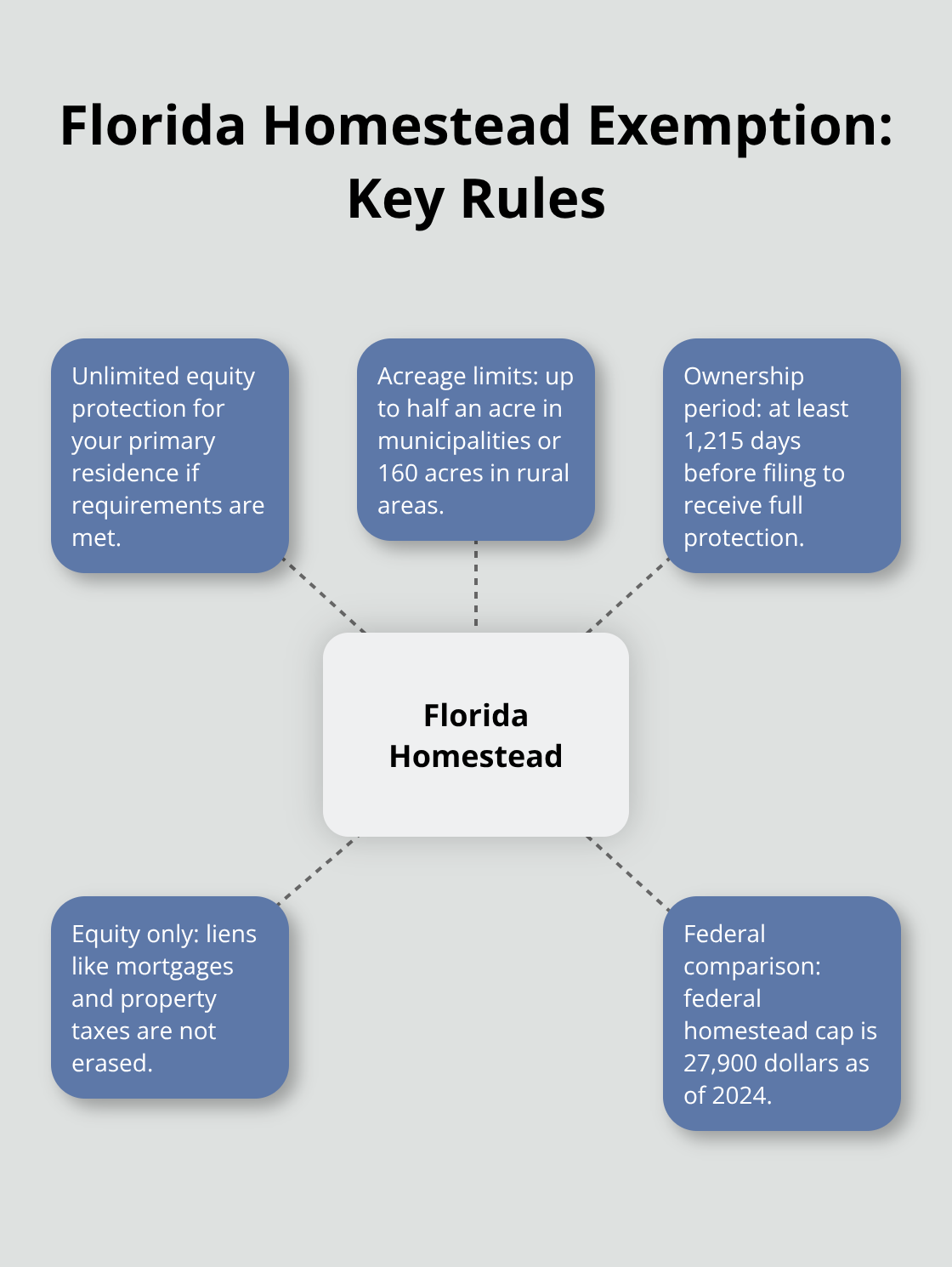
Florida’s homestead exemption is notably generous, protecting unlimited home equity within half an acre in urban areas or 160 acres in rural zones, provided you have owned the home for at least 1,215 days before filing. Federal exemptions offer only 27,900 dollars in homestead protection as of 2024, making Florida’s system significantly stronger for homeowners. To claim Florida exemptions, you must have lived in Florida continuously for at least 24 months before filing. This residency requirement prevents people from moving to Florida solely to access stronger exemptions.
Documenting Your Assets Correctly
Understanding which exemptions apply to your specific assets prevents costly mistakes during the bankruptcy process. Many filers lose protection for property because they fail to properly list and value assets on their bankruptcy schedules. Accurate documentation on your schedules determines whether the trustee can liquidate your property or whether exemptions shield it from sale. The trustee examines listed assets during the meeting of creditors, so thorough and honest valuations protect your interests throughout the case.
What Assets Stay Protected in Your Florida Chapter 7 Case
Your Home and Homestead Protection
Your home represents the strongest protection under Florida law, and the numbers prove why this matters. Florida’s homestead exemption shields unlimited equity in your primary residence if you own it within half an acre in a city or 160 acres in rural areas and have held the property for at least 1,215 days before filing. This unlimited protection stands in sharp contrast to federal exemptions, which cap homestead protection at 27,900 dollars as of 2024. The exemption protects only your equity, not secured debts like mortgages or property tax liens. If you owe 150,000 dollars on a home worth 250,000 dollars, your 100,000 dollar equity remains fully protected.
If you fall behind on mortgage payments, Chapter 7 alone won’t save the home. Chapter 13 bankruptcy lets you catch up on missed payments over three to five years while keeping the property. This distinction makes Chapter 13 the better choice when you want to preserve a home with mortgage arrears.
Vehicle Protection and Transportation Assets
Your vehicle receives protection up to 5,000 dollars in equity when you combine Florida’s 1,000 dollar motor vehicle exemption with the 4,000 dollar wildcard exemption available only in Chapter 7. If your car is worth 7,000 dollars with no loan balance, you keep the vehicle and the trustee cannot liquidate it because your 5,000 dollar exemption covers the equity. Married couples filing jointly can each claim vehicle exemptions, effectively doubling protection for a family’s transportation. New vehicles typically create minimal exposure since financing and immediate depreciation leave little equity to protect.
Retirement Accounts and Income Protection
Retirement accounts receive complete exemption under Florida law, including 401(k)s, 403(b)s, traditional IRAs, and Roth IRAs up to approximately 1.5 million dollars per person under federal protections. Pension payments, profit-sharing plans, stock bonus plans, and annuities remain fully exempt from liquidation. This protection applies regardless of the account balance, so a 500,000 dollar 401(k) stays completely safe from creditors.
Government Benefits and Wage Protection
Social Security benefits, disability payments, workers’ compensation settlements, VA benefits, and unemployment compensation are entirely protected. The critical rule is avoiding commingling these exempt funds with non-exempt income like wages or rental income, which could strip away protection if creditors challenge the source of money in your bank account. Keeping exempt benefits in separate accounts preserves their protected status throughout your bankruptcy case.
Understanding which assets qualify for protection under Florida law forms the foundation of your bankruptcy strategy. The next section examines how you can evaluate your specific assets before filing and time your bankruptcy petition to maximize these protections.
Maximizing Your Exemptions Before Filing
Evaluate Your Assets with Accurate Values
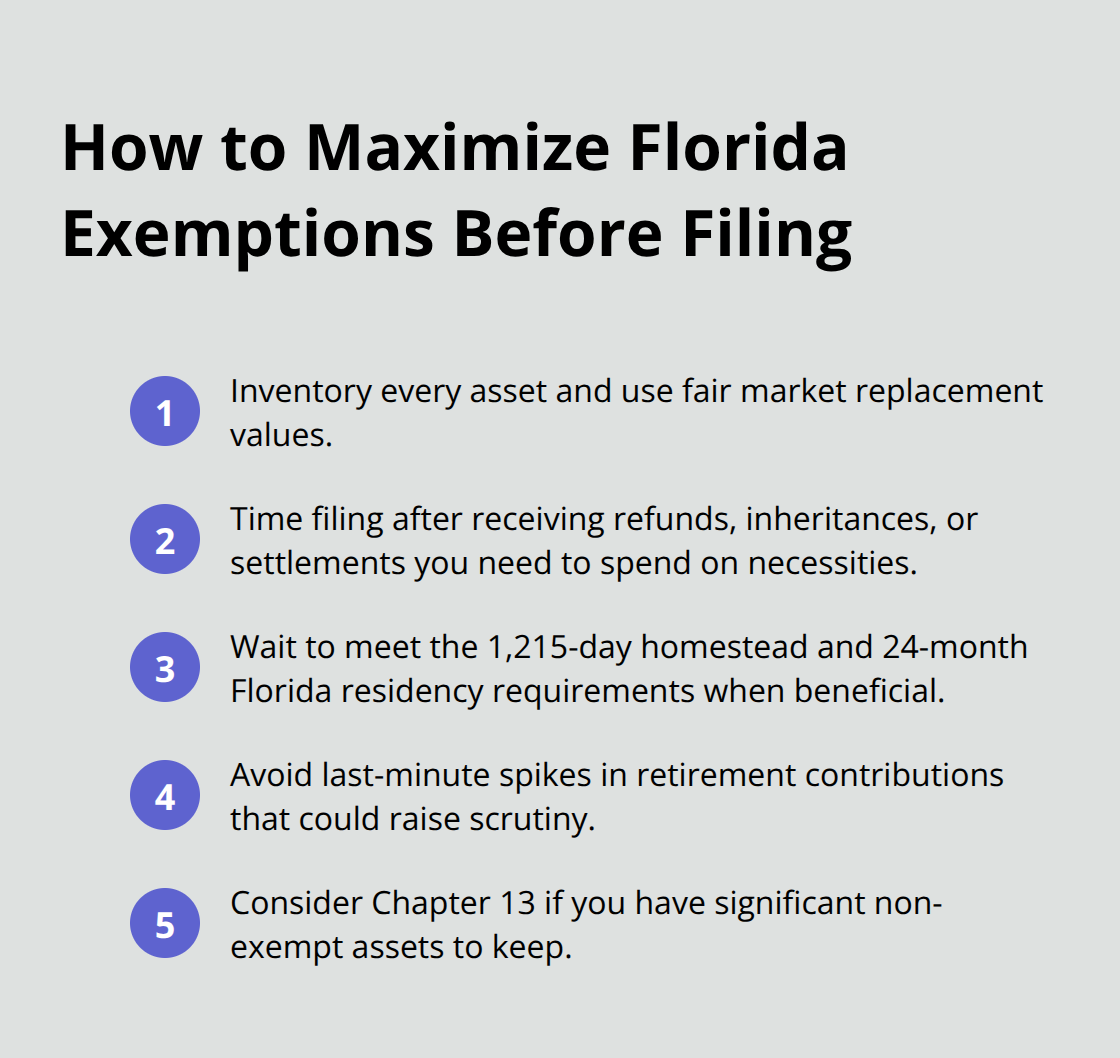
Evaluating your assets accurately before filing Chapter 7 bankruptcy determines how much property you actually keep. Most filers underestimate what they own or fail to recognize that certain assets qualify for specific exemptions. Start by listing every asset you possess, including household items, vehicles, bank accounts, retirement savings, and real estate. Fair market value matters, not what you paid originally. A dining table worth 800 dollars when purchased may only be worth 200 dollars today at replacement cost, which is what the bankruptcy court uses. Inventory your home room by room and assign realistic values to furniture, electronics, clothing, and decorative items.
Many people discover they own far less in unprotected assets than they feared once they apply actual replacement costs rather than sentimental values. This honest assessment prevents surprises during the bankruptcy process and helps you understand exactly what the trustee can and cannot liquidate.
Time Your Filing Around Financial Events
Timing your bankruptcy filing around certain financial events can meaningfully increase your exemption protections. If you expect a tax refund, inheritance, or insurance settlement within the next few months, filing after receiving these funds allows you to spend them on living expenses or essential purchases before your bankruptcy date.
The trustee cannot liquidate funds already spent on necessary items.
Conversely, if you have recently received money from one of these sources, waiting several months before filing protects those funds from the bankruptcy estate because they are no longer considered property of your estate. Contributions to retirement accounts close to your filing date sometimes trigger fraudulent transfer concerns, so avoid maximizing 401(k) contributions in the months immediately before filing.
If you own a home but have not yet reached the 1,215-day ownership requirement for full homestead protection, waiting to file until you meet this threshold preserves unlimited equity instead of capping protection at 170,350 dollars. Similarly, if you have lived in Florida for less than 24 months, waiting until you satisfy the residency requirement allows you to claim Florida exemptions rather than federal exemptions, which typically offer weaker protection.
Consult an Attorney for Precise Strategy
Working with a bankruptcy attorney transforms exemption planning from guesswork into a precise strategy tailored to your financial situation. An attorney reviews your asset list and identifies exemptions you likely missed, such as tools of trade for self-employed workers, hurricane savings accounts, or prepaid college funds for your children. They evaluate whether claiming the homestead exemption, personal property exemption, or wildcard exemption produces the best outcome for your specific circumstances.
Some filers benefit more from the 4,000 dollar wildcard exemption than from homestead protection if their home equity exceeds the homestead limits or if they rent rather than own. An attorney prepares accurate schedules and valuations that withstand trustee scrutiny during the meeting of creditors. They also advise whether Chapter 7 or Chapter 13 better protects your assets given your income, debts, and property values.
If you have significant non-exempt assets, Chapter 13 allows you to keep everything (including vehicles and retirement accounts) by paying the value of non-exempt property through a three to five-year repayment plan rather than surrendering assets to the trustee. One wrong choice can cost you thousands in unprotected property, which is why professional guidance matters from the start.
Final Thoughts
Florida Chapter 7 exemptions protect the assets that matter most-your home, vehicle, retirement accounts, and government benefits remain shielded from creditors when you understand how Florida law applies to your situation. The unlimited homestead protection combined with vehicle exemptions up to $5,000 and complete retirement account protection creates a framework that allows thousands of Floridians to discharge their debts while keeping their financial foundation intact. Accurate asset evaluation, strategic timing, and professional guidance determine whether you maximize these protections or miss exemptions that could save you thousands.
We at Harnage Law, PLLC understand that bankruptcy decisions carry real financial consequences, and our team guides you through every step of the process. We stop creditor harassment, prevent wage garnishments, and halt lawsuits so you can focus on rebuilding your financial life. We help you discharge qualifying debts and secure the fresh start you deserve while protecting your property throughout the bankruptcy process.
Contact us to schedule a consultation and discuss how Florida Chapter 7 exemptions apply to your specific situation. Let us help you protect your assets and move forward with confidence.