
Filing for Chapter 7 bankruptcy in Florida means attending a 341 meeting-a required hearing where you’ll meet with a trustee to discuss your financial situation. This meeting sounds intimidating, but it’s straightforward once you know what to expect.
We at Harnage Law, PLLC have guided countless clients through this process. This guide covers everything you need to know about Florida 341 meeting info, from what happens during the hearing to how you should prepare.
What Happens at Your 341 Meeting
A 341 meeting is a required examination conducted by a Chapter 7 trustee appointed by the U.S. Trustee Program. The name comes from Section 341 of the Bankruptcy Code, which mandates this meeting in every Chapter 7 case. The trustee administers your bankruptcy estate, identifies assets available for liquidation, and oversees distributions to creditors. This is not a courtroom hearing with a judge present. Instead, the trustee meets with you under oath to verify the information in your bankruptcy petition and asks questions about your finances, property, debts, and income.
According to the U.S. Trustee Program, the meeting typically lasts about five minutes, though you may participate in a conference call for 30 to 45 minutes. Most 341 meetings in Florida now occur virtually using Zoom, which allows you to attend from home. The trustee will ask you to confirm that everything in your petition is accurate and truthful. You must disclose any errors or omissions immediately. Creditors have the right to attend and ask questions, but in practice, they rarely show up. The trustee is not your advocate-their role is to identify assets, collect funds, and treat creditors fairly under the law.
When Your 341 Meeting Occurs
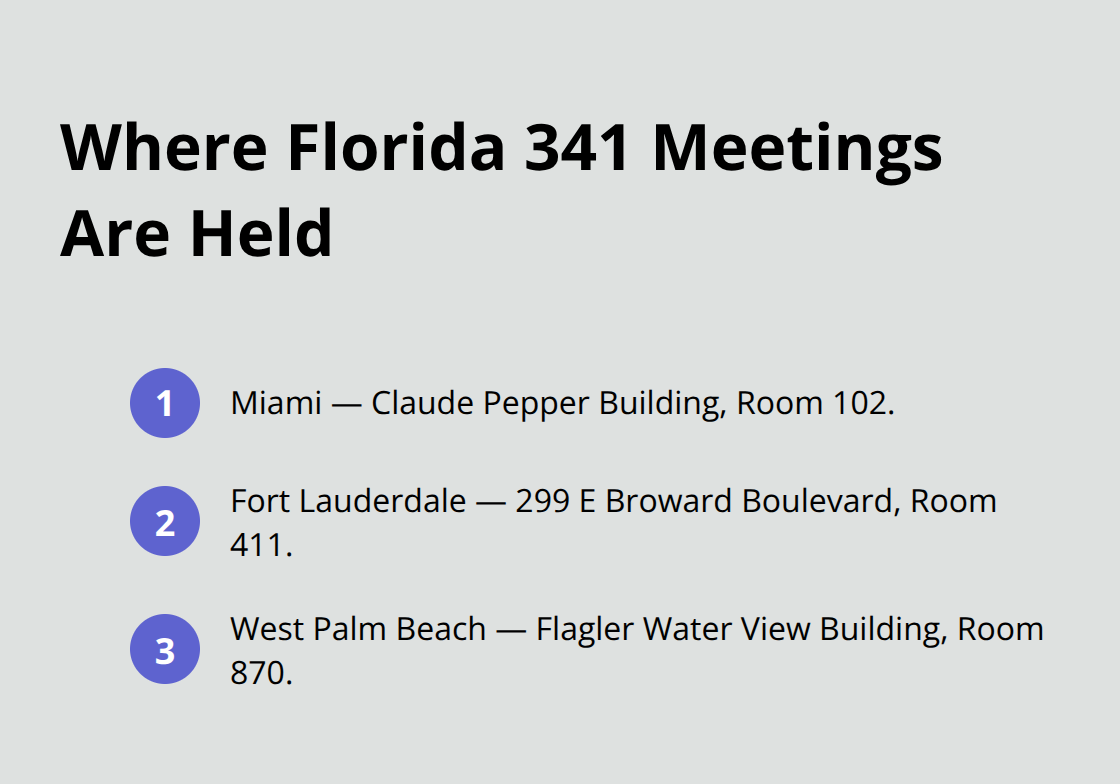
The Notice of Chapter 7 Bankruptcy Case is issued within 10 business days of filing your petition. This notice includes the date, time, and location of your 341 meeting, plus critical deadlines for creditor objections to discharge. Your meeting is typically scheduled about 40 days after you file. In Florida, 341 meetings are held in Miami at the Claude Pepper Building in Room 102, in Fort Lauderdale at 299 E Broward Boulevard in Room 411, and in West Palm Beach at the Flagler Water View Building in Room 870.
You must attend the meeting on the scheduled date. If you fail to appear, the trustee can dismiss your entire bankruptcy case, which means you lose all the protections and benefits of filing. If you have a joint case with your spouse, both of you must attend. If one spouse fails to show up, the trustee may dismiss that person’s case or the entire joint case. Missing the meeting is one of the easiest ways to lose your bankruptcy protection, so treat the date as non-negotiable.
Documents and ID You Must Bring
At least 14 days before your 341 meeting, you must provide the trustee with a government-issued photo ID and evidence of your Social Security number. Acceptable documents include a driver’s license, passport, military ID, or state ID card. Without these documents, the trustee will reschedule your meeting, which delays your discharge and extends the bankruptcy process.
You must also bring a copy of your most recent federal income tax return, including all attachments, or a tax return transcript. If you do not have a recent return, you must provide a written statement explaining why. Bring statements for all depository and investment accounts (checking, savings, money market, mutual funds, and brokerage accounts) showing the account status through your filing date.
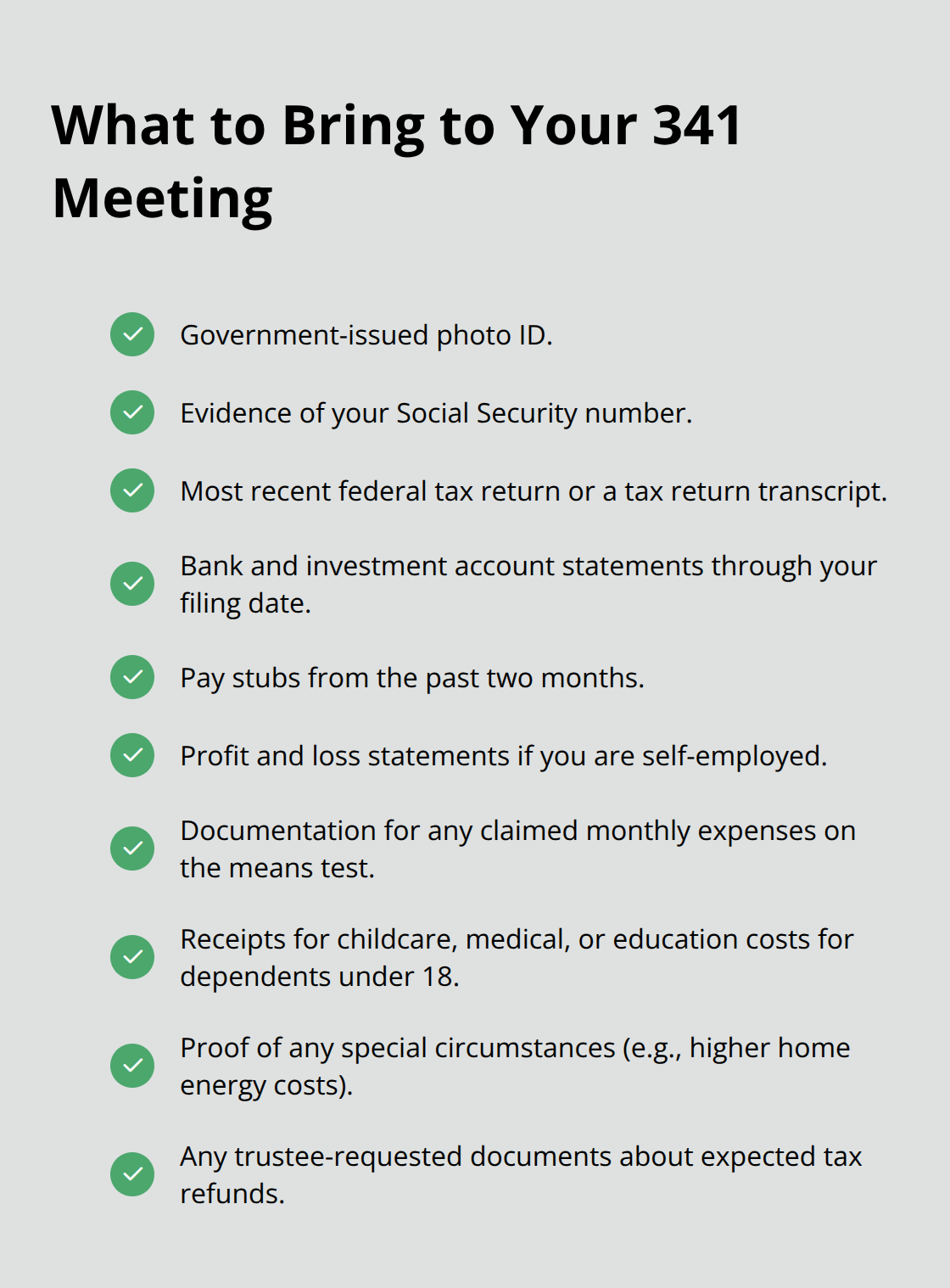
If you claimed business expenses or special circumstances on your means test forms, bring documentation supporting those claims. The trustee will review these documents before the meeting and may ask follow-up questions based on what they find.
Understanding what the trustee expects from you before the meeting sets the stage for your next critical task: preparing your petition and schedules so you can answer questions confidently and accurately.
What Happens During Your 341 Meeting
The Trustee’s Role and What They’re Looking For
The trustee’s primary job is to administer your bankruptcy estate, not to help you. According to the U.S. Trustee Program, the trustee identifies non-exempt assets available for liquidation and oversees distributions to creditors. During your meeting, the trustee will place you under oath and ask questions designed to verify the accuracy of your petition and uncover any assets or income you may have omitted. The trustee typically opens by asking you to confirm your name, address, and whether you reviewed the bankruptcy information sheet provided by your attorney.
From there, the questioning becomes more detailed and specific to your financial situation. The trustee will ask whether you have listed all assets and all debts, and whether anyone owes you money. Creditors theoretically have the right to attend and ask questions, but in practice, they rarely show up. When they do appear, their questions usually focus on whether you obtained credit fraudulently or whether you transferred property shortly before filing.
Questions About Your Finances and Property
The trustee’s questions will center on your finances, property transfers, and recent financial activity. You will be asked about ongoing credit card use and the timing of your last card payments before filing. The trustee wants to know about any purchases, sales, or leases in the last 12 months and about transfers or gifts of $1,000 or more to family members in the last four years.
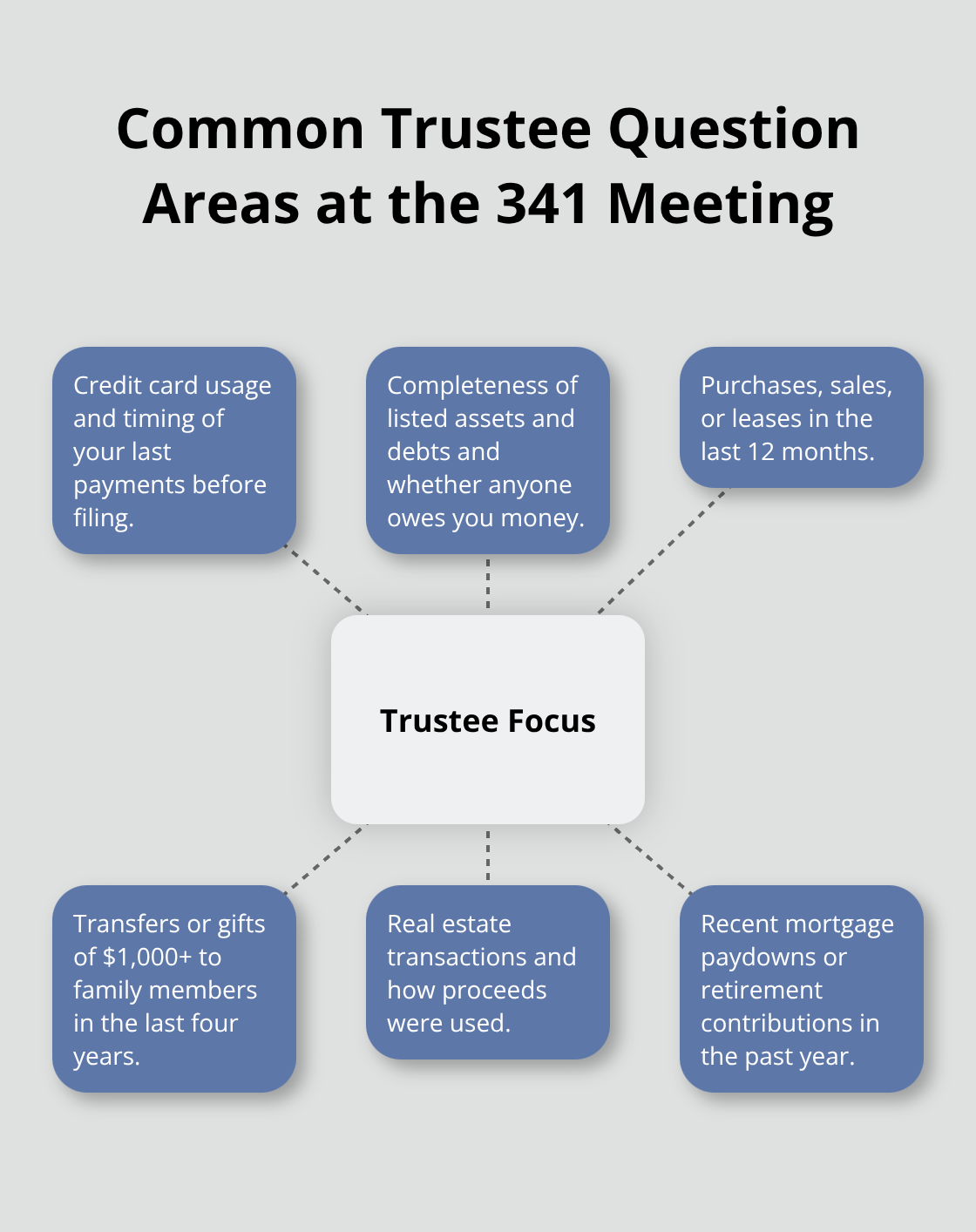
If you own or owned real estate, expect detailed questions about what happened to any property and what you did with the proceeds. The trustee will ask whether you paid down a mortgage or added to a 401(k) or IRA in the past year. You should be prepared to explain how long you have lived in your current residence and whether you have any joint debts with your spouse. If you are married, the trustee may ask whether your spouse has used your credit cards.
How to Answer Questions and Handle Errors
Truthfulness and conciseness matter enormously. Evasive or uncertain answers raise red flags and can jeopardize your discharge. All testimony is recorded and can be used in disputes later. If you discover errors or omissions in your petition after filing, file amendments immediately. Full disclosure is the only path to a successful bankruptcy.
The trustee will also ask whether you want to make corrections or additions to your bankruptcy schedules before the meeting concludes. This moment gives you a final opportunity to address any inaccuracies in your paperwork. Correcting mistakes at the meeting is far better than having the trustee uncover them during their investigation. Your honesty and accuracy at this stage directly affect whether you receive your discharge and move forward with your fresh start.
How to Prepare for Your 341 Meeting in Florida
Review Your Bankruptcy Petition and Schedules Thoroughly
Read every page of your bankruptcy petition and all accompanying schedules at least twice before your meeting. You will stand under oath and confirm that everything in these documents is accurate and truthful. If you signed documents without fully understanding them, the trustee will notice inconsistencies in your answers. The petition includes detailed schedules about your assets, debts, income, and expenses. Bring a copy to the meeting and mark it so you can reference specific pages during questioning.
When the trustee asks about a particular debt or asset, locate it immediately in your schedules. If you find errors or omissions while reviewing, contact your attorney right away so amendments can be filed before the meeting. The U.S. Trustee Program emphasizes that full disclosure is essential to obtaining your discharge. Creditors have specific deadlines to object to your discharge, and incomplete or inaccurate information gives them grounds to challenge it.
Gather Financial Records Before Meeting Day
Collect your financial records now, not the night before. Bring bank statements for all checking, savings, money market, and investment accounts showing balances through your filing date. Bring pay stubs from the past two months to verify your current income and employment status. If you are self-employed, bring profit and loss statements for the past year.
Bring documentation of any monthly expenses you claimed on your means test forms, including receipts for childcare, medical expenses, or education costs for dependents under 18. If you claimed higher home energy costs or other special circumstances, bring the supporting documentation the trustee requested. Bring your most recent federal income tax return with all attachments, or a tax return transcript if you do not have the full return. If you expect a tax refund for the year you filed, the trustee will address this at the meeting.
Avoid Financial Activity Before Your Meeting
Do not make large purchases, transfer money, or pay down debts immediately before your meeting. The trustee will ask about all financial activity in the months before filing and may question sudden changes. Any unusual transactions raise red flags and can delay your discharge or invite further investigation into your case.
Answer Questions Directly and Honestly
Answer every question directly and honestly without offering unnecessary information. If you do not know the answer to a question, say so rather than guessing. If you cannot recall a specific amount, provide your best estimate and explain that you can follow up with documentation after the meeting. Evasive answers or hesitation raises suspicion and can delay your discharge. All testimony is recorded, and the trustee can use anything you say against you later if inconsistencies emerge.
Final Thoughts
The 341 meeting is a straightforward process once you understand what to expect. You will meet with a trustee under oath to confirm the accuracy of your bankruptcy petition and answer questions about your finances, property, and recent financial activity. The meeting typically lasts only five minutes, though you may participate in a call for 30 to 45 minutes. Most Florida 341 meeting info comes from the U.S. Trustee Program, which now conducts most meetings virtually via Zoom, making attendance easier from home.
After your meeting concludes, the trustee will continue administering your case by identifying non-exempt assets for liquidation and overseeing distributions to creditors. Creditors have specific deadlines to object to your discharge, so accuracy in your petition matters. The trustee will issue a discharge order once you have complied with all filing requirements, completed the required personal financial management course, and the court confirms your discharge.
We at Harnage Law, PLLC guide you through every step of the Chapter 7 bankruptcy process, including thorough preparation for your 341 meeting. Our role is to help you understand what the trustee expects, gather the right documentation, and answer questions with confidence. If you need help with Florida 341 meeting info or have questions about your upcoming hearing, contact Harnage Law, PLLC to discuss your situation and learn how we can support your path to financial recovery.