Filing for Chapter 7 bankruptcy in Florida involves navigating multiple systems-courts, trustees, attorneys, and financial counselors. The good news is that Florida Chapter Seven resources are widely available, from government agencies to online platforms designed specifically for filers.
At Harnage Law, PLLC, we’ve seen how access to the right tools and guidance transforms the bankruptcy process from overwhelming to manageable. This post covers the local support services, digital resources, and attorney options that can help you move forward.
Florida Chapter 7 Support Systems and Court Resources
Government and Non-Profit Legal Assistance
Florida offers concrete support systems designed specifically for Chapter 7 filers, and knowing where to access them separates a smooth filing from a chaotic one. The Northern District of Florida Bankruptcy Bar Association runs the P.L.A.N. (Pro Bono Legal Assistance Network) initiative, which connects qualifying individuals with volunteer attorneys at no cost. If you earn below 150% of the federal poverty line, you may qualify for completely free legal representation through this program. The Florida State University College of Law Bankruptcy Pro Bono Clinic, certified under Admin Orders 24-005 and 25-001, offers free legal services to those who meet income requirements. Contact Adjunct Professor Michael C. Markham at 727-480-5118 or mcmarkham@fsu.edu to learn if you qualify.
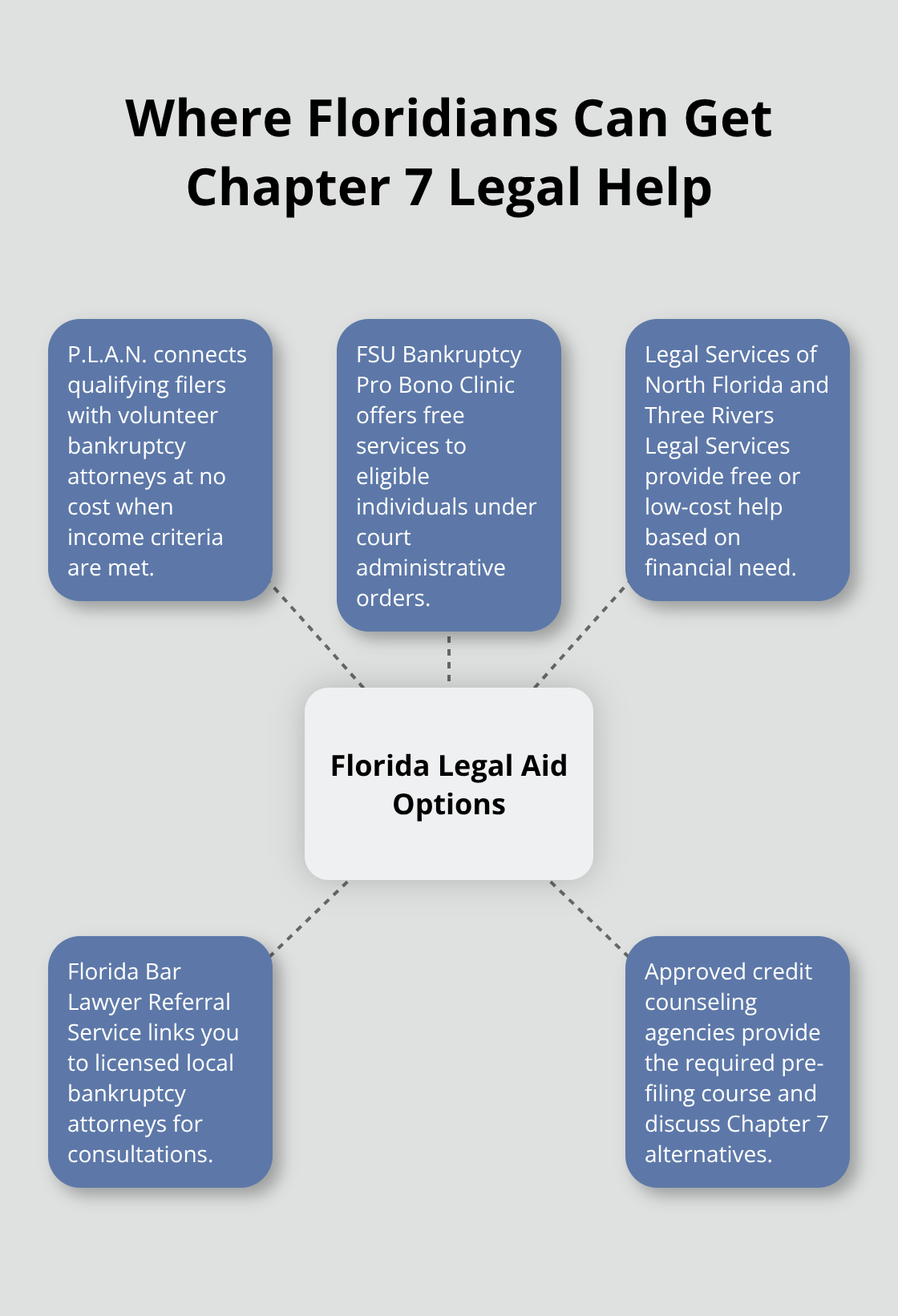
Legal Services of North Florida and Three Rivers Legal Services provide reduced-cost or free assistance depending on your financial situation. The Florida Bar Association Lawyer Referral Service connects you with licensed attorneys in your area, and FloridaLawHelp.org and FloridaFreeLegalAnswers.org offer searchable databases of local legal aid providers. Credit counseling agencies approved by the U.S. Trustee must be completed within six months before filing, and these agencies help you understand whether Chapter 7 is truly your best option or if alternatives exist.
Court Resources and Trustee Offices
The Northern District of Florida Bankruptcy Court maintains free self-help materials on its official website, including videos in English, Spanish, and Creole that walk you through the filing process step by step. The court publishes detailed guidance on filing requirements, creditor lists, exemptions, and what to expect at your 341 meeting (which typically occurs 21 to 40 days after filing). Your assigned Chapter 7 trustee reviews your petition, verifies the accuracy of your financial disclosures, and may liquidate nonexempt assets to pay creditors. Trustee offices in Tallahassee, Gainesville, and Pensacola maintain public hours and can answer procedural questions, though they cannot provide legal advice.
PACER (Public Access to Court Electronic Records) allows you to access your case details online at no cost until you exceed $30 in charges during a quarterly cycle. The court accepts filings by mail to 110 East Park Avenue, Suite 100, Tallahassee, FL 32301, or in-person delivery at the Tallahassee or Pensacola divisions during business hours from 9:00 a.m. to 4:00 p.m. local time. Filing fees total $335, though you can request installment payments over up to 180 days, and fee waivers are available if your income falls below 150% of the poverty level.
Choosing Professional Legal Representation
With these resources in place, many filers still benefit from working with a Chapter 7 attorney who understands Florida’s specific requirements and can guide you through each stage of the process.
Digital Tools That Actually Work for Florida Chapter 7 Filers
Free Court Access and Case Monitoring
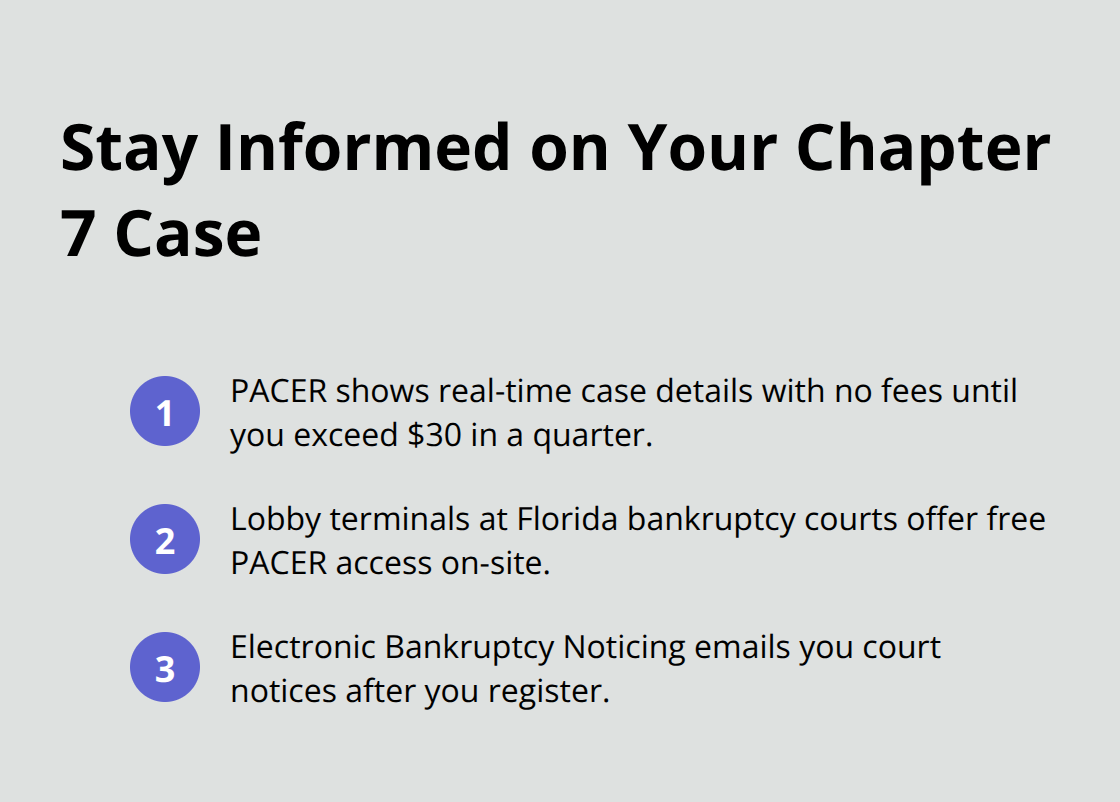
PACER allows you to access your case details in real time without paying per-document fees until you exceed $30 in a quarterly cycle. Lobby terminals at Florida bankruptcy courts provide free PACER access, so you can monitor your case status without incurring charges. The Northern District of Florida publishes case information through Electronic Bankruptcy Noticing, which delivers notices directly to your email if you register for the service. This combination of tools keeps you informed about filing deadlines, trustee actions, and discharge status without relying solely on attorney updates.
Forms, Calculators, and Self-Filing Guidance
Upsolve.org guides you through self-filing if you cannot afford an attorney, walking you through the federal forms required for the Northern District of Florida and helping you understand the means test calculation on Form B22A. The U.S. Courts website provides downloadable official bankruptcy forms in the correct 100-series format for individuals, and the Northern District of Florida publishes local form requirements on its website to help you avoid submitting outdated or incorrect documents that courts reject outright. Financial calculators on FloridaLawHelp.org and the U.S. Trustee’s website help you determine whether Chapter 7 makes financial sense before you file, showing whether your average monthly income over the past six months falls below Florida’s state median income threshold. The means test calculation directly affects your eligibility-if your income exceeds state thresholds, you face a presumption of abuse.
Educational Videos and Legal Resources
Educational videos in English, Spanish, and Creole from the Northern District of Florida Bankruptcy Court explain what happens at your 341 meeting, how the trustee evaluates nonexempt assets, and what to expect during the four-to-six-month timeline from credit counseling to discharge. The FSU Bankruptcy Clinic provides contact information for free or reduced-cost legal review if you qualify by income. Document preparation software like LawDepot or Rocket Lawyer can help structure your petition, though these tools cannot provide legal advice and do not replace attorney review for complex situations (such as asset protection or reaffirmation agreements).
Moving From Research to Action
These digital resources work best when paired with professional guidance that translates your online research into a solid filing strategy tailored to your Florida circumstances. The next section covers what to look for when selecting a Chapter 7 attorney who understands both the federal bankruptcy code and Florida-specific requirements.
Finding the Right Chapter 7 Attorney in Florida
Verifying Track Records and Discharge Rates
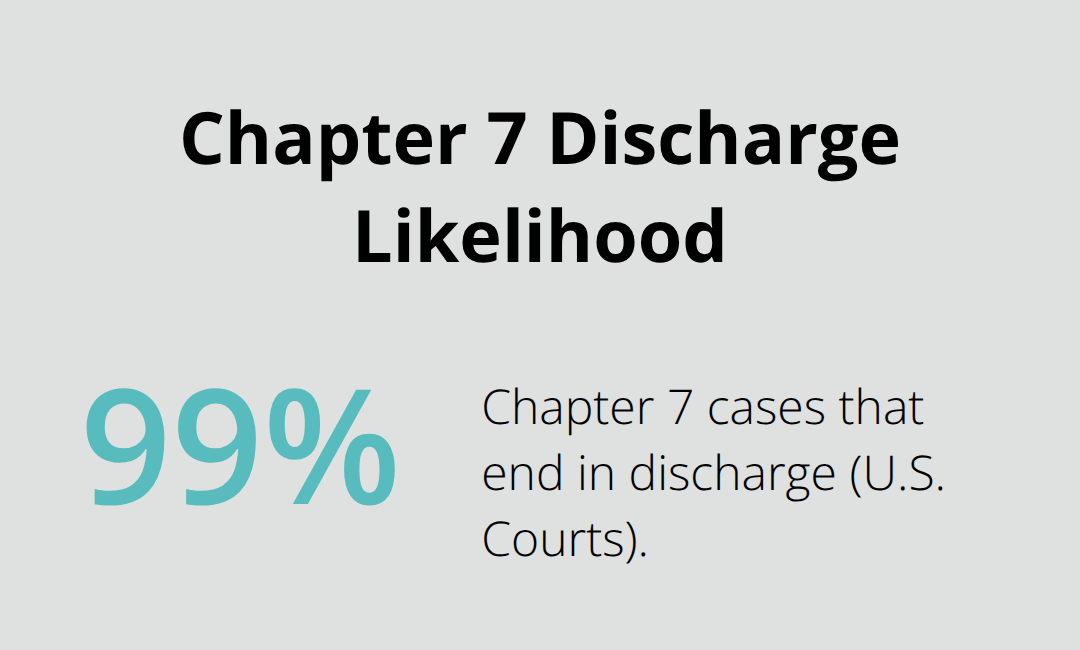
Choosing a Chapter 7 attorney matters far more than most people realize. The difference between working with someone who treats your case as a transaction versus someone who understands Florida’s bankruptcy landscape can affect whether you keep your home, protect your assets, and actually receive a discharge. Start with verifiable track records. PACER.gov data shows Van Horn Law Group filed over 6,500 Chapter 7 cases in the last 12 months, making them the largest bankruptcy firm in Broward County by volume. This indicates experience handling the specific situations that arise in high-volume practice. Ask any attorney candidate how many Chapter 7 cases they handle annually and what percentage result in discharge. Over 99% of Chapter 7 cases end in discharge according to U.S. Courts data, so anything significantly lower suggests either selective case acceptance or underlying issues with their practice. Request references from clients who filed within the past year, particularly those in your income bracket or with similar asset situations.
Understanding Florida Exemptions and Asset Protection
A Chapter 7 attorney in Florida must understand state exemptions, which determine what property you keep versus what the trustee liquidates. Florida allows homestead exemptions up to a certain amount of home equity, and an attorney unfamiliar with Florida’s specific rules may cost you thousands in unprotected assets. During your initial consultation, assess whether the attorney explains the means test calculation in understandable terms. If your income exceeds Florida’s state median, you’ll need to complete Form B22A to prove no presumption of abuse exists. An attorney who can walk you through this without jargon signals they communicate clearly under pressure.
Evaluating Fee Structures and Payment Plans
Fee transparency separates trustworthy attorneys from those hiding costs. Typical Chapter 7 fees in Florida range from $1,200 to $2,000 for straightforward cases, though complex situations involving business assets or reaffirmation agreements may cost more. Ask whether the quoted fee covers the full process from filing through discharge or if additional charges apply for the 341 meeting, reaffirmation agreements, or creditor disputes. The court filing fee is $335, and some attorneys bundle this into their total cost while others charge it separately. Payment plans matter significantly. Many Florida bankruptcy attorneys offer installment arrangements, allowing you to pay half upfront and the remainder over 60 to 90 days (which aligns with your timeline before the 341 meeting occurs 21 to 40 days after filing). Avoid attorneys who demand full payment before filing, as this creates unnecessary pressure on already-stressed finances.
Assessing Experience with Reaffirmation Agreements
Ask directly whether the attorney has handled reaffirmation agreements, which allow you to keep secured debts like car loans by continuing payments. This requires written agreements, specific disclosures, and court approval if you lack representation (and an attorney’s experience here determines whether you keep your vehicle or lose it). An attorney who can explain the reaffirmation process clearly demonstrates they understand the practical mechanics of Chapter 7 beyond basic filing procedures.
Final Thoughts
Florida Chapter Seven resources span government agencies, online platforms, and qualified attorneys-each playing a distinct role in your bankruptcy journey. The Northern District of Florida provides free court materials and trustee guidance, legal aid organizations offer reduced-cost representation, and digital tools like PACER keep you informed throughout the process. These resources exist specifically because Chapter 7 filing involves complex federal rules, state-specific exemptions, and tight procedural deadlines that demand accuracy.
The path forward depends on your financial situation and comfort level with the process. If your income falls below Florida’s state median and you have nonexempt assets to liquidate, Chapter 7 offers a genuine fresh start-over 99% of cases result in discharge within four to six months. Self-filing through platforms like Upsolve.org works for straightforward situations with minimal assets and no reaffirmation needs, though most filers benefit significantly from attorney guidance when protecting homestead property, navigating reaffirmation agreements, or facing trustee asset challenges.
Professional legal guidance matters most when the stakes are highest. An attorney who understands Florida exemptions prevents you from losing unprotected assets, while someone experienced with reaffirmation agreements ensures you keep your vehicle if you choose to continue payments. Contact Harnage Law, PLLC to discuss your specific situation and determine whether Chapter 7 aligns with your financial goals.