
Chapter 7 bankruptcy in Florida offers a path to eliminate most unsecured debts, but understanding the discharge timeline Florida is essential. The process typically takes three to six months from filing to final discharge, though several factors can affect your specific timeline.
At Harnage Law, PLLC, we guide clients through each stage so they know exactly what to expect. This guide breaks down the discharge process, explains which debts disappear and which remain, and shows you how to rebuild financially after discharge.
Timeline from Filing to Your Discharge
The Standard Chapter 7 Discharge Timeline in Florida
Chapter 7 bankruptcy in Florida moves faster than most people expect, but the speed depends heavily on how prepared you are and whether complications arise. From the moment you file your petition, you have roughly 3 to 4 months until discharge, assuming no creditor objections or missed deadlines. Federal rules set a hard deadline: your discharge must be entered no later than 60 days after the 341 meeting, which typically occurs 20 to 40 days after filing. This means the timeline is largely predictable if you follow every requirement exactly. Most filers who complete all mandatory steps without delays receive discharge within 90 to 120 days, though some cases finish closer to 4 months depending on trustee workload and court scheduling.
Critical Deadlines You Cannot Miss
Your real deadline pressure starts immediately after filing. You must complete a credit counseling course within 180 days before you file, and you need the Certificate of Credit Counseling filed with your petition package within 14 days of filing. Your bankruptcy schedules, Statement of Financial Affairs, and List of Creditors must all be filed within 14 days as well. The 341 Meeting of Creditors follows next-you must attend in person under oath.
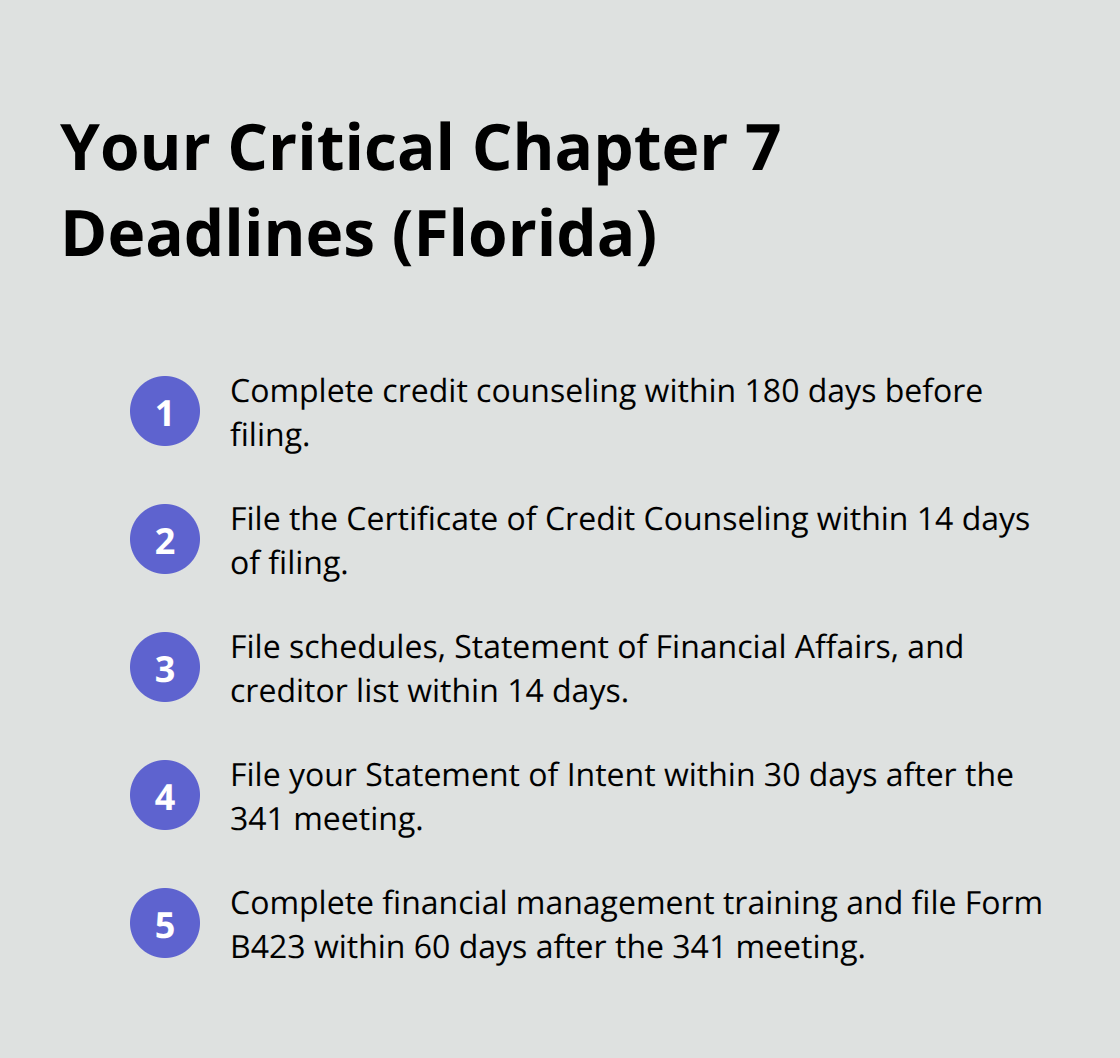
This meeting lasts under 10 minutes for most filers, and the trustee simply verifies information on your schedules. After the 341 meeting, you have 30 days to file your Statement of Intent regarding any secured debts, and within 60 days you must complete a Financial Management Training Course and file Form B423. Miss any of these deadlines and your case gets dismissed without a discharge.
What Delays Your Discharge
The discharge itself arrives about 60 days after the 341 meeting if no creditor files an objection, which happens in the majority of cases. Creditor objections or adversary proceedings are the primary reason cases extend beyond the standard 4-month window, sometimes pushing discharge into 6 months or longer. The trustee’s review of your documents can also cause delays if errors exist in your paperwork. Reaffirmation agreements (if you choose to keep property like a car) can add another 30 to 60 days if the court requires a hearing. Free Bankruptcy Clinics at Florida courthouses help you avoid mistakes that trigger delays.
What Happens After Discharge
Once the discharge order arrives, your obligations to most creditors officially end. However, certain debts survive the discharge process, and understanding which ones remain is essential for your financial recovery.
What Happens During the Discharge Process in Florida
The Automatic Stay Stops Creditor Collection Immediately
The automatic stay takes effect the moment you file your Chapter 7 petition, and creditors must stop calling, sending collection letters, and pursuing lawsuits. Federal law under 11 U.S.C. § 362 mandates this freeze on most collection activity-it is not optional for creditors. Wage garnishments halt, foreclosure proceedings pause, and utility shutoffs stop. Creditors who violate the stay face penalties, so most lenders comply quickly. The automatic stay does not eliminate your debts; it simply provides breathing room while the bankruptcy process unfolds. Your communication with creditors shifts entirely to the trustee and your attorney, which removes the stress of fielding collection calls while you navigate the legal process.
The Bankruptcy Trustee Manages Your Case
The bankruptcy trustee assigned to your case becomes the central figure in moving you toward discharge. This trustee reviews every document you file, verifies the accuracy of your asset and debt schedules, and conducts the 341 meeting where creditors have the opportunity to ask questions under oath. The trustee’s role is not to punish you but to ensure compliance with federal bankruptcy law and to liquidate any nonexempt assets if your case is an asset case (though most Florida Chapter 7 cases are no-asset cases where the trustee has minimal involvement beyond the meeting). After the 341 meeting concludes, typically lasting under 10 minutes, the trustee submits a report to the court.
The Discharge Order Arrives and Takes Effect
If no creditor files an objection to your discharge within 60 days after the 341 meeting, the discharge order enters automatically. This order is the legal document that erases your qualifying debts and stops creditors from pursuing collection on those obligations. The discharge is final and cannot be reversed unless you obtained it through fraud or misrepresentation, in which case creditors have up to one year to challenge it. Once discharge arrives, you have officially completed the bankruptcy process. However, not all debts vanish with the discharge order-some obligations survive the process and require your attention moving forward.
Debts That Disappear and Which Ones Remain After Discharge
Unsecured Debts That the Discharge Erases
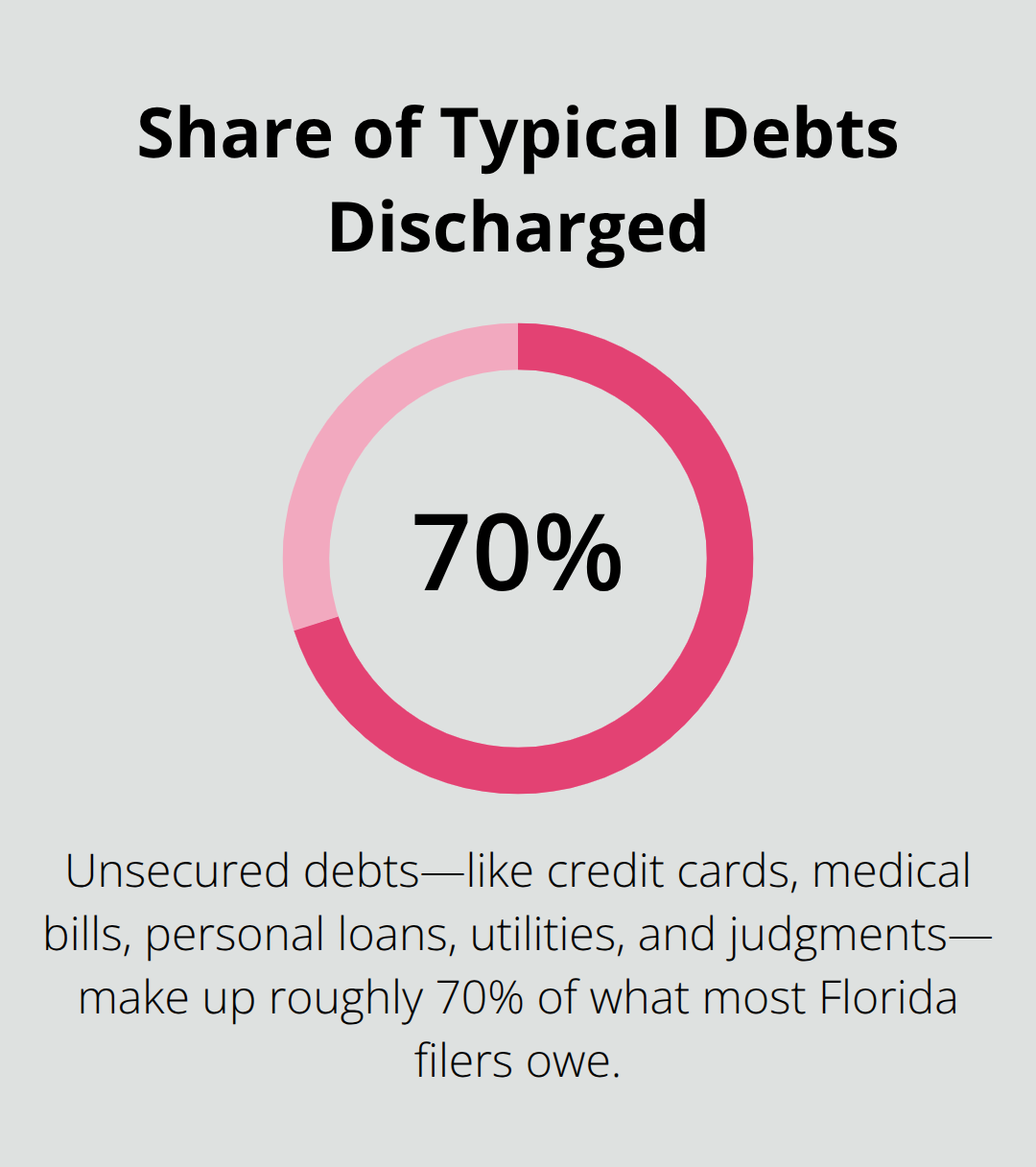
The discharge order eliminates most of your unsecured debts once it arrives. Credit card balances, medical bills, personal loans, utility arrears, and unsecured judgments all vanish when the court enters your discharge. These debts represent roughly 70 percent of what most Florida filers owe, according to patterns in federal bankruptcy filings. The discharge stops creditors from pursuing collection on these obligations permanently, and they cannot reopen the accounts or demand payment after the order takes effect.
Debts That Survive the Discharge Process
Some obligations persist after discharge arrives, and you remain legally responsible for them. Child support and alimony never disappear under any circumstances. Most federal and state income taxes also survive the discharge, along with debts you incurred to repay those taxes. Student loans stay on your balance sheet unless you prove undue hardship, which courts rarely grant.
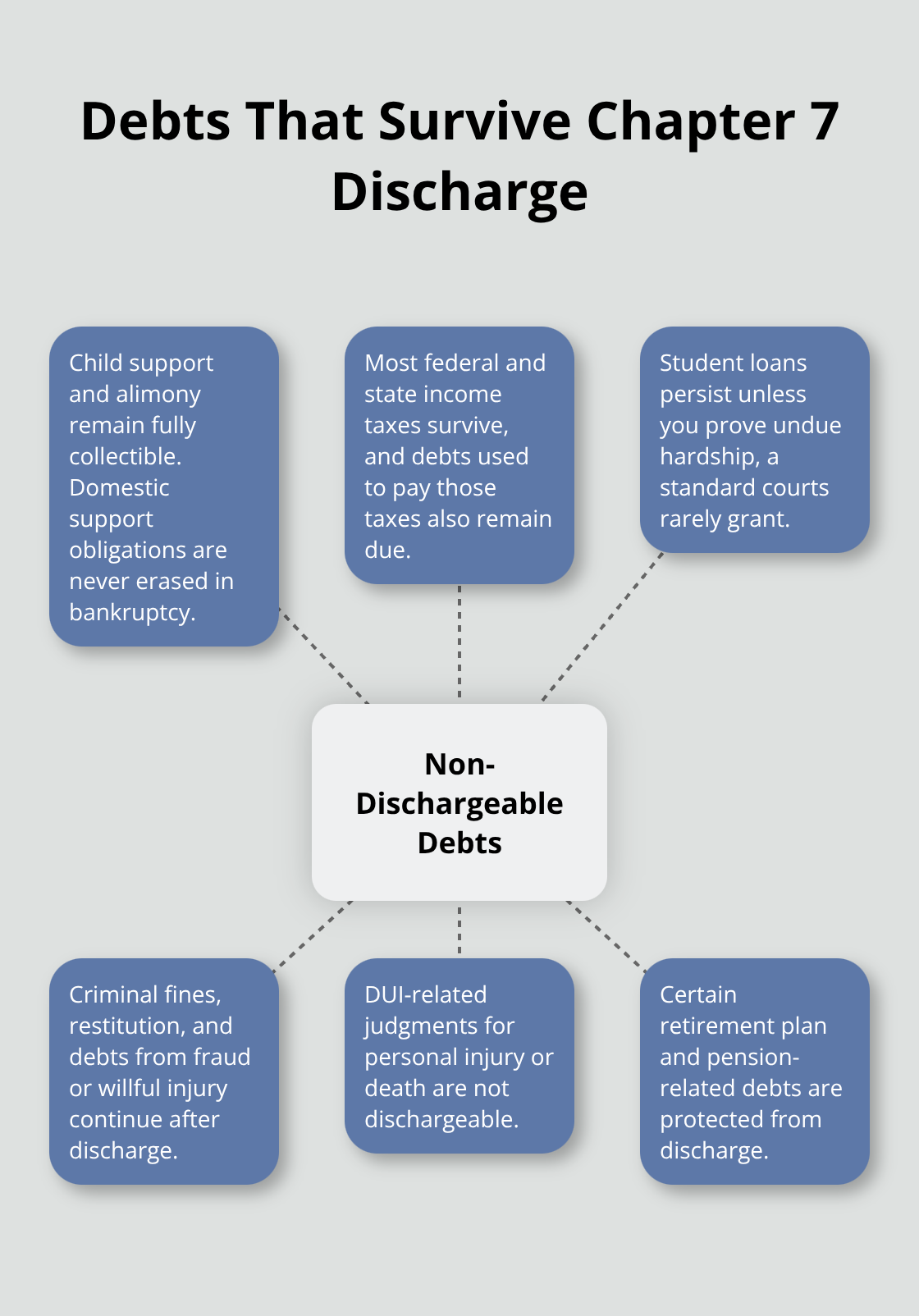
Criminal fines, restitution orders, and debts from fraud or willful injury to someone also survive discharge. DUI-related judgments for personal injury or death cannot be discharged. Debts owed to certain retirement plans and pension obligations are protected from discharge as well.
How Incomplete Schedules Trap You in Debt
A critical mistake occurs when filers fail to list all their debts accurately on their bankruptcy schedules. Any debt not properly documented in your schedules may not discharge, even if it would normally qualify for elimination. Once discharge arrives, you cannot go back and add debts you forgot to list. If you owe back taxes from three years ago, that debt likely survives, but a tax refund you owe from an overpayment might discharge. If you took out a personal loan to pay taxes, that loan debt also survives. The distinction matters enormously for your post-discharge financial plan, and misunderstanding which debts remain can derail your recovery.
Categorizing Your Debts Before Filing
Spend time before filing to categorize every single debt you owe and confirm its status with your attorney. Your financial stability after discharge depends on knowing exactly what obligations persist. Work through each debt systematically and determine whether it falls into the dischargeable or non-dischargeable category. This preparation prevents surprises after discharge arrives and allows you to plan your post-bankruptcy finances with confidence. An attorney can help you navigate the distinctions between similar debts (such as taxes versus tax-related loans) and ensure your schedules reflect the complete and accurate picture of your financial obligations.
Final Thoughts
Your discharge order marks the official end of your bankruptcy case, but your financial recovery truly begins after the court enters that order. Secured credit cards offer the fastest path to rebuilding your credit score within the first months following discharge. Apply for one, use it for small purchases, and pay the full balance each month to demonstrate responsible credit behavior to lenders.
Monitor your credit report through annualcreditreport.com and dispute any errors that appear after your discharge takes effect. Establish an emergency fund by setting aside money monthly into a separate savings account, which prevents you from returning to credit cards or payday loans when unexpected expenses arise. Your non-dischargeable debts-child support, alimony, and surviving taxes-remain your legal responsibility, so prioritize these obligations in your budget to protect yourself from future legal action.
The discharge timeline Florida represents your opportunity to rebuild your financial life with intention and discipline. Contact Harnage Law, PLLC if you have questions about debts that survived your discharge or need guidance on post-discharge financial decisions tailored to your specific situation.