Chapter 7 bankruptcy offers Florida residents a path to eliminate unsecured debts and start fresh financially. This Florida bankruptcy process overview walks you through each stage, from eligibility requirements to debt discharge.
We at Harnage Law, PLLC have guided countless individuals through this process. Understanding the steps ahead removes confusion and helps you make informed decisions about your financial future.
What Chapter 7 Bankruptcy Actually Covers in Florida
Chapter 7 bankruptcy discharges unsecured debts-debts without collateral backing them. Credit card balances, medical bills, personal loans, and deficiency judgments from repossessed vehicles fall into this category. U.S. households carry more than 1 trillion dollars in credit card debt with average interest rates around 24 percent, making Chapter 7 relief genuinely valuable for those drowning in these obligations. When you file Chapter 7 in Florida, the automatic stay takes effect immediately, stopping wage garnishments, lawsuits, bank levies, and foreclosure actions nationwide. This federal protection applies to all creditors simultaneously, which is why filing early matters when collectors actively pursue you.
The Means Test Determines Your Eligibility
Florida’s Chapter 7 eligibility hinges on the Means Test, which examines your income over the last six full months. If your income falls below the Florida median for your household size, you pass automatically. If your income exceeds the median, the test looks at whether your remaining disposable income after allowed expenses is sufficient to fund a Chapter 13 repayment plan instead. This calculation is strict and involves precise documentation of your expenses, so accuracy matters. The test prevents high-income earners from using Chapter 7 to avoid repaying debts they can actually afford, but it also means lower-income Floridians get faster relief through Chapter 7 discharge rather than being forced into a three to five year repayment plan.
Debts That Survive Chapter 7
Some debts cannot be eliminated in Chapter 7, no matter how much you owe. Domestic support obligations like child support and alimony are nondischargeable, meaning past-due amounts stay with you. Most student loans cannot be discharged unless you prove undue hardship, a high bar that rarely succeeds. Certain tax debts, debts incurred through fraud, and recent criminal fines also survive bankruptcy.
Florida’s Strong Homestead Protection
Florida’s homestead exemption is among the strongest in the nation, allowing you to protect unlimited equity in your primary residence. Vehicle equity is exempt up to 5,000 dollars per debtor, retirement accounts receive protection, and household goods are exempt (meaning you keep what matters most). Understanding these distinctions separates realistic outcomes from wishful thinking when planning your Chapter 7 filing. The automatic stay and these protections work together to preserve your financial foundation while you move through the bankruptcy process.
How to Prepare for Chapter 7 Filing in Florida
Complete Credit Counseling Before Filing
Florida law requires you to complete a credit counseling course from an approved agency listed on the U.S. Trustee website before you file. This course takes a few hours and covers budgeting, debt management alternatives, and realistic expectations for bankruptcy. The course forces you to confront whether Chapter 7 is the right path or whether you have other options. Once you complete counseling, you receive a certificate that becomes part of your filing packet. The court will not process your petition without it, so treat this as non-negotiable.
Understand Filing Fees and Payment Options
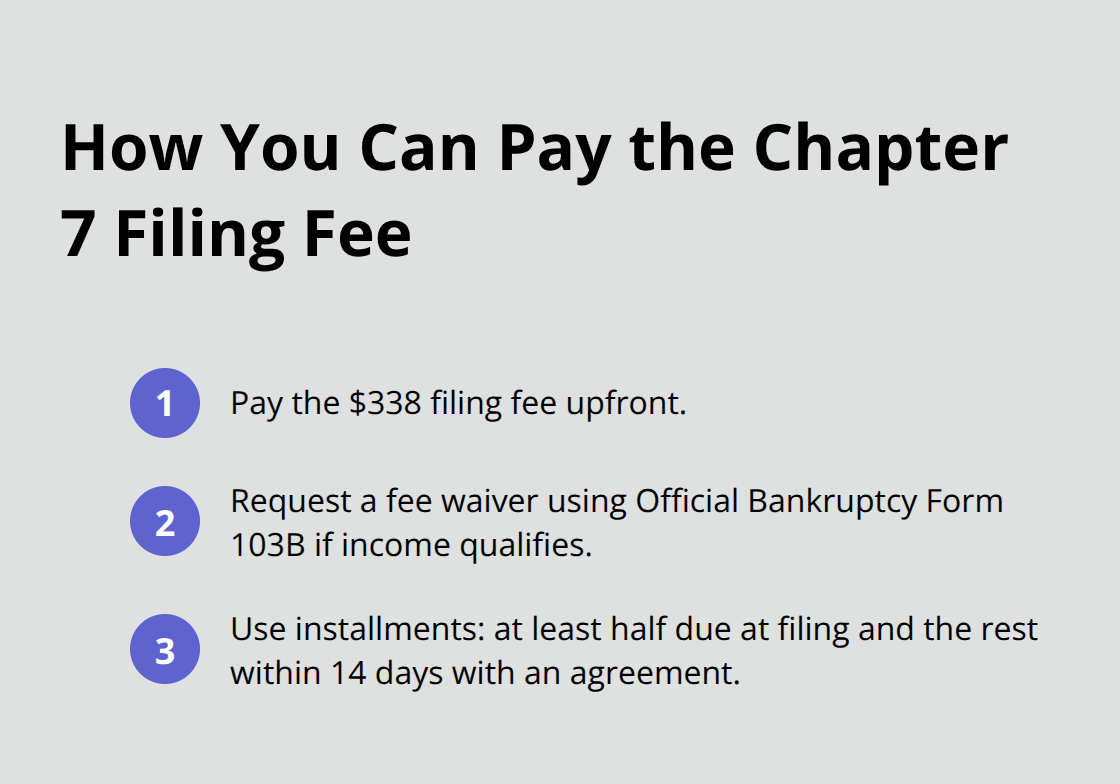
The filing fee is $338 if you have the funds upfront. If your income qualifies, you can request a fee waiver using Official Bankruptcy Form 103B based on federal poverty guidelines. You can also pay the fee in installments, with at least half due at filing and the remainder within 14 days, as long as you submit an installment agreement form and both spouses sign if filing jointly.
Gather Required Documentation
Collect your last 60 days of pay stubs, tax returns, and a list of all creditors with their addresses and amounts owed. The creditor matrix must follow your court’s specific formatting requirements-check your local court’s clerk instructions to avoid rejection. Have your government-issued photo ID ready and provide only the last four digits of your Social Security number on all forms to protect your privacy. When you meet with an attorney to prepare your petition, bring documentation of your income, monthly expenses, assets, and liabilities. The attorney will help you complete Schedules A through J, the Means Test Calculation, and the Statement of Financial Affairs. These documents must be accurate because they determine your eligibility and what happens to your property.
File Your Petition and Attend the 341 Meeting
Filing your petition triggers the automatic stay immediately, stopping all collection activity. Within 14 days, you must file the original wet-signed petition and the Pre-petition Statement with the court. The 341 Meeting of Creditors typically occurs about 30 days after filing. The trustee will ask you questions about your income, debts, assets, and intentions regarding secured property like your home or car. An attorney will be present to assist you and help answer technical questions. Creditors rarely attend and almost never ask questions, making this a brief, predictable process for most filers.
Complete Debtor Education and Receive Discharge
After the 341 meeting, you must complete a second credit counseling course, called debtor education, before discharge. Most people receive their discharge 90 to 120 days after filing. This speed is one reason Chapter 7 appeals to Florida residents drowning in debt, especially those facing wage garnishment or foreclosure where time genuinely matters. Once you understand the preparation steps and timeline, the next phase focuses on what happens to your specific debts after discharge.
Debt Discharge and Financial Fresh Start
Chapter 7 discharge eliminates most unsecured debts, but the word “most” matters here because some obligations survive bankruptcy no matter what. Credit card balances, medical bills, personal loans, and deficiency judgments from vehicle repossessions disappear completely when you receive your discharge order, typically 90 to 120 days after filing. The Federal Reserve reported that U.S. credit card debt exceeds 1 trillion dollars, with average interest rates hovering around 24 percent, so the relief Chapter 7 provides is substantial for those carrying multiple high-interest accounts. Payday loans, cash advances, and lines of credit also discharge. Once your discharge order arrives, creditors must stop collection efforts entirely, and you owe nothing on those debts.
Which Debts Vanish in Chapter 7
This finality is why Chapter 7 appeals to Florida residents facing relentless creditor calls and wage garnishments-the process ends those obligations permanently. The automatic stay halts collection activity the moment you file, and discharge makes that protection permanent. Most unsecured debts fall away, leaving you with a clean slate on accounts that once consumed your monthly budget.
Debts That Survive Bankruptcy
Certain debts are nondischargeable and will follow you after bankruptcy closes. Child support and alimony cannot be eliminated, and past-due amounts remain your legal obligation. Most federal and private student loans survive discharge unless you can prove undue hardship, a legal standard that requires showing you cannot maintain a minimal standard of living, your hardship will persist for most of the loan repayment period, and you made good faith efforts to repay. Courts rarely grant this exception, so plan on student loans remaining your responsibility. Recent income tax debts, criminal fines, and debts obtained through fraud or false statements also survive. If you have substantial nondischargeable debts, Chapter 13 might serve you better by consolidating everything into a manageable three to five year repayment plan.
Credit Score Recovery After Discharge
Your credit score takes an immediate hit when you file-Chapter 7 stays on your credit report for ten years-but the damage stops there and actually reverses faster than most people expect. Bankruptcy removes the stress of unpaid debts that were dragging your score down month after month, and creditors view a discharged bankruptcy more favorably than ongoing delinquencies. Many clients report receiving credit card offers within six months of discharge, though you should avoid taking on new debt immediately. Secured credit cards (which require a cash deposit) and on-time payments on any remaining obligations build positive credit history after discharge. Within eighteen to twenty-four months of discharge, some Florida residents have qualified for mortgages and purchased homes, especially those with strong income and stable employment. The key is treating your financial fresh start as exactly that-a reset, not permission to repeat the patterns that created the original debt.
Final Thoughts
Chapter 7 bankruptcy in Florida offers a legitimate path to eliminate unsecured debts and stop creditor harassment within months rather than years. The Florida bankruptcy process overview shows that eligibility depends on the Means Test, the automatic stay provides immediate protection, and discharge typically arrives 90 to 120 days after filing. Florida’s strong homestead exemption and vehicle protections mean you preserve what matters most while eliminating debts that consumed your budget.
The decision to file Chapter 7 depends on your income, assets, and which debts you carry. Nondischargeable obligations like child support and most student loans require honest assessment before moving forward, and Chapter 13 might serve you better if you have substantial income or assets to protect through a repayment plan. Understanding your specific situation matters far more than making assumptions based on general information.
We at Harnage Law, PLLC help individuals and families overcome financial challenges by providing legal guidance through every step of the bankruptcy process. A free consultation with our team clarifies your options, timeline, and next steps without pressure or judgment. Contact us today to discuss your situation and begin moving toward financial recovery.