Debt doesn’t have to be permanent. If you’re struggling with credit card bills, medical debt, or other obligations, debt relief options in Florida can help you regain control of your finances.
We at Harnage Law, PLLC understand that choosing between Chapter 7 bankruptcy and other solutions isn’t simple. This guide walks you through your realistic options so you can make an informed decision based on your actual situation.
Understanding Your Debt Situation in Florida
What Debts Are You Actually Carrying
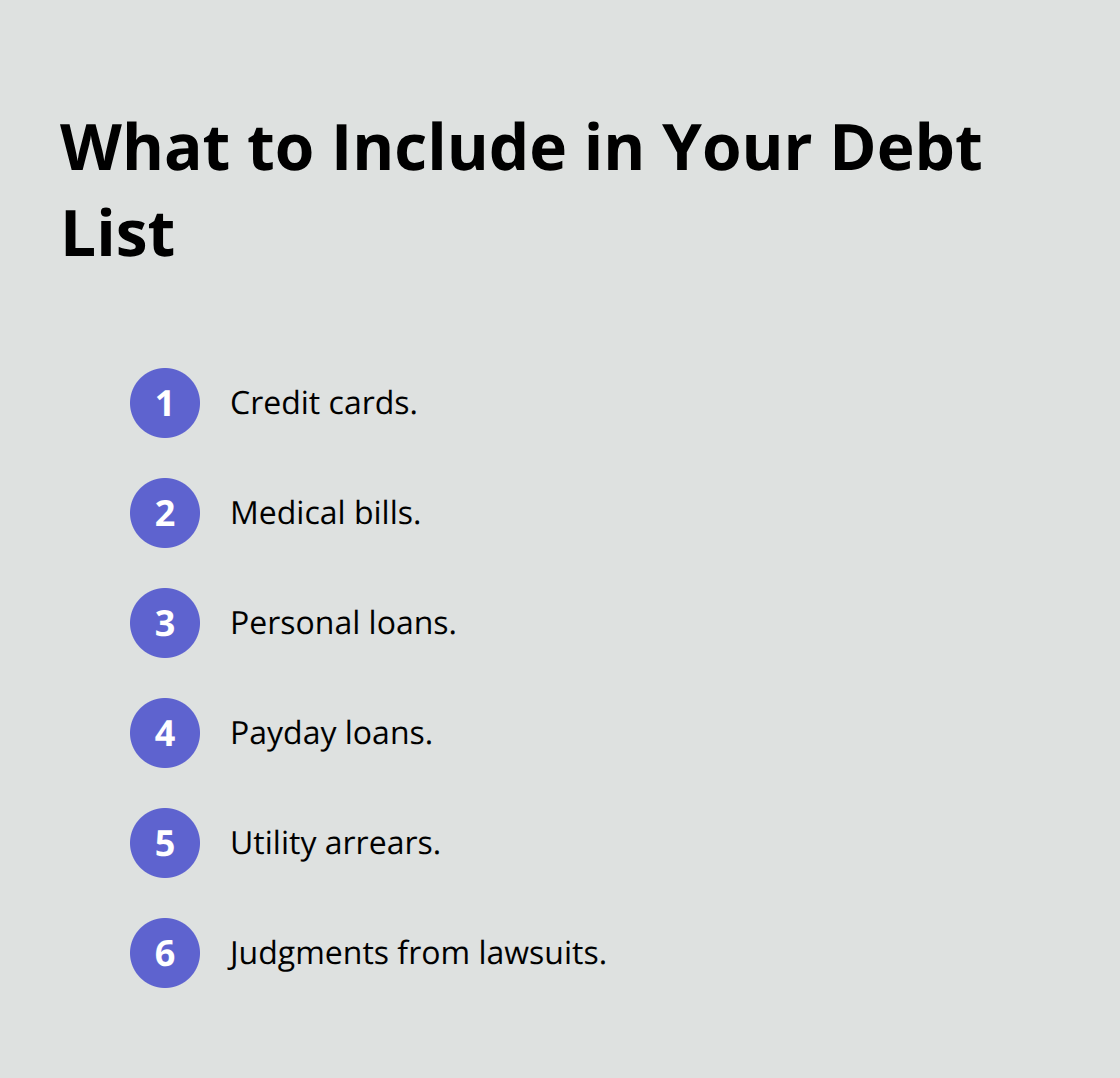
Before you choose a debt relief path, you need a clear picture of what you owe. Most people dramatically underestimate their total debt because they focus on the largest balance while ignoring smaller obligations. List every debt: credit cards, medical bills, personal loans, payday loans, utility arrears, and judgments from lawsuits. Credit card debt remains the most common debt people want to erase, and it’s generally dischargeable in Chapter 7.
Medical bills are typically dischargeable as well, which matters since the average American medical debt sits around $2,500 per household according to financial surveys.
Unsecured personal loans, including payday loans, can be discharged. Overdue utility bills and unsecured judgments often qualify too. Don’t overlook debts you think are minor-every obligation affects your total picture and your eligibility for different relief options. Some debts won’t disappear in any bankruptcy scenario: child support, alimony, most student loans, most tax debts, and criminal restitution stay with you regardless of which path you choose. Understanding which debts qualify for discharge and which don’t shapes your entire strategy.
Income and Expenses Determine Your Options
Your income matters more than you think because it determines whether Chapter 7 is even available to you. Florida’s median household income for a family of four sits around $75,000 annually according to U.S. Census data, though this varies by county. If your household income falls below Florida’s median for your family size, Chapter 7 eligibility is straightforward. If it exceeds the median, you’ll face the means test-a calculation that compares your income against allowable expenses like housing, food, transportation, and childcare.
This test uses Official Forms 122A-1 and 122A-2 to determine your disposable income. The filing fee itself costs $338, though you can request fee waivers using Official Bankruptcy Form 103B if you meet financial requirements, or pay in installments with a minimum initial payment of half the fee. Your monthly expenses matter equally because they directly affect which solution works: if you have stable income but high monthly obligations, Chapter 13’s repayment plan might protect your home while you catch up on mortgage arrears. If your income is low relative to expenses, Chapter 7’s quick discharge becomes more attractive.
Calculate your actual take-home pay after taxes, then subtract housing, food, transportation, insurance, and childcare to see what remains. This number reveals whether settlement negotiations, consolidation, or bankruptcy makes sense for your situation.
Timeline and Goals Shape Your Next Steps
Decide what you want to protect and when you need relief. If foreclosure threatens your home, speed matters-Florida’s judicial foreclosure process gives you only 20 days to respond to a foreclosure complaint, so acting fast can make the difference between keeping your property and losing it. Chapter 13 halts foreclosure immediately through the automatic stay and lets you catch up on mortgage arrears within a 3- to 5-year plan. Chapter 7 typically discharges debts within 3 to 4 months, making it the faster option if you don’t own a home or have minimal assets.
If wage garnishment has already started, filing bankruptcy immediately stops it via the automatic stay, though you can also assert head-of-household exemptions to pause it beforehand. Florida’s homestead exemption protects your primary residence with no cap on value, subject to acreage limits, which changes how you evaluate keeping versus losing a home. Your timeline also affects credit recovery-Chapter 7 discharge stays on credit reports for up to 10 years under the Fair Credit Reporting Act, while Chapter 13 appears for 7 years. Despite this, many people see meaningful credit score improvements within 1 to 2 years after discharge.
Gather your recent pay stubs, tax returns, mortgage statements (if applicable), and a complete creditor list before consulting with a bankruptcy attorney. This preparation accelerates the process and helps you understand which debt relief path actually fits your finances, setting the stage for evaluating Chapter 7 as a specific solution.
How Chapter 7 Works in Florida
The Discharge Process and What It Means
Chapter 7 bankruptcy discharges qualifying debts by liquidating non-exempt assets to pay creditors, though in Florida most filers walk away with minimal or zero asset loss because Florida’s exemption laws are exceptionally protective. The discharge itself is a court order declaring that you no longer owe the debt; creditors cannot pursue you afterward, and any attempt to collect violates federal law. Credit card debt, medical bills, unsecured personal loans, utility arrears, and most judgments disappear entirely once the court issues your discharge.
Immediate Protection Through the Automatic Stay
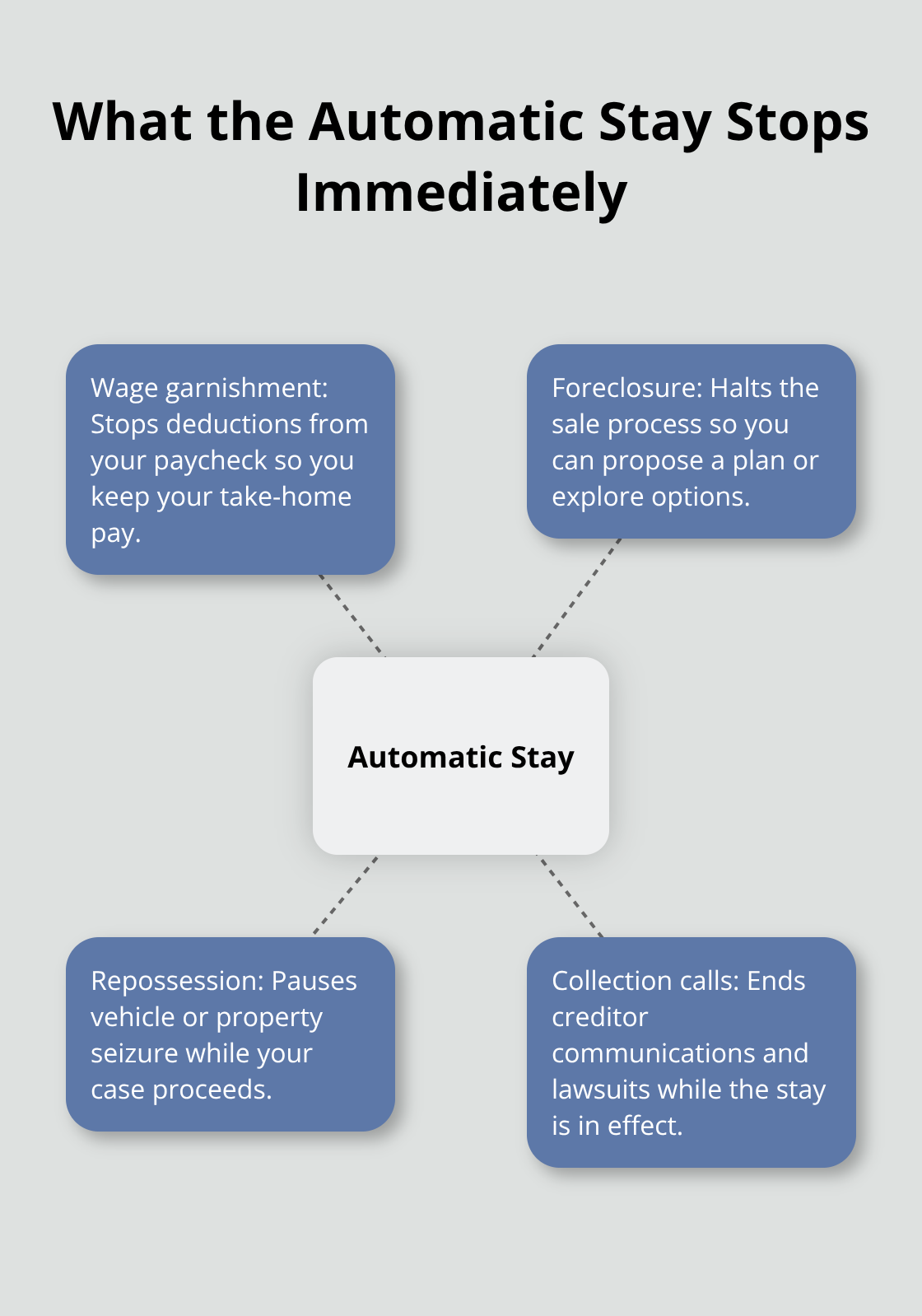
When you file, the automatic stay stops wage garnishment, foreclosure, repossession, and collection calls immediately-this alone saves many people thousands of dollars in lost income and prevents losing a home within weeks. The stay is automatic; you don’t need to request it. Creditors must halt collection efforts the moment the court receives your petition, giving you breathing room to move forward with your case.
Eligibility Requirements and the Means Test
The means test determines your eligibility; if your household income falls below Florida’s median for your family size, you qualify without further calculation. Households above the median must complete Official Forms 122A-1 and 122A-2, which subtract allowable living expenses from income to determine disposable income. If disposable income is too high, Chapter 13 becomes necessary instead. Your income directly controls whether Chapter 7 remains available to you.
Filing Costs and Required Documents
The filing fee is $338, though you can request a waiver using Official Bankruptcy Form 103B if your income falls below poverty guidelines, or arrange installment payments with a minimum initial payment of half the fee. You must complete mandatory credit counseling from an approved agency listed on the U.S. Trustee’s website before filing and provide copies of pay stubs from the last 60 days. These requirements exist to verify your financial situation and ensure you understand the process.
Timeline and Asset Protection
The actual timeline moves fast: you attend a meeting of creditors (often by phone) roughly 30 days after filing, creditors have 60 days to object, and discharge typically arrives 3 to 4 months after filing. Florida’s homestead exemption protects your primary residence with no value cap (subject to acreage limits), making home protection straightforward compared to other states. Personal property exemptions also shield essential items like vehicles up to certain values, household goods, and tools of your trade. Debts that survive discharge include child support, alimony, most student loans, most tax debts, and criminal restitution-these obligations persist regardless of bankruptcy. Understanding which assets you keep and which debts remain helps you evaluate whether Chapter 7 truly solves your financial crisis or whether alternative strategies deserve consideration.
Beyond Bankruptcy: When Other Debt Relief Works Better
Debt Consolidation and Balance Transfers Fall Short
Debt consolidation and balance transfer programs sound appealing because they promise lower monthly payments without the stigma of bankruptcy. The reality is messier. Consolidation swaps multiple debts for a single loan, typically at a lower interest rate, but it requires a qualifying new loan and depends on your credit profile. If your credit is already damaged, lenders won’t offer favorable terms. Balance transfers shift high-interest credit card balances to a card with a 0% introductory rate, usually lasting 6 to 21 months according to major credit card issuers. The catch: you must make regular payments during that window, and once the promotional period ends, the remaining balance reverts to standard rates, often 18% to 25%.
These tools work only if you have sufficient income to cover the new payment structure. If your problem is that you can’t afford payments at all, consolidation simply extends your suffering across a longer timeline while you accumulate more interest. You’re still paying back debt you may not have created through wise decisions.
Negotiated Settlements Create Hidden Tax Traps
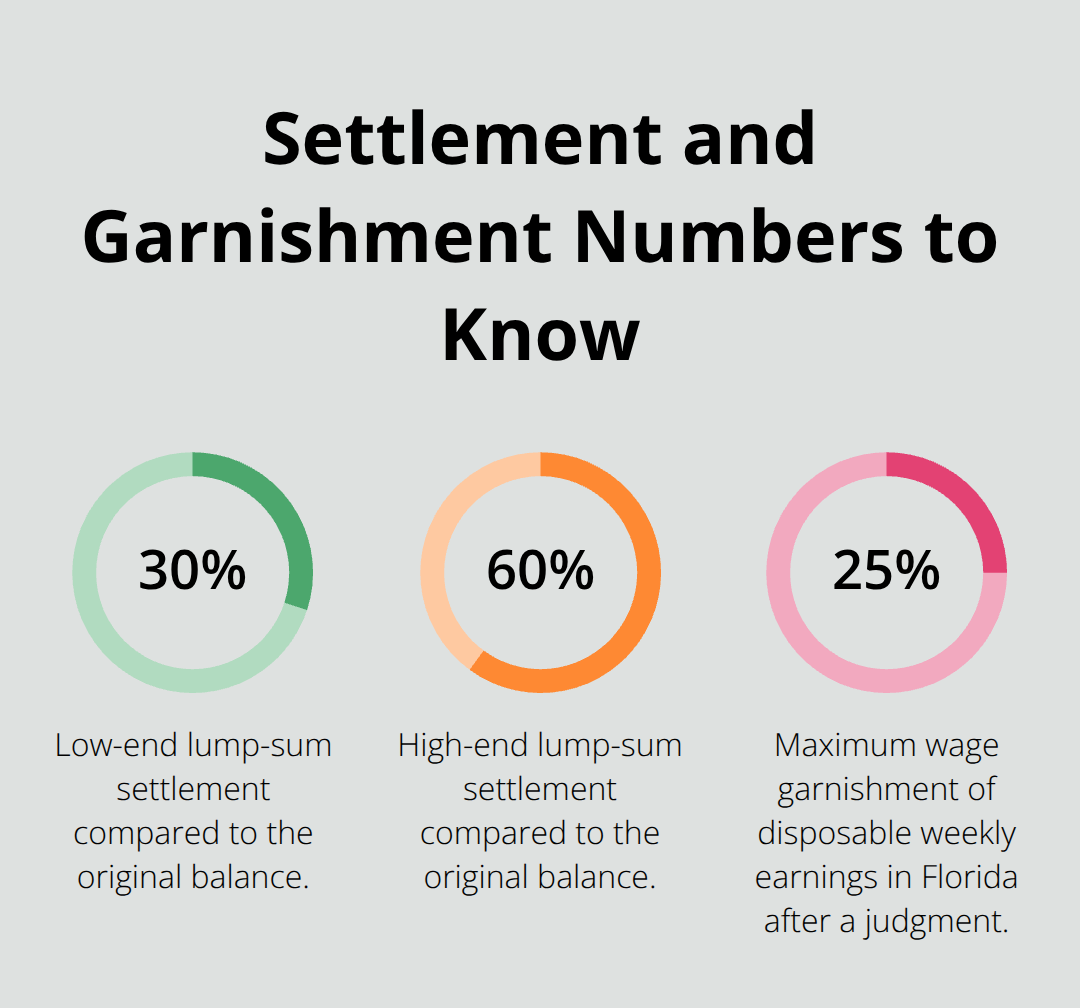
Negotiated settlements let you pay a lump sum-often 30% to 60% of what you owe-to close an account entirely, according to debt settlement firms. The downside deserves serious attention: you must stop paying creditors to fund the settlement, which tanks your credit score within 30 to 90 days and triggers collection calls and lawsuits. Florida law gives creditors 20 days to respond to your lawsuit, and if they win, wage garnishment can reach up to 25% of your disposable weekly earnings.
Additionally, the IRS treats forgiven debt over $600 as taxable income, meaning a $10,000 settlement could create a $10,000 tax liability in the following year (a nasty surprise many people don’t anticipate). You trade immediate relief for years of credit damage and potential tax consequences that rival the original debt.
Credit Counseling Plans Lock You Into Years of Payments
Debt management plans through credit counseling agencies involve negotiating reduced interest rates directly with creditors, then making a single monthly payment to the agency for distribution. These plans typically run 3 to 5 years and require you to close credit cards, which damages your credit utilization ratio and makes rebuilding harder afterward. Credit counseling itself provides value for understanding spending habits, but the formal debt management plan locks you into years of payments with no guarantee creditors will cooperate or reduce balances.
Chapter 7 Delivers Faster Results
Chapter 7 discharges most of these same debts within 3 to 4 months instead, stops all collection activity immediately through the automatic stay, and protects you from wage garnishment entirely. If your income qualifies you for Chapter 7, choosing to spend years negotiating settlements or consolidating debt while creditors continue calling and threatening garnishment simply delays the solution that actually works. The automatic stay halts collection efforts the moment you file, giving you immediate relief that consolidation and settlement negotiations cannot match.
Final Thoughts on Choosing Your Debt Relief Path
Chapter 7 bankruptcy outperforms other debt relief options Florida residents consider because it delivers faster results, stops creditor harassment immediately, and discharges qualifying debts completely rather than stretching payments across years. Consolidation locks you into new loans with ongoing payments, settlement negotiations damage your credit and trigger tax consequences, and credit counseling plans require 3 to 5 years of payments with no guarantee creditors will cooperate. Chapter 7 discharges most unsecured debts within 3 to 4 months, the automatic stay halts collection efforts the moment you file, and Florida’s homestead exemption protects your primary residence with no value cap.
The right choice depends on your specific income, assets, debts, and what you want to protect. If your household income falls below Florida’s median for your family size, Chapter 7 eligibility is straightforward, and if foreclosure threatens your home, Chapter 13 might serve you better by halting the sale and letting you catch up on arrears. If wage garnishment has already started, bankruptcy stops it immediately while other options leave you vulnerable, and if you have minimal assets and qualifying debts, Chapter 7 offers the cleanest path forward.
We at Harnage Law, PLLC help individuals and families discharge qualifying debts and rebuild their financial future by providing personalized legal guidance through every step of the bankruptcy process. We focus on stopping creditor harassment, preventing wage garnishments, and halting lawsuits so you can move forward. Contact Harnage Law, PLLC to discuss which debt relief path actually fits your situation and start toward financial recovery.