Credit card debt can feel overwhelming, especially when balances keep growing. The good news is that Chapter 7 bankruptcy offers a legitimate path to eliminate this burden entirely.
At Harnage Law, PLLC, we help Florida residents understand how credit card debt discharge works and what to expect throughout the process. This guide walks you through the discharge process, common obstacles you might face, and how to rebuild your financial life afterward.
How Credit Card Debt Disappears in Chapter 7
Credit Cards as Unsecured Debt
Credit card debt ranks as the most common type of unsecured debt that Florida residents discharge through Chapter 7 bankruptcy. When you file, every credit card balance you list receives equal treatment under federal law-there’s no hierarchy, no special status. The bankruptcy code doesn’t distinguish between a $2,000 balance and a $50,000 balance across multiple cards. What matters is that credit cards are unsecured debt, meaning the creditor holds no claim on your home, car, or other property if you stop paying. This distinction proves significant because Chapter 7 can typically discharge 100 percent of your qualifying credit card debt, something secured debts like mortgages cannot achieve.
The Automatic Stay Stops All Collection Activity
The moment you file your petition with the court in the Middle District of Florida, an automatic stay takes effect immediately. This federal court injunction stops all collection calls, lawsuits, wage garnishments, and creditor harassment instantly. You won’t receive another call demanding payment. Any lawsuit already filed gets paused. Any wage garnishment already in progress halts. This protection applies to every single creditor the moment the clerk’s office stamps your filing as received. The automatic stay isn’t a temporary measure or a negotiation tactic-it’s a federal command that creditors must follow or face contempt of court charges.
Timeline From Filing to Discharge
Your discharge typically arrives within 90 to 120 days from filing in Brevard County and most Florida bankruptcy courts. The timeline breaks down predictably: your 341 Meeting of Creditors happens about 30 days after filing (usually conducted via Zoom and lasting 10 to 15 minutes), and your discharge order issues roughly 60 to 90 days after that meeting concludes. During those months, you must complete a personal financial management course from an approved agency listed on the U.S. Trustee’s website-this must happen after filing but before discharge.
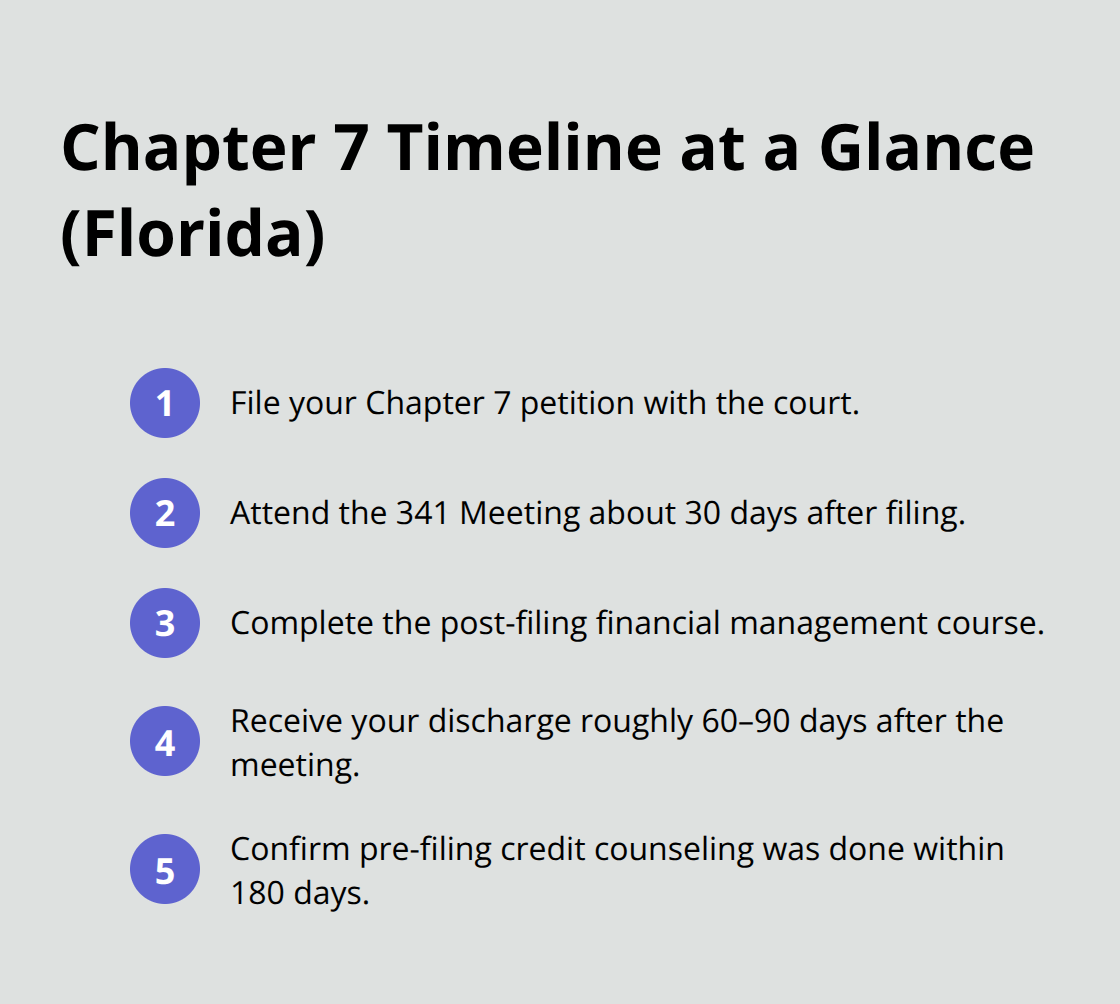
You’ll also need to have completed pre-filing credit counseling within 180 days before you filed.
What Discharge Actually Means
Once the discharge order enters, it becomes a permanent federal court injunction prohibiting creditors from collecting on those debts. The discharge isn’t just a notation on your credit report; it’s a legal prohibition backed by the full power of federal courts. Creditors cannot sue you, garnish your wages, or pursue collection efforts after discharge. Many filers obtain a secured credit card within weeks of receiving their discharge, allowing them to begin rebuilding immediately rather than waiting months to reestablish credit.
Understanding how discharge works sets the foundation for your fresh start, but the path forward isn’t always straightforward. Certain obstacles can complicate or prevent discharge entirely, and knowing what these barriers are helps you prepare for what comes next.
Common Obstacles to Credit Card Debt Discharge in Florida
Fraud and Misrepresentation Challenges
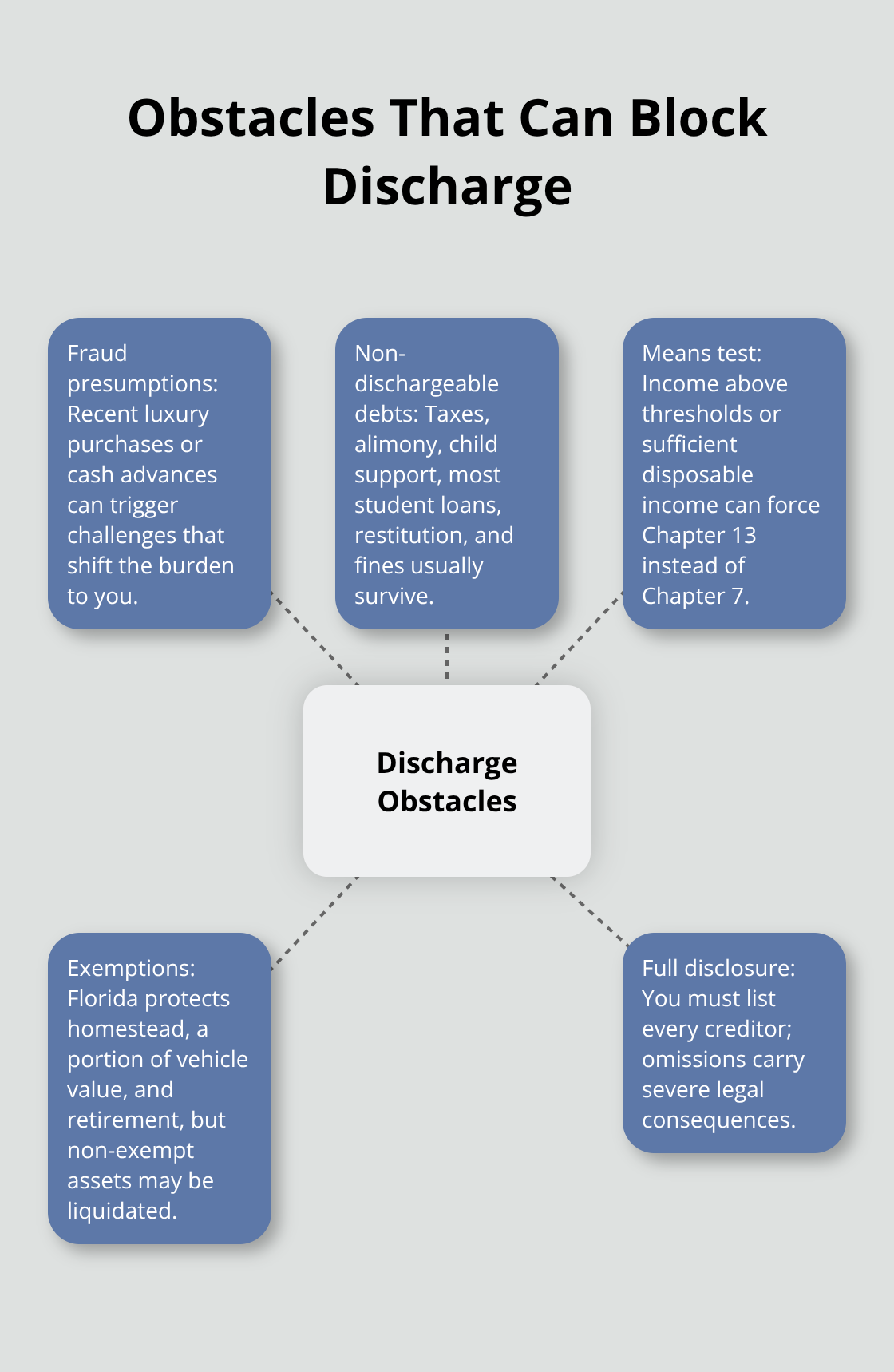
Not every debt qualifies for discharge, and certain actions before filing can disqualify otherwise eligible credit card debt. The bankruptcy code specifically protects certain creditors and penalizes debtors who engage in fraudulent behavior. Fraud-related charges carry the highest risk. If you made luxury purchases exceeding roughly $900 within 90 days before filing or took cash advances over about $1,250 within 70 days before filing, the creditor can challenge those transactions as presumptively fraudulent under the bankruptcy code. This doesn’t mean the debt automatically survives discharge, but the creditor gets a presumption in their favor, forcing you to prove the purchases were legitimate.
Actual fraud cases involving intentional deception are harder to prove but carry the same consequence: non-discharge.
Non-Dischargeable Debts You Cannot Eliminate
Beyond fraud, debts arising from willful or malicious injury to another person or property remain non-dischargeable. Taxes, alimony, child support, and most student loans also survive discharge regardless of your financial condition. Criminal restitution obligations and fines cannot be discharged either. These carve-outs exist across all Chapter 7 cases nationwide, not just in Florida, but knowing them prevents the disappointment of discovering post-discharge that certain debts persist.
Income Requirements and the Means Test
Your income level determines whether you can file Chapter 7 at all. Florida’s median household income for a single person sits at $41,334 annually according to the most recent means test data. If your average monthly income over the last six calendar months multiplied by 12 falls below that threshold, you automatically pass the means test and face no further income scrutiny. Above that level, you must complete the formal means test, comparing your disposable income against federal thresholds to establish whether Chapter 7 remains available. If your 60-month disposable income projections exceed $12,475 total, you cannot file Chapter 7 and must pursue Chapter 13 instead.
Asset Protection Through Florida Exemptions
Your assets affect what property you keep after filing. Florida exemptions provide substantial asset protection, including an unlimited homestead exemption for your primary residence, a $5,000 motor vehicle exemption, and strong retirement account protections. This means most filers retain their homes and vehicles despite filing Chapter 7. However, non-exempt assets get liquidated by the trustee to pay creditors, though in many Florida cases, no assets remain available for distribution because the exemptions cover everything the debtor owns.
The Requirement to List Every Creditor
Omitting creditors from your filing constitutes a federal crime under 18 U.S.C. 152, so every credit card issuer must be listed regardless of whether you want to discharge that particular debt. This requirement prevents strategic decisions about which debts to eliminate and which to repay. Understanding these obstacles shapes your filing strategy and determines what outcomes you can realistically achieve, but the discharge itself represents only the beginning of your financial recovery.
Rebuilding Your Credit After Discharge in Florida
Your Credit Score Takes an Immediate Hit
Your credit score drops 130 to 200 points the moment you file Chapter 7. That initial damage feels severe, but the recovery trajectory surprises most filers. Within two to three years of discharge, many borrowers rebuild their scores to the 620 to 660 range, which qualifies them for standard credit products like auto loans and unsecured credit cards. The bankruptcy notation stays on your credit report for ten years from the filing date, but its impact weakens significantly after year three or four. Lenders weight recent payment history far more heavily than older negative marks, which means your actions today matter more than the bankruptcy itself.
Secured Cards Accelerate Your Recovery
A secured credit card within weeks of discharge accelerates recovery substantially. You deposit cash matching your credit limit, typically ranging from $200 to $2,500, and the card reports to all three credit bureaus just like a traditional card. Making on-time payments every single month for six to twelve months demonstrates creditworthiness to future lenders and often qualifies you for an unsecured card or credit line upgrade. The discipline required here cannot be overstated: missing even one payment resets your recovery timeline and signals to creditors that your financial habits haven’t improved.
Keep Utilization Low and Payments Perfect
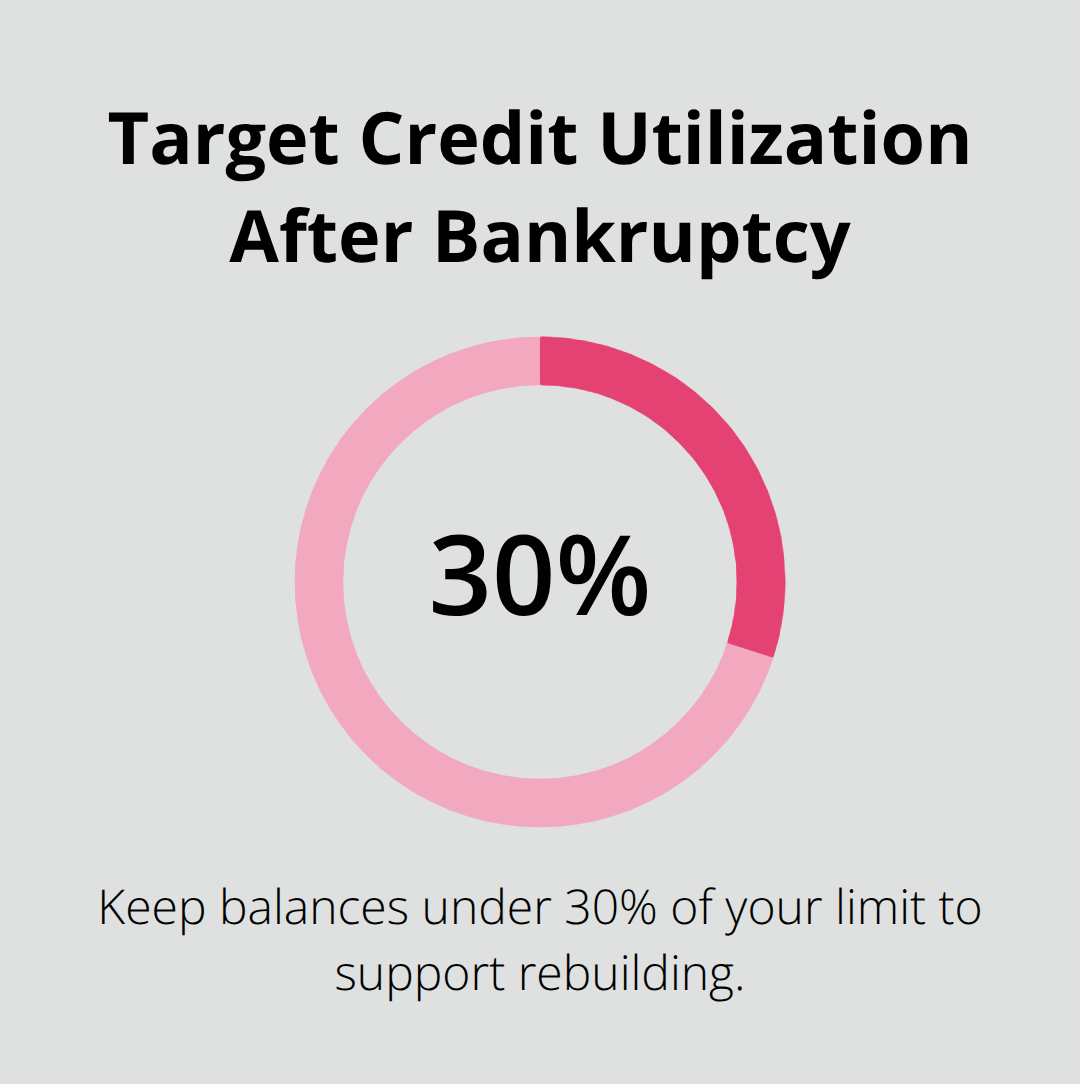
Stop carrying high balances on your secured card; keep utilization below 30 percent of your limit (if you have a $500 limit, never carry more than a $150 balance). Pay the full statement balance each month rather than just the minimum, which eliminates interest charges and demonstrates financial control.
After twelve months of perfect payment history on your secured card, request a credit limit increase or transition to an unsecured card. Simultaneously, ensure every other obligation gets paid on time: utility bills, rent, insurance premiums, and any remaining debts that survived discharge. These payments don’t report to credit bureaus directly, but late payments trigger collection activity that absolutely does.
Space Credit Applications and Build Discipline
Avoid the temptation to apply for multiple credit products simultaneously; each application triggers a hard inquiry that temporarily lowers your score. Space applications six months apart instead. Within three to four years of discharge, filers with disciplined payment histories often achieve scores in the 680 to 720 range, positioning themselves for competitive mortgage rates and favorable lending terms. The path from discharge to creditworthiness depends entirely on your actions after the court order arrives, not on the bankruptcy itself.
Final Thoughts
Credit card debt discharge in Florida through Chapter 7 bankruptcy eliminates qualifying unsecured debts permanently, stops all collection activity immediately through the automatic stay, and completes within 90 to 120 days in most cases. The discharge itself becomes a federal court injunction that creditors cannot challenge or circumvent. Your path forward depends on understanding the obstacles that can complicate discharge, such as fraud presumptions on recent luxury purchases, non-dischargeable debts like taxes and child support, and income thresholds that determine Chapter 7 eligibility.
Rebuilding after discharge happens faster than most people expect. Your credit score recovers substantially within two to three years when you obtain a secured credit card, maintain perfect payment history, and keep utilization below 30 percent. The bankruptcy notation remains on your credit report for ten years, but its impact weakens dramatically after year three or four as recent positive payment history outweighs the older negative mark.
The decision to file Chapter 7 requires careful analysis of your specific financial situation, your income level relative to Florida’s means test thresholds, and your asset protection needs. We at Harnage Law, PLLC guide Florida residents through every step of the bankruptcy process, from initial consultation through discharge and beyond (stopping creditor harassment, preventing wage garnishments, and halting lawsuits while helping you protect your assets and discharge qualifying debts). Contact us to schedule your free consultation and begin your fresh financial start today.