
Filing Chapter 7 bankruptcy in Florida comes with strict rules, and missing even one requirement can result in dismissal. Your case could be dismissed before you receive any debt relief, leaving you back where you started.
We at Harnage Law, PLLC know that understanding the chapter 7 dismissal timeline helps you stay on track. This guide walks you through the common reasons cases get dismissed and the practical steps to protect yours.
What Actually Gets Your Chapter 7 Case Dismissed in Florida
Filing Errors That Trigger Immediate Dismissal
Dismissal happens fast, and the court does not need your permission to throw your case out. The Southern District of Florida reports that cases close in as little as 113 days median time, but dismissal can occur much sooner if you violate key requirements. The most common trigger is failing to file your creditor matrix in the correct text format when you file your petition. The Clerk’s Instructions for Preparing, Submitting and Obtaining Service Matrices state that without a complete mailing matrix separated from your schedules, the court may dismiss your case without further notice or hearing. This is not a warning-it is automatic.
You must also file your Statement of Social Security Number (Official Form 121) within 14 days after filing. Missing this deadline under Local Rule 9011-4(C) results in dismissal. The filing fee itself must be paid in full within seven days using a money order or cashier’s check; personal checks and cash are rejected under Local Rule 5081-1(A). If you cannot pay, you need court approval for installments or a waiver, but inaction triggers dismissal. You must file incomplete lists of schedules, payment advices, or your Statement of Financial Affairs within 14 days of filing, or Local Rule 5005-1 allows dismissal.
The Means Test and Income Verification Problems
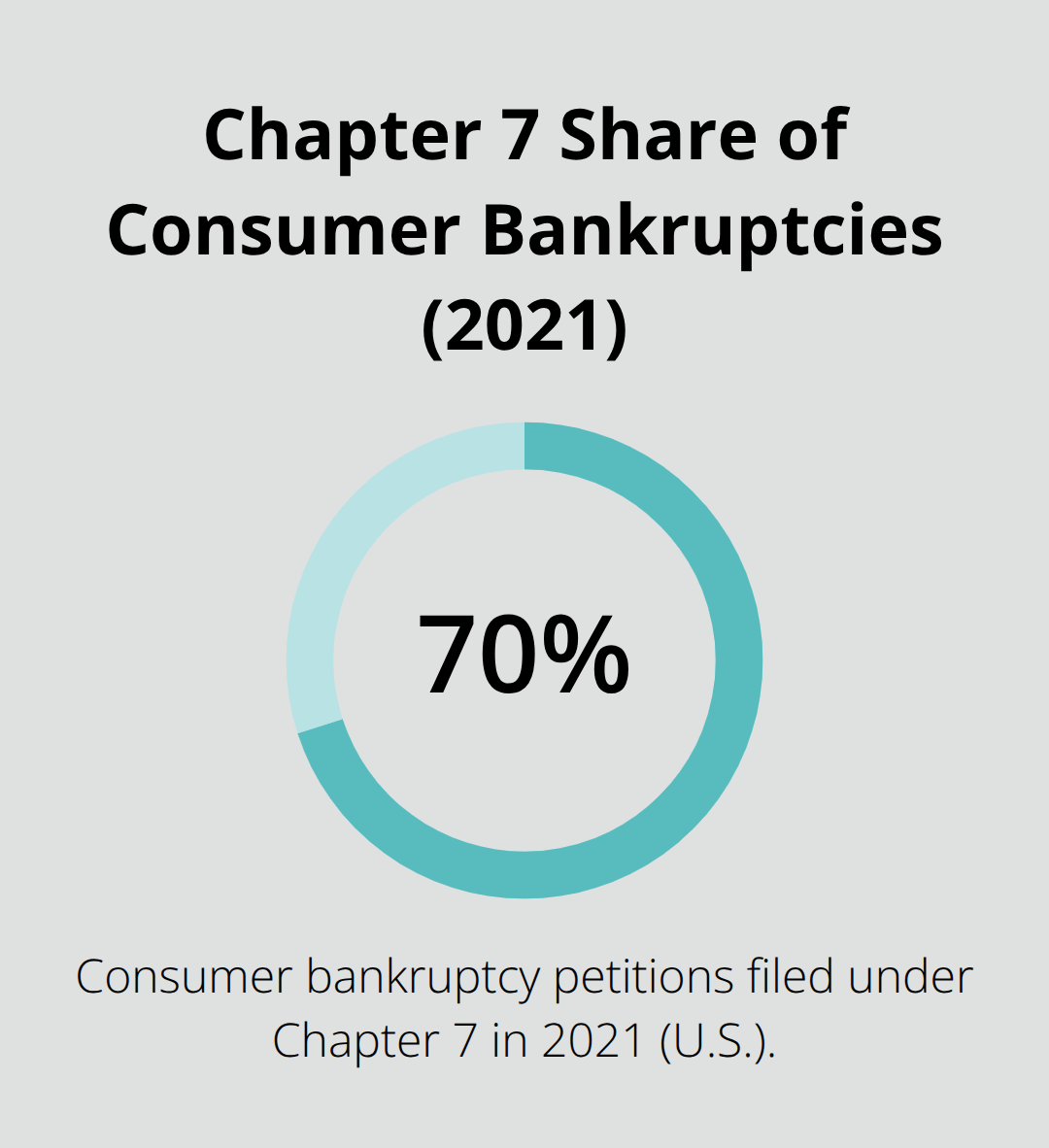
The means test presents a different dismissal risk. About 70 percent of consumer bankruptcy petitions in 2021 were filed under Chapter 7 according to the Administrative Office of the U.S. Courts, but many filers fail to pass the means test calculation. If your current monthly income exceeds the median for your household size in Florida, you must pass the means test or face dismissal or conversion to Chapter 13.
Hiding assets or misreporting income constitutes fraud and guarantees dismissal plus potential criminal charges.
Attendance and Course Requirements
You must attend the Meeting of Creditors (the 341 meeting) within 20 to 40 days after filing, and nonattendance results in immediate dismissal. If you file jointly with a spouse, both of you must attend. You cannot skip the required credit counseling course before filing-this is mandatory under the U.S. Trustee’s Office rules. Failure to complete it within 180 days before filing and submit the certificate leads to dismissal. After the 341 meeting, you must complete a Financial Management Course and file Form B423 within 60 days, or your discharge gets delayed indefinitely.
Trustee Cooperation and Document Submission
The trustee appointed to your case expects full cooperation; if you ignore requests for documents like your most recent federal tax return (due at least seven days before the 341 meeting), dismissal follows. Your next critical step involves understanding how the trustee investigates your case and what happens when dismissal motions are filed.
Preventing Dismissal Before It Starts
Organize Your Documents Before Filing
Stopping dismissal requires action on three fronts: gathering the right documents before filing, hitting every deadline the court sets, and staying in constant contact with your trustee. The median Chapter 7 case in the Southern District of Florida closes in 113 days, but that timeline collapses instantly if you miss critical requirements. Start by creating a master checklist of everything you need to file on day one. Your creditor matrix must be in plain text format, separated from your schedules, with every creditor’s name and address spelled correctly. The Clerk’s Instructions for Preparing, Submitting and Obtaining Service Matrices makes this clear: incomplete or improperly formatted matrices result in dismissal without notice.
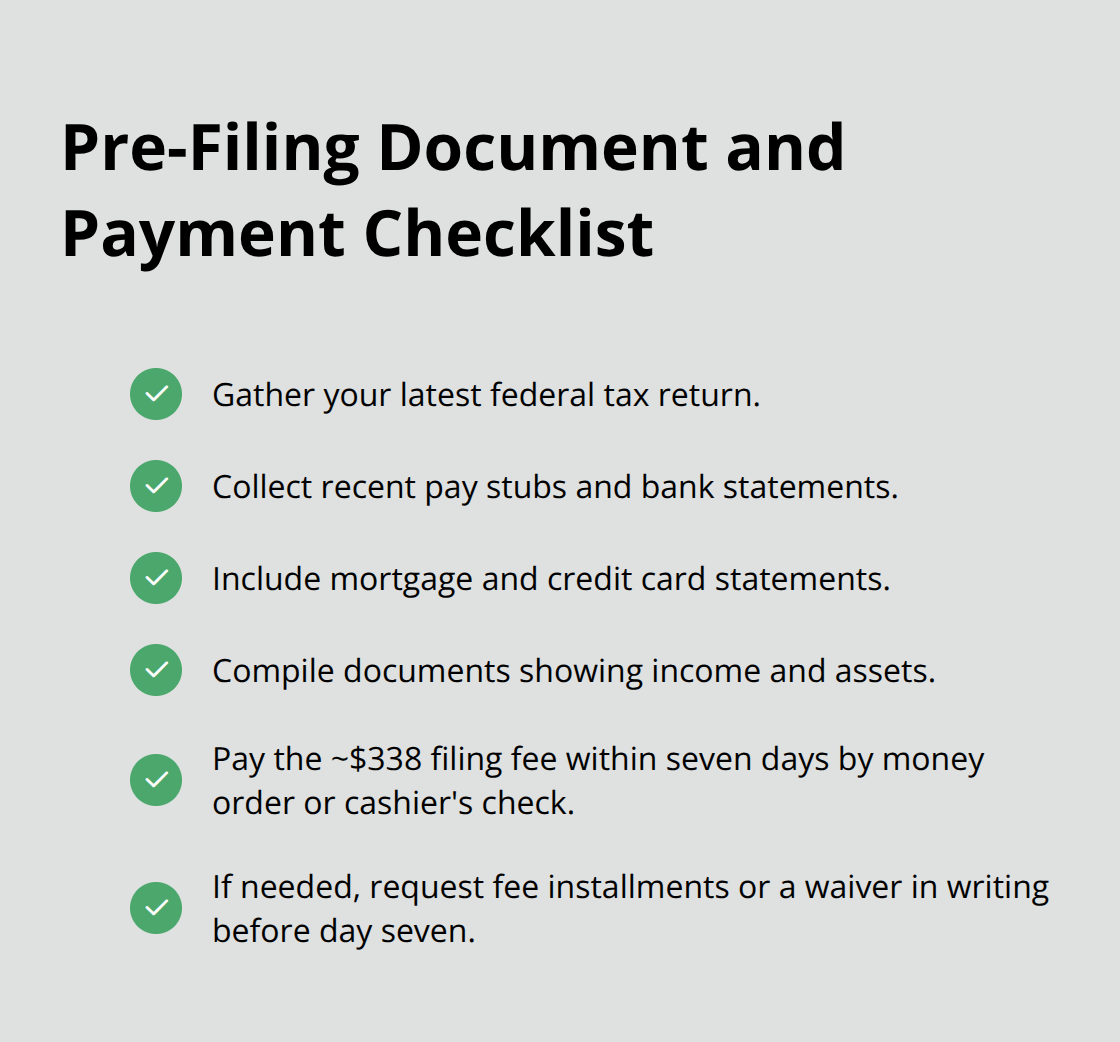
Pull your most recent federal tax return, recent pay stubs, bank statements, mortgage statements, credit card statements, and any documents showing income or assets you own. The court will ask for these anyway, so gathering them upfront prevents the scramble that kills cases. Your filing fee of approximately $338 must be paid within seven days using a money order or cashier’s check only; if you cannot afford it, request installments or a fee waiver in writing before day seven arrives.
Mark Every Deadline on Your Calendar
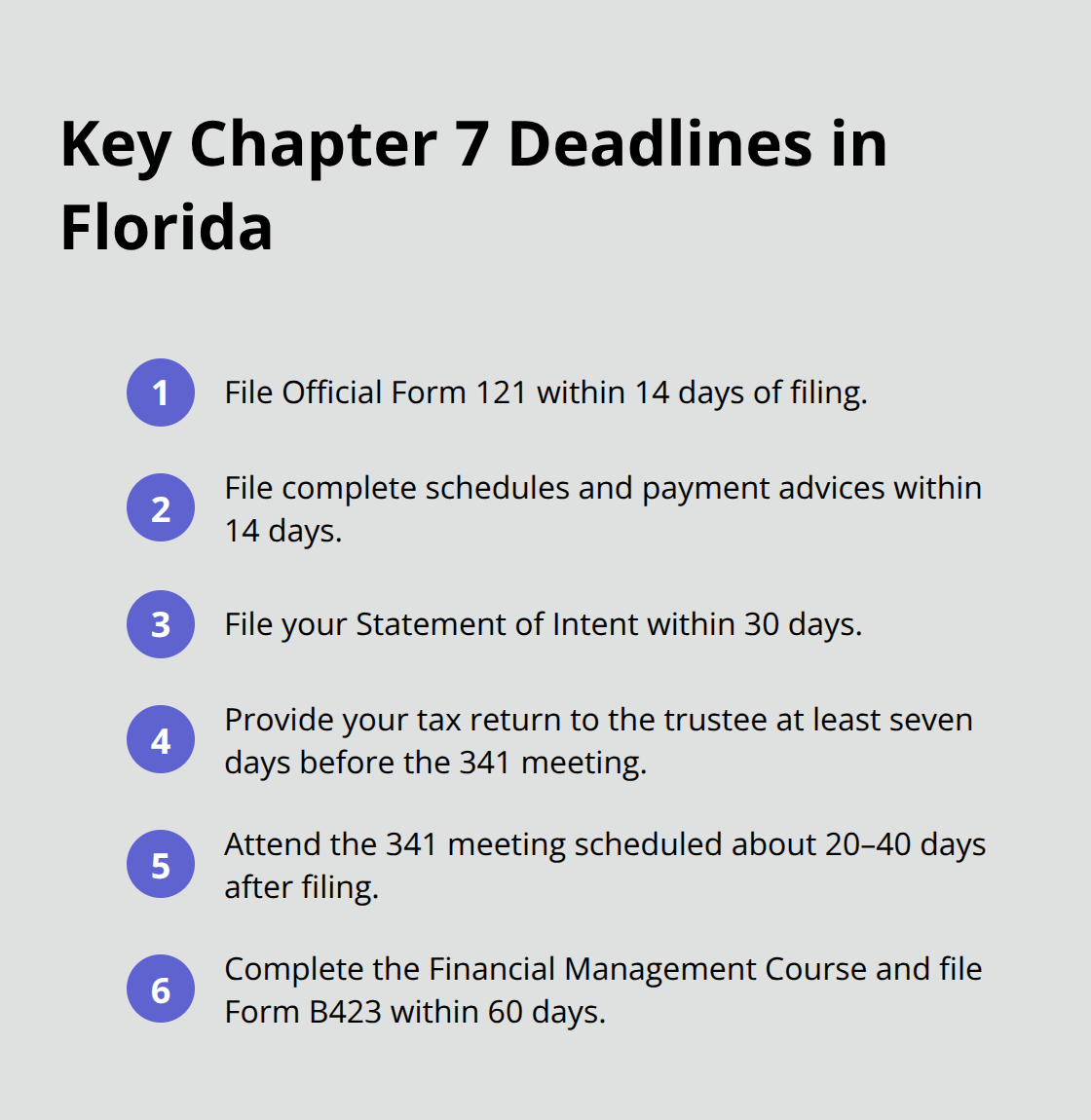
Deadlines are non-negotiable, and the court counts them from the first date set for your 341 meeting, not from your filing date. Your Statement of Social Security Number (Official Form 121) must be filed within 14 days after filing. Your complete lists of schedules and payment advices must also be filed within 14 days. Your Statement of Intent, describing whether you will surrender or retain property, must be filed within 30 days. Before the 341 meeting, provide your tax return to the trustee at least seven days in advance. After the meeting, complete your Financial Management Course and file Form B423 within 60 days, or your discharge stalls indefinitely. Write these dates on a physical calendar and set phone reminders for five days before each one.
Communicate Directly with Your Trustee
The trustee assigned to your case is not your enemy; this person reviews your petition, verifies your income and assets, and investigates whether you qualify for Chapter 7. Respond to every document request immediately. If the trustee asks for clarification on a schedule item, answer the same day. If you receive a notice of missing documents from the court, do not wait to respond. The Middle District of Florida saw 4,651 reaffirmation agreements filed in 2021, many because debtors communicated proactively with their trustees about which debts they wanted to keep. That communication prevented disputes and dismissals. Your trustee’s investigation into your case and the motions filed during this period determine whether your case survives to discharge.
How Dismissal Happens After You File in Florida
The Initial Review Period and Document Verification
From the moment you file your Chapter 7 petition in Florida, the clock starts ticking on multiple fronts simultaneously. The trustee assigned to your case has approximately 20 to 40 days to schedule your 341 meeting, according to the Southern District of Florida Chapter 7 Timeline. During this initial review period, the trustee examines your petition, schedules, and creditor matrix for completeness and accuracy. If documents are missing or improperly formatted, the court issues a notice of deficient documents, and you typically have 14 days to cure the problem. This is when most dismissals occur-not because debtors are dishonest, but because they miss the deadline to respond.
Income Verification and Means Test Evaluation
The trustee runs a background check on your income and assets during this phase. If your reported income exceeds the median for your household size in Florida, the trustee flags your case for means test review. Failing the means test triggers either dismissal or conversion to Chapter 13, depending on whether you can propose a viable repayment plan. The trustee investigation phase represents your most vulnerable window. The trustee holds broad authority to investigate whether you have disclosed all assets, whether your income calculations are accurate, and whether you qualify for Chapter 7 at all.
Fraud Detection and Asset Disclosure Issues
If the trustee suspects fraud-hidden bank accounts, unreported income, or asset concealment-a motion to dismiss for fraud is filed, and dismissal becomes nearly certain. The trustee also reviews your Statement of Intent to determine whether you plan to surrender or retain property with liens. If you stated you would retain a car or home but then fail to reaffirm the debt or perform within 30 days of the 341 meeting, the trustee may file a motion to dismiss for breach of the automatic stay or failure to comply with your obligations.
The Final Hearing and Dismissal Decision
The final hearing phase occurs after the trustee’s investigation concludes, typically 40 to 60 days after filing. If no motion to dismiss has been filed by this point, your case is moving toward discharge. However, if the trustee or a creditor has filed a motion to dismiss, you must attend a hearing to contest it. The judge will review the trustee’s findings, hear your explanation, and decide whether dismissal is warranted. At this hearing, bring documentation proving you disclosed all assets, your income calculations are correct, and you have complied with all court orders. If you cannot rebut the trustee’s findings, the judge grants the motion to dismiss, and your case is terminated without discharge.
Timeline Variations and Immediate Action Steps
The Administrative Office of the U.S. Courts reports that the median Chapter 7 case in 2021 closed in 113 days, but this timeline assumes full compliance with all requirements. Cases with dismissal motions filed stretch much longer, sometimes exceeding six months. Respond to every trustee request within 48 hours, attend the 341 meeting prepared with all documents, and complete the Financial Management Course by day 60. If you receive a notice of missing documents or a motion to dismiss, contact a Chapter 7 attorney immediately rather than attempting to respond alone. The difference between a dismissed case and a successful discharge often comes down to whether you treat trustee deadlines as absolute rather than negotiable.
Final Thoughts
Chapter 7 dismissal in Florida happens when you miss deadlines, hide assets, or fail to cooperate with your trustee. The chapter 7 dismissal timeline moves fast, and the court will not wait for you to catch up. Your case can be terminated without discharge in as little as 14 days if you fail to file required documents, or within 60 days if the trustee discovers fraud or noncompliance.
The most important takeaway is this: dismissal is preventable. You control whether you gather complete financial documentation, mark every deadline on your calendar, and respond immediately to trustee requests. You control whether you attend the 341 meeting, complete the Financial Management Course on time, and disclose all assets honestly (the court does not dismiss cases to punish you; dismissal happens because filers miss requirements they did not understand or did not take seriously enough).
If you are considering Chapter 7 bankruptcy in Florida, contact Harnage Law, PLLC today. The sooner you get professional guidance, the sooner you can file with confidence and move toward a fresh financial start. We at Harnage Law, PLLC help individuals and families in Florida overcome financial challenges by providing legal guidance throughout the bankruptcy process.