Florida residents facing overwhelming debt often struggle with choosing between Chapter 7 bankruptcy versus Chapter 13 bankruptcy. Both options provide debt relief, but they work differently and serve different financial situations.
We at Harnage Law, PLLC see clients daily who need clarity on which bankruptcy chapter fits their circumstances. The right choice depends on your income, assets, and long-term financial goals.
How Does Chapter 7 Bankruptcy Work in Florida
Chapter 7 bankruptcy provides the fastest debt relief option for Florida residents and completes the entire process within three to six months. The American Bankruptcy Institute reports approximately 352,000 Chapter 7 filings occurred in 2022, which makes it the most popular bankruptcy option nationwide.
Florida Income Requirements and Means Test
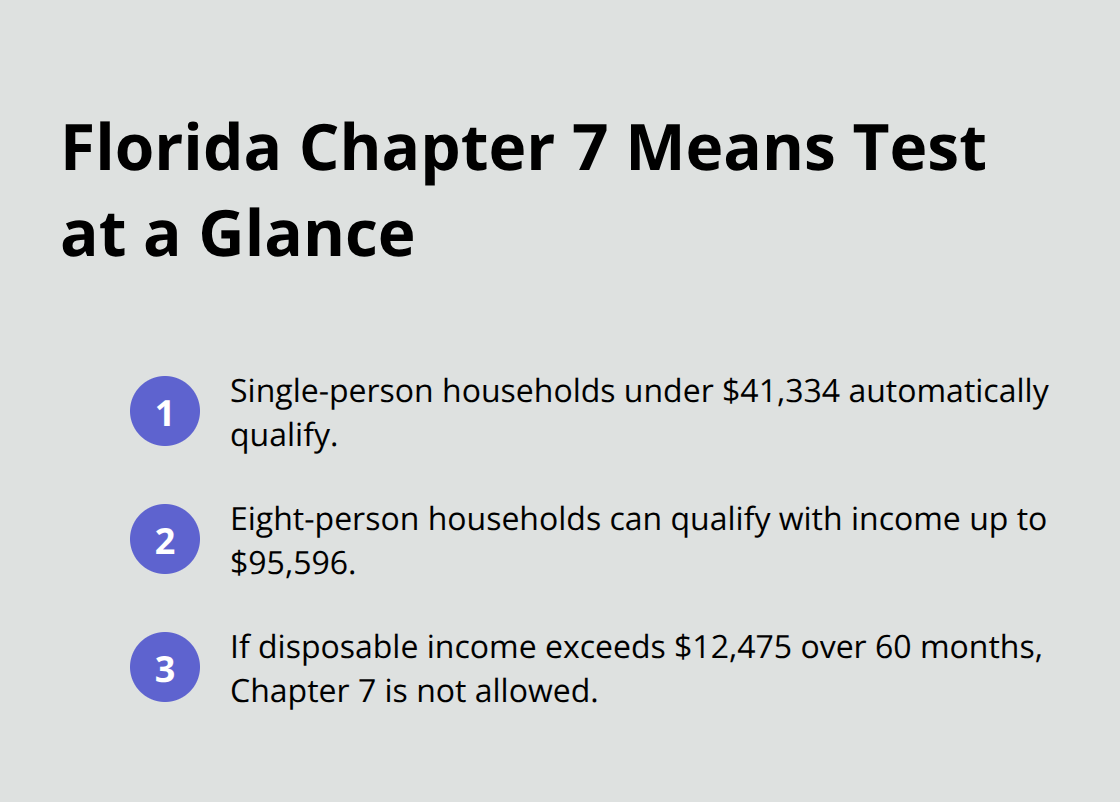
Florida residents must pass the means test to qualify for Chapter 7 bankruptcy. Single-person households that earn less than $41,334 annually automatically qualify, while eight-person households can earn up to $95,596. Income above these thresholds requires detailed means test calculations.
The test examines your last six months of income and compares it against allowed expenses based on IRS standards. If your disposable income exceeds $12,475 over 60 months, you cannot file Chapter 7. Veterans with debt accumulated during active duty and individuals with primarily business debts bypass the means test entirely.
Asset Protection Under Florida Law
Florida offers some of the strongest bankruptcy exemptions in the United States. The homestead exemption protects unlimited equity in your primary residence if you owned it for at least 1,215 days before you file. Motor vehicles receive protection up to $5,000 in equity.
Retirement accounts like 401(k)s and IRAs stay protected up to $1,711,975 per person for cases filed between April 2025 and March 2028. The wildcard exemption allows $1,000 additional protection for any property (or $4,000 if you don’t claim the homestead exemption).
Timeline and Debt Discharge Process
Most Chapter 7 cases result in no-asset proceedings, which means you keep all your property while you discharge unsecured debts. The filing fee costs $338, though payment plans are available for qualified individuals. After you file, an automatic stay immediately stops creditor harassment and wage garnishments, and lawsuits.
The trustee meeting occurs 20-40 days after you file, where you answer questions about your financial situation under oath. Debt discharge typically happens 60-90 days later and eliminates credit card debts, medical bills, and qualifying tax debts permanently.
When Chapter 7 May Not Be the Right Choice
Chapter 7 works best for individuals who want quick debt relief and don’t need to keep secured property like homes with mortgages. However, some situations require different approaches to debt relief and asset protection.
How Does Chapter 13 Bankruptcy Work in Florida
Chapter 13 bankruptcy operates as a reorganization plan that allows Florida residents to keep their assets while they repay creditors through a court-approved payment plan that lasts three to five years. Unlike Chapter 7’s quick discharge, Chapter 13 requires steady income and commitment to monthly payments that range from $100 to several thousand dollars (depending on your disposable income and debt amount).
Monthly Payment Plans and Court Approval
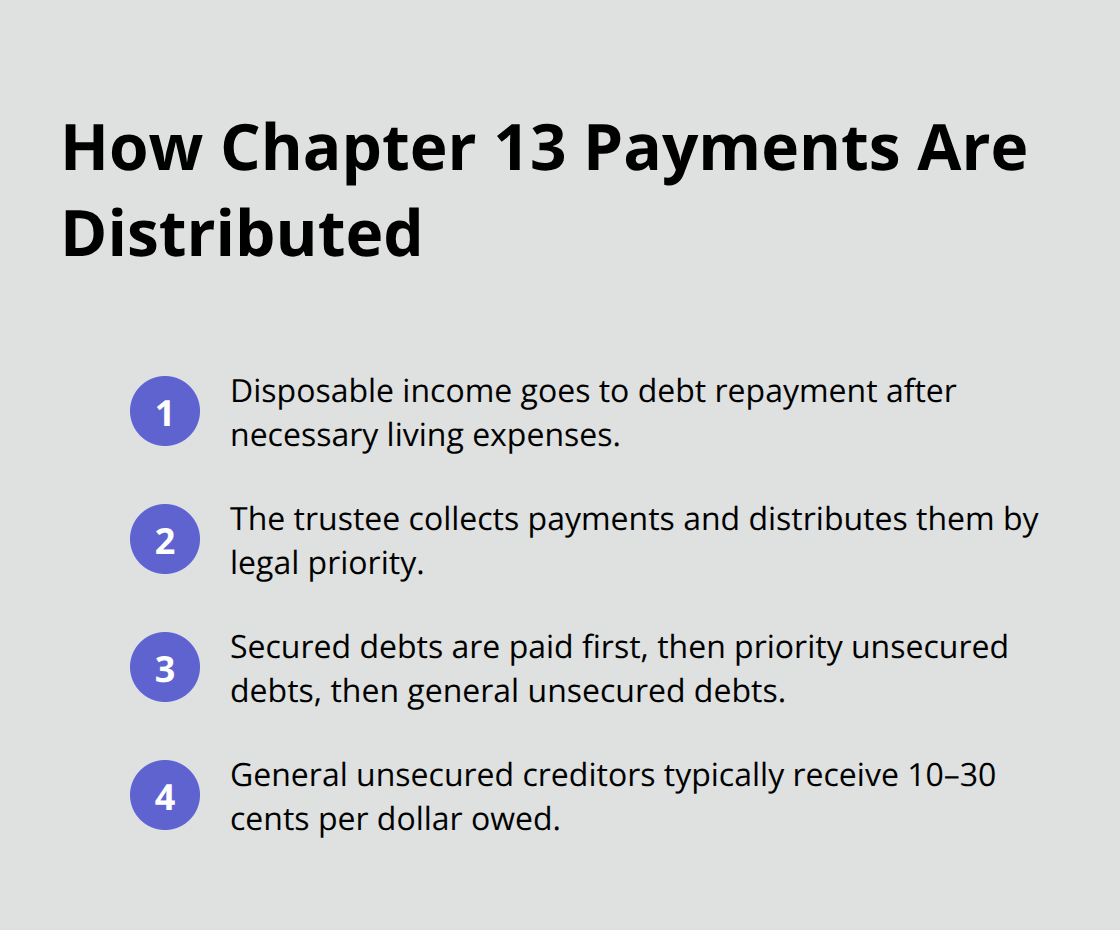
Florida Chapter 13 plans must dedicate all disposable income toward debt repayment after you cover necessary living expenses based on IRS standards. The court trustee collects your monthly payment and distributes funds to creditors according to priority. Secured debts like mortgages receive payment first, followed by priority unsecured debts like taxes, then general unsecured debts receive the remaining funds. Most plans pay general creditors only 10-30 cents per dollar owed, though higher-income filers may pay significantly more.
Debt Reorganization and Asset Retention
Chapter 13 excels at stopping foreclosure and repossession while it allows you to catch up on missed payments through the plan. You can strip second mortgages that exceed your home’s value and reduce car loans to the vehicle’s current market value if you’ve owned it longer than 910 days. The plan also allows cramdown of other secured debts, which potentially saves thousands on overfinanced assets. Priority debts like recent taxes and child support must be paid in full, but the plan spreads these payments over 36-60 months instead of requiring immediate lump sums.
Superior Asset Protection Benefits
Florida’s unlimited homestead exemption becomes even more powerful in Chapter 13 because you never face asset liquidation. You can protect non-exempt property by paying its value through the plan rather than losing it to a trustee. High-income earners who fail the Chapter 7 means test often find Chapter 13 provides better outcomes than debt consolidation or settlement companies, which typically charge 20-25% fees while they offer no legal protection from creditors.
These distinct advantages make Chapter 13 particularly attractive for specific financial situations, but the differences between both bankruptcy chapters extend beyond payment structures and asset protection.
Key Differences Between Chapter 7 and Chapter 13 in Florida
Income Thresholds Determine Your Bankruptcy Options
Florida’s median income creates a clear line between your bankruptcy choices. Single households that earn under $41,334 annually qualify for Chapter 7 automatically, while those above this threshold face the means test calculation. Chapter 13 accepts all income levels but requires sufficient disposable income to fund a meaningful payment plan. Higher earners who fail Chapter 7’s means test often find Chapter 13 their only bankruptcy option, though this limitation becomes advantageous for asset protection.
Asset Treatment Differs Dramatically Between Chapters
Chapter 7 liquidates non-exempt assets to pay creditors, though Florida’s generous exemptions protect most property for average households. Chapter 13 allows retention of all assets regardless of exemption status, but non-exempt property value must be paid to creditors through the plan. Florida’s unlimited homestead exemption works powerfully in both chapters (protecting primary residences completely), yet Chapter 13 provides superior protection for luxury items, business equipment, and investment properties that exceed exemption limits. High-value asset owners consistently choose Chapter 13 to avoid liquidation risks.
Credit Impact and Recovery Timelines Vary Significantly
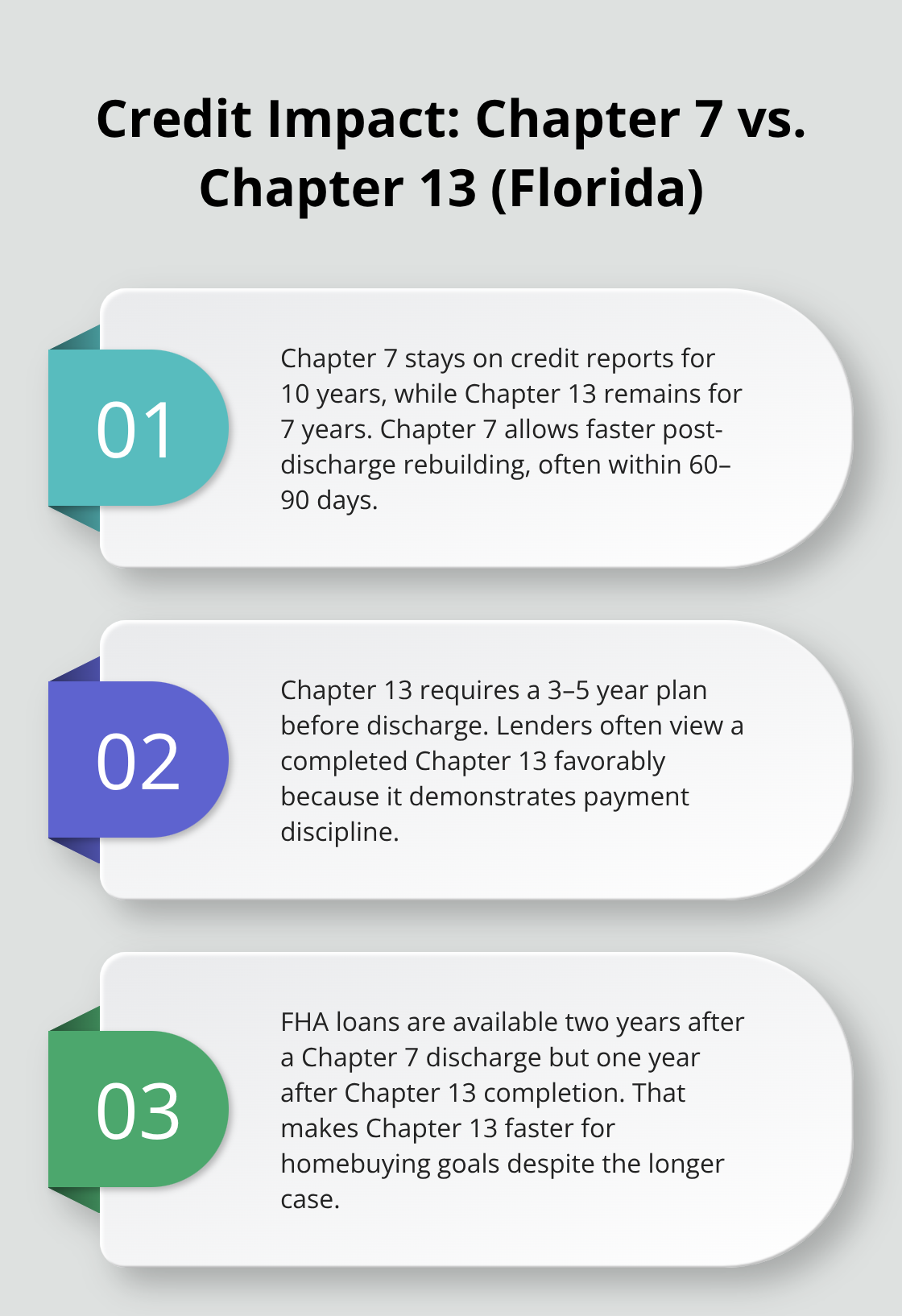
Chapter 7 stays on credit reports for ten years but allows immediate credit rebuilding after discharge (typically within 60-90 days of filing). Chapter 13 remains visible for seven years yet requires 3-5 years of plan completion before discharge occurs. Mortgage lenders often view completed Chapter 13 plans more favorably than Chapter 7 discharges because they demonstrate payment discipline. FHA loans become available two years after Chapter 7 discharge versus one year after Chapter 13 completion, making Chapter 13 faster for homebuying goals despite longer case duration.
Timeline and Process Complexity Differences
Chapter 7 completes within three to six months with minimal court interaction beyond the trustee meeting. Chapter 13 requires monthly payments for 36-60 months with ongoing court supervision and potential plan modifications. Chapter 7 filers attend one trustee meeting and wait for discharge, while Chapter 13 participants must maintain steady income and payment compliance throughout the entire plan period. Court approval is required for major financial decisions during Chapter 13 cases (such as taking new loans or selling assets).
Final Thoughts
Chapter 7 bankruptcy versus Chapter 13 bankruptcy decisions depend on your income level, asset portfolio, and long-term financial objectives. Florida residents with income below state median thresholds typically benefit from Chapter 7’s rapid debt elimination process. Higher earners often find Chapter 13’s comprehensive asset protection justifies the extended payment commitment.
Your choice hinges on whether you must retain non-exempt property, resolve mortgage arrearages, or eliminate junior liens. Chapter 7 serves individuals who want immediate debt relief without complicated asset considerations. Chapter 13 fits people with consistent income who need structured debt reorganization over multiple years.
Bankruptcy law complexity demands professional legal guidance for optimal outcomes. We at Harnage Law, PLLC analyze each client’s unique financial situation and protect their interests during the legal process (our firm concentrates on Chapter 7 cases to help clients eliminate qualifying debts while stopping creditor harassment). Contact our bankruptcy attorneys to discuss your circumstances and identify which bankruptcy option offers the most effective path to financial recovery.