Chapter 7 bankruptcy offers Florida residents a powerful path to eliminate overwhelming debt and start fresh financially. Understanding the bankruptcy rules Chapter 7 requires can make the difference between a successful filing and costly mistakes.
We at Harnage Law, PLLC see how proper preparation transforms lives. The process involves strict eligibility requirements, asset protection strategies, and precise documentation that must be handled correctly.
Who Qualifies for Chapter 7 Bankruptcy in Florida
Income Limits and Means Test Requirements
Florida residents must pass the means test to qualify for Chapter 7 bankruptcy. The means test compares your current monthly income to Florida’s median income levels. For 2024, the median income for a single person in Florida is $56,473, while a family of four has a median income of $89,739 according to the U.S. Census Bureau.
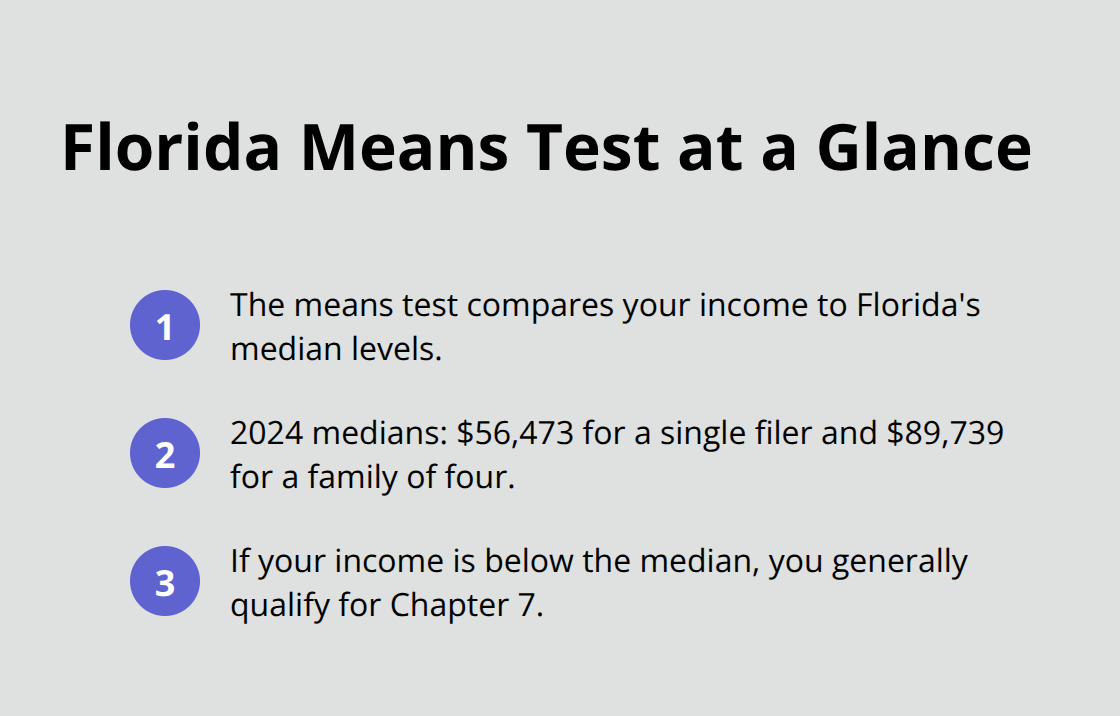
If your income falls below these thresholds, you automatically qualify for Chapter 7. Income above the median triggers a detailed calculation of your disposable income that uses IRS-allowed expenses. The calculation includes housing, transportation, food, and other necessary expenses. Debtors who earn above the median can still qualify if their disposable income after allowed expenses proves insufficient to fund a Chapter 13 repayment plan.
Dischargeable Debts Under Chapter 7
Chapter 7 eliminates most unsecured debts including credit cards, medical bills, personal loans, and utility bills. Student loans remain non-dischargeable except in cases of undue hardship, which requires proof of three strict criteria that the Brunner test establishes. Child support, alimony, recent tax debts, and criminal restitution cannot be discharged under any circumstances.
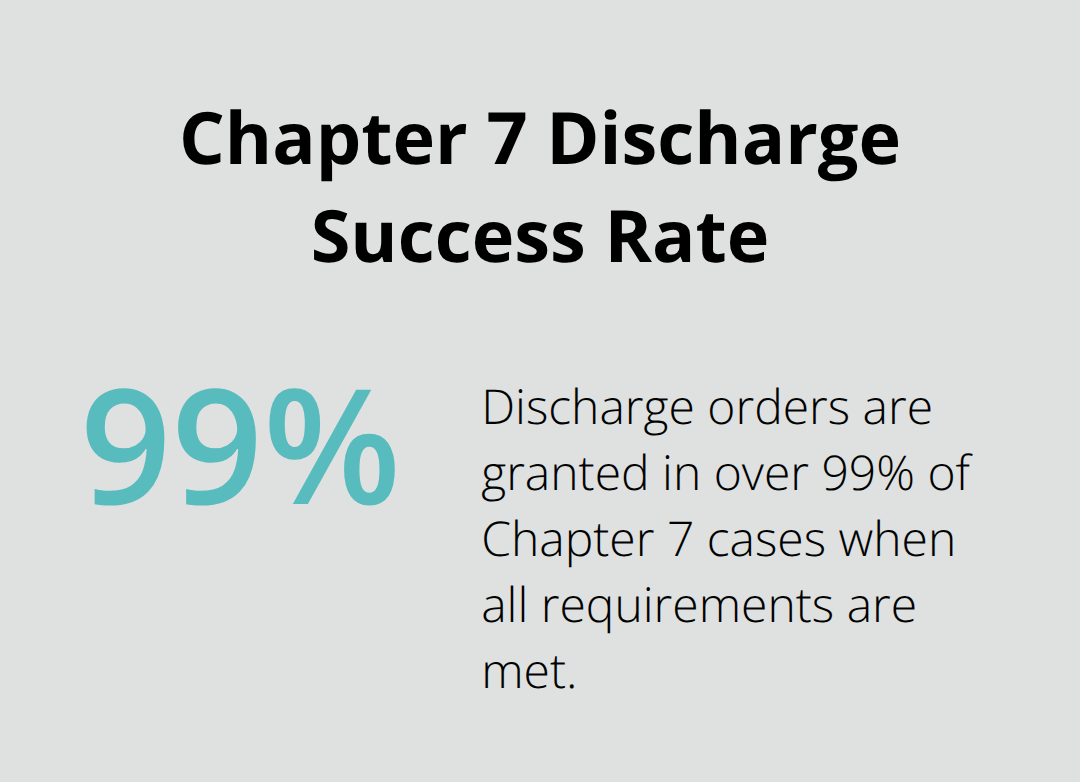
The discharge process typically takes four to six months after you file your petition. Courts grant discharge orders in over 99% of Chapter 7 cases when debtors follow all requirements and provide accurate information.
Florida Property Exemptions
Florida’s homestead exemption provides unlimited protection for primary residences on up to half an acre in municipalities or 160 acres in rural areas (provided you’ve owned the property for at least 1,215 days before you file). The state’s $5,000 vehicle exemption protects one car, while retirement accounts receive protection up to $1,711,975 per person.
Florida’s wildcard exemption allows an additional $1,000 in personal property protection, which increases to $4,000 if you don’t use the homestead exemption. These exemptions help you keep essential assets while you eliminate debt through the bankruptcy process, which sets the foundation for understanding the specific steps and documentation required to file your case successfully.
How Does Filing Chapter 7 Work in Florida
Required Documents and Forms
Chapter 7 bankruptcy in Florida demands completion of 22 official bankruptcy forms within strict deadlines. The petition package includes your Voluntary Petition, Summary of Assets and Liabilities, Schedules A through J that detail your property and debts, Statement of Financial Affairs, and the critical Form B122A-1 for means test calculations. You must submit a Certificate of Credit Counseling completed within 180 days before you file, plus a legible photocopy of your government-issued photo ID. The court requires a $338 filing fee, which you can pay in installments if the court approves, or request a waiver if your income falls below 150% of federal poverty guidelines.
Immediate Protection and Creditor Contact Rules
The automatic stay takes effect the moment you file your petition and immediately stops all collection activities (lawsuits, wage garnishments, and harassing phone calls cease instantly). This protection applies to secured debts like mortgages and car loans, unsecured debts, and most government collection actions. Creditors who violate the automatic stay face contempt of court charges and potential monetary sanctions. The stay remains in effect until your case closes, typically four to six months later, which provides breathing room to complete the bankruptcy process without creditor interference.
Trustee Responsibilities and Creditors Meeting
The U.S. Trustee appoints a case trustee within days of your petition to review your documents for accuracy and identify any nonexempt assets for liquidation. You must attend the Meeting of Creditors, typically scheduled 20 to 40 days after you file, where the trustee questions you under oath about your financial affairs, income, and property. Creditors rarely attend these meetings, which last 10 to 15 minutes for straightforward cases. The trustee determines whether your case qualifies as a no-asset case (all property is exempt) or an asset case that requires liquidation of nonexempt property to pay creditors.
While the Chapter 7 process follows established procedures, many Florida residents make preventable errors that can jeopardize their fresh start or lead to case dismissal.
Common Mistakes That Can Destroy Your Chapter 7 Case in Florida
Hidden Assets and Income Misrepresentation
Florida bankruptcy courts impose severe penalties for concealment of assets or income during Chapter 7 proceedings. The U.S. Trustee Program reports that asset concealment represents the most common form of bankruptcy fraud, with criminal penalties that include up to five years in federal prison and $250,000 in fines. Debtors must disclose all property they owned within four years before they file, which includes transferred assets, closed bank accounts, and income from all sources.
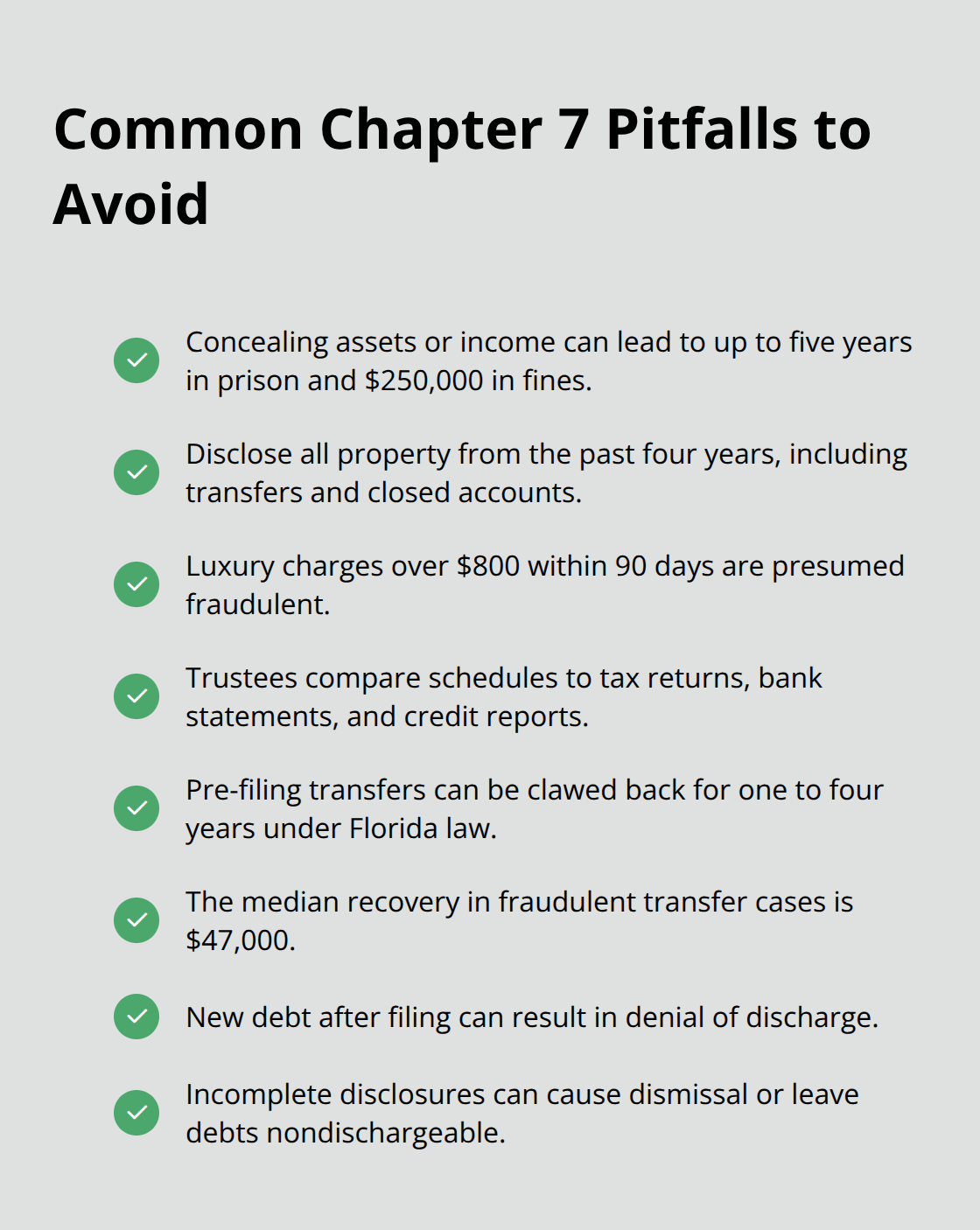
Courts scrutinize luxury purchases made within 90 days before you file. They presume fraud for charges that exceed $800 to a single creditor for luxury goods or services. The bankruptcy trustee cross-references your schedules against tax returns, bank statements, and credit reports to identify discrepancies that could indicate fraud.
Pre-Filing Asset Transfers
Property transfers to family members or friends before you file trigger fraudulent transfer investigations that can result in case dismissal and criminal charges. Florida law allows trustees to recover transfers made within one year if debtors intended them to hinder creditors (with lookback periods that extend to four years for transfers to insiders like relatives). The median recovery amount in fraudulent transfer cases reaches $47,000 according to American Bankruptcy Institute data.
New Debt After Filing
New debt after you file but before discharge violates court orders and can lead to denial of discharge for all debts. Credit card purchases that exceed $800 for luxury items within 90 days of your petition create presumptions of fraud. These presumptions shift the burden of proof to debtors to demonstrate legitimate need for the purchases.
Incomplete Financial Disclosures
Courts require complete and accurate financial information in all bankruptcy schedules. Missing bank accounts, unreported income sources, or omitted creditors can result in case dismissal or denial of discharge. The trustee compares your petition against public records, tax filings, and creditor reports to verify accuracy. Debtors who fail to list all debts may find those omitted debts remain non-dischargeable after the case closes.
Final Thoughts
Chapter 7 bankruptcy provides Florida residents with powerful debt relief that eliminates credit cards, medical bills, and personal loans within four to six months. The automatic stay immediately stops creditor harassment, wage garnishments, and lawsuits while it protects your exempt property through Florida’s generous homestead and vehicle exemptions. Mastery of bankruptcy rules Chapter 7 requires navigation of complex means test calculations, extensive documentation requirements, and strict disclosure obligations.
The process demands precision in completion of 22 official forms and adherence to court deadlines that can determine your case’s success or failure. Courts require complete accuracy in all financial disclosures, and any mistakes can result in case dismissal or denial of discharge. Florida’s bankruptcy system offers significant benefits but punishes debtors who fail to follow proper procedures (particularly those who attempt to hide assets or provide incomplete information).
We at Harnage Law, PLLC guide Florida families through every step of the Chapter 7 process. Our firm stops creditor harassment, prevents wage garnishments, and helps protect your assets while you rebuild your financial future. Professional legal guidance transforms this complex process into a manageable path toward financial freedom that protects your rights and maximizes your debt relief benefits.