
Getting your Chapter 7 discharge proof is one of the most important steps in your bankruptcy journey. This document officially confirms that qualifying debts have been eliminated, giving you the fresh financial start you’ve earned.
At Harnage Law, PLLC, we help clients understand exactly what discharge means and how to verify you’ve received it. This guide walks you through obtaining your discharge documentation, avoiding common delays, and taking action once your discharge is final.
What Chapter 7 Discharge Actually Means in Florida
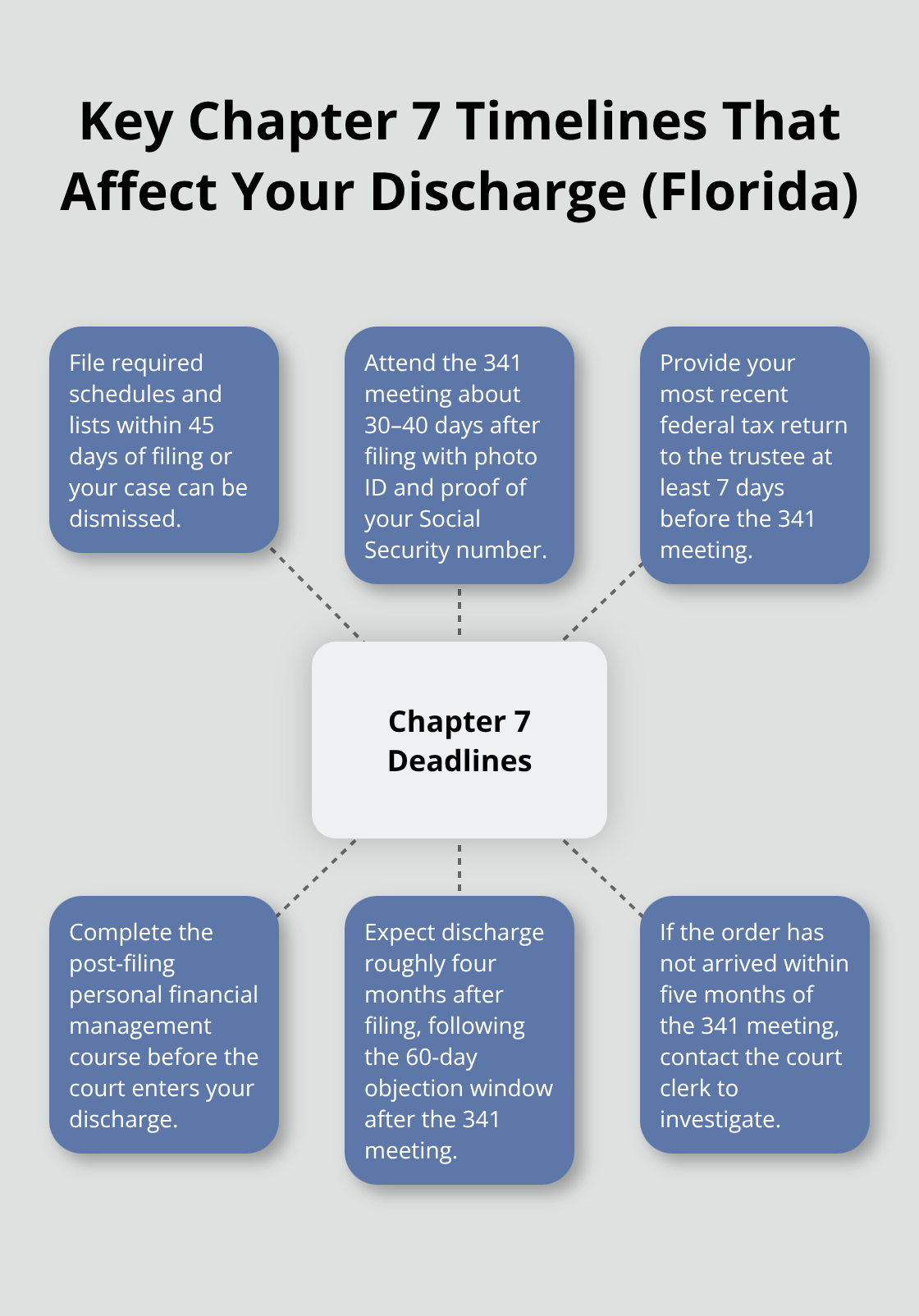
A Chapter 7 discharge is a permanent court order that erases your obligation to pay qualifying debts. This is not a suggestion or a temporary relief-it is a binding legal injunction that prohibits creditors from pursuing collection actions against you for those debts. According to 11 U.S.C. § 727, once the court grants your discharge, creditors cannot sue you, call you, or send collection letters for discharged debts. The discharge typically arrives about four months after you file, following your 341 meeting and a 60-day objection window. If no creditor, trustee, or U.S. trustee files an objection during this period, the discharge becomes automatic. This means most debtors receive their discharge without additional court hearings or complications. The discharge order is mailed to you, your creditors, and the trustee, confirming in writing that specified debts have been eliminated.
Which Debts Disappear Under Chapter 7
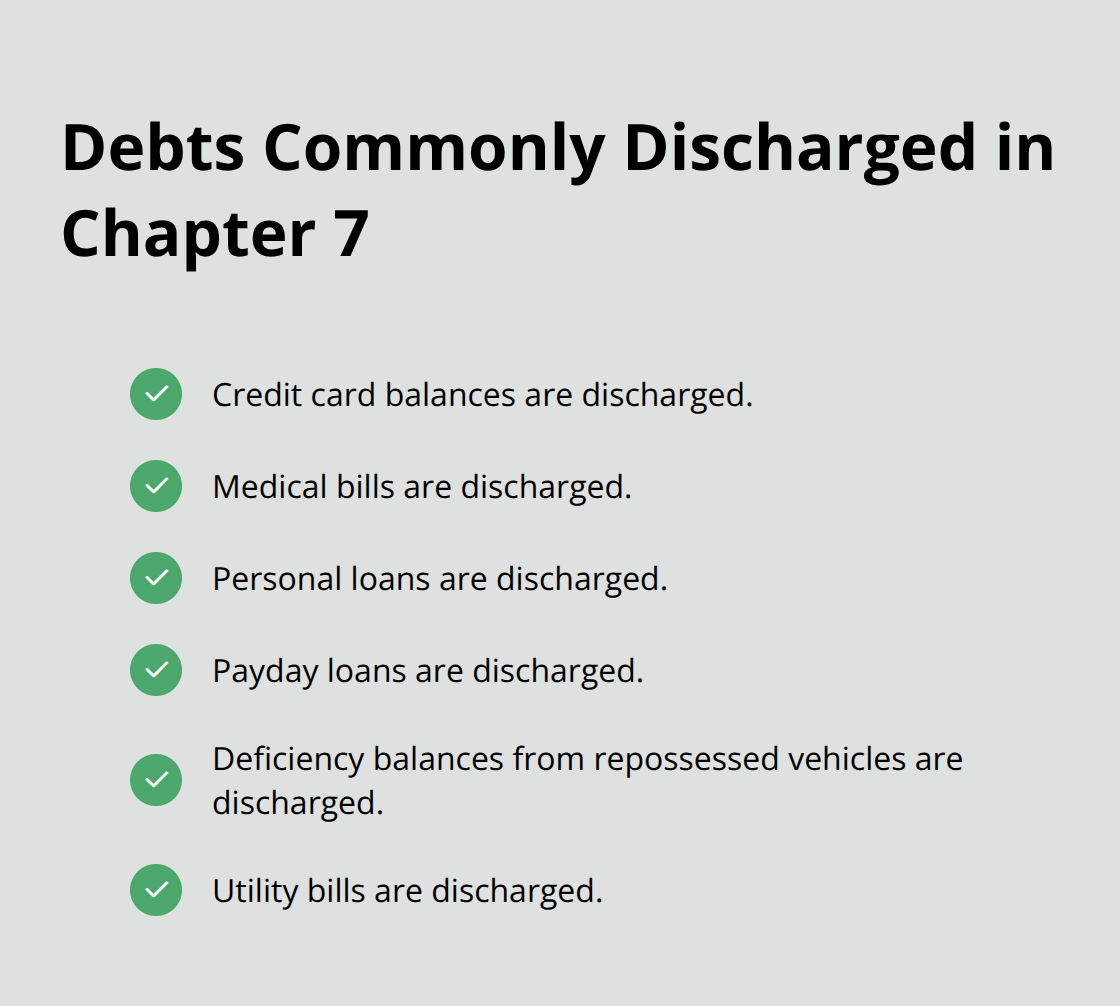
Credit card balances, medical bills, personal loans, and most unsecured debts vanish with your discharge. These are the debts that have no collateral backing them-no car, home, or other asset securing the creditor’s claim. Payday loans, deficiency balances from repossessed vehicles, and utility bills are also discharged in most cases. However, your discharge order does not specify which debts are nondischargeable; that determination comes from federal law under 11 U.S.C. § 523(a).
This distinction matters because creditors have the burden of proving that a debt falls outside the discharge, not the other way around. If a creditor wants to argue that a debt should survive bankruptcy-such as a debt for fraud or willful injury-they must file an adversary proceeding and convince the court. Many debtors mistakenly assume all their debts disappear, then discover later that certain obligations remain. Accuracy in your initial bankruptcy schedules prevents surprises after discharge.
Debts That Survive Your Discharge
Most federal income taxes from the past three years remain nondischargeable, as do recent state taxes. Student loans backed by the federal government or guaranteed by it typically survive Chapter 7 unless you can prove undue hardship through an adversary proceeding-a high legal bar that few debtors meet. Child support and alimony obligations never disappear in bankruptcy, regardless of the chapter you file. Criminal fines, court-ordered restitution, and certain penalties imposed by government agencies also persist after discharge. Debts for willful or malicious injury to another person, debts arising from driving under the influence, and certain condominium or homeowners association fees are nondischargeable. Debts you fail to list on your schedules may also survive unless the creditor had actual notice of your bankruptcy filing. This is why working with legal guidance to ensure complete and accurate scheduling matters-omissions can cost you thousands in debts that should have been eliminated. Liens on property survive discharge as well, meaning a creditor can still foreclose on a home or repossess a vehicle if you owe a secured debt, even though the personal liability for that debt is eliminated.
What Happens Next With Your Discharge
Once you understand what your discharge covers and what it does not, you need to obtain the actual documentation that proves your release. The discharge order serves as your official proof, and knowing where to find it and how to verify it protects you from future collection attempts.
Getting Your Discharge Order From the Court
Your discharge order arrives automatically by mail once the court issues it, typically four months after your 341 meeting. The court mails it to you, your creditors, and your trustee simultaneously. You do not need to request it or take any action to receive it. However, many debtors miss this document when it arrives or misplace it later, which creates problems if a creditor ignores the discharge and attempts collection.
Protecting Your Discharge Documentation
Store your discharge order in a safe, easily accessible location such as a fireproof safe or a dedicated folder. Take a photo or scan of it and store a digital copy on your computer or cloud storage. This protects you if the original is lost or damaged. The discharge order serves as your proof that the court has eliminated your qualifying debts, and you may need to present it to dispute fraudulent collection attempts or verify your release status with creditors months or even years after discharge.
Finding Your Discharge on the Court Docket
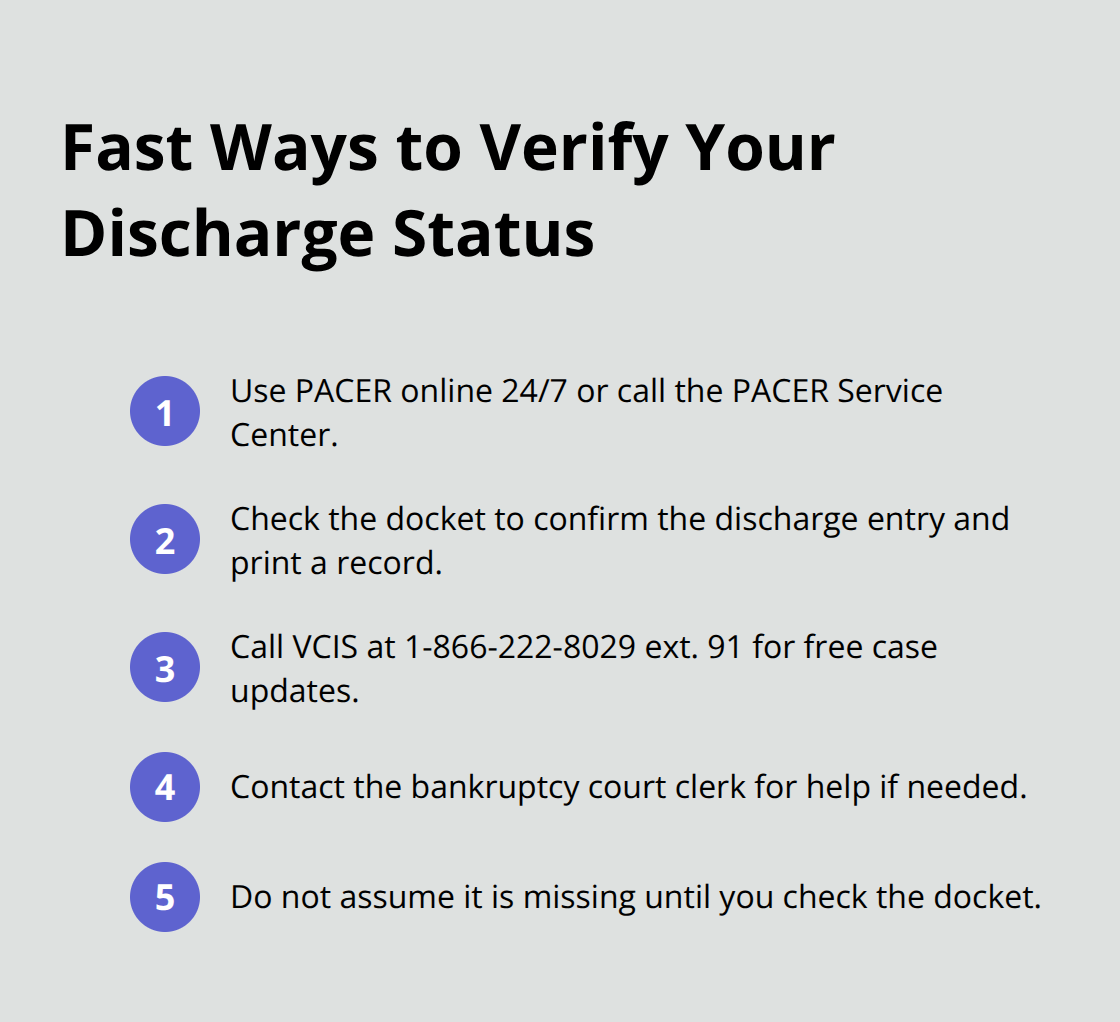
If your discharge has not arrived within five months of your 341 meeting, contact the bankruptcy court clerk immediately. You can reach the clerk’s office by phone during business hours or visit in person if you are in Florida. The Northern District of Florida, Middle District of Florida, and Southern District of Florida all maintain clerk offices in Jacksonville, Orlando, Tampa, and other locations.
Access your case status and discharge information through PACER, the Federal Judiciary’s electronic filing system, which operates 24/7 at pacer.uscourts.gov or by calling the PACER Service Center at 1-800-676-6856. PACER shows whether your discharge has been entered on the court docket and provides an official record you can print. Alternatively, call the Voice Case Information System at 1-866-222-8029 extension 91 to hear current case information at no charge. Many debtors overlook these free resources and instead assume their discharge is missing when it simply has not been retrieved from the docket.
Understanding What Your Discharge Order Contains
The discharge order itself is a straightforward document that states your case number, the date of discharge, and confirmation that you have been granted relief of debts under 11 U.S.C. § 727. It does not list which debts are discharged and which are not. That determination comes from federal law and any separate court rulings in adversary proceedings.
Your discharge notice from the court also includes information about nondischargeable debts and your rights after discharge. Read this notice carefully and keep it with your discharge order. Understanding what your discharge covers and what it does not prevents confusion when creditors contact you after the discharge becomes final, and it prepares you for the next steps in rebuilding your financial life.
Common Mistakes That Stop Your Florida Chapter 7 Discharge
Missing Court Deadlines and Required Filings
The bankruptcy court gives you 45 days from the filing date to submit your schedules, statement of financial affairs, and mailing matrix listing all creditors. If you miss this deadline, the court dismisses your case automatically, meaning no discharge, no debt relief, and no fresh start. You lose your filing fee and must start over if you want bankruptcy protection. The court does not send reminders or second chances.
Your Chapter 7 trustee and the U.S. Trustee program track these deadlines closely, and the system operates on strict timelines.
Within 10 days of filing, the court issues a Notice of Chapter 7 Bankruptcy Case that spells out every deadline you must meet. Many people file without an attorney and overlook this notice entirely, thinking they can handle the paperwork casually. This is a serious mistake. The 341 meeting of creditors happens about 30 to 40 days after you file, and you must attend in person with photo identification and proof of your Social Security number. If you fail to show up, the trustee can dismiss your case.
Providing Tax Documentation to Your Trustee
You must provide your trustee with a copy of your most recent federal income tax return or transcript at least seven days before the 341 meeting. The U.S. Trustee program requires this documentation to verify your income and expenses. If you skip this step, discharge delays by weeks or months while the trustee requests the missing documents. The trustee cannot move forward without proof of your financial situation, and the court will not enter your discharge until this requirement is satisfied.
Completing the Personal Financial Management Course
Federal law requires you to finish an instructional course in personal financial management after filing but before the discharge order is issued. This requirement is not optional and not negotiable. The court will not enter your discharge until the trustee receives proof that you completed the course through an approved provider. Many debtors complete credit counseling before filing (which is required) but then forget about the post-filing course requirement and assume they are done.
The discharge gets delayed indefinitely while the trustee waits for proof of course completion. Some debtors never complete the course and never receive a discharge. You can find approved providers through the U.S. Trustee program website, and most courses cost between 50 and 200 dollars and take a few hours to complete. The course covers budgeting, credit management, and financial planning tailored to people emerging from bankruptcy.
Avoiding New Debt Before Discharge Arrives
Taking on new debt between filing and discharge creates serious problems. If you incur new debt during this period, creditors may argue that you obtained credit through fraud or misrepresentation, which can trigger an objection to your discharge under 11 U.S.C. § 727. Opening new credit accounts, taking out loans, or making large purchases on credit signals to the trustee and creditors that you are not taking your bankruptcy seriously. This invites scrutiny and can result in an adversary proceeding that delays or denies your discharge entirely.
Live on cash, use debit cards, and avoid any new credit obligations until your discharge order arrives in writing and is final. The period between filing and discharge (typically four months) requires financial discipline. Any new credit activity can jeopardize the relief you worked to obtain, so treat this time as a transition phase where you operate on existing resources only.
Final Thoughts
Confirming your Chapter 7 discharge proof requires checking PACER at pacer.uscourts.gov or calling 1-800-676-6856 to verify that your discharge order appears on the court docket. Store your discharge order in a safe location and maintain a digital copy as backup protection. Contact your bankruptcy court clerk if five months have passed since your 341 meeting and you have not received the discharge order in writing.
Once your discharge arrives, your obligations to qualifying debts become permanently eliminated and creditors cannot pursue collection actions, file lawsuits, or contact you about discharged debts. Review your credit report from all three bureaus to confirm that discharged debts now show a zero balance and that creditors have stopped reporting collection activity. If a creditor ignores the discharge and attempts collection anyway, you can file a motion to reopen your case and enforce the discharge injunction against them.
Rebuilding your credit immediately after discharge strengthens your financial recovery and opens doors to better lending terms within months. Open a secured credit card with a cash deposit and pay the balance in full each month to establish positive payment history, keep credit utilization below 10 percent of your total limit, and avoid payday loans or co-signing obligations that could trap you in debt again. We at Harnage Law, PLLC help clients navigate every stage of Chapter 7 bankruptcy and answer questions about your discharge status or credit recovery-contact us for a consultation to discuss your situation and next steps.