Debt can feel suffocating, but Chapter 7 bankruptcy in Florida offers a legitimate path to financial relief. The process wipes out qualifying debts and gives you a genuine opportunity to rebuild.
We at Harnage Law, PLLC understand the stress that comes with overwhelming debt. This guide walks you through how Chapter 7 works, what you stand to gain, and the mistakes to avoid along the way.
How Chapter 7 Bankruptcy Works in Florida
The Chapter 7 Timeline and Automatic Stay
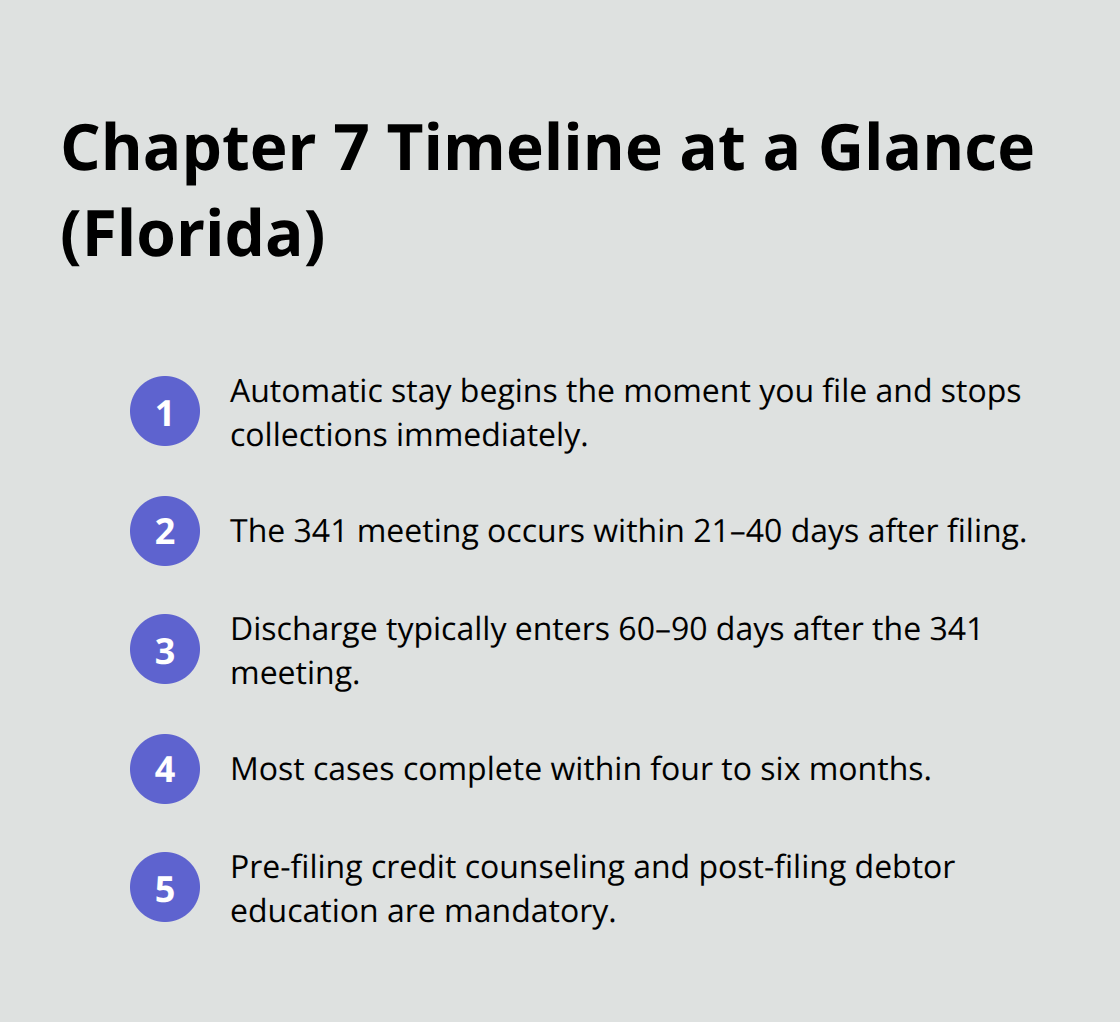
Chapter 7 bankruptcy in Florida operates through a structured process that typically wraps up within four to six months. The moment you file your petition, an automatic stay takes effect, which halts collection calls, wage garnishments, lawsuits, and most repossession attempts immediately. This breathing room is real and significant.
Filing Requirements and the Means Test
You’ll need to file detailed schedules listing every asset, debt, expense, and income source. The U.S. Bankruptcy Court for the Southern District of Florida requires you to complete a means test, which compares your household income against the Florida median income for your household size. If your income falls at or below that median, you generally qualify for Chapter 7. If it exceeds the median, the court evaluates your expenses and debts to determine eligibility.
The 341 Meeting and Asset Protection
Within 21 to 40 days after filing, you’ll attend a 341 meeting of creditors, typically conducted via Zoom. This meeting is straightforward-the trustee and creditors ask questions about your finances under oath, but most meetings last only a few minutes. The trustee’s job is to locate and liquidate any nonexempt assets to pay creditors. However, Florida law offers substantial protections through exemptions that allow you to keep your primary home with unlimited equity (if you’ve owned it for at least 1,215 days), one vehicle with up to $5,000 in equity, retirement accounts up to $1,711,975 per person for cases filed between April 1, 2025 and March 31, 2028, and up to $4,000 in personal property. Most Chapter 7 cases in Florida are no-asset cases, meaning there’s little or nothing for the trustee to sell because your property is fully protected by exemptions.
Discharge and Nondischargeable Debts
The discharge typically arrives within 60 to 90 days after the 341 meeting if no creditor objects. Once discharged, you’re released from personal liability for most debts-credit cards, medical bills, personal loans, and utility bills vanish permanently. What cannot be discharged matters just as much. Child support, alimony, most student loans, recent tax debts, criminal fines, and debts incurred after filing survive Chapter 7. Co-signers on your debts remain liable even after your discharge.
Costs, Counseling, and Documentation
Filing fees total $338 in the Southern District of Florida, and you can request to pay in installments with a minimum initial payment of half the fee, or apply to waive the fee entirely using Official Bankruptcy Form 103B if your income qualifies under poverty guidelines. Before filing, you must complete credit counseling from an approved agency listed on the U.S. Trustee’s website, and within 60 days after your 341 meeting, you must complete a personal financial management course to obtain your discharge. The accuracy of your paperwork determines everything-misrepresenting assets or debts can result in loss of assets or penalties. Florida residents who’ve filed Chapter 7 in the past eight years or Chapter 13 in the past six years face waiting periods before filing again. Your future earnings after discharge belong entirely to you since they’re not used to repay discharged debts, giving you genuine control over rebuilding your financial life.
Understanding these mechanics sets the stage for recognizing the tangible benefits that Chapter 7 delivers to Florida residents facing overwhelming debt.
What You Actually Gain From Chapter 7 in Florida
Stopping Creditor Contact Permanently
The automatic stay that activates when you file Chapter 7 stops collection calls immediately, but the real power of this bankruptcy lies in three concrete outcomes that reshape your financial position. Creditors must cease all contact-phone calls, letters, lawsuits, wage garnishments, and repossession attempts all halt within days of filing. The Federal Trade Commission reports that roughly 43 million Americans carry debt in collections, and most face calls that arrive multiple times daily. Chapter 7 silences this noise permanently and gives you breathing room to stabilize your finances.
Keeping What Matters Most
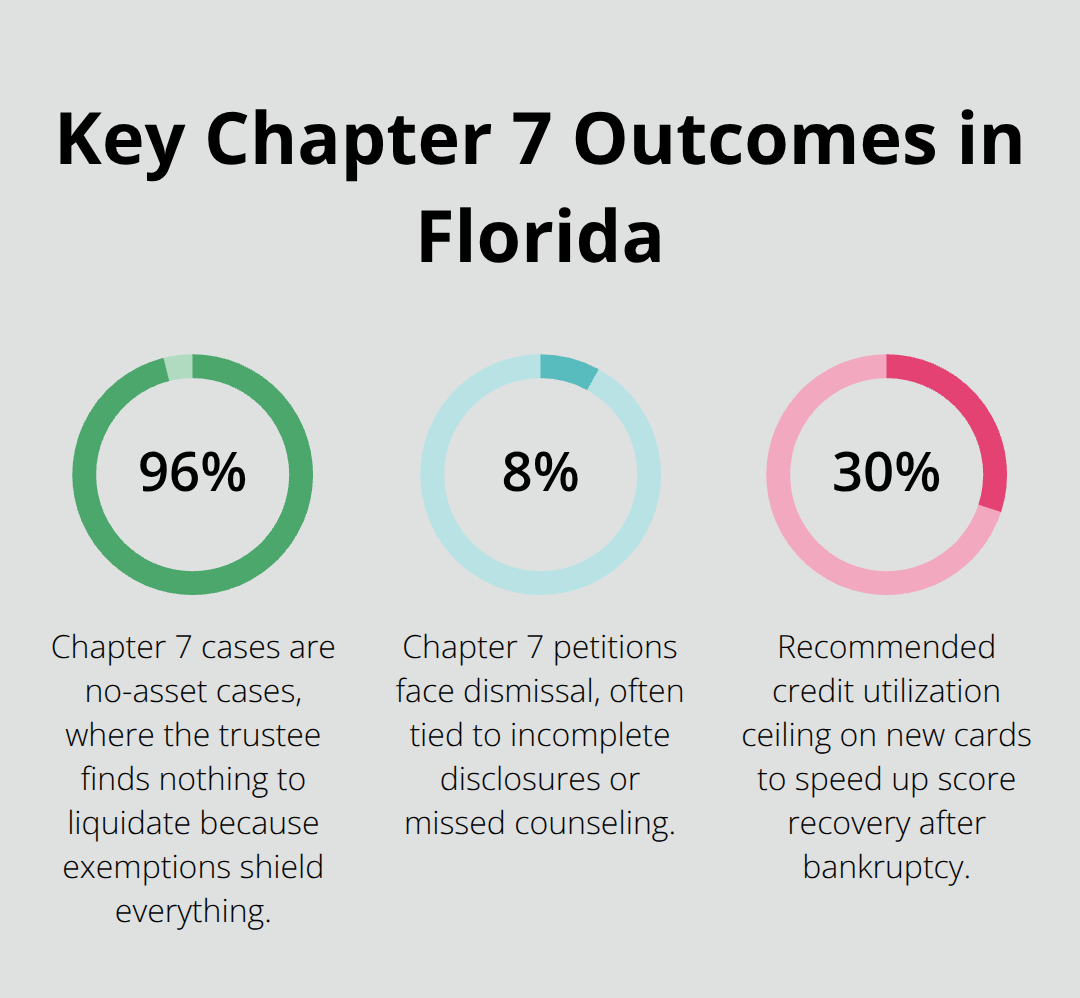
Florida’s exemption laws rank among the most generous in the nation. You keep your primary home with unlimited equity if you’ve owned it for at least 1,215 days, one vehicle with up to $5,000 in equity, retirement accounts protected up to $1,711,975 per person for cases filed between April 1, 2025 and March 31, 2028, and $4,000 in personal property. This means most Florida residents who file Chapter 7 lose nothing because their possessions fall within these protected categories. The U.S. Courts report that approximately 96 percent of Chapter 7 cases are no-asset cases, where the trustee finds nothing to liquidate because exemptions shield everything.
Eliminating Qualifying Debts
Qualifying debts vanish permanently through discharge, typically within 60 to 90 days after your 341 meeting. Credit card balances, medical bills totaling thousands of dollars, personal loans, and utility debt disappear entirely. Once entered, the discharge is absolute-creditors cannot pursue you for those debts, and your future earnings remain entirely yours for rebuilding. You’re not funneling money toward old debt; every dollar you earn after discharge goes toward your actual life.
Understanding What Survives
Student loans, child support, and recent tax debts do not discharge, so understand what survives before filing. Co-signers on your debts remain liable even after your discharge. The real actionable benefit is timing: Chapter 7 resolves within four to six months, compared to Chapter 13’s three-to-five-year repayment plan. You regain financial stability faster, which means you can focus on rebuilding credit immediately rather than years into a payment plan.
Taking Action on Your Situation
Gather your pay stubs, tax returns, a complete list of debts and assets, and monthly expenses to assess whether Chapter 7 fits your situation. This preparation positions you to have a productive conversation with a bankruptcy attorney who can review your specific circumstances and confirm whether these protections and discharge benefits apply to you. Understanding these tangible gains sets the foundation for recognizing the mistakes that derail filers and how to avoid them.
Common Mistakes to Avoid When Filing Chapter 7 in Florida
Incomplete Financial Disclosures Trigger Trustee Investigations
Most Chapter 7 cases fail not because the law changes but because filers skip critical preparation steps or mishandle information disclosure. The bankruptcy trustee assigned to your case reviews every document you submit with skepticism built into the role. Inaccuracies, omissions, or inconsistencies trigger investigations that delay discharge, increase costs, or result in case dismissal. The U.S. Courts report that roughly 8 percent of Chapter 7 petitions face dismissal, and many of these dismissals stem from incomplete financial disclosures or failure to attend required counseling sessions.
Your filing paperwork must reflect reality exactly as it stands on the day you file. If you own a second vehicle, a vacation property, cryptocurrency holdings, or recent inheritance money, these assets must appear on your schedules. Hiding assets constitutes fraud, and bankruptcy courts take this seriously. The trustee possesses tools called avoiding powers that allow recovery of transfers or improper prepetition actions, meaning if you moved money around or paid down certain debts right before filing, the trustee can reverse those transactions.
Asset Transfers and Transaction Scrutiny
Many filers panic when reviewing their financial picture and attempt to shield assets by transferring them to family members or friends, but this tactic backfires spectacularly. Courts examine the last two years of bank statements and financial transactions, so any unusual movement gets scrutinized. The means test calculation requires accuracy across income, expenses, and debt figures. If your household income exceeds the Florida median, the expense deductions must be precise because the trustee will challenge inflated figures like claiming $800 monthly for car expenses when you own one vehicle outright. Overestimating expenses or misreporting income gives the trustee grounds to request conversion to Chapter 13 or dismissal entirely.
Your credit counseling agency and personal financial management course provider submit completion certificates directly to the court, so missing either deadline means no discharge. These requirements exist to protect both you and creditors, and skipping them eliminates the entire benefit of filing.
Post-Discharge Financial Discipline Determines Long-Term Success
What happens after discharge matters as much as the filing itself, yet most filers treat post-bankruptcy planning as optional. Creditors stopped calling, debts vanished, and suddenly the pressure lifts, but this is precisely when financial discipline matters most. The average American household carries 3.8 credit cards according to Experian, and rebuilding credit after Chapter 7 requires strategic decisions about which accounts to open and when.
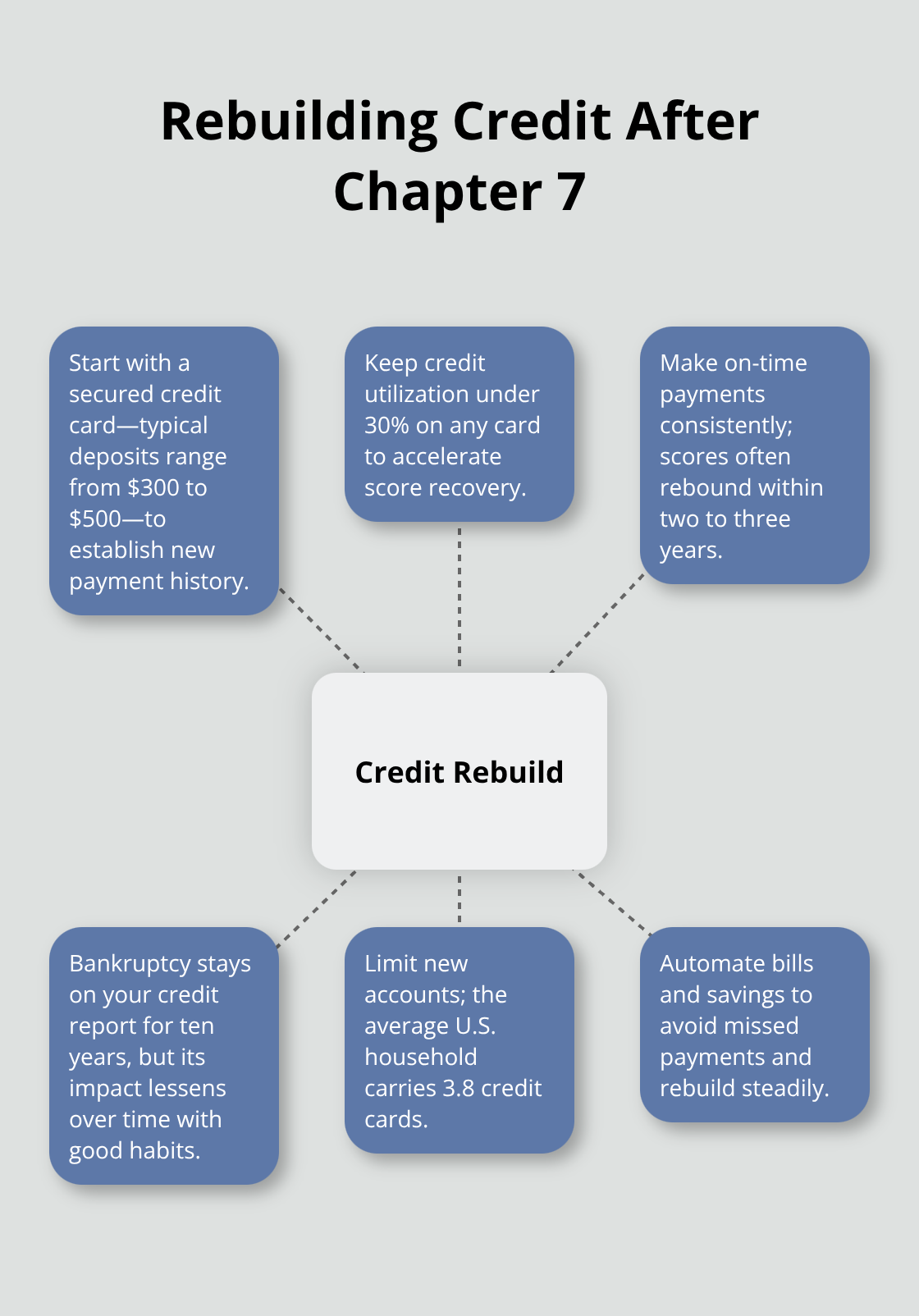
Secured credit cards with $300 to $500 deposits help establish fresh credit history, and keeping utilization below 30 percent on any new cards accelerates credit score recovery. Your bankruptcy remains on your credit report for ten years, but your score typically rebounds within two to three years if you maintain consistent on-time payments. Many filers emerge from discharge and immediately return to old spending patterns because they never addressed the behaviors that created the debt initially.
Building Sustainable Financial Habits
The personal financial management course covers budgeting basics, but applying those lessons requires ongoing discipline. Setting up a monthly budget that allocates income toward essentials first, then savings, then discretionary spending prevents the debt spiral from restarting. Without this structure, Chapter 7 becomes a temporary reprieve rather than a permanent fresh start. Florida residents who file Chapter 7 cannot file again for eight years, so treating this as a one-time opportunity rather than a quick fix changes how you approach the years immediately following discharge.
Building a three-month emergency fund protects against unexpected expenses that previously triggered credit card debt. Automating savings transfers the moment paychecks arrive removes the temptation to spend that money elsewhere. These actionable steps transform Chapter 7 from a legal reset into a genuine financial rebirth.
Final Thoughts
Chapter 7 bankruptcy in Florida delivers tangible relief that extends far beyond eliminating debt. The automatic stay stops creditor harassment within days, Florida’s generous exemptions protect your home, vehicle, and retirement accounts, and the discharge process typically completes within four to six months. Most filers emerge from Chapter 7 with their essential assets intact and their future earnings entirely their own.
Your path forward depends on understanding whether Chapter 7 bankruptcy Florida fits your specific circumstances, since income levels, asset values, and nondischargeable debts vary from person to person. The means test calculation, exemption strategy, and timing of your filing all influence outcomes significantly, which is why generic advice falls short. Mistakes in disclosure or documentation can delay discharge or trigger trustee investigations, so accuracy matters from the moment you start gathering paperwork.
Contact Harnage Law, PLLC to discuss whether Chapter 7 bankruptcy in Florida is the right choice for your circumstances and to start planning your fresh start with confidence. We guide Florida residents through every step of the process with personalized legal guidance and representation. Our firm helps you discharge qualifying debts, stop creditor harassment, prevent wage garnishments, and halt lawsuits while protecting your assets under Florida law.