Filing for Chapter 7 bankruptcy in Florida triggers an automatic stay-a legal shield that stops creditors from calling, garnishing wages, or foreclosing on your home the moment your case begins.
At Harnage Law, PLLC, we’ve seen how this protection transforms lives by giving people breathing room to reorganize their finances. But creditors often violate the automatic stay, and knowing how to fight back matters.
What Happens the Moment You File Chapter 7 in Florida
The Automatic Stay Takes Effect Immediately
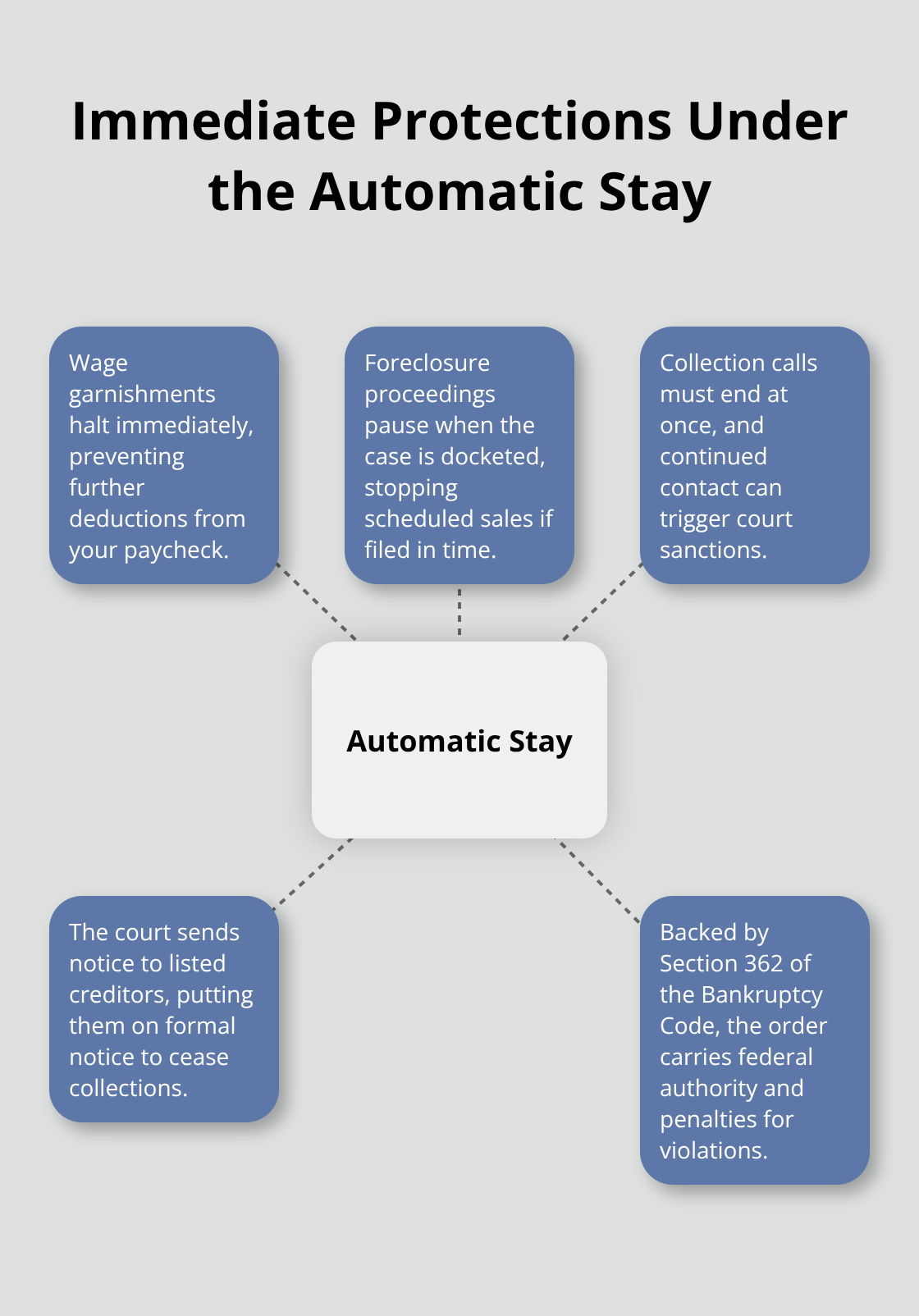
The automatic stay activates instantly when you file your Chapter 7 petition with the Florida bankruptcy court. This is not a request or a promise from creditors-it’s a federal court order governed by Bankruptcy Code Section 362 that takes effect the second your case is docketed. The court notifies creditors that collection activities must stop immediately. Wage garnishments halt, foreclosure proceedings pause, and collection calls must end.
Which Debts the Stay Protects
The stay applies to most creditors, including credit card companies, medical debt collectors, personal loan lenders, and mortgage servicers attempting to foreclose. However, the stay does not apply universally. Child support and alimony obligations continue, as do tax liens and criminal proceedings. Student loans also remain unaffected by the stay. Understanding which debts fall under the stay’s protection and which do not prevents surprises later in your case.
How Long the Stay Lasts
The stay remains in effect throughout your entire Chapter 7 case, which typically concludes within three to six months in Florida. During this window, creditors cannot pursue collection without first obtaining court permission through a motion for relief from the automatic stay. This motion requires creditors to prove to the judge that they have a compelling reason-usually that their secured debt is not adequately protected or that the stay causes them undue hardship. Courts rarely grant these motions without strong evidence.
What Happens When Creditors Violate the Stay
If a creditor violates the stay by continuing collection efforts, contacting you, or attempting foreclosure, you have grounds to file a motion for contempt and recover damages (including actual losses and attorney fees). Some creditors test the boundaries deliberately, banking on debtors who do not know their rights. Creditors who contact you after the stay takes effect commit a violation that courts take seriously. You should document every violation-record dates, times, names of callers, and written communications-to create evidence that protects you if you need to enforce the stay in court. This documentation becomes your strongest tool when holding creditors accountable for illegal collection attempts.
How Creditors Ignore the Automatic Stay
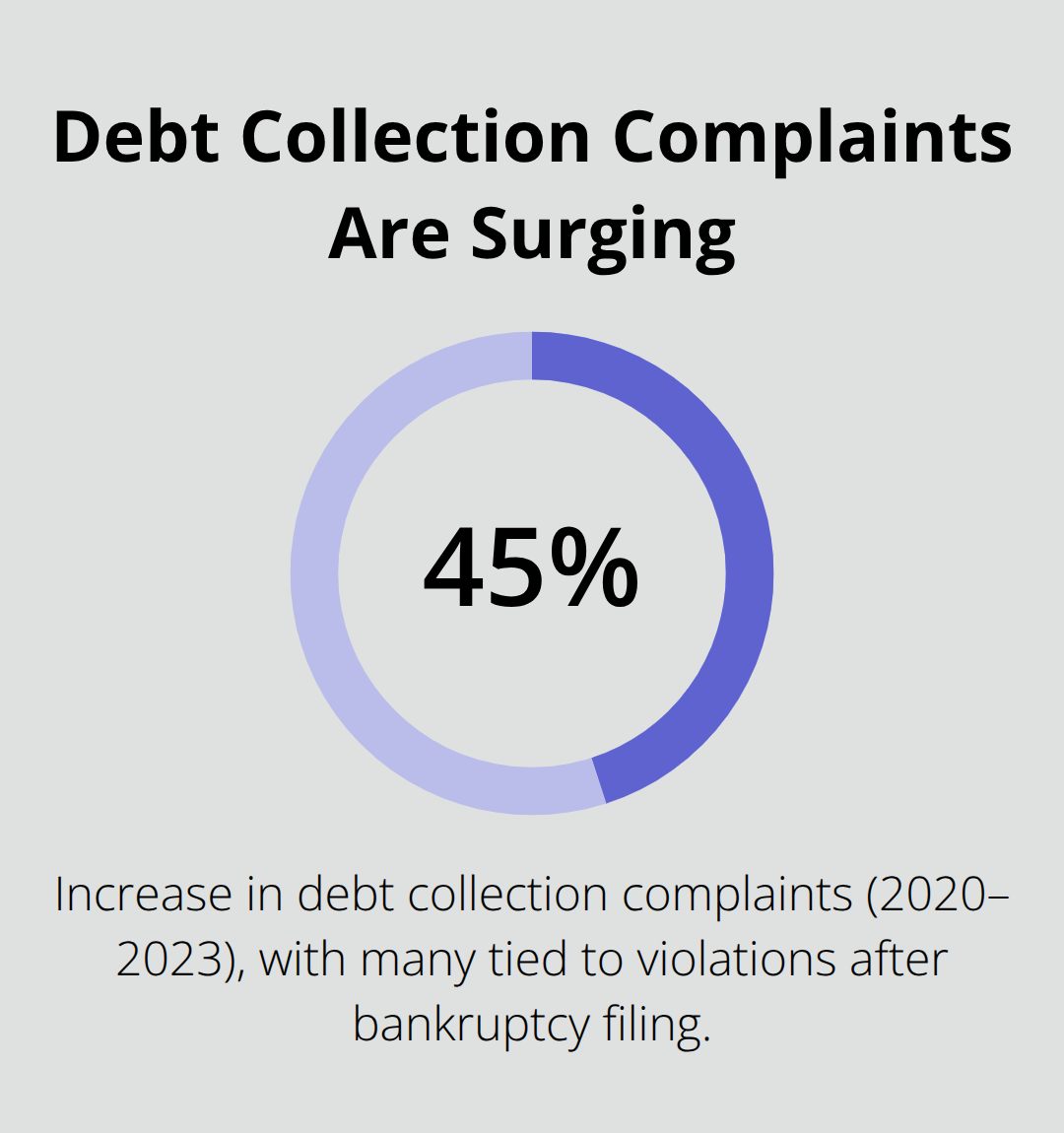
Creditors routinely violate the automatic stay in Florida Chapter 7 cases because many assume debtors will not fight back. The Federal Trade Commission reports that debt collection complaints increased 45% from 2020 to 2023, and a significant portion of those complaints involved violations after bankruptcy filing. Collection agencies operate on volume, sending form letters and making automated calls without verifying whether a bankruptcy petition has been filed.
Some larger servicers experience internal delays between when the bankruptcy court notifies them and when their collection department receives the notice, creating windows where violations occur. Mortgage servicers and auto lenders push particularly hard, sometimes accelerating foreclosure or repossession timelines immediately after a debtor files, betting that financial stress will prevent the debtor from taking legal action. Credit card companies frequently continue charging interest and fees during the stay period, treating the automatic stay as a minor inconvenience rather than a binding court order. Your responsibility is to document every contact attempt, payment demand, or collection action that occurs after you file your petition, because creditors count on your silence and confusion to continue their illegal conduct.
Wage Garnishments and Bank Levies Continue Illegally
Wage garnishments that should have stopped continue to appear in paychecks for weeks after filing because payroll processors operate on delayed cycles. Bank levies freeze accounts even though the stay prohibits them, forcing you to file a motion to unfreeze funds while living without access to your own money. These violations hit hardest in the first weeks after filing, when creditors test whether you actually filed or whether you will challenge them.
Foreclosure and Repossession Attempts Accelerate
Foreclosure sales scheduled before your filing date sometimes proceed because servicers claim the sale was already in motion, though courts generally halt these actions if you file before the sale closing. Repossession attempts occur most aggressively in the first 30 days after filing, when creditors assess whether you will enforce your rights. Servicers and lenders deliberately push forward, hoping you will not respond.
Collection Calls and Utility Shutoffs Violate the Stay
Collection calls accelerate rather than stop, with some creditors instructing their teams to contact debtors more frequently before the stay takes effect. Utility shutoff notices arrive even though Florida law requires utilities to maintain service for at least 20 days after bankruptcy filing. These violations compound your financial stress at the moment you need stability most.
Creditors File Counterclaims to Preserve Claims
Creditors also file counterclaims in pending lawsuits, attempting to preserve their claims before the automatic stay prevents further litigation. This tactic forces you to respond to court filings while managing the bankruptcy process itself. The practical reality is that violations happen constantly, and creditors rely on debtors being unaware or too overwhelmed to respond-which is why documenting every violation and responding quickly transforms your position from vulnerable to protected.
Fighting Back Against Automatic Stay Violations
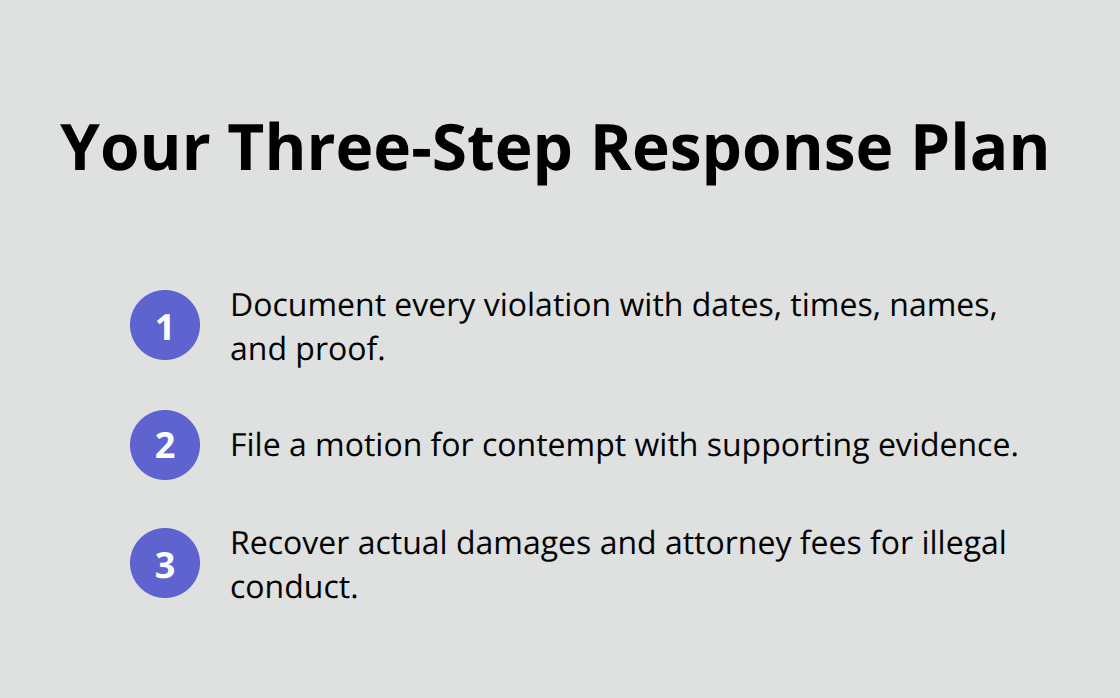
Creditors count on your silence. The moment you file Chapter 7 in Florida, violations begin, and most debtors assume they have no recourse. This assumption costs you money. When a creditor calls after the stay takes effect, continues a wage garnishment, or pushes forward with foreclosure, you hold legal power that courts will enforce. The path forward requires three concrete actions: documenting violations with precision, filing a motion for contempt, and recovering damages that compensate you for the creditor’s illegal conduct.
Document Every Violation With Precision
Start documenting violations the day you file your petition. Create a spreadsheet with the date, time, creditor name, type of violation (call, letter, garnishment, foreclosure notice), and any identifying details like the caller’s name or case number mentioned. Screenshot every text message and collection letter. Record call attempts in writing immediately after they occur, noting the exact time and what the caller said. This documentation transforms vague complaints into legal evidence. Courts require specificity, and judges rarely grant relief based on memory alone.
If a wage garnishment continues after filing, obtain the payroll stub showing the deduction with the date, amount, and creditor name clearly visible. If your bank account is levied, print the frozen account notice with the timestamp. If foreclosure documents arrive after filing, scan them with the postmark or delivery date visible. This evidence becomes your strongest tool because it proves the violation occurred and establishes the creditor’s knowledge of the bankruptcy filing (the court automatically notifies all creditors listed in your petition). Without documentation, a creditor can claim the violation was an isolated error or that their system had not yet received notice. With documentation, you have proof of deliberate or reckless conduct.
File a Motion for Contempt With the Bankruptcy Court
Once you have solid documentation, file a motion for contempt of the automatic stay with the bankruptcy court. This motion asks the judge to hold the creditor in contempt for violating the court’s order. Florida bankruptcy courts take these violations seriously because they undermine the integrity of the bankruptcy process. Your motion should include the dates of violations, copies of your documentation, and a clear statement of how the violation harmed you financially or emotionally.
Courts award damages in three categories: actual damages (the money the creditor extracted or the costs you incurred due to the violation), statutory damages up to $1,000 per violation in some cases, and attorney fees for the cost of bringing the motion. If a creditor continues wage garnishments for three months after filing, you recover the garnished amounts plus attorney fees. If a foreclosure proceeds illegally, you recover the costs of stopping the sale plus fees.
Understand How Creditors Respond to Enforcement
Some creditors ignore first violations, betting you will not respond. When you file a motion for contempt and recover damages, word spreads through their legal and compliance departments. The second violation becomes far less likely. Bankruptcy courts operate on strict procedural rules, and an improperly filed motion may be dismissed without reaching the merits of your case. The cost of attorney representation for a contempt motion is far lower than the damages you recover, making this investment highly practical.
Courts view creditors who violate the stay as acting in bad faith, and judges use contempt motions as tools to enforce compliance across their dockets. Contact Harnage Law, PLLC to file this motion properly, because procedural errors can delay relief or weaken your claim. The firm helps clients protect their rights and recover damages from creditors who ignore the automatic stay.
Final Thoughts
The automatic stay in Florida Chapter 7 bankruptcy stops creditors immediately and gives you real breathing room to rebuild your finances. Violations happen constantly, but you hold the power to fight back by documenting creditor calls, wage garnishments, foreclosure attempts, and collection letters that arrive after filing. Filing a motion for contempt transforms you from a passive debtor into someone who recovers actual damages and attorney fees from creditors who ignore the court’s order.
Working with a Florida bankruptcy attorney matters because the process requires precision and procedural accuracy. At Harnage Law, PLLC, we help clients stop creditor harassment, prevent wage garnishments, halt lawsuits, and discharge qualifying debts through every step of the bankruptcy process. Contact Harnage Law, PLLC to discuss your situation and understand how the automatic stay in Florida applies to your specific debts and creditors.