
Retirement savings are often the last thing people want to risk when facing overwhelming debt. Chapter 7 bankruptcy offers real chapter relief by protecting most retirement accounts while eliminating unsecured debts like credit cards and medical bills.
At Harnage Law, PLLC, we help Florida residents understand how bankruptcy can actually preserve their retirement security rather than destroy it. The right strategy makes all the difference between losing everything and rebuilding with your nest egg intact.
How Your Retirement Stays Protected in Chapter 7
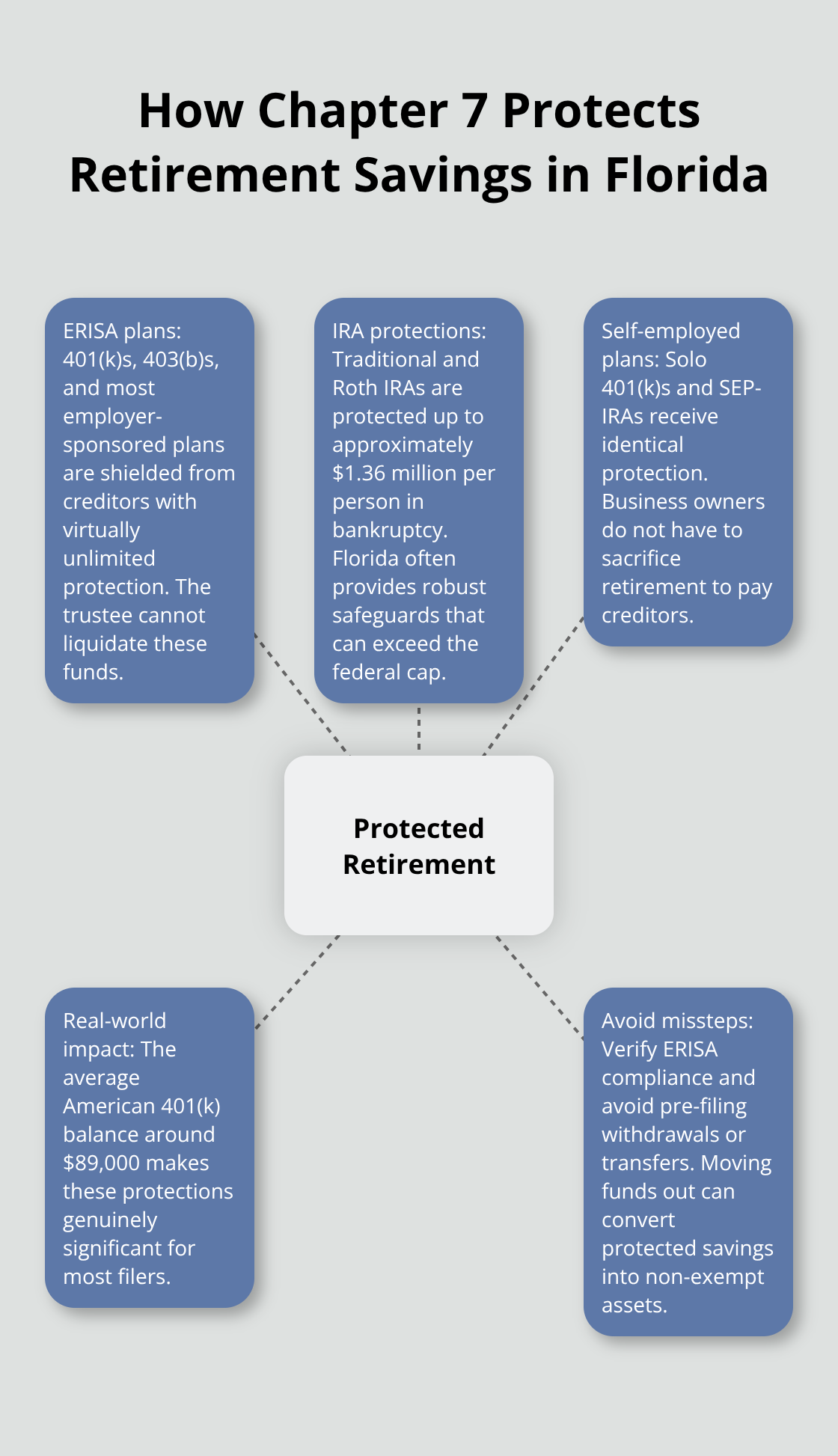
Federal law treats retirement accounts as protected assets when you file Chapter 7 bankruptcy in Florida. The Employee Retirement Income Security Act of 1974, known as ERISA, shields 401(k)s, 403(b)s, and most employer-sponsored plans from creditors with virtually unlimited protection. The bankruptcy trustee cannot touch these funds or liquidate them to pay debts. The average American 401(k) balance sits around $89,000, making this protection genuinely significant for most filers. Traditional IRAs and Roth IRAs receive strong protection too, though they face a combined exemption cap of approximately $1.36 million per person in bankruptcy. Florida state law reinforces this federal protection by exempting ERISA-qualified plans entirely and offering robust safeguards for IRAs that often exceed the federal cap. Your retirement savings have multiple legal shields working in your favor simultaneously.
ERISA Plans Remain Completely Off Limits
Your 401(k) or 403(b) stays completely protected during Chapter 7 if your plan qualifies as ERISA-compliant, which most employer plans do. The trustee cannot access these funds under any circumstances. Self-employed retirement plans like Solo 401(k)s and SEP-IRAs receive identical protection, so business owners do not sacrifice their retirement to pay creditors. Stock bonus plans and profit-sharing arrangements qualify for the same exemption. Verification matters before filing: confirm your specific plan meets ERISA requirements, and avoid any transfers out of the account in the months before your case. Withdrawing money from a retirement account before filing converts those funds into non-exempt assets that creditors can reach. Transferring funds to a regular brokerage account eliminates the protection entirely.
IRAs Require Different Treatment Based on Ownership
Traditional and Roth IRAs receive strong Florida protection, but inherited IRAs operate under different rules after the 2014 Supreme Court decision. Inherited IRA funds are not exempt from creditors, making them vulnerable in bankruptcy. If you own an inherited IRA, discuss this specific account with a bankruptcy attorney before filing to understand your exposure. Standard IRAs owned in your name maintain their protection, allowing you to keep these funds intact while discharging debts like credit cards and medical bills. The distinction between inherited and owned IRAs affects your overall asset protection strategy significantly.
What Debts Disappear in Chapter 7 Bankruptcy in Florida
Unsecured Debts That Chapter 7 Eliminates
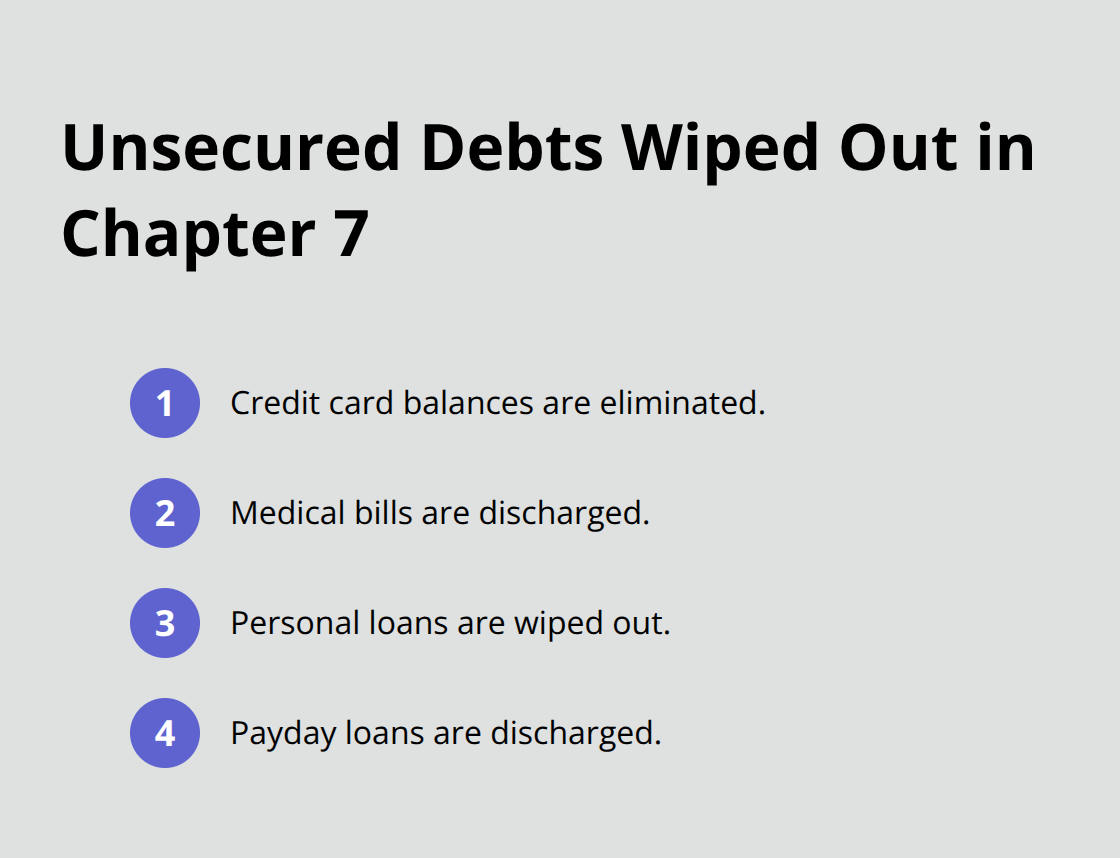
Chapter 7 bankruptcy eliminates unsecured debts entirely, which means you walk away owing nothing on these obligations. Credit card balances, personal loans, medical bills, and payday loans all qualify for discharge in Florida Chapter 7 cases. The average American carries roughly $6,375 in credit card debt according to Federal Reserve data, and Chapter 7 wipes this clean without requiring repayment.
Medical debt represents the leading cause of personal bankruptcy filings, with healthcare costs pushing families into crisis when insurance gaps or unexpected illness strikes. Payday loans demand immediate repayment with interest rates exceeding 400 percent annually, trapping borrowers in cycles that Chapter 7 breaks entirely. Unsecured personal loans from banks or online lenders disappear through discharge as well.
How Discharge Works in Your Favor
The discharge process in Chapter 7 typically completes within four to six months from filing, providing relatively quick relief compared to Chapter 13’s three to five year repayment plan. Once the court grants your discharge, creditors must stop collection attempts immediately, including phone calls, letters, and wage garnishments. Attempting to collect after discharge violates federal law and can result in damages against the creditor.
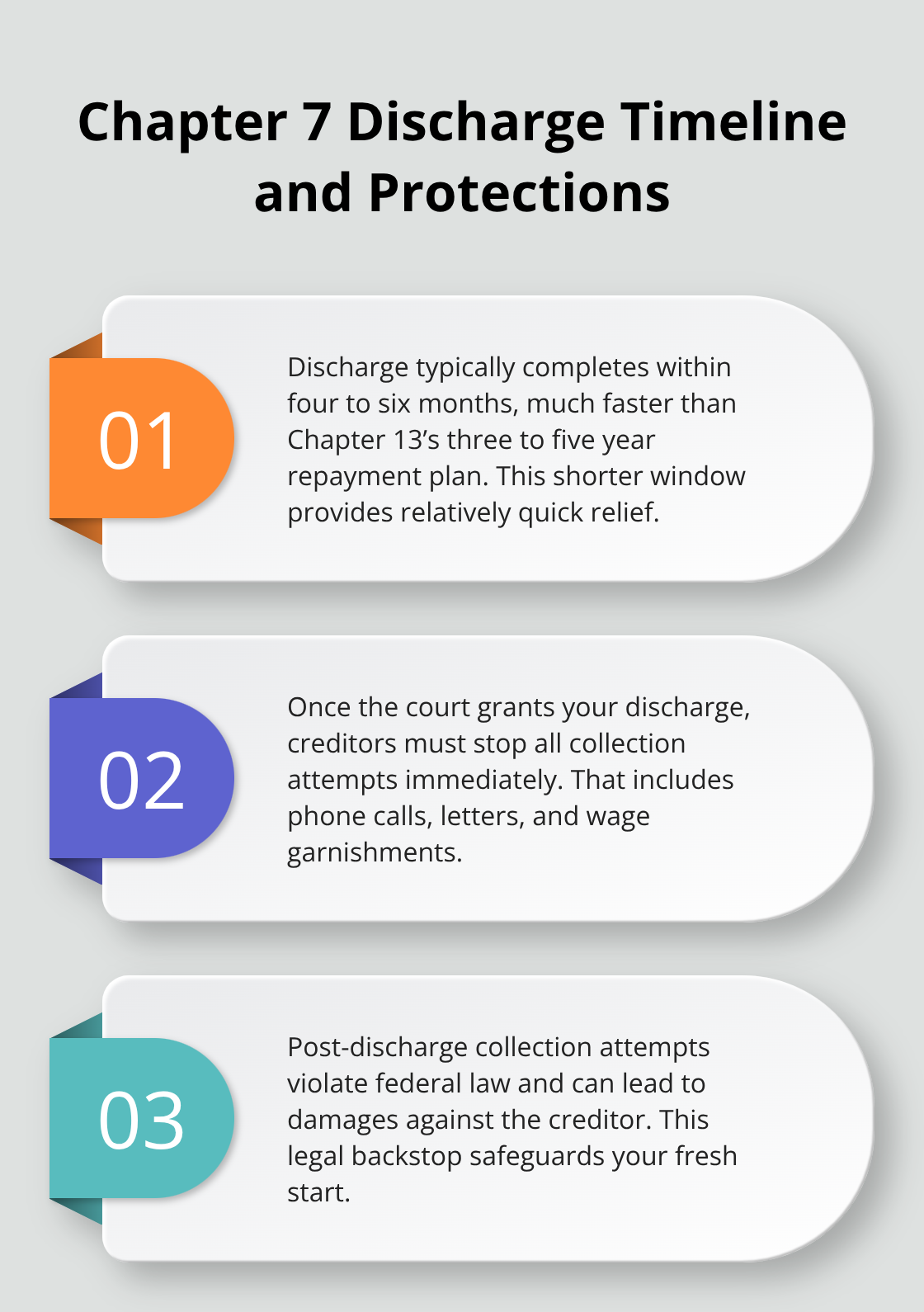
This legal protection means you reclaim control of your paycheck and eliminate the constant pressure of collection agencies pursuing debts that no longer exist. The fresh start applies broadly to most consumer debts, though certain obligations like student loans, child support, and recent taxes remain non-dischargeable.
Secured Versus Unsecured Debt
The critical distinction separates unsecured debts from secured debts like mortgages or car loans, which remain tied to collateral the creditor can reclaim. Your Chapter 7 discharge eliminates the personal liability for unsecured obligations, freeing up income that previously flowed toward creditors. Understanding which debts disappear versus which survive helps you plan your financial recovery accurately and avoid the emotional decisions that lead people to drain retirement accounts unnecessarily when Chapter 7 would have eliminated those debts entirely. The debts you thought required sacrifice often vanish through the discharge process, allowing you to preserve your retirement savings while addressing your financial crisis.
What Actually Gets Discharged in Chapter 7
Many people assume Chapter 7 bankruptcy wipes every debt off the books, which creates dangerous false confidence that leads to poor financial decisions before filing. The reality is more nuanced and frankly better than most debtors realize. Chapter 7 eliminates unsecured debts completely, meaning credit cards, medical bills, personal loans, and payday loans vanish through discharge. However, certain obligations survive bankruptcy no matter what you do.
Debts That Survive Chapter 7 Discharge
Student loans remain non-dischargeable unless you meet the undue hardship test, which courts apply rarely and strictly. Child support and spousal maintenance obligations continue unchanged because they protect dependents, not creditors. Recent income taxes filed within three years of your filing date stay on your shoulders. DUI-related damages cannot be discharged either. The distinction matters enormously because people sometimes drain retirement accounts to pay debts that Chapter 7 would have eliminated anyway, sacrificing their financial future unnecessarily. This emotional decision-making happens frequently when debtors lack clear information about what actually survives discharge. Understanding exactly which debts disappear prevents the irreversible mistake of liquidating protected retirement savings to cover obligations that should have vanished through the bankruptcy process.
How Secured Debts Work Differently
Chapter 7 does not eliminate secured debts like mortgages or car loans, though it handles them differently than unsecured obligations. The discharge eliminates your personal liability on the debt, but the creditor retains the right to repossess or foreclose on the collateral if you stop making payments. Many Florida filers keep their homes and vehicles by continuing regular payments after discharge, protecting both their property and their credit score.
The Timeline From Filing to Relief
The timeline from filing to discharge typically runs four to six months, providing relatively quick relief compared to Chapter 13’s three to five year commitment. This compressed timeline means creditor harassment stops almost immediately once you file, even before the discharge order arrives. The automatic stay halts collection calls, wage garnishments, and lawsuits the moment your petition reaches the court.
Immediate Financial Breathing Room
Most debtors see their paychecks stabilize within weeks as garnishments cease and creditors must stop collection efforts. This rapid breathing room allows you to assess your situation clearly and make rational decisions about your retirement accounts rather than panic decisions driven by constant creditor pressure. The debts you thought required sacrifice often vanish through the discharge process, allowing you to preserve your retirement savings while addressing your financial crisis.
Final Thoughts on Chapter 7 Relief in Florida
Chapter 7 bankruptcy stops creditor harassment immediately through the automatic stay, which halts collection calls, letters, and wage garnishments the moment you file. Your next paycheck reflects your actual earnings rather than what creditors have seized, providing financial breathing room that allows clear thinking instead of panic-driven decisions. With unsecured debts eliminated and your retirement accounts protected, you stand on solid ground to rebuild your financial future.
Rebuilding after Chapter 7 means establishing new spending habits that prevent the debt cycle from repeating itself. The discharge typically arrives within four to six months, giving you a defined timeline for when your financial obligations truly end, and many Florida residents find that eliminating credit card balances and medical bills frees up hundreds of dollars monthly. Secured credit cards help rebuild your credit score gradually, and most lenders view Chapter 7 filers favorably after discharge because the bankruptcy eliminates the risk they represent.
Your retirement accounts remain intact throughout this process, growing undisturbed while you address your current financial situation. We at Harnage Law, PLLC help Florida residents navigate this entire process, from filing through discharge and into your financial recovery. Contact us today to discuss your specific situation and learn how Chapter 7 can provide the relief you need while keeping your retirement savings safe.