
Chapter 7 bankruptcy myths in Florida keep people trapped in debt longer than necessary. We at Harnage Law, PLLC hear the same misconceptions repeatedly from people who could benefit from filing but hold back based on false beliefs.
The truth is simpler and far less scary than the stories circulating. This post breaks down seven major myths with real facts about how Chapter 7 actually works for Florida residents.
Myth 1: Chapter 7 Bankruptcy in Florida Will Ruin Your Credit Forever
Chapter 7 stays on your credit report for ten years, but that timeline shouldn’t scare you into staying trapped in debt. Most people see credit score improvement within one to two years after discharge, according to data from filers who actively rebuild. Your score drops when you file, typically falling 130 to 200 points depending on where you started, but the recovery trajectory is steep because you’ve eliminated the debt dragging you down month after month. Within 24 months of discharge, many filers qualify for new credit cards, auto loans, and even mortgages. The longer you wait without filing, the more damage your credit takes from missed payments, collections accounts, and wage garnishments.
Rebuilding starts immediately after discharge with a secured credit card (usually $500 to $2,500 deposit) and on-time payments every single month without exception. Post-bankruptcy filers are actually viewed as less risky by creditors because you cannot file Chapter 7 again for eight years, making you a safer bet than someone with no bankruptcy history. Apply for a secured card within three to six months after discharge, use it for small purchases you’d make anyway, and pay it off completely each month. After twelve months of perfect payments, many card issuers convert secured accounts to unsecured cards and return your deposit. Skip secured cards with annual fees over $100 or interest rates above 25 percent; look for cards with minimal fees and reasonable rates from major issuers.
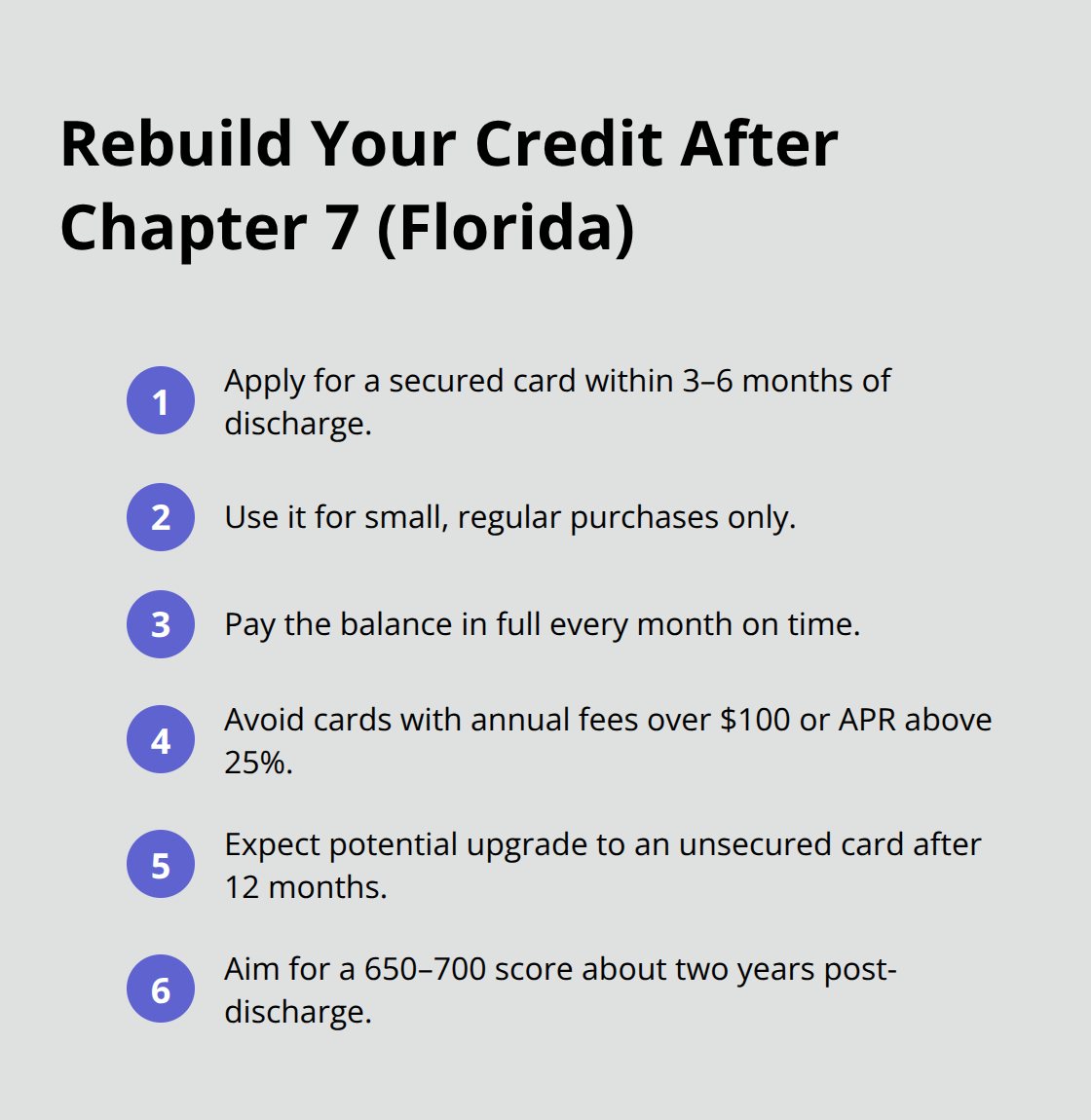
Your credit score at two years post-discharge reaches 650 to 700, positioning you to refinance mortgages, get better insurance rates, and access credit on terms that actually work in your favor.
Myth 2: You’ll Lose Everything You Own When Filing Chapter 7 in Florida
Florida’s homestead exemption stands as one of the strongest asset protections in the nation, allowing you to shield unlimited equity in your primary residence as long as you owned it for at least 1,215 days before filing. Your home stays yours after Chapter 7 discharge, provided you keep current on mortgage payments. Florida exemptions also protect up to $5,000 in motor vehicle equity per vehicle, so you can keep at least one car without concern. Personal property exemptions cover furniture, electronics, and household items up to $1,000, or $4,000 if you don’t claim the homestead exemption. Tax-exempt retirement accounts receive substantial protection reaching up to $1,711,975 per person for cases filed between April 1, 2025, and March 31, 2028.
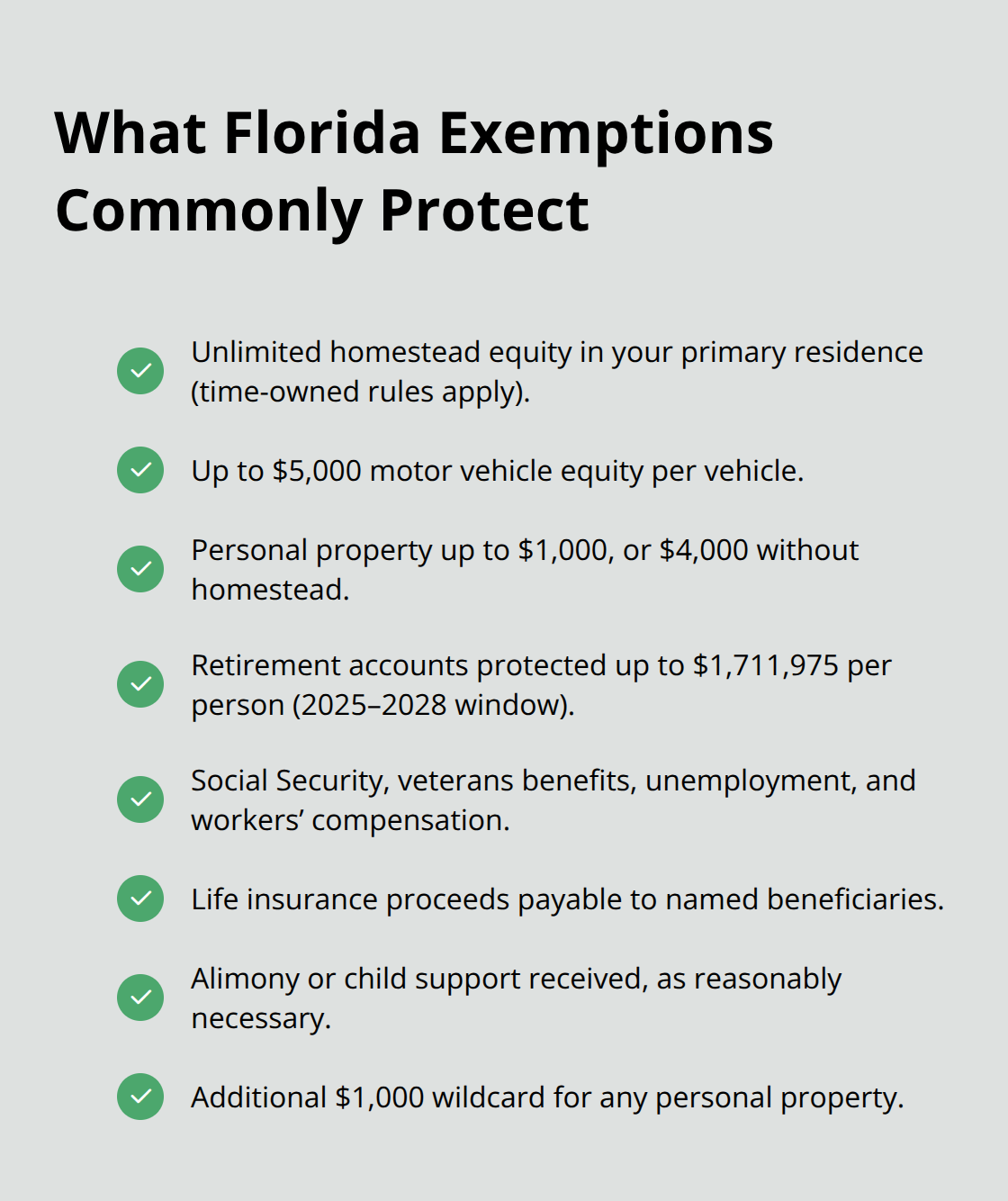
Public benefits including Social Security, veterans benefits, unemployment compensation, and workers compensation remain completely protected from Chapter 7 liquidation under Florida law. Life insurance proceeds payable to named beneficiaries stay yours, and alimony or child support received qualifies as exempt to the extent reasonably necessary for your support and dependents. The wildcard exemption provides an additional $1,000 of protection for any personal property you choose, giving you flexibility to shield items beyond standard categories. Most filers keep their home, one vehicle, retirement savings, and essential household goods through the exemption process.
Proper exemption planning before filing makes the difference between losing nonexempt property and preserving your financial foundation. Understanding which assets qualify for protection shapes your filing strategy significantly, which brings us to another widespread concern about Chapter 7.
Myth 3: Everyone Will Know You Filed for Bankruptcy in Florida
Bankruptcy filings are public record, but the reality of who actually sees them differs dramatically from what most people fear. Federal courts maintain these records through PACER (the Public Access to Court Electronic Records system), which requires registration and a small fee to access individual cases. Employers, landlords, and neighbors do not randomly search bankruptcy databases-they have no practical way to discover your filing unless they specifically look for it. Credit reporting agencies receive notice of your Chapter 7 filing and report it on your credit report, but this is separate from the public court record. The distinction matters: your credit report is what lenders and creditors see when evaluating you, not courthouse documents.
Creditors access bankruptcy filings because they appear on your petition and have a legal right to notice, but they focus primarily on whether their debt gets discharged. Collection agencies, debt buyers, and credit card companies receive automatic notification through the court system once you file, which actually stops them from contacting you due to the automatic stay. Mortgage lenders and car loan companies monitor filings to protect their secured interests in your home or vehicle. Employment screening companies do not typically pull bankruptcy records during background checks unless you apply for positions requiring credit checks or financial responsibility. You will not see strangers showing up at your door or your family learning about the filing through gossip-the information exists in a court database that requires deliberate searching to find.
The privacy concerns that hold people back from filing rarely match what actually happens after discharge. Most filers discover that their financial situation improves so dramatically that the public nature of the filing becomes irrelevant compared to the relief they experience. This brings us to another major misconception: the belief that steady employment disqualifies you from Chapter 7 protection.
Myth 4: You Can’t File Chapter 7 If You Have a Job in Florida
Having steady employment does not disqualify you from Chapter 7 bankruptcy in Florida. The means test, which determines your eligibility, compares your household income against Florida’s median income for your household size, not whether you work. If your income falls below the median, you pass the means test automatically and can file Chapter 7 regardless of employment status. Even if your income exceeds the median, you still qualify if your monthly expenses and debt obligations are high enough. The means test outcome depends on your overall financial situation-including dependents, transportation costs, housing expenses, and debt load-not solely on having a paycheck.
Many employed Floridians with stable jobs pass the means test because their expenses consume most or all of their income. Creditors understand that working people often carry significant obligations like child support, mortgage payments, car loans, and medical expenses that reduce disposable income. The test accounts for these real-world costs, meaning you do not need to be unemployed or broke to qualify. If you earn $60,000 annually but spend $55,000 on legitimate household and family expenses, the means test recognizes your actual financial position. Thousands of Florida residents with full-time jobs successfully file Chapter 7 each year, discharging credit card debt, medical bills, and personal loans while keeping their employment and income intact. Your job stability actually strengthens your position as a filer because lenders view employed individuals as more likely to rebuild credit responsibly after discharge, which makes the next myth about filing costs particularly important to address.
Myth 5: Filing Chapter 7 Bankruptcy in Florida Is Too Expensive
The federal filing fee for Chapter 7 in Florida is $338, a one-time cost that pales in comparison to what most people already spend managing debt each month. Attorney fees typically range from $1,500 to $2,500 depending on case complexity and your location within Florida, meaning total out-of-pocket costs land between roughly $1,838 and $2,838. If you cannot afford the filing fee upfront, you can request to pay it in installments by filing Local Form Application for Individuals to Pay the Filing Fee in Installments, with at least half the fee due at filing and the remainder paid within 14 days. Low-income filers qualify for a filing fee waiver entirely by completing Official Bankruptcy Form 103B and demonstrating income below federal poverty guidelines available through the U.S. Trustee website.
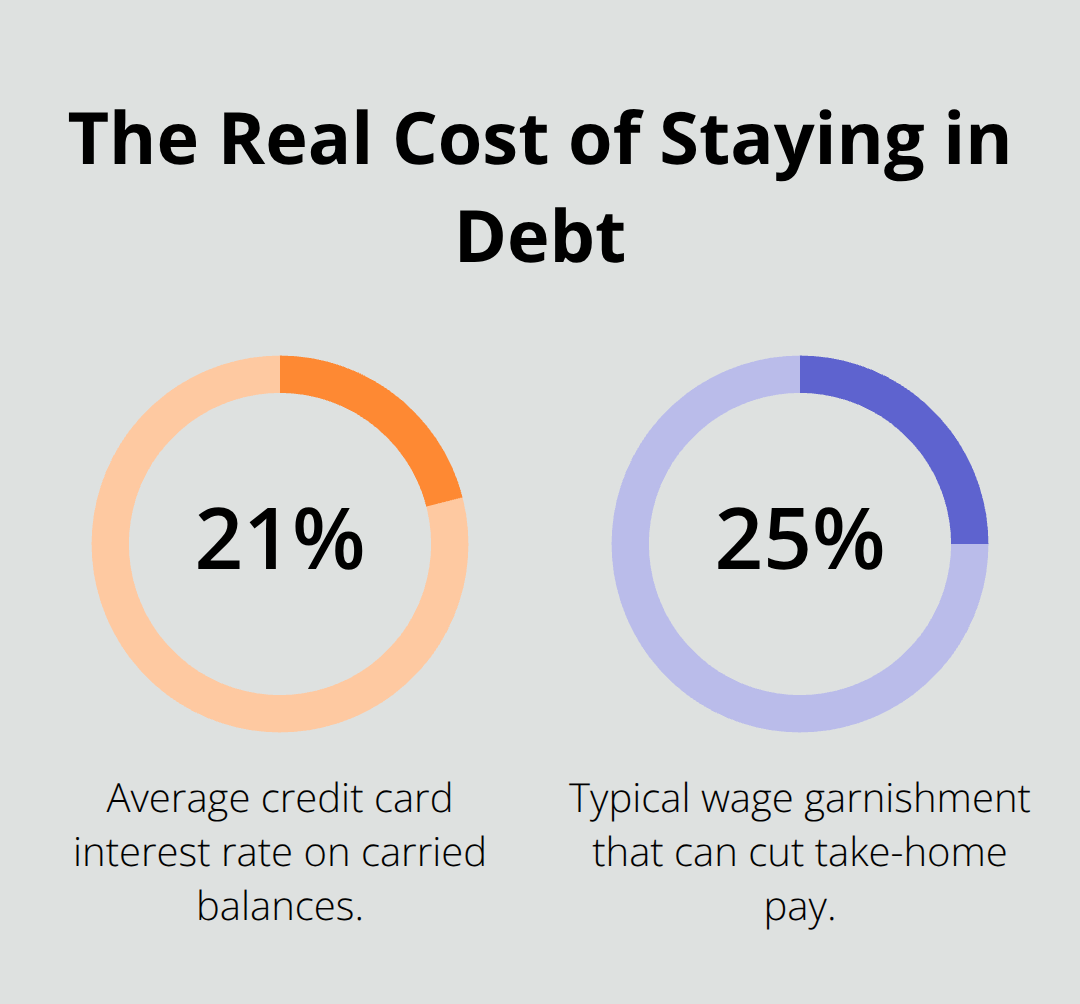
The real expense comparison reveals that staying in debt costs far more than filing. The average credit card holder in debt carries balances at 21 percent interest rates, meaning a $15,000 balance generates $3,150 in annual interest charges alone before principal reduction. Medical debt holders pay collection agency fees and face lawsuit costs that compound their original bills, while wage garnishment orders reduce your actual take-home pay by 25 percent or more.
Six months of minimum payments on high-interest credit cards often exceed your total Chapter 7 filing and attorney costs combined. Filing stops all collection efforts immediately through the automatic stay, eliminating future interest accrual on unsecured debts and halting wage garnishments that drain your paycheck every two weeks.
The question shifts from whether you can afford to file to whether you can afford not to file. Most people who delay filing based on cost concerns spend thousands more on interest, fees, and garnishments before they finally take action. This financial reality connects directly to another widespread misconception about how often you can actually file for bankruptcy protection.
Myth 6: You Can Only File Chapter 7 Once in Florida
The eight-year rule applies only to consecutive Chapter 7 filings, meaning you cannot file Chapter 7 again until eight years have passed since your previous Chapter 7 discharge. This does not mean you are permanently barred from bankruptcy protection if you face financial hardship before eight years elapse. If you need relief within that window, Chapter 13 bankruptcy becomes available as an alternative, allowing you to reorganize debts through a three to five year repayment plan while keeping your assets intact. The eight-year clock starts from your discharge date, not your filing date, so the actual waiting period depends on how quickly your case closes, typically three to six months. Understanding this distinction prevents unnecessary delay when your financial situation deteriorates between potential filings.
Previous bankruptcy filings of different chapters affect your eligibility differently than multiple Chapter 7 filings do. If you filed Chapter 13 previously, you can file Chapter 7 after four years from the Chapter 13 discharge rather than waiting the full eight years, provided you received a discharge in the earlier case. Conversely, if you filed Chapter 7 first and later need Chapter 13 protection, no mandatory waiting period applies between those two different chapter types. Multiple filings become necessary when circumstances change dramatically after your initial discharge, such as a job loss causing new medical debt or a family emergency creating fresh financial obligations that dwarf your post-bankruptcy income. Your specific situation determines whether another filing makes sense and which chapter fits your current needs and timeline.
Myth 7: Chapter 7 Doesn’t Wipe Out All Your Debts
Chapter 7 discharges most unsecured debts like credit cards, medical bills, and personal loans, but several categories survive the process regardless of how thorough your filing is. Child support and alimony obligations never disappear in bankruptcy and remain your legal responsibility until paid in full. Student loans typically cannot be discharged unless you prove undue hardship using the Brunner test from Brunner v. New York State Higher Education Services Corp, a standard that most filers cannot meet. Federal and state income taxes older than three years may discharge, but recent tax debts and penalties stay with you, and the IRS can still pursue collection after your discharge. Criminal fines, restitution orders, and debts incurred through fraud all survive Chapter 7 protection.
Understanding what actually gets discharged prevents disappointment when your discharge order arrives and certain obligations remain on your plate. If you owe $8,000 in credit card debt, $12,000 in medical bills, and $35,000 in student loans, Chapter 7 eliminates the first two categories but leaves the student loans intact unless you meet the undue hardship standard. Child support arrears cannot be discharged, so if you owe $6,000 in back support payments, that amount survives your case and creditors can continue collection efforts. The discharge stops collection on dischargeable debts immediately through the automatic stay, but non-dischargeable obligations continue accruing interest and penalties.
Knowing which debts survive Chapter 7 shapes your overall financial strategy and helps you plan for obligations that extend beyond your discharge. This clarity about what remains becomes essential as you evaluate whether Chapter 7 fits your situation or whether another path forward makes more sense for your specific circumstances.
Final Thoughts on Chapter 7 Bankruptcy in Florida
Misinformation about Chapter 7 keeps people trapped in cycles of debt that grow worse each month. False stories about losing everything, permanent credit damage, or unaffordable filing costs prevent you from taking action that could stop wage garnishments, halt collection calls, and eliminate thousands in unsecured debt. The Chapter Seven myths Florida residents hear from friends, family, and online sources often contradict the actual legal framework protecting filers.
Your actual bankruptcy options require honest assessment of your income, expenses, assets, and debts against the real eligibility rules, not the misconceptions circulating around you. Florida exemptions protect far more than most people realize, meaning you likely keep your home, vehicle, retirement accounts, and essential belongings through the process. Understanding which debts discharge and which survive shapes your financial planning after discharge and allows you to focus energy on obligations that actually remain.
Contact Harnage Law, PLLC to discuss whether Chapter 7 bankruptcy offers the fresh start you need and deserve. We help individuals and families overcome financial challenges through personalized legal guidance tailored to your circumstances. Our goal is helping you protect your assets and rebuild your financial future.