Filing Chapter 7 bankruptcy doesn’t mean losing everything. Florida law protects certain business assets from creditors, and understanding these protections is the first step toward debt discharge and financial recovery.
At Harnage Law, PLLC, we’ve guided countless business owners through this process. The difference between keeping your assets and losing them often comes down to knowing the rules and planning ahead.
What Assets Actually Stay Protected in Chapter 7
Florida’s Exemption Shield for Business Assets
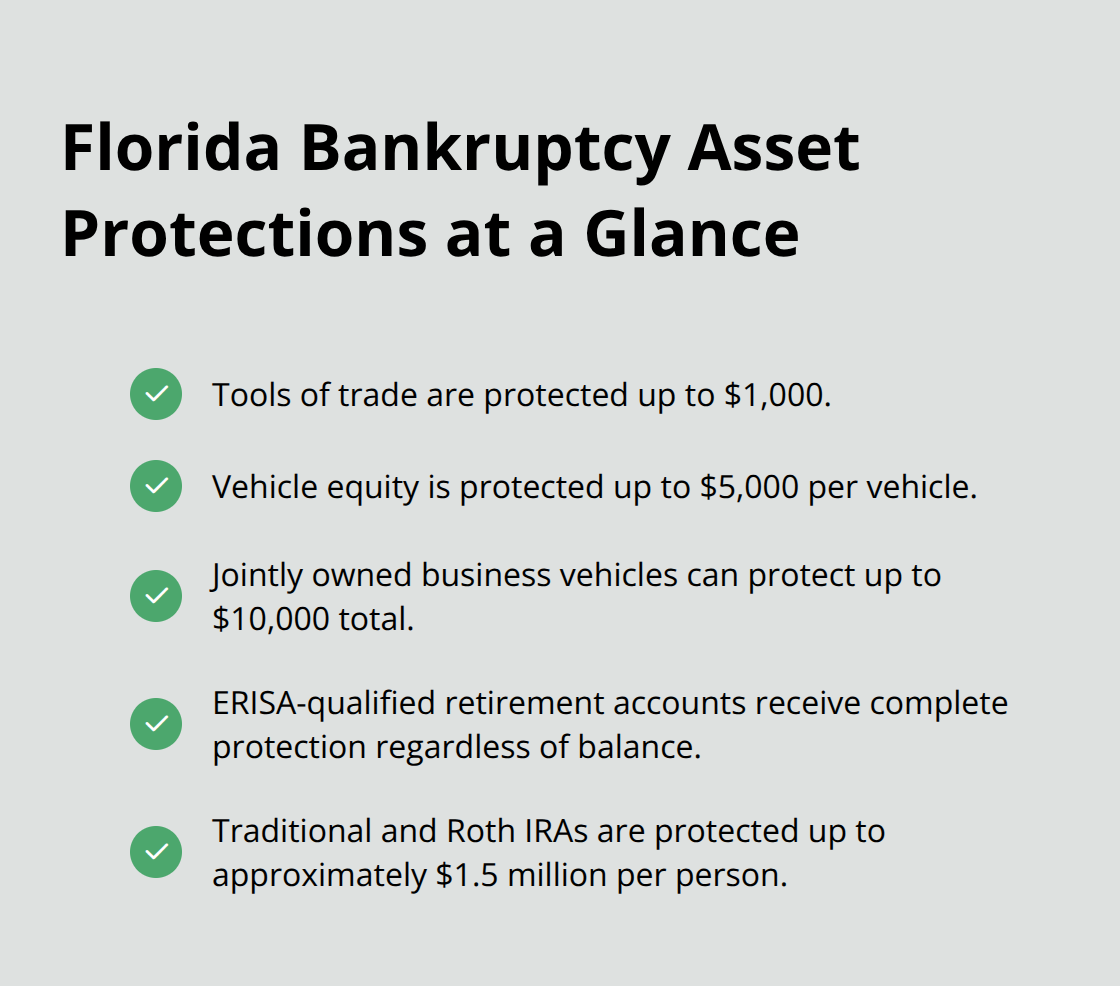
Florida’s exemption laws create a shield around certain business assets, but this protection only works if you understand which assets qualify and how the trustee evaluates them. The state allows you to choose between federal exemptions and Florida exemptions-in most cases, Florida’s exemptions offer stronger protection for business owners. Tools of trade receive protection up to $1,000, which covers equipment and instruments essential to your profession or business operations. If you run a service business or trade, this exemption preserves critical operational assets. Vehicle equity receives protection up to $5,000 per vehicle under Florida law, and if you own multiple vehicles used in your business, you can potentially protect up to $10,000 if both spouses own them jointly.
Retirement Accounts and Personal Property Protection
Retirement accounts receive complete protection regardless of balance for ERISA-qualified plans like 401(k)s and 403(b)s, while traditional and Roth IRAs receive protection up to approximately $1.5 million per person according to inflation-adjusted federal limits. Household goods and personal property receive up to $1,000 per item with no overall cap on essential items. The trustee cannot touch these protected assets when liquidating your estate, which means your basic operating equipment, vehicles, and retirement savings remain yours.
How the Trustee Values Your Business Assets
The bankruptcy trustee’s job involves identifying nonexempt assets and converting them to cash for creditors, but this only applies to assets exceeding exemption limits. When evaluating your business assets, the trustee examines fair market value, not what you paid for them or what you owe on them. A vehicle worth $8,000 with a $6,000 loan leaves $2,000 in equity, which falls within Florida’s $5,000 protection, so you keep it. Inventory, accounts receivable, and business equipment that exceed exemption amounts become part of the estate and face potential liquidation.
Accurate Valuation and No-Asset Cases
Accurate valuation matters significantly-overestimating asset values during the filing process creates problems later, while underestimating them wastes protection you’re legally entitled to claim. Most Chapter 7 cases in Florida are no-asset cases, meaning the trustee finds no nonexempt property to liquidate and creditors receive no distribution from asset sales. If your business assets fall entirely within Florida exemptions, your case becomes a no-asset case, and you discharge your debts without losing protected property.
Timing and Fraudulent Transfers
The trustee also reviews transfers made within two years before filing to identify fraudulent conveyances or preferential payments to insiders. This scrutiny means timing matters when protecting assets through exemption planning. Understanding how the trustee evaluates transfers and valuations helps you avoid costly mistakes that could jeopardize your asset protection strategy-which is why working with legal counsel before filing becomes essential to identify which assets you can safely protect and which ones require different planning approaches.
Strategic Planning Before Filing for Chapter 7 Bankruptcy
Review Your Asset Transfers in the Past 24 Months
Timing your Chapter 7 filing matters far more than most business owners realize. The two-year lookback period that trustees use to examine transfers means that any asset movement within 24 months before filing gets scrutinized. If you transferred equipment, vehicles, or cash to family members, sold business assets at below-market prices, or paid down certain debts to insiders, the trustee can reverse these transactions and pull the assets back into your bankruptcy estate.
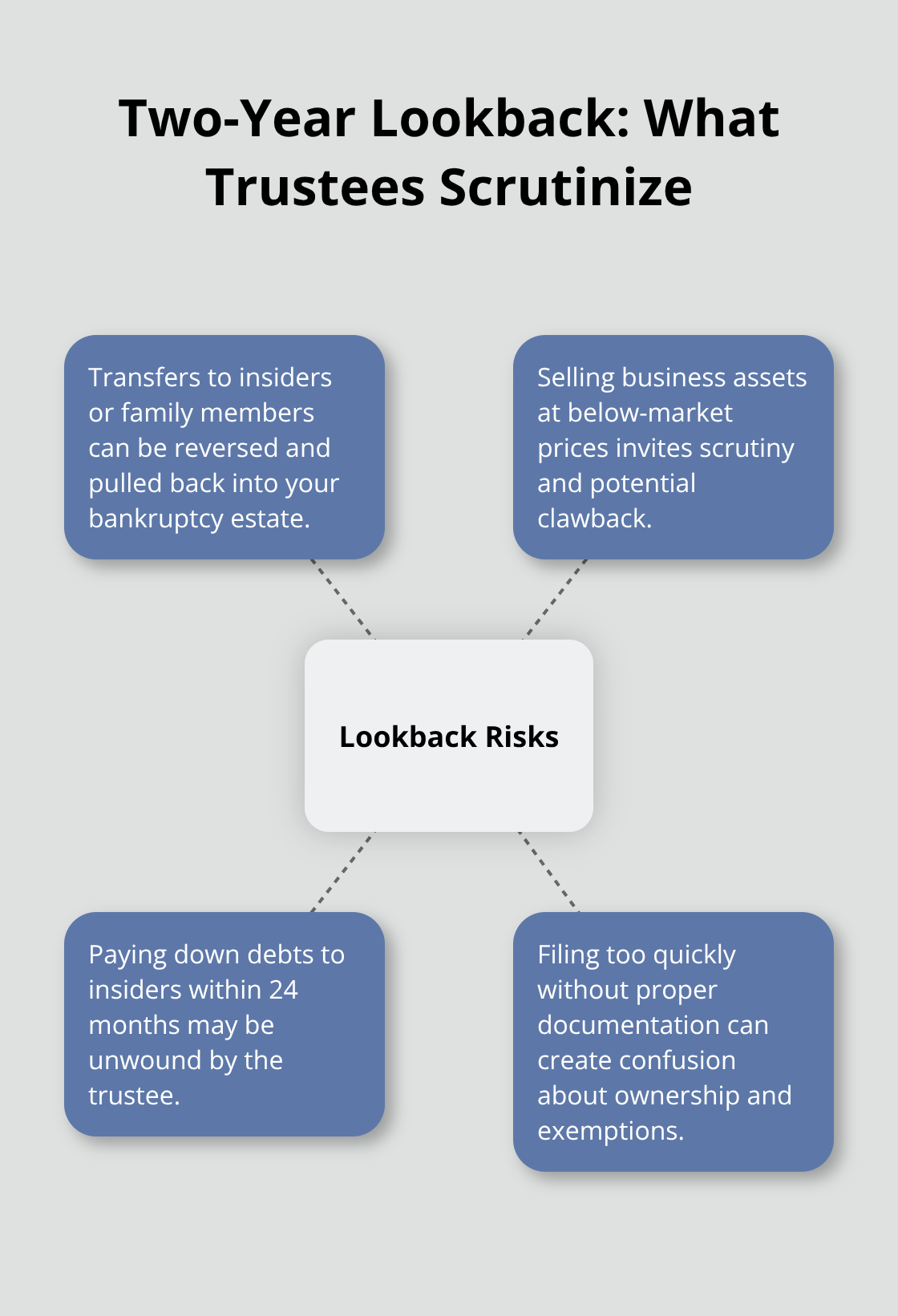
Waiting six months or a year to file after making transfers does not solve this problem-the trustee still catches them. Filing too quickly without proper documentation of your current financial position creates confusion about what assets you own and what exemptions apply. The ideal approach involves reviewing your asset transfers for the past 24 months with a bankruptcy attorney before filing to identify any problematic transactions and determine whether waiting or filing immediately serves your protection goals better.
Business owners sometimes believe that incorporating a new entity or restructuring ownership just before filing protects assets, but courts view these last-minute changes as fraudulent conveyances designed to hinder creditors. Your filing date should reflect your actual financial condition at that moment, not a manipulated version designed to hide assets.
Gather and Organize Your Financial Documentation
Documenting your business operations and financial records before filing creates the foundation for protecting what you’re legally entitled to keep. Collect your last two years of tax returns, current profit-and-loss statements, balance sheets showing all assets and liabilities, bank statements for all business and personal accounts, and loan documents for any secured debts. The trustee will request these documents anyway, and having them organized accelerates the process while reducing errors that could cost you protected assets.
Accurate fair market valuations of all business assets-equipment, inventory, vehicles, accounts receivable-must be documented with supporting evidence like recent appraisals, repair estimates, or comparable sales data. Overvaluing assets wastes exemptions you could claim elsewhere; undervaluing them risks trustee challenges and potential loss of protection.
Document Your Tools of Trade and Business Equipment
For tools of trade or business equipment, document how each item is essential to your profession and generates income, since this strengthens your exemption claim under Florida law. If you operate as a sole proprietor, separate your personal and business records completely, showing which assets are business-related and which are personal property, because this distinction affects which exemptions apply. A bankruptcy attorney can review these records before filing to verify that nothing gets missed and that your exemption strategy aligns with what the trustee will actually find when evaluating your estate. This preparation becomes especially important when you have multiple asset categories (vehicles, equipment, inventory) that fall under different exemption rules, as proper documentation prevents the trustee from challenging your valuations or exemption claims during the 341 meeting.
Common Mistakes Business Owners Make During Chapter 7 Bankruptcy
Transferring Assets Before Filing
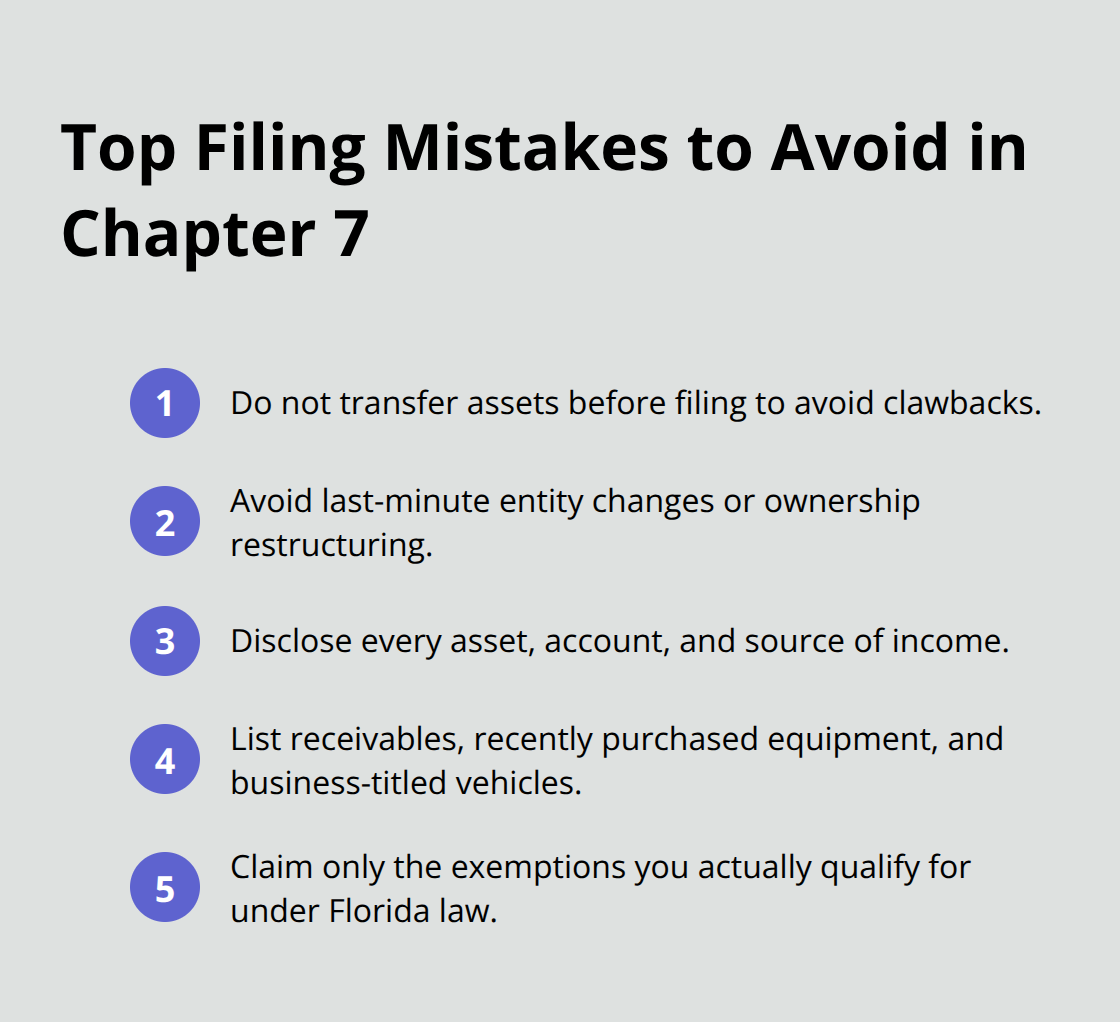
Asset protection plans collapse when business owners transfer assets recklessly in the months before filing. The trustee’s two-year lookback window catches every transfer, and courts reverse suspicious transactions to pull them back into your estate for liquidation. Moving equipment to a family member, selling inventory at steep discounts, or paying down debts to insiders signals fraudulent intent to courts. One Florida business owner transferred a $12,000 commercial printer to his brother three months before filing, believing the asset was now safe. The trustee recovered it, sold it, and distributed the proceeds to creditors instead of letting the owner keep it under his tools-of-trade exemption. The mistake cost him thousands in protected equity.
Courts view last-minute restructuring, new entity formation, or sudden ownership changes as attempts to hide assets. Judges apply strict scrutiny to filings that follow suspicious financial activity. The safer approach involves filing with your assets exactly as they exist now, properly documented and valued, rather than manipulating your financial position to create a false picture of protection.
Omitting Assets and Income from Your Schedules
Complete and honest disclosure of every asset, liability, and financial transaction becomes non-negotiable once you file. Courts and trustees verify information against tax returns, bank statements, and creditor records. Omitting assets from your schedules, underreporting income, or hiding bank accounts violates the bankruptcy oath you take at your 341 meeting.
Discovery of these omissions can result in dismissal, denial of discharge, or even fraud charges.
Florida business owners sometimes fail to list accounts receivable, equipment purchased recently, or vehicles held in business names, thinking minor assets won’t matter. The trustee catches these omissions through document review and questions at the meeting of creditors. This damages your credibility and weakens your exemption claims for legitimate assets.
Misunderstanding Florida’s Exemption Laws
Failing to understand which Florida exemptions apply to your specific business assets creates another costly mistake. Many owners believe that incorporating or using an LLC shields personal assets from bankruptcy, but these structures offer no protection once you file personally. A sole proprietor operating under a business name still owns all business assets personally and must list them in bankruptcy.
Conversely, owners sometimes claim exemptions they don’t qualify for, such as tools-of-trade protection for assets unrelated to their profession or claiming homestead exemptions without meeting Florida’s 1,215-day ownership requirement. These incorrect claims trigger trustee objections and potential asset loss. The discipline required is straightforward: document everything accurately, disclose completely, and understand exactly which exemptions apply to which assets before filing (this is where working with a bankruptcy attorney becomes invaluable to your case).
Final Thoughts
Protecting business assets through Chapter 7 bankruptcy requires three essential actions: understanding Florida’s exemption rules, documenting your financial position accurately, and avoiding transfers that trigger trustee scrutiny. Tools of trade protection up to $1,000 shields equipment essential to your profession, vehicle equity protection up to $5,000 per vehicle keeps transportation assets in your hands, and retirement accounts receive complete protection regardless of balance for ERISA-qualified plans. These exemptions exist to help you rebuild after debt discharge, but only if you claim them correctly before filing.
The mistakes that cost business owners the most are preventable. Transferring assets within two years before filing invites trustee recovery actions, while omitting assets or income from your schedules violates your bankruptcy oath and can result in dismissal or fraud charges. Misunderstanding which exemptions apply to your business structure wastes protection you’re legally entitled to claim, so reviewing your situation with a bankruptcy attorney before filing prevents costly errors.
Gather your financial records, document fair market values for all business assets, and review any transfers made in the past 24 months. Then contact Harnage Law, PLLC to review your situation before filing-we help individuals and families discharge qualifying debts while protecting the assets you need to rebuild.