
Creditors are increasingly aggressive about accessing retirement savings that you thought were protected. If you’re facing wage garnishments, lawsuits, or frozen accounts, Chapter 7 bankruptcy offers a direct path to stop these collection efforts and secure a fresh start.
We at Harnage Law, PLLC understand how frightening it is to watch your retirement disappear. This guide shows you exactly how Chapter 7 works in Florida and what protections actually apply to your accounts.
How Creditors Access Retirement Accounts You Thought Were Protected
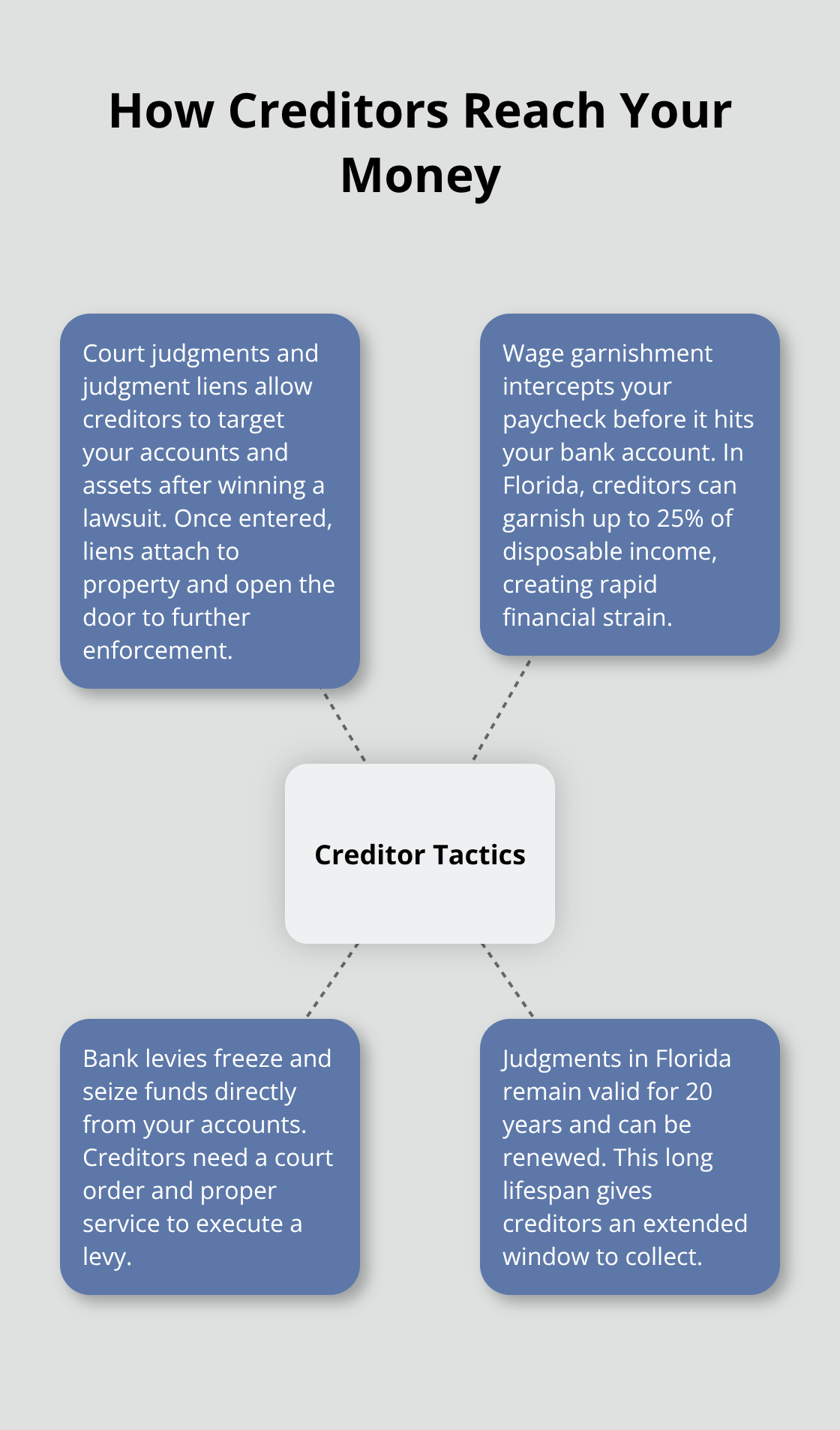
Creditors pursue retirement savings through several concrete legal pathways that many people don’t realize exist until it’s too late. Court judgments represent the most direct route-once a creditor wins a lawsuit against you, they can file a judgment lien against your accounts and assets. In Florida, a judgment remains valid for 20 years and creditors can renew it, giving them an extended window to pursue collection. Wage garnishment stands as another aggressive tactic where creditors obtain court orders to intercept your paycheck before it reaches your bank account. Florida allows creditors to garnish up to 25% of your disposable income, which accumulates quickly if you earn a steady salary. Some creditors also use bank levies to freeze and seize funds directly from your accounts, though this requires a court order and proper service of process.
Which Retirement Accounts Are Actually Vulnerable
The critical distinction lies between ERISA-qualified plans and non-qualified accounts. ERISA-qualified plans-including 401(k)s, 403(b)s, and defined benefit pensions-receive unlimited federal protection from creditors under the Employee Retirement Income Security Act. These accounts remain essentially off-limits to most creditors unless you face a domestic support obligation like child support or alimony. However, non-qualified accounts like traditional IRAs and Roth IRAs receive more limited protection. Under federal bankruptcy law, IRAs receive protection up to approximately $1.7 million, but outside of bankruptcy, state law determines how much creditors can actually reach. Florida Statute § 222.21 provides strong protections for properly qualified retirement accounts, but the protection applies only if the account maintains its tax-exempt status and receives proper documentation. Many people incorrectly assume all retirement savings are untouchable-they are not.
Red Flags That Creditors Are Closing In
A lawsuit notice signals that a creditor is actively pursuing a judgment against you, and you typically have 20 days to respond in Florida. If you ignore it, the creditor wins by default and can immediately begin collection actions. Frozen bank accounts indicate that a creditor has already obtained a court order and is actively seizing funds. Wage garnishment notices from your employer carry particular weight because they are difficult to stop without legal intervention. Multiple collection calls, threatening letters from debt collectors, and demands for payment represent earlier warning signs, but they often escalate quickly to lawsuits if you fail to take action. The window to protect your assets narrows rapidly once creditors move from collection agencies to the court system, making the next step-understanding how Chapter 7 bankruptcy stops these collection efforts-essential to your financial survival.
How Chapter 7 Stops Collection Dead in Its Tracks
The Automatic Stay: Your Immediate Legal Shield
Filing Chapter 7 bankruptcy in Florida activates an automatic stay that halts all creditor collection activities instantly. This court order stops wage garnishments, lawsuits, bank levies, and collection calls within days of your filing. Creditors who continue pursuing you after receiving notice face contempt of court charges. If your wages are already garnished, the garnishment stops. If a lawsuit is pending, it pauses. If your bank account is frozen, the freeze lifts. This automatic stay is not a suggestion or a delay tactic-it is a legal mandate that creditors must follow. Most creditors immediately cease collection efforts once they receive notice of your bankruptcy filing from the court. You gain breathing room to stabilize your finances while your case proceeds through the system, typically taking three to four months from filing to discharge.
ERISA-Qualified Plans: Unlimited Federal Protection
Federal bankruptcy law, specifically 11 U.S.C. § 522, provides the framework for protecting retirement accounts during Chapter 7. ERISA-qualified plans like 401(k)s, 403(b)s, and defined benefit pensions receive unlimited protection with no dollar cap whatsoever. These accounts remain completely off-limits to creditors during and after bankruptcy. The Employee Retirement Income Security Act shields these funds from virtually all collection actions, with narrow exceptions for domestic support obligations like child support or alimony.
IRAs and State-Level Protections
Traditional IRAs and Roth IRAs receive protection up to approximately $1.7 million per person under current federal exemption amounts, adjusted for inflation. Florida Statute § 222.21 layers additional state-level protection on top of these federal safeguards, particularly for accounts that maintain their tax-exempt status. The key requirement is proper documentation-you must list these accounts on your bankruptcy schedules and claim the exemption. Florida courts have consistently upheld these protections in cases like In re Chilton, which confirmed that inherited IRAs remain exempt, and In re Cassell, which protected SEP-IRAs.
Government and Military Pensions
Government pensions and military retirement benefits receive comprehensive protection under Florida law, meaning that income stream remains untouched regardless of your bankruptcy status. This distinction matters enormously because your actual retirement income continues flowing while your unsecured debts are discharged. Many people fail to protect their retirement funds simply because they did not properly disclose them or failed to apply the correct exemption. If your retirement accounts are properly documented and you claim the exemptions, creditors cannot touch them during or after bankruptcy. Understanding which accounts qualify for protection and how to document them correctly determines whether your retirement savings survive the bankruptcy process intact. The next section examines the specific steps you take to claim these exemptions and what happens to your accounts after discharge.
Stabilizing Your Finances After Chapter 7 Discharge
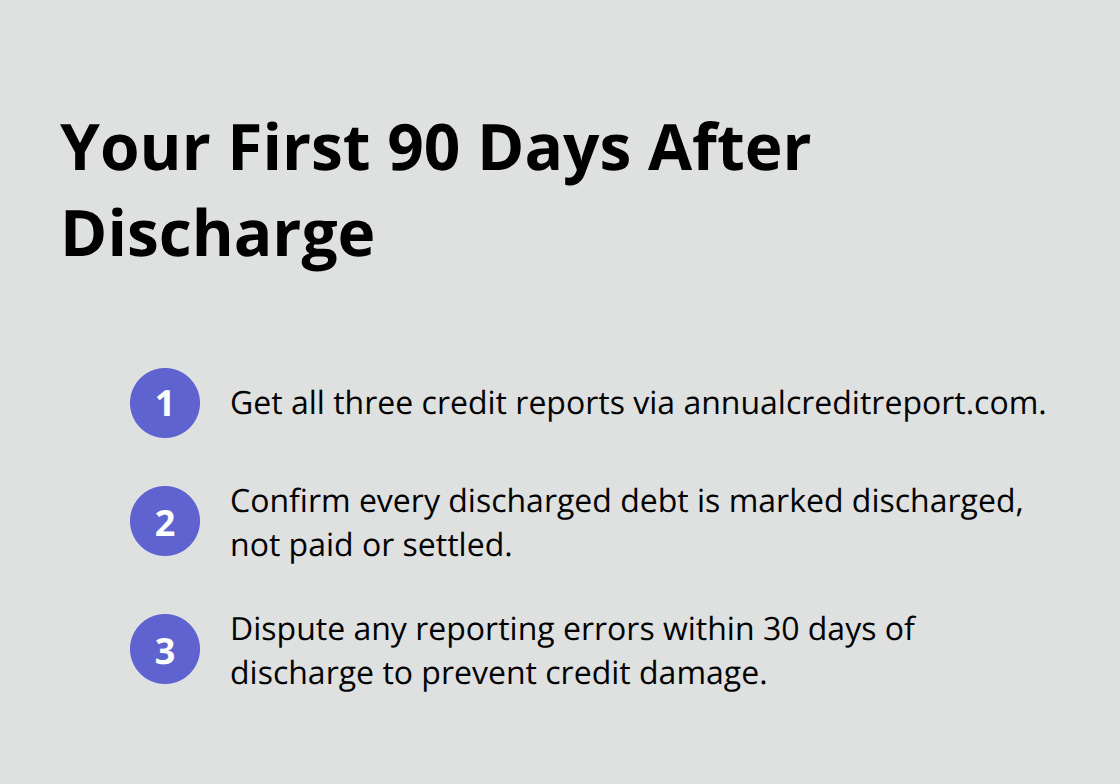
Your Chapter 7 discharge eliminates qualifying unsecured debts, but the real work of financial recovery starts immediately after the court closes your case. The first 90 days post-discharge demand attention to three concrete actions that determine whether you rebuild successfully or slide back into debt. Start by obtaining your credit report from all three bureaus through annualcreditreport.com, the only federally authorized source for free reports. Verify that all discharged debts appear as discharged, not paid or settled, since this distinction affects your credit score recovery. Incorrect reporting happens frequently, and disputing errors within 30 days of discharge prevents months of credit damage.
Securing New Credit and Monitoring Your Reports
Next, secure a secured credit card with a $500 to $1,000 deposit at a bank or credit union that reports to all three credit bureaus. Use it for one small recurring charge monthly, like a subscription service, then pay the full balance immediately. This pattern demonstrates responsible credit use without risk, and after 12 months of perfect payment history, most issuers convert the account to unsecured status and return your deposit. Your credit score typically improves 100 to 150 points within the first year after discharge if you maintain zero missed payments and keep credit card balances below 10% of your limits. Federal Trade Commission data shows that bankruptcy filers who actively rebuild credit reach 650 credit scores within 18 to 24 months, putting them in range for conventional mortgage approval.
Avoiding Common Post-Discharge Mistakes
The critical mistake people make is immediately applying for multiple new credit accounts or using high-limit cards they qualify for post-discharge. Limit yourself to one new account every six months and avoid store credit cards entirely, as their interest rates typically exceed 25%. Simultaneously, continue contributing to your retirement accounts without hesitation. Chapter 7 bankruptcy does not prohibit future retirement contributions, and post-filing contributions receive the same creditor protections as pre-filing accounts. If you earn $50,000 annually, you can contribute $7,000 to a traditional or Roth IRA in 2026, and if your employer offers a 401(k), contribute at minimum the amount needed to capture any employer match. This decision separates people who rebuild wealth from those who remain financially vulnerable.
Creating Your Monthly Budget Framework
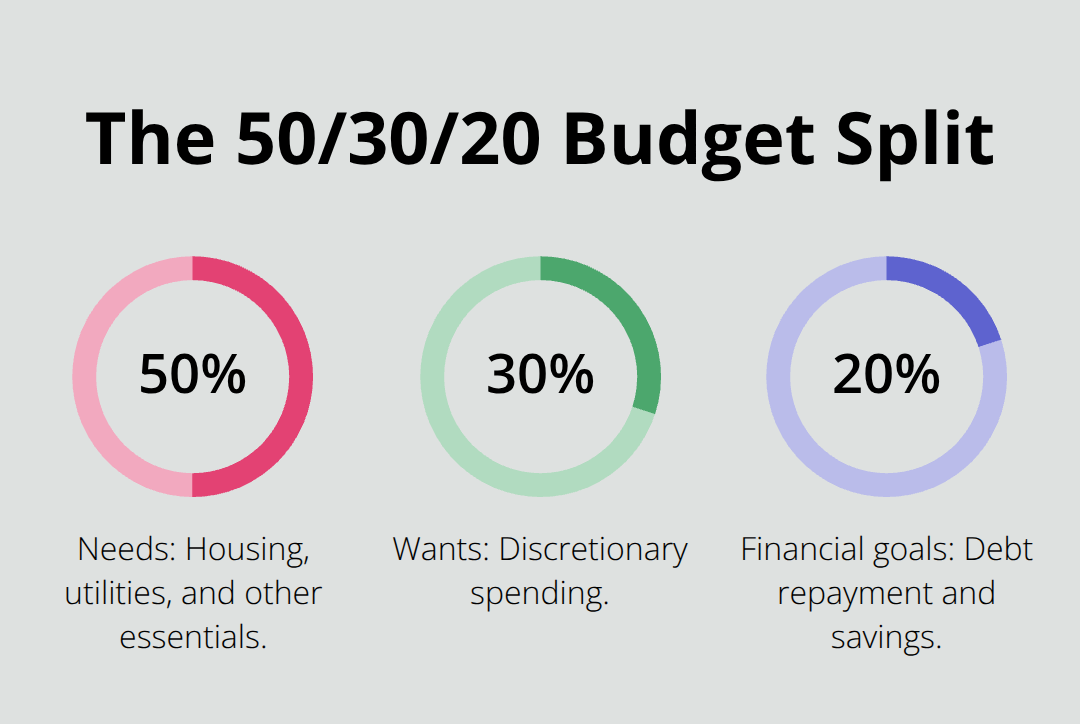
Create a written budget that accounts for every dollar using the 50/30/20 framework: 50% of after-tax income toward necessities like housing and utilities, 30% toward discretionary spending, and 20% toward debt repayment and savings. If your monthly take-home is $3,000, this means $1,500 for essentials, $900 for discretionary items, and $600 for financial security. The bankruptcy discharge eliminated your unsecured debts, so this $600 should flow directly into a high-yield savings account earning 4% to 5% annual interest, not back toward credit card payments.
Build a three-month emergency fund first, which at $600 monthly takes five months to reach $3,000. Once that account reaches $9,000 to $12,000, redirect contributions to your retirement accounts.
Tracking Spending and Eliminating Financial Leaks
Track spending using free tools like YNAB or EveryDollar for the first six months post-discharge to identify spending patterns you cannot see without data. Most people discover they spend $200 to $400 monthly on subscriptions, delivery services, or impulse purchases that disappear when tracked visibly. Eliminating these leaks without lifestyle reduction creates the breathing room that prevents re-accumulation of debt and accelerates retirement savings growth.
Final Thoughts
Creditors do not stop pursuing your retirement savings on their own, and once they file a lawsuit and obtain a judgment, the collection pressure intensifies rapidly through wage garnishments, bank levies, and account freezes. Waiting for the situation to resolve itself guarantees that more of your retirement funds disappear and your financial stress compounds. Chapter 7 bankruptcy stops this cycle immediately through the automatic stay, which halts all collection activities the moment you file.
Your ERISA-qualified retirement accounts remain completely protected with unlimited federal safeguards, and your IRAs receive protection up to approximately $1.7 million under current federal exemption amounts. Florida law layers additional state-level protections on top of these federal safeguards, particularly for accounts that maintain their tax-exempt status. Government and military pensions continue flowing untouched, and once your unsecured debts are discharged, you rebuild your financial foundation without the weight of credit card debt, medical bills, or personal loans dragging you backward.
Contact Harnage Law, PLLC to discuss your specific situation and determine whether Chapter 7 fits your circumstances. Gather documentation of your retirement accounts, including recent statements and plan documents showing qualification, and act within the next 30 to 60 days to prevent additional creditor actions that become exponentially harder to reverse. Your bankruptcy fresh start protects your retirement savings and gives you the foundation you need to rebuild with confidence.