Running a solo business in Florida means managing finances alone, and one wrong move during chapter filing can derail your entire operation. Many entrepreneurs file for Chapter 7 bankruptcy without understanding the consequences, missing deadlines, or overlooking critical assets.
At Harnage Law, PLLC, we’ve seen how preventable mistakes cost business owners thousands in lost opportunities and extended financial hardship. This guide walks you through the most common pitfalls and how to avoid them.
Common Chapter 7 Bankruptcy Mistakes Solo Entrepreneurs Make in Florida
Running a solo business in Florida means managing finances alone, and one wrong move during Chapter 7 filing can derail your entire operation. Many entrepreneurs file for Chapter 7 bankruptcy without understanding the consequences, missing deadlines, or overlooking critical assets. This chapter walks you through the most common pitfalls and how to avoid them.
Underestimating What Debts Actually Discharge
The most damaging mistake solo entrepreneurs make is misunderstanding which debts actually discharge in Chapter 7. Many business owners file believing all their business debts will vanish, only to discover that certain obligations persist after discharge. Self-employment taxes older than three years may discharge, but recent payroll taxes typically do not. Sales tax debts are generally nondischargeable, meaning you remain liable even after your case closes.
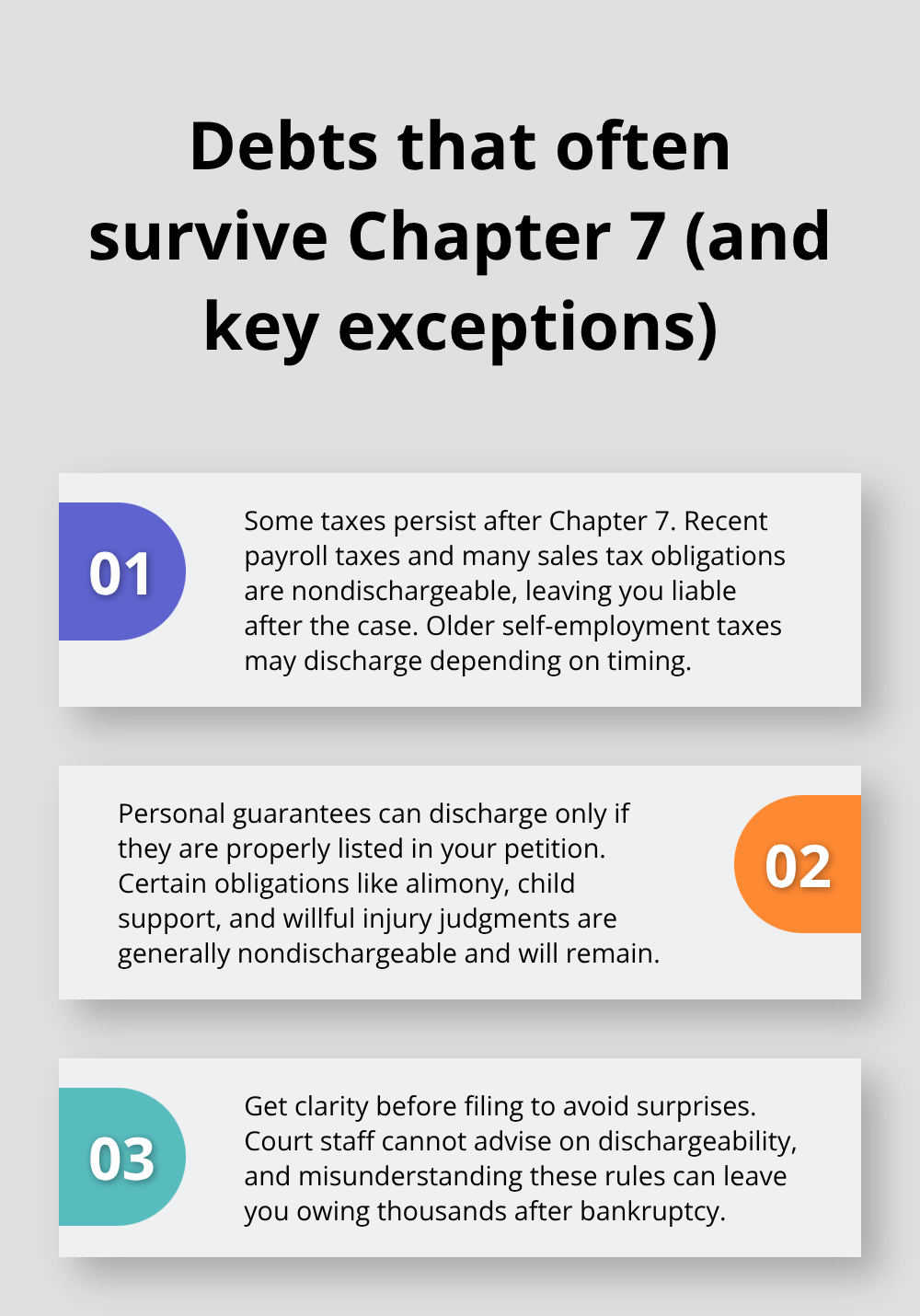
Personal guarantees on business loans can be discharged, which reduces your personal liability, but this only works if you properly list them on your petition. The U.S. Bankruptcy Code contains specific rules about nondischargeable obligations like alimony, child support, and willful injuries. Court staff cannot advise you on which debts qualify for discharge. Filing without clarity on these rules means you could emerge from bankruptcy still owing thousands in taxes or vendor debts you thought would disappear.
Incomplete Asset Disclosure Destroys Cases
Incomplete asset disclosure creates more problems than any other filing error. The trustee scrutinizes self-employed filers intensely because business income and equipment represent high-value targets. If you fail to list a vehicle, equipment, or inventory, the trustee can reopen your case and liquidate those assets months or even years later.
Florida has no tools-of-trade exemption, so business equipment beyond personal exemptions sits completely exposed. One solo entrepreneur in Orlando lost $15,000 in camera equipment because it was never listed on the bankruptcy petition, and the trustee discovered it during a post-discharge audit. You must gather two years of tax returns, a month-by-month six-month profit-and-loss statement, bank statements, client contracts, and all expense logs before filing. Commingling personal and business finances makes asset tracking impossible and triggers trustee red flags that lead to deeper investigations and potential fraud allegations.
Missing Critical Deadlines and Requirements
Missing the 341 creditors’ meeting deadline results in automatic case dismissal. This meeting typically occurs 21 to 40 days after filing and is often held by Zoom in the Orlando Division. You must attend under oath and answer questions about your income, business operations, and asset valuations.
Failing to complete pre-filing credit counseling or the post-filing financial management course disqualifies your discharge entirely. The means test deadline for Chapter 7 eligibility requires accurate calculation of your six-month average gross income minus ordinary business expenses. If your income exceeds Florida’s median of approximately $68,000 for a single person as of 2026, you face heightened scrutiny and must document every legitimate business deduction.
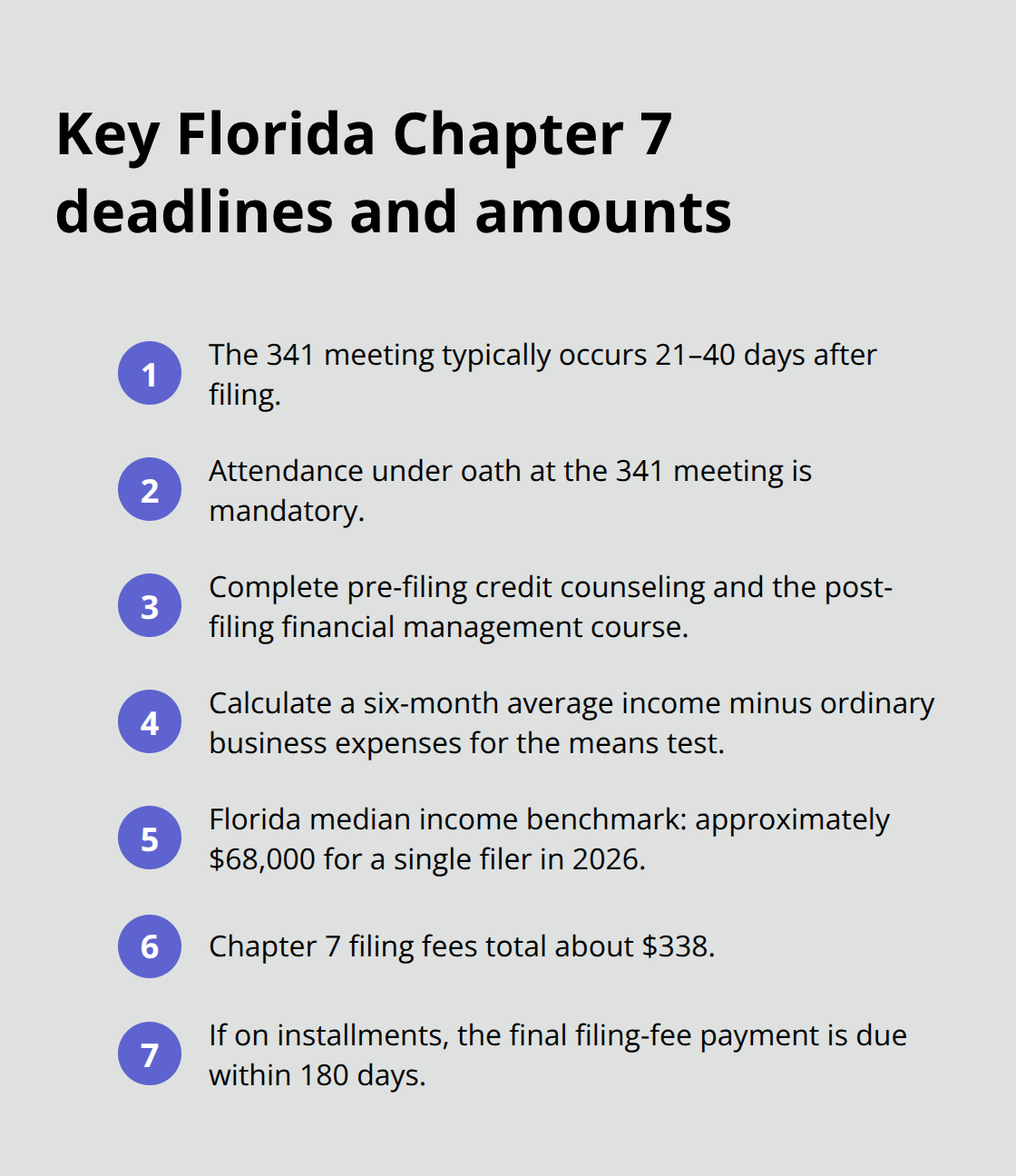
Filing fees total around $338, and if you request installment payments, your final payment deadline is 180 days after filing. Missing any of these windows results in case dismissal or delayed discharge, leaving you exposed to creditor actions and wage garnishments that the automatic stay was supposed to stop. Understanding these deadlines upfront prevents costly delays and protects your financial position throughout the process.
How to Stop Making Chapter 7 Mistakes Before Filing
Hire an Attorney Before You Gather Documents
Preventing the mistakes outlined above requires action before you file, not damage control afterward. The single most effective step is hiring a bankruptcy attorney immediately, even before gathering documents. Many solo entrepreneurs delay this decision to save money, but that delay costs far more in missed exemptions, liquidated assets, and dismissed cases.
An attorney reviews your specific situation, determines whether Chapter 7 actually fits your business structure, and identifies which debts will genuinely discharge. This conversation happens early enough to explore alternatives like Chapter 13 if Chapter 7 exposes too much equipment or inventory. Without this conversation, you operate blind on decisions worth tens of thousands of dollars.
Organize Complete Financial Documentation
Complete financial documentation must be organized before your attorney files anything. Gather two years of personal and business tax returns, then create a month-by-month profit-and-loss statement covering the six calendar months immediately before filing. This six-month P&L is mandatory for the means test and determines whether you pass Chapter 7 eligibility, so accuracy here directly impacts your case outcome.
Use QuickBooks, a spreadsheet template, or accounting software to track monthly revenue and every business expense: vehicle costs, office rent, utilities, insurance, marketing, supplies, and contractor payments. The trustee will request bank statements covering the same six-month period, so maintain completely separate personal and business accounts now to prevent the appearance of commingling that triggers additional investigations. Document all business assets with photographs and current values, including equipment, inventory, and vehicles.
Clarify Which Debts Actually Discharge
Debt discharge clarity requires your attorney to review every obligation: payroll taxes from the past three years, recent sales tax, personal guarantees on business loans, and any judgments against you. The attorney then explains which debts discharge completely, which persist after bankruptcy, and which require special handling during your case. This clarity prevents the shock of discovering months later that you still owe thousands in nondischargeable obligations.
Once your attorney completes this review, you understand exactly what financial relief Chapter 7 provides and what obligations remain your responsibility. This knowledge shapes your post-bankruptcy financial strategy and prevents unrealistic expectations about your fresh start. With complete documentation organized and debt discharge rules clarified, your attorney can accurately complete the bankruptcy petition, identify which assets fall within Florida exemptions, and calculate your means test correctly.
The next section walks you through what happens after you file and how to navigate the creditors’ meeting and discharge process successfully.
Rebuilding After Discharge in Florida
Your Chapter 7 discharge eliminates qualifying debts, but your financial recovery starts immediately after the court signs off, typically 60 to 90 days after your creditors’ meeting. The automatic stay that stopped wage garnishments and collection calls disappears once discharge is final, so creditors can resume collection attempts on nondischargeable debts like taxes or student loans. Your credit report will show the bankruptcy filing for approximately 10 years, but credit recovery happens faster than most solo entrepreneurs expect. According to Experian data, filers who actively rebuild typically see credit scores rise 100 to 200 points within 12 to 18 months of discharge, particularly if they establish new credit accounts and make consistent on-time payments.
Secured Cards and Credit Union Loans Accelerate Recovery
Secured credit cards represent the fastest path to rebuilding because approval rates are high and they report to all three credit bureaus immediately. Capital One and Discover both offer secured cards that accept deposits from $200 to $2,500, and monthly payments reported to credit bureaus accelerate score recovery significantly faster than simply waiting. Many Florida credit unions, particularly those serving the Space Coast region and central Florida, offer rebuilding loan products specifically designed for post-bankruptcy filers. These loans often feature reasonable rates and terms designed around modest income levels, and consistent repayment directly rebuilds your credit profile.
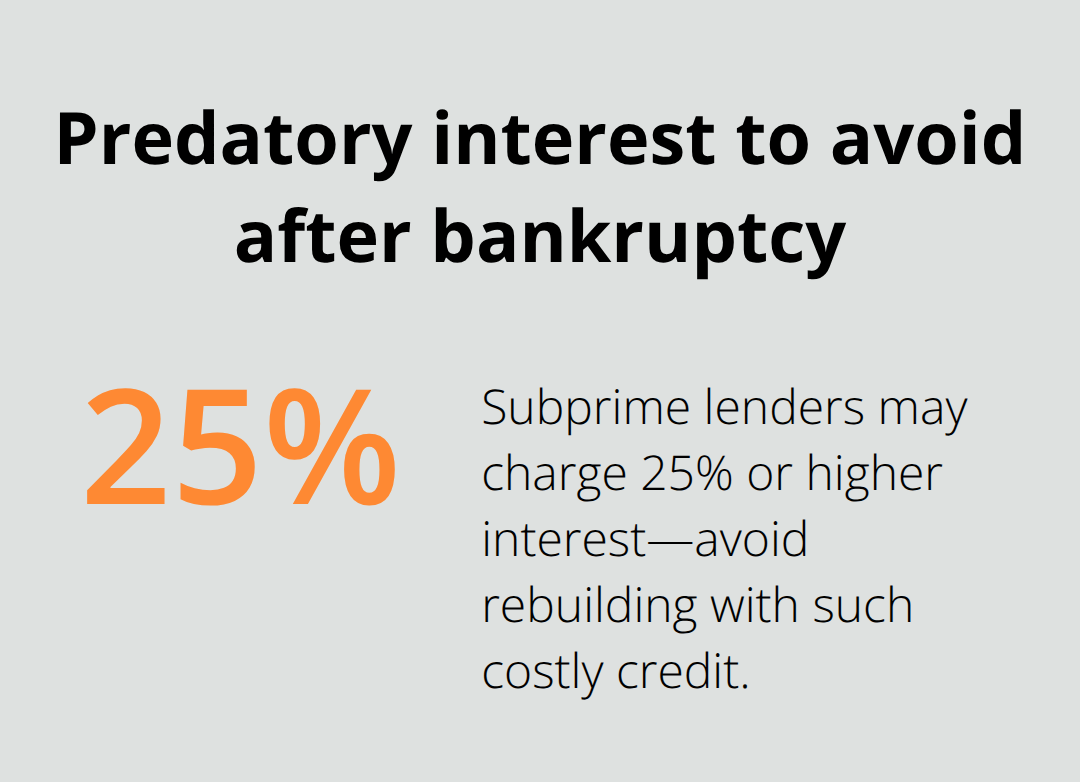
Avoid subprime lenders charging 25 percent or higher interest rates; the cost of rebuilding through predatory lending outweighs the credit benefit. Instead, check with your bank or local credit union first, since many offer post-bankruptcy products at legitimate rates.
Separate Personal and Business Finances Immediately
Separating personal and business finances now prevents future problems that could force you back into bankruptcy. Open a dedicated business bank account if you operate as a sole proprietor, and run all business revenue and expenses through that account exclusively. This separation creates a clear audit trail that protects you during future tax examinations and prevents the trustee-triggering commingling that nearly destroyed your case before.
Track business expenses meticulously using accounting software like QuickBooks or Wave, both offering free or affordable tiers for solo entrepreneurs. Quarterly tax payments on self-employment income prevent the debt accumulation that led to your Chapter 7 filing. Calculate your estimated tax liability quarterly and pay on time to avoid another cycle of tax debt and potential future bankruptcy consideration.
Build Cash Reserves Before Expansion
Build a cash reserve of three to six months in business expenses before you expand operations or hire help, since income volatility contributed to your financial crisis initially. This reserve protects your business during slow months and prevents the income gaps that force entrepreneurs back into debt cycles. Monitor your monthly cash flow closely and adjust spending when revenue dips, rather than accumulating new debt to cover shortfalls.
Final Thoughts
The mistakes outlined in this guide stem from one common source: attempting Chapter 7 filing without professional guidance. Solo entrepreneurs in Florida face unique pressures to save money, but cutting corners on legal representation during chapter filing costs exponentially more in liquidated assets, dismissed cases, and extended financial hardship. Understanding debt discharge rules, disclosing all assets accurately, and meeting every deadlines separates successful cases from financial disasters that could have been prevented.
Your path forward requires three concrete actions. First, contact a bankruptcy attorney immediately to evaluate whether Chapter 7 actually protects your business structure and income level (this conversation determines whether Chapter 7 or Chapter 13 better serves your situation and identifies which debts will genuinely discharge). Second, organize complete financial documentation before filing: two years of tax returns, a month-by-month six-month profit-and-loss statement, bank statements, and asset valuations. Third, clarify which debts discharge and which persist, so you enter bankruptcy with realistic expectations about your fresh start.
After discharge, rebuild systematically through secured credit cards and credit union loans, separate your personal and business finances completely, and establish cash reserves before expanding operations. These steps prevent the income volatility and debt accumulation that led to your initial financial crisis. If you’re facing financial challenges, contact us for a consultation to explore whether Chapter 7 bankruptcy offers the fresh start your business needs.