
Gig workers face income swings that traditional employees never experience. One month you’re earning well; the next, work dries up completely.
Chapter 7 bankruptcy offers a real path forward for those drowning in credit card debt and medical bills. We at Harnage Law, PLLC help gig workers in Florida understand how this relief works and whether it fits their situation.
Why Gig Workers in Florida Face Financial Instability
Income Swings Create Cash Flow Chaos
Gig workers in Florida earn income that looks nothing like a traditional paycheck. Delivery drivers might make $800 one week and $300 the next. Rideshare drivers saw earnings collapse during COVID-19 while food delivery exploded, then reversed when lockdowns ended, according to data tracking platform income volatility. The Bureau of Labor Statistics documents that independent work has grown significantly, but this growth masks a harsh reality: irregular pay creates constant cash flow pressure. Without predictable income, gig workers cannot reliably cover fixed expenses like rent, car payments, and insurance. A single slow month forces difficult choices between paying utilities or credit cards.
Hidden Costs Shrink Your Real Earnings
High gross income also masks the real problem. You might earn $3,000 in a month after platform fees, fuel costs, vehicle maintenance, and self-employment taxes consume your earnings. The gig economy’s structure leaves workers absorbing all business costs that traditional employers cover, shrinking net income dramatically while gross numbers look deceptively healthy on paper. Medical emergencies hit harder when you lack employer health insurance, and unexpected car repairs become financial disasters since your vehicle is your income source.
How Debt Traps Form Quickly
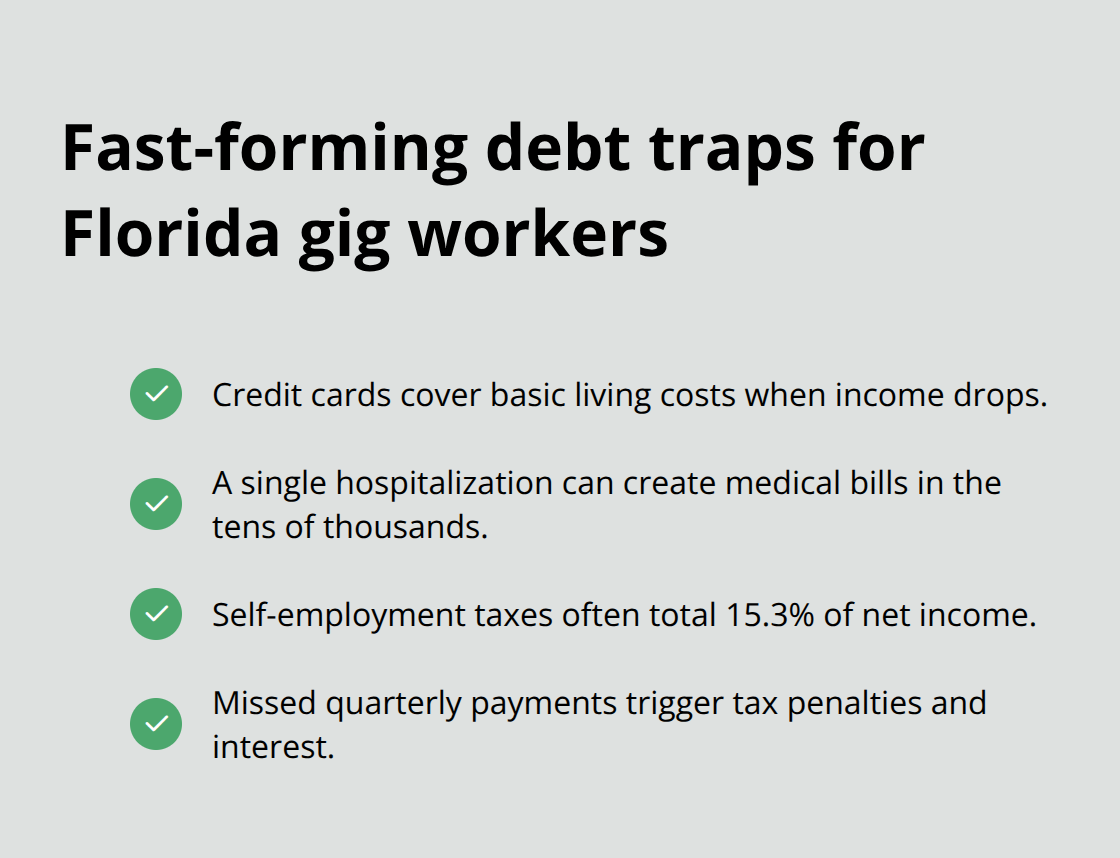
The combination of income swings and zero job security creates debt traps that are difficult to escape alone. When income drops, credit cards become the bridge to cover living expenses, and balances climb quickly. Medical debt accumulates faster for uninsured gig workers, with a single hospitalization potentially costing tens of thousands of dollars. Self-employment taxes add another layer of burden since gig workers owe both the employer and employee portions of Social Security and Medicare taxes, often totaling 15.3 percent of net income. Many gig workers face tax debt penalties and interest when quarterly payments are missed because income fluctuations make planning impossible.
Florida’s Rising Costs Amplify the Problem
Without employer-sponsored benefits, you pay full premiums for health insurance through Florida’s Health Benefit Exchange or private plans, creating another major monthly expense. Rising living costs in Florida compound these challenges, with housing costs climbing while gig income remains stagnant or declines. This mismatch between expenses and unpredictable earnings is exactly why Chapter 7 bankruptcy exists-it provides a tool for gig workers struggling under unsecured debt loads that income volatility made impossible to manage. Understanding how Chapter 7 works and whether you qualify depends on knowing the specific rules that apply to self-employed workers in Florida.
What Chapter 7 Actually Eliminates for Florida Gig Workers
Unsecured Debts Disappear Completely
Chapter 7 bankruptcy discharges unsecured debts that strangle your finances, and this matters tremendously for gig workers drowning in credit card balances and medical bills. Credit card debt vanishes-if you’ve maxed out multiple cards covering slow income months, Chapter 7 wipes these balances completely. Medical debt disappears too, which is critical since uninsured gig workers often face five-figure hospital bills from a single emergency. Personal loans, payday loans, and other consumer debts fall into this category as well. The discharge happens relatively quickly, typically within three to four months from filing to completion according to U.S. Courts data. This speed matters because you stop bleeding money to creditors while the process unfolds.
What Chapter 7 Cannot Touch
Chapter 7 cannot eliminate child support, alimony, most student loans, and certain tax obligations. For the unsecured consumer debts crushing most gig workers, however, discharge provides genuine relief. Tax debt presents a more complex situation-self-employment taxes (trust fund taxes) generally remain nondischargeable in Chapter 7, but Chapter 13 allows these debts to be paid over three to five years within a repayment plan if your income supports it.
The Automatic Stay Stops Creditor Attacks Immediately
The automatic stay triggers the moment you file and stops creditor harassment instantly. Your phone stops ringing with collection calls, letters cease arriving, and lawsuits against you halt. Florida law caps wage garnishment at specific thresholds, but Chapter 7 stops even this reduced garnishment entirely. For gig workers, this protection is essential since losing income to garnishment creates additional financial chaos when your earnings already fluctuate unpredictably.
You Keep the Assets That Generate Your Income
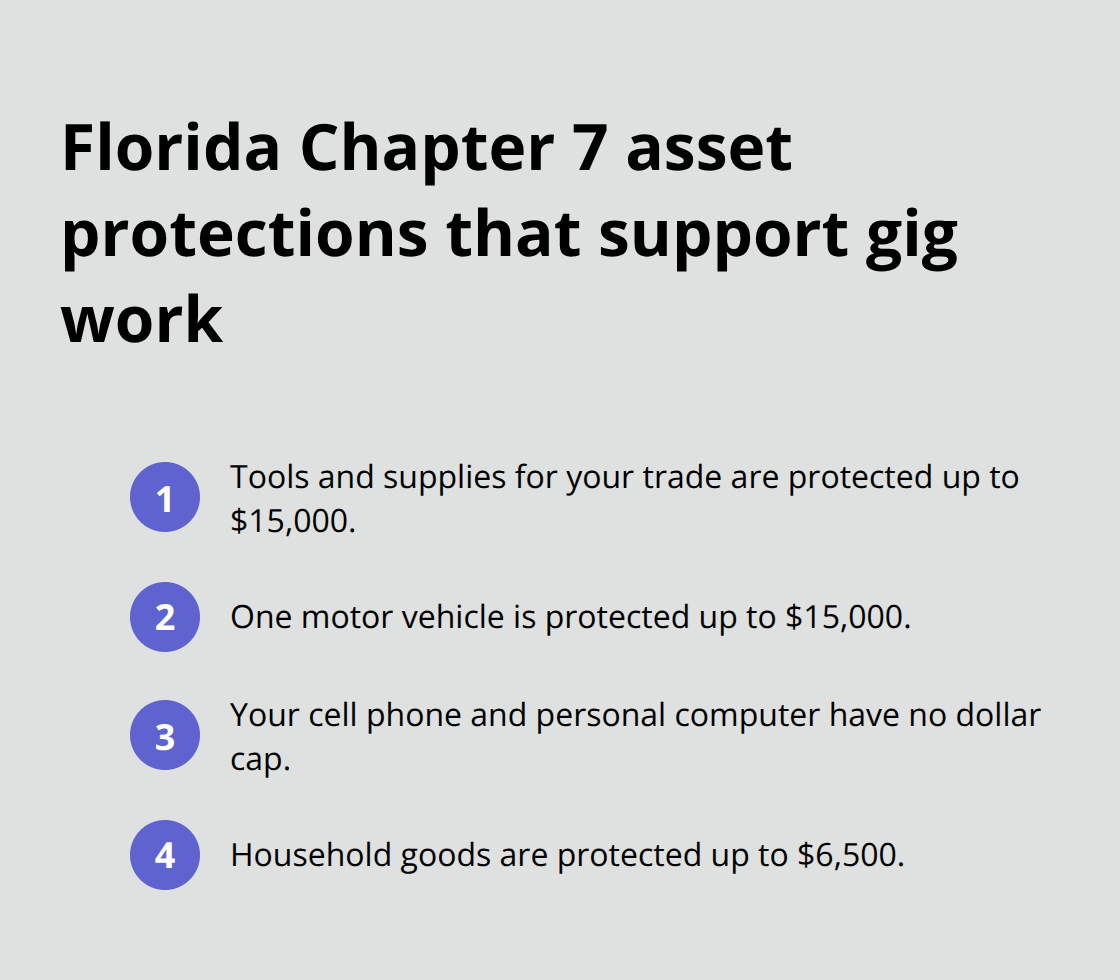
You retain the assets necessary for your livelihood. Florida exemptions protect tools and supplies used for your trade up to $15,000, a motor vehicle up to $15,000, a cell phone and personal computer with no dollar cap, and household goods up to $6,500. These protections mean your delivery vehicle, phone, and work equipment remain yours-you do not lose the instruments generating your income. Your ability to continue earning after Chapter 7 discharge remains intact, allowing you to rebuild without losing your livelihood.
Understanding Eligibility Determines Your Path Forward
Whether Chapter 7 actually works for you depends on passing the means test, which compares your six-month average income to the median income for your household size in Florida. Gig workers with irregular earnings can still qualify, but documentation and timing matter significantly when your income swings month to month.
How Gig Workers Qualify for Chapter 7 in Florida
The Means Test and Your Six-Month Income Average
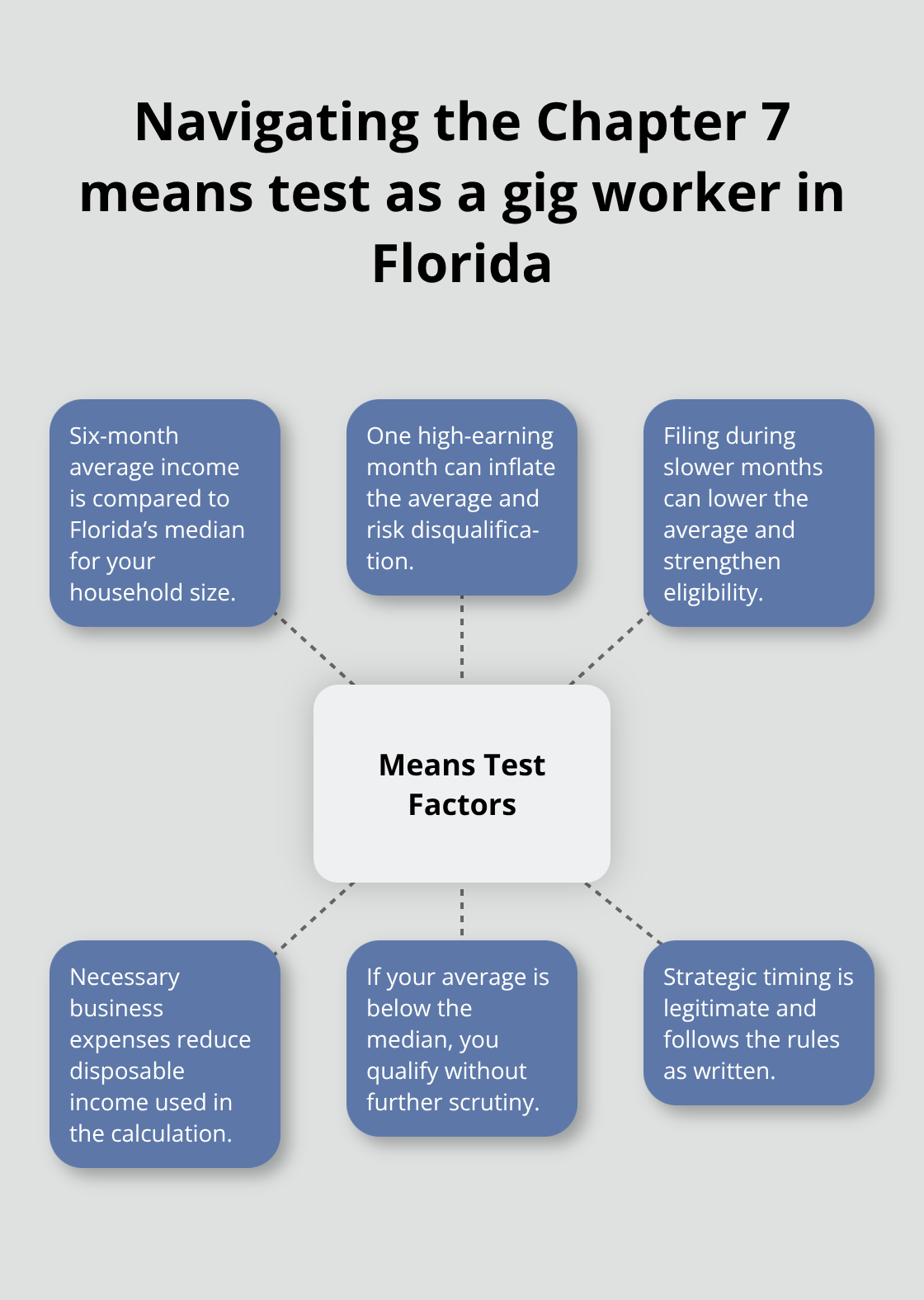
The means test determines whether you can file Chapter 7, and it works differently for self-employed workers than for traditional employees. The U.S. Trustee Program calculates your six-month average gross income before filing and compares it to the median income for a household of your size in Florida. If your average falls below the median, you automatically qualify for Chapter 7 without further scrutiny.
Gig income swings make this calculation tricky. A single large payout from a platform or a particularly profitable month can inflate your six-month average and potentially disqualify you. Conversely, timing matters enormously. If you file during a period when your income has dropped, your six-month lookback captures those slower months, lowering your average and strengthen your Chapter 7 position. This is not gaming the system; it is using the rules as written.
Strategic Timing and Income Documentation
An attorney experienced with gig workers analyzes your specific income pattern and identifies the optimal filing window. The means test also allows deductions for necessary business expenses that reduce your disposable income in the calculation. Fuel, vehicle maintenance, phone plans for work, platform fees, and insurance all reduce the income number the court sees. If you earn high gross income but have substantial deductible expenses, you may still qualify because net income is what matters.
Documentation requirements separate viable Chapter 7 cases from weak ones, and gig workers must compile thorough records that traditional employees do not need. You need two years of personal and business bank statements to show income deposits and expense payments, smoothing out monthly fluctuations and providing a factual foundation. Two years of invoices, contracts, receipts, and platform payment records capture cash inflows and outflows that bank statements alone miss.
Organizing Records for Court Review
Your 1099 forms from platforms confirm reported income, and two years of federal tax returns or tax transcripts give the court a complete financial picture. Platform statements from Uber, Lyft, DoorDash, or other services you use should be compiled and organized chronologically. Poor documentation weakens your case and raises red flags with the trustee, while meticulous records demonstrate that you understand your finances and are serious about the process.
Filing Requirements and Timeline
The filing itself requires a petition plus schedules listing assets and liabilities, current income and expenses, and a financial affairs statement. Filing fees total $335 according to U.S. Courts data, and fees can be paid in installments or waived for very low-income filers. Credit counseling from an approved agency must occur before filing, though emergencies may qualify for exceptions.
The timeline from filing to discharge typically runs three to four months, meaning you stop making payments to unsecured creditors relatively quickly once the petition is filed. An attorney can guide you through each requirement and help you organize documentation in the format courts require.
Final Thoughts
Chapter 7 bankruptcy offers gig workers in Florida a legitimate path out of debt that income volatility made impossible to escape alone. The relief is real: unsecured debts disappear, creditor harassment stops immediately, and you retain the assets needed to keep earning. Your vehicle, phone, and work equipment remain yours, allowing you to rebuild without losing your livelihood.
The decision to file depends on your specific financial situation. If your six-month average income falls below Florida’s median for your household size, you likely qualify. Even with irregular earnings, strategic timing and thorough documentation can strengthen your position, and the means test accounts for business expenses like fuel and platform fees that reduce the income number the court sees.
Contact Harnage Law, PLLC for a free consultation to assess whether Chapter 7 bankruptcy fits your circumstances. We help gig workers in Florida navigate this process with personalized guidance tailored to your situation. Your fresh start is within reach.