Your side hustle generates income that matters to you. When you file Chapter 7 bankruptcy in Florida, that income and those assets don’t disappear from the court’s view-they become part of your bankruptcy relief process.
At Harnage Law, PLLC, we see side hustlers make costly mistakes because they don’t understand what happens to their business during bankruptcy. The good news is that Florida law provides protections, and knowing the rules before you file makes all the difference.
What Happens to Your Side Hustle in Florida Chapter 7 Bankruptcy
How the Bankruptcy Trustee Evaluates Your Business Assets
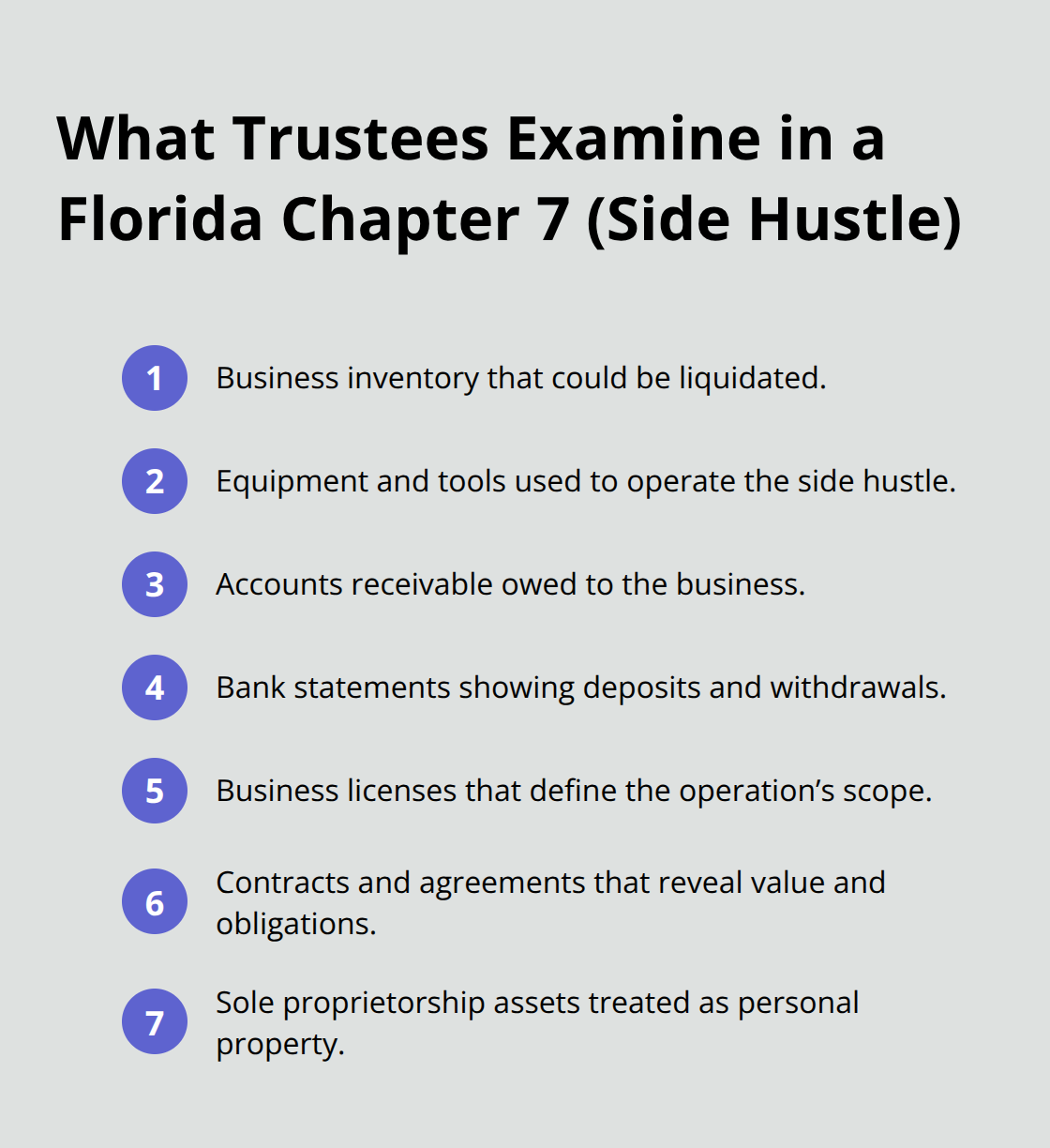
When you file Chapter 7 bankruptcy in Florida, the court appoints a trustee to examine your side hustle assets and determine what gets liquidated. The trustee’s job is straightforward: identify nonexempt property and convert it to cash for creditors. The trustee will review your business inventory, equipment, tools, and any accounts receivable your side hustle generates. Bank statements, business licenses, and contracts reveal the scope and value of your operation to the trustee. If your side hustle operates as a sole proprietorship, the trustee treats business assets the same as personal property, which is why separating your finances now matters enormously.
Many side hustlers operate informally without clear records, and this lack of documentation makes the trustee’s job harder and your situation riskier. The trustee can pursue what the law calls avoiding powers, meaning they can recover transfers you made in the 90 days before filing if those transfers benefited insiders or moved assets around suspiciously. A side hustle run from your home with minimal equipment often qualifies as a no-asset case, meaning nonexempt property is either absent or minimal, so creditors receive little or nothing. However, a side hustle with significant inventory, equipment, or client receivables triggers asset liquidation that can disrupt your income stream for months.
Which Side Hustle Income Gets Reported to the Court
Your side hustle income becomes part of your bankruptcy petition and schedules, and this income directly affects your means test calculation and discharge eligibility. The court requires six months of business income averaged to determine your current monthly income, which then gets multiplied by 12 to compare against Florida median income thresholds. For a household of one, Florida’s median income sits at $41,334 annually according to current bankruptcy guidelines, and side hustle income that pushes you above this threshold forces you into the means test calculation.
You must disclose all business income on Schedule I, including gross receipts, minus ordinary and necessary business expenses like supplies, software subscriptions, equipment maintenance, or platform fees. The IRS allows deductions for legitimate business costs, and the court applies these same standards to your bankruptcy filing. Many side hustlers underreport expenses or fail to document them, which inflates their reported income and triggers false presumptions of abuse under the means test. If your side hustle generates $800 monthly but you claim only $200 in expenses when you actually incur $600, the court calculates disposable income on inflated numbers and may force you into Chapter 13.
Protection Limits Under Florida Bankruptcy Exemptions
Keeping meticulous profit-and-loss statements and separating business and personal finances now gives you credibility with the trustee and protects you during the 341 meeting, where the trustee questions you under oath about your income and expenses. Side hustlers who cannot clearly explain their business deductions face skepticism that can delay discharge or result in conversion to Chapter 13.
Florida law provides strong protections for side hustle assets through exemptions that shield tools of the trade, and this protection is often misunderstood by people filing without guidance. The state exempts tools of the trade needed to earn income, which includes equipment, machinery, and implements directly used in your business up to $1,000 in value. If your side hustle requires a vehicle for deliveries, client visits, or service provision, Florida protects $1,000 of the vehicle’s equity separately.
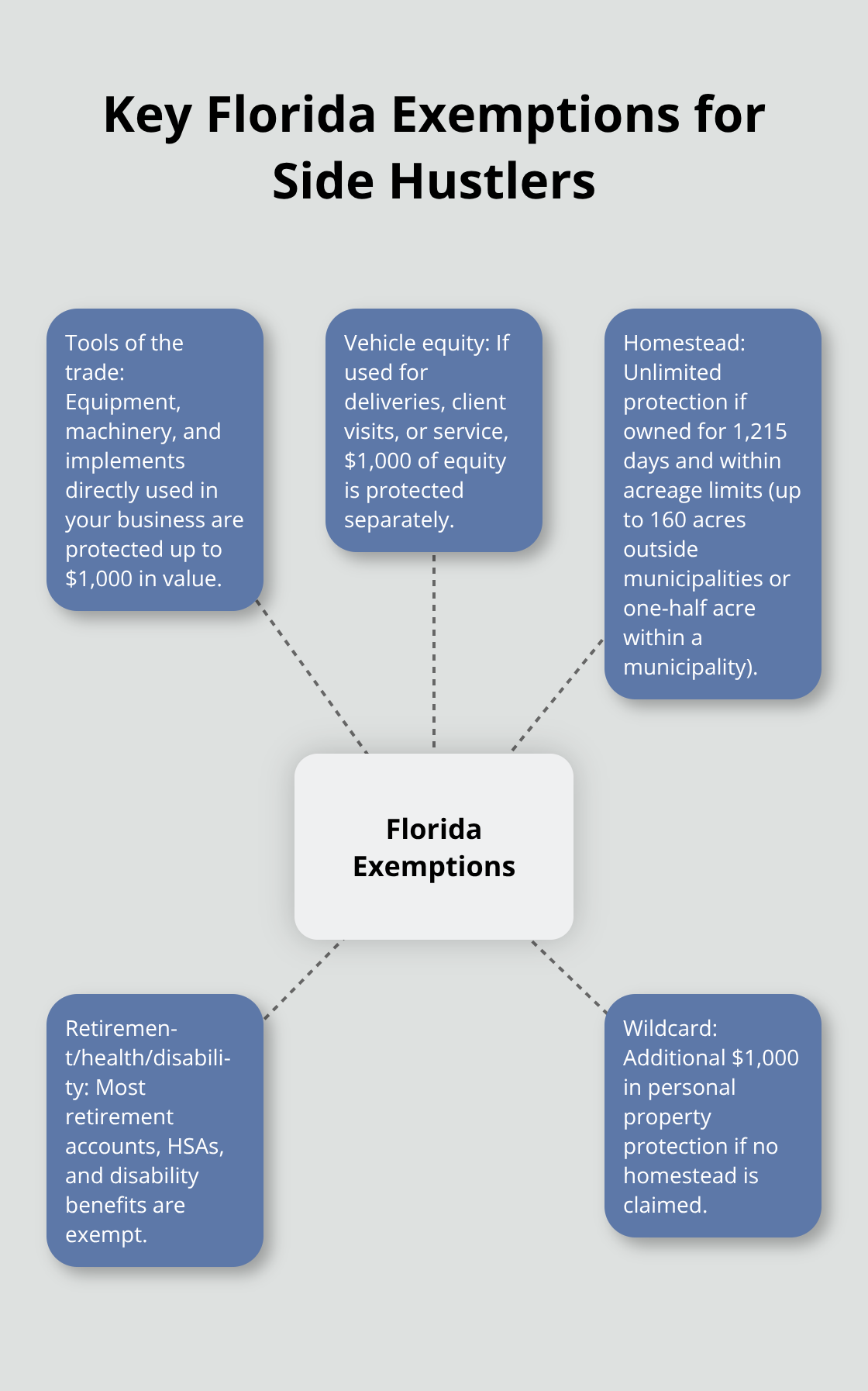
Many side hustlers overlook Florida’s unlimited homestead exemption, which protects home equity with no dollar limit if you own the property for 1,215 days before filing and it meets acreage requirements (up to 160 acres outside municipalities or one-half acre within a municipality). Running your side hustle from home makes the homestead exemption particularly valuable because your primary residence and your business location receive the same protection. Additionally, Florida exempts most retirement accounts, health savings accounts, and disability benefits, which means income you have deposited into these accounts stays protected even during liquidation.
The wildcard exemption lets you protect an additional $1,000 in personal property if you do not claim the homestead exemption, which benefits side hustlers operating without home ownership. Maximizing these exemptions requires proper scheduling on the bankruptcy petition, and errors in claiming exemptions can trigger fraud concerns or result in loss of protection. Understanding which exemptions apply to your specific situation and claiming maximum protection before the trustee liquidates assets separates side hustlers who preserve their income streams from those who lose critical business tools. The mistakes you make now-or the protections you put in place-determine whether your side hustle survives the bankruptcy process intact or faces liquidation that takes months to recover from.
Steps to Protect Your Side Hustle Before Filing Chapter 7 in Florida
Separate Business and Personal Finances Immediately
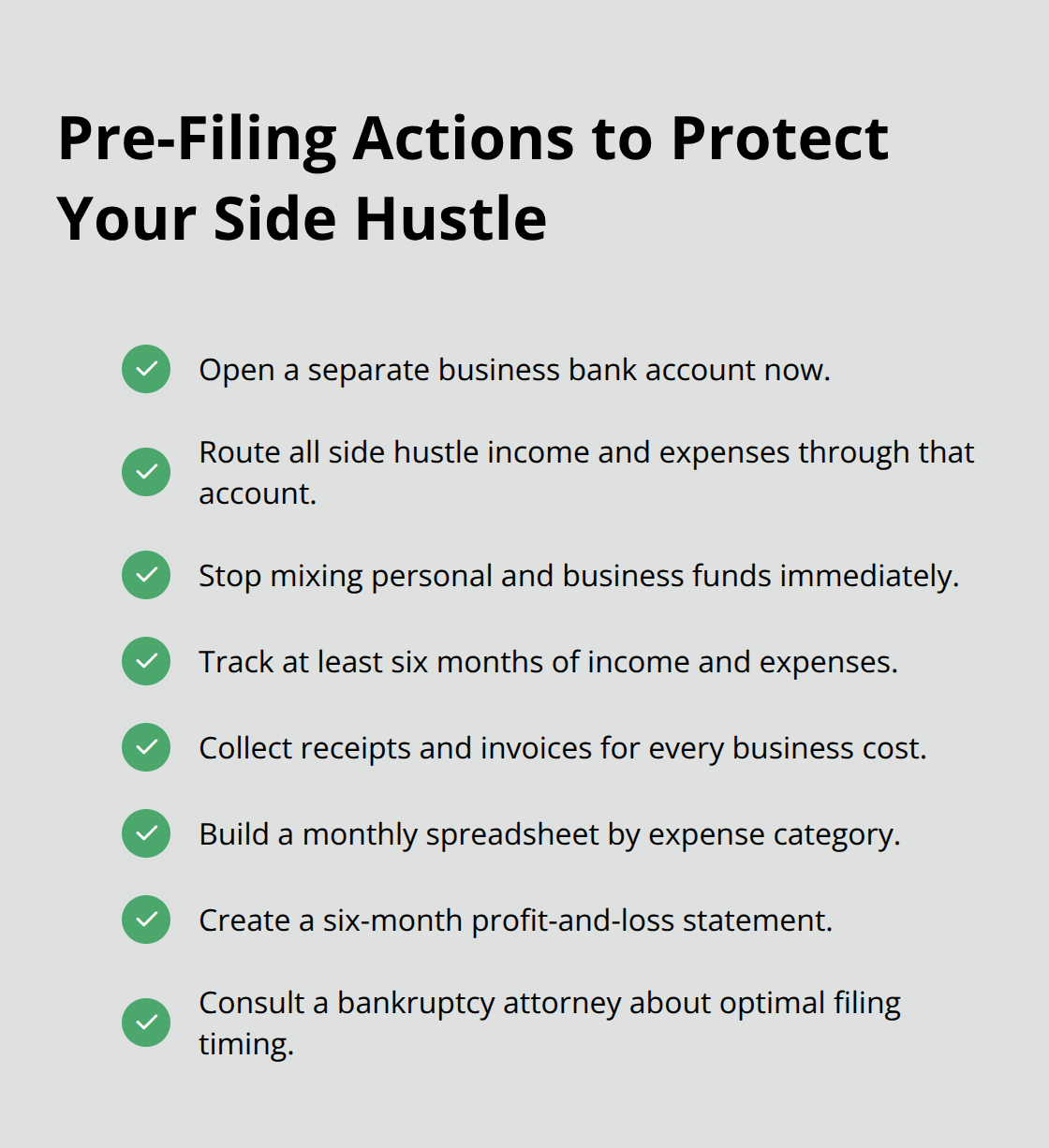
Protecting your side hustle starts months before you file for bankruptcy, not the day you walk into court. The trustee will scrutinize every transaction from the past 90 days and examine your entire financial picture from the past six months, so the time to act is now. Stop mixing business and personal money immediately. Open a separate business bank account if you haven’t already, and route all side hustle income and expenses through that account exclusively.
The IRS requires sole proprietors to track business income and expenses separately anyway, and bankruptcy courts expect the same documentation. When your business account shows a clear pattern of deposits and withdrawals tied to your side hustle, the trustee understands your operation more easily and determines what qualifies as legitimate business expenses versus personal spending disguised as business costs. A side hustler who deposits client payments into a personal checking account alongside grocery purchases and utility bills creates red flags that can delay your discharge or trigger conversion to Chapter 13.
The trustee may assume you’re hiding income or inflating expenses because the records don’t tell a coherent story.
Open the business account this week and begin routing income and expenses through it going forward. This single step transforms your credibility with the court.
Document All Legitimate Business Expenses
Documenting your actual business expenses is where most side hustlers fail, and this failure costs them dearly during bankruptcy. The IRS allows deductions for ordinary and necessary business expenses, and bankruptcy courts apply the same standard, but you must prove the expenses are real. Start collecting receipts and invoices for every business cost: software subscriptions, equipment purchases, supplies, platform fees, vehicle maintenance tied to client visits, or home office utilities proportional to your business space.
Create a simple spreadsheet that tracks monthly expenses by category so you can show the trustee a six-month pattern of legitimate costs. If you spend $600 monthly on business supplies and software but have no documentation, the court will allow nothing. If you have receipts and a clear pattern, the court accepts the full amount and reduces your reported income accordingly. This documentation directly lowers your means test income and may move you from Chapter 13 back into Chapter 7 eligibility. A side hustler with documented $500 monthly expenses looks dramatically different to the means test than one with zero documentation claiming the same costs.
Gather three to six months of receipts now, organize them, and create a profit-and-loss statement showing income minus documented expenses. This preparation protects you more than almost any other single action you can take before filing.
Consult With a Bankruptcy Attorney About Timing
The timing of your filing affects your means test calculation significantly. If your side hustle generates seasonal income, filing during a low-income month can reduce your six-month average and help you qualify for Chapter 7 instead of Chapter 13. A bankruptcy attorney can review your income patterns and recommend the optimal filing window based on your specific business cycle. Delaying your filing by one or two months (if creditors aren’t actively pursuing collection) can lower your average income and change your bankruptcy outcome substantially.
An attorney also helps you understand which exemptions apply to your specific situation and ensures you claim maximum protection before the trustee liquidates assets. The mistakes you make now-or the protections you put in place-determine whether your side hustle survives the bankruptcy process intact or faces liquidation that takes months to recover from. Understanding the common pitfalls that derail side hustlers during bankruptcy filing prevents costly errors that can extend your case or result in asset loss.
Common Mistakes Side Hustlers Make When Filing Chapter 7 in Florida
Hiding Income or Assets From the Bankruptcy Court
The trustee views incomplete or inconsistent financial records as a signal to investigate further, and side hustlers who fail to disclose all income sources or business accounts trigger extended investigations that delay discharge by months. The bankruptcy petition requires you to list every asset, every debt, and every income stream, and the 341 meeting puts you under oath to answer questions about your finances. A side hustler who operates a freelance business but fails to mention a second small consulting gig, or who maintains a business savings account but lists only a personal checking account, creates credibility problems that can result in case conversion to Chapter 13 or denial of discharge entirely.
The trustee has access to bank records through subpoena and can cross-reference your tax returns against your bankruptcy schedules, so omissions get discovered. Federal law under 11 U.S.C. § 727 allows the trustee to object to your discharge if you fail to explain any loss of assets or income, meaning one hidden account can cost you the entire benefit of bankruptcy relief. Many side hustlers rationalize that a small second income stream or a barely-used business account doesn’t matter, but the court sees intentional concealment regardless of the amount involved. The consequences are severe: your discharge gets denied, creditors continue collection efforts, and you lose the fresh start bankruptcy was supposed to provide.
Failing to Disclose Business Bank Accounts
Side hustlers often maintain multiple accounts without realizing that the bankruptcy petition requires full disclosure of every account you control. A business savings account that sits dormant, a separate account for a second side hustle, or even an old business account you stopped using must all appear on your schedules. The trustee will discover these accounts through financial institution searches and credit reports, and the discovery of an undisclosed account after you file creates the appearance of intentional fraud.
The court interprets nondisclosure as an attempt to hide assets from creditors, and this interpretation can result in dismissal of your case or denial of discharge. You lose all bankruptcy protection and remain liable for every debt you filed to eliminate. The trustee may also refer your case to the U.S. Attorney for criminal investigation if the nondisclosure appears deliberate. Disclose every account you have opened, closed, or currently maintain on your bankruptcy petition, even if the account holds minimal funds or you haven’t used it in months.
Mixing Personal and Business Finances Before Filing
The single most damaging mistake is mixing personal and business finances before filing, because this creates the appearance of financial chaos that invites trustee scrutiny and gives creditors grounds to argue you mismanaged your obligations. If your business account shows personal grocery purchases, rent payments, and entertainment expenses alongside legitimate business transactions, the trustee cannot easily distinguish what portion of your income actually belongs to your side hustle versus what belongs to personal spending.
This confusion inflates your reported business income because the trustee may disallow legitimate business deductions when the documentation doesn’t support a clear business purpose. A side hustler who deposits $3,000 in monthly client payments into a personal account that also receives a $2,000 salary and contains $1,500 in monthly personal expenses cannot credibly claim which portion of account activity relates to the business. The means test calculation becomes impossible to verify, and the trustee defaults to treating all deposits as income without expense offsets.
Separating your finances now-before you file-gives you a documented six-month pattern showing exactly what your side hustle generates and what it costs to operate. This separation also protects you if the trustee questions your expense claims during the 341 meeting, because you can point to a business account that shows consistent expense patterns matching your profit-and-loss statement. Open a separate business account this week and maintain it exclusively for side hustle income and business expenses for the next several months before filing. This single action transforms how the court views your operation and prevents the trustee from viewing your finances as deliberately obscured.
Final Thoughts
Protecting your side hustle during Chapter 7 bankruptcy in Florida requires three core actions: separate your finances now, document every legitimate business expense, and consult with a bankruptcy attorney before you file. These steps determine whether your side hustle survives the bankruptcy process intact or faces months of disruption and asset loss. The trustee will examine your records regardless, so the question is whether those records tell a clear story of legitimate business activity or raise red flags that trigger extended investigation and potential case conversion to Chapter 13.
The mistakes side hustlers make are preventable. Hiding income, failing to disclose accounts, and mixing personal and business finances create the appearance of intentional fraud that can result in denial of discharge entirely. You lose all bankruptcy relief and remain liable for every debt you filed to eliminate. The cost of these mistakes far exceeds the effort required to organize your finances before filing.
Florida law provides strong protections for side hustle assets through exemptions that shield tools of the trade, home equity, and retirement accounts (maximizing these exemptions requires proper scheduling on your bankruptcy petition and understanding which protections apply to your specific situation). We at Harnage Law, PLLC assist individuals and families in overcoming financial challenges through Chapter 7 bankruptcy relief. Contact us at chapter7florida.com to discuss your side hustle situation and build a practical plan that preserves your income streams while providing the bankruptcy relief you need.