Starting a business with personal debt hanging over your head creates unnecessary stress and financial risk. Filing Chapter 7 bankruptcy quickly can give you the clean slate you need before launching your venture.
At Harnage Law, PLLC, we’ve seen how the right timing makes all the difference for Florida entrepreneurs. This guide walks you through whether filing now sets you up for long-term business success.
What Gets Wiped Out in Chapter 7 Bankruptcy in Florida
Chapter 7 bankruptcy eliminates most unsecured debts, which is the primary reason Florida entrepreneurs file before launching a business. Credit card balances, personal loans, medical bills, and payday loans vanish after discharge according to U.S. Courts data.
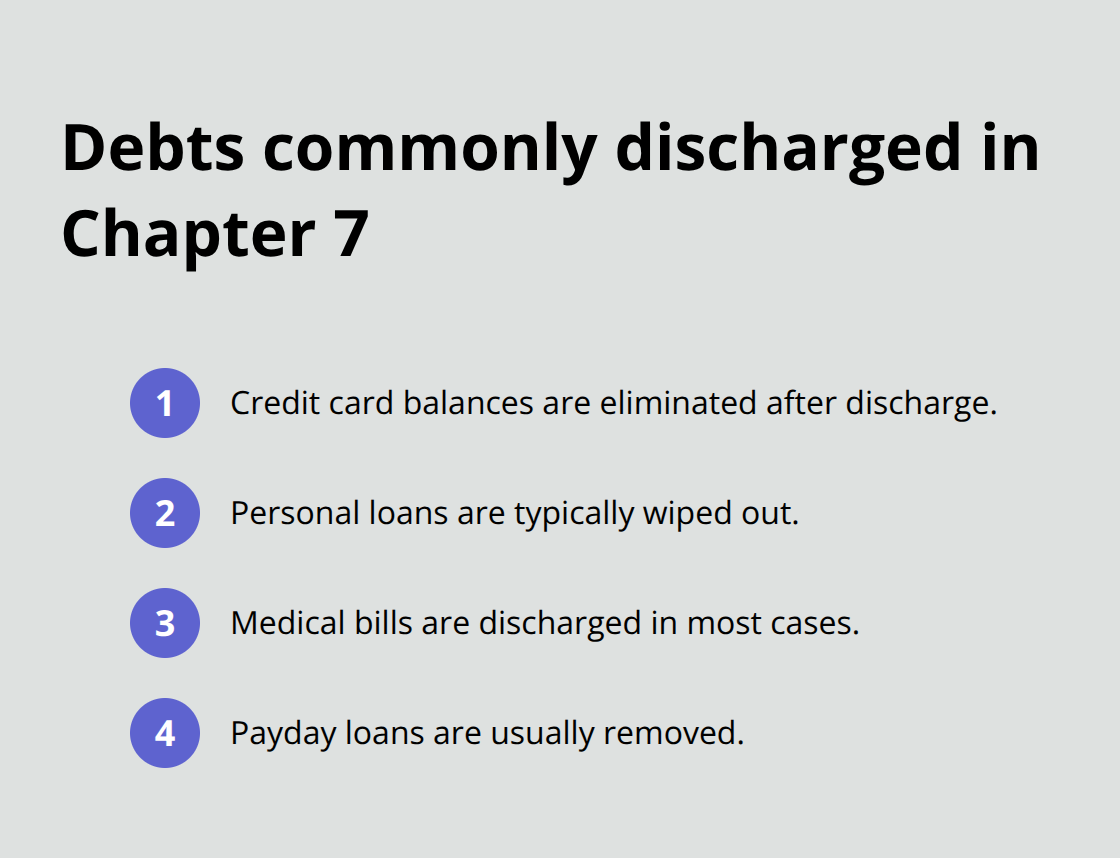
More than 99% of Chapter 7 cases filed by individual debtors end with a discharge, meaning the vast majority of filers successfully clear their debts. This matters for business owners because unsecured debt becomes personal liability that follows you into your new venture. When you start with a clean slate, you avoid the constant pressure of collection calls and the temptation to funnel business revenue toward old personal debts. The discharge typically arrives within three to six months after filing, giving you a defined timeline to plan your business launch.
Debts That Survive Chapter 7
Certain debts do not disappear in Chapter 7. Child support, alimony, most federal and state taxes, most student loans, and willful injuries remain your responsibility according to U.S. Courts information. If you owe back taxes or child support, Chapter 7 clears other debts but leaves these obligations intact, so your business planning must account for these continuing payments.
Credit Score Impact After Filing
Your credit score will drop immediately after filing, but this damage is temporary and manageable for business purposes. Most lenders focus less on the bankruptcy itself and more on what happens after discharge. Within 12 to 18 months post-discharge, you can qualify for business credit products if you demonstrate stable income and responsible financial behavior.
Timeline for Accessing Business Financing
Traditional bank loans typically require two to three years of clean payment history after discharge, but SBA loans and business credit cards often become available sooner. The key is building business credit separately from personal credit by opening vendor accounts and small trade lines immediately after discharge. Your personal credit recovery accelerates when you use a secured credit card responsibly and keep business finances completely separate from personal accounts.
How Lenders View Post-Bankruptcy Applicants
Lenders view post-bankruptcy filers who maintain clean records more favorably than those with ongoing collection activity, so the discharge itself actually improves your borrowing position compared to someone still drowning in debt. This fresh financial standing positions you well as you move into the next phase-structuring your business to protect personal assets and separate your finances from day one.
How to Shield Your Business From Personal Debt After Bankruptcy
The moment your Chapter 7 discharge arrives, you have a rare opportunity to build your business structure correctly from the start. Most entrepreneurs who file bankruptcy before launching a venture make a critical mistake: they treat their new business finances the same way they managed personal money before. This guarantees that business income and assets will be exposed to old creditors or future business liabilities. The solution is ruthless separation between personal and business accounts, which protects both your fresh start and your new venture’s survival.
Establish Separate Banking and Credit Immediately
Open a dedicated business bank account within days of your discharge, before you launch operations or make your first sale. Use this account exclusively for business transactions, and never deposit personal funds or withdraw money for personal expenses. According to U.S. Courts information, the trustee in bankruptcy cases reviews new assets and business income carefully, so documentation matters enormously if you want to protect what you build. Maintain meticulous records showing that business income stays in the business account and personal income goes to your personal account. Many Florida entrepreneurs make the error of commingling funds, which gives creditors or future litigation opponents grounds to pierce the corporate veil and access personal assets. Get a separate business credit card immediately and use it only for business purchases, never for personal spending.
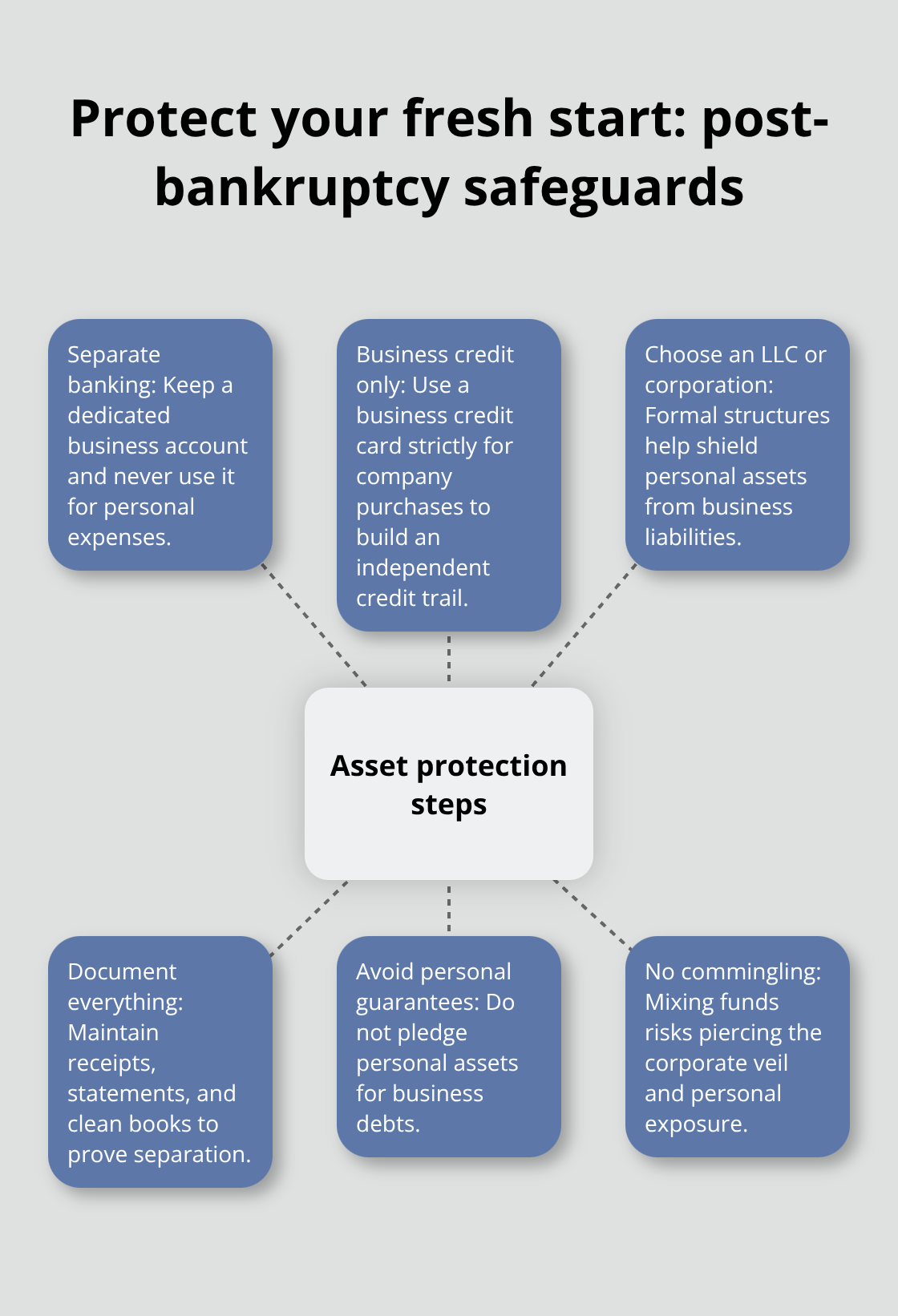
This creates a clear financial trail that demonstrates the business operates independently from your personal finances.
Choose Your Business Structure With Asset Protection in Mind
Forming an LLC or corporation shields your personal assets from business liabilities, which is non-negotiable after bankruptcy. A sole proprietorship offers zero protection and exposes everything you just protected through Chapter 7. If a customer sues your business or a vendor files a claim, they can reach your personal bank accounts and assets if you operate as a sole proprietor. An LLC costs between $50 and $500 to form in Florida depending on the county, and a corporation costs roughly the same, yet this investment prevents catastrophic personal liability. Do not personally guarantee business loans under any circumstances, even if lenders pressure you to do so. A personal guarantee converts a business debt into personal liability, which defeats the entire purpose of separating your finances. If a lender refuses to extend credit without a personal guarantee, that lender is too risky for your stage of growth. SBA loans and reputable lenders typically do not require personal guarantees after you establish 12 to 18 months of solid business performance, so wait rather than sacrifice your asset protection.
Document Everything for Future Creditor Protection
Keep detailed records of all business transactions, income deposits, and expense payments from day one. Separate documentation protects you if creditors challenge your asset protection structure or if litigation arises later. Courts examine commingled accounts and personal withdrawals from business funds as evidence that the business and personal finances are not truly separate. Maintain receipts, bank statements, and accounting records that clearly show business funds remain in business accounts. This documentation also helps you qualify for financing later, since lenders want to see organized financial records that demonstrate business viability and responsible money management.
Avoid Personal Guarantees at All Costs
Lenders often request personal guarantees as a condition of extending credit to new businesses, particularly those owned by individuals with bankruptcy histories. Resist this pressure completely. A personal guarantee means you pledge your personal assets as collateral for the business debt, which exposes the very assets you protected through Chapter 7. If the business fails or cannot pay the loan, the lender pursues your personal bank accounts, home equity, and other assets. This transforms a business liability into a personal one and undermines your fresh start. Wait for lenders who understand post-bankruptcy business growth and do not demand personal guarantees as a prerequisite for financing.
Your business structure and financial separation now determine whether your fresh start remains protected or collapses under future pressure. The next phase involves rebuilding your credit strategically so that lenders view you as a viable borrowing risk and financing becomes accessible without sacrificing the asset protection you’ve established.
How Fast You Rebuild Credit and Access Business Financing in Florida
Your Credit Score Recovers Faster Than You Think
Your credit score will improve after Chapter 7 discharge, and lenders understand this timeline better than most entrepreneurs realize. Within 12 to 18 months of discharge, you can qualify for business credit products if you maintain stable income and responsible financial behavior, according to U.S. Courts data. The key is acting immediately after discharge rather than waiting passively for your score to improve on its own. Open a secured credit card within 30 days of discharge and charge small recurring expenses like software subscriptions or office supplies, then pay the balance in full every month. This activity reports to credit bureaus and shows lenders you manage credit responsibly despite your bankruptcy history.
Access to Business Loans on Your Timeline
SBA loans become accessible within 18 to 24 months post-discharge if you maintain consistent business income and clean payment records during that window. Traditional bank loans typically require two to three years of clean history, so plan your major financing needs accordingly rather than applying too early and facing rejection that damages your credit further. Business credit cards designed for post-bankruptcy entrepreneurs often approve applicants with limited credit history because they focus on current business performance rather than past personal failures.
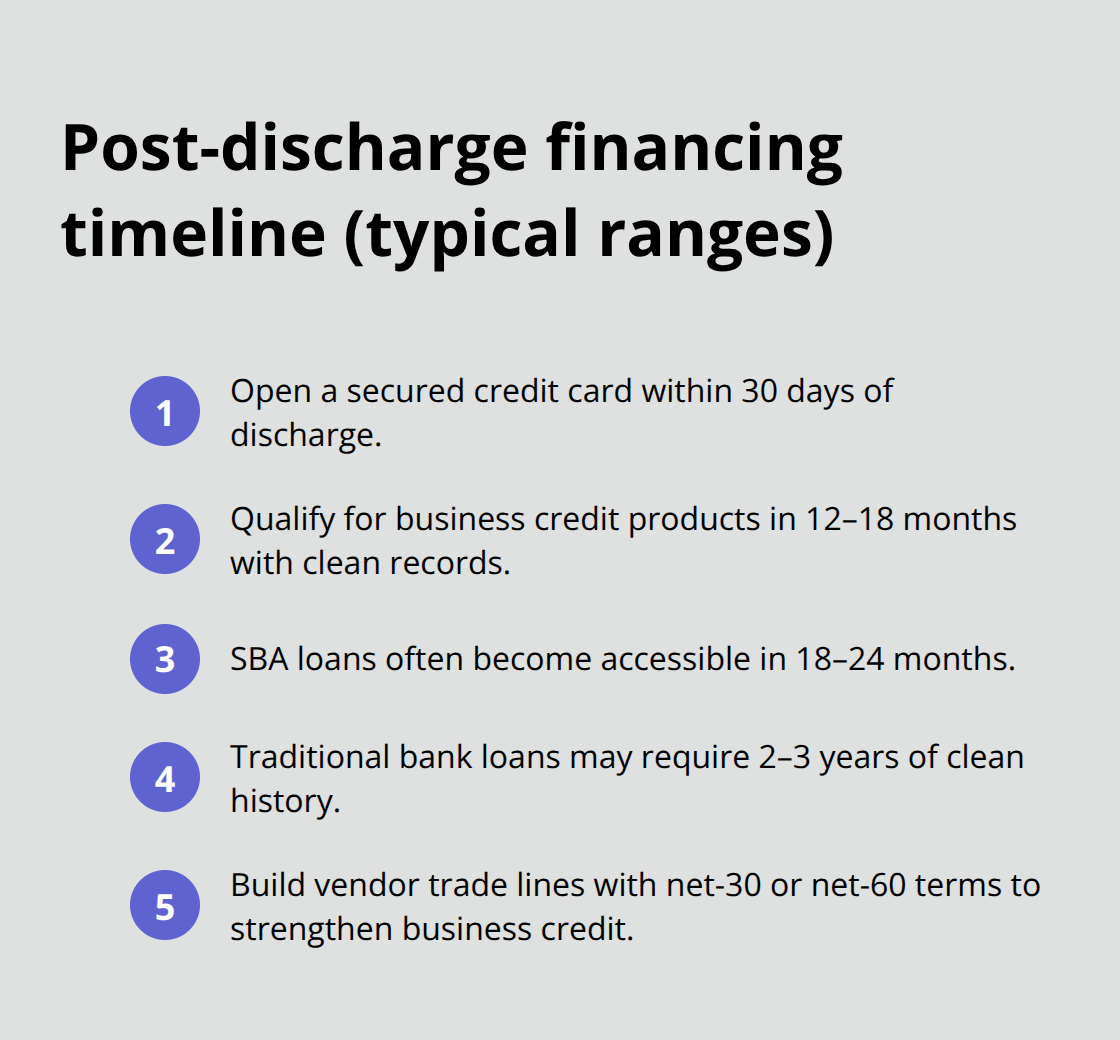
Vendors and suppliers become your first financing partners during this rebuilding phase. Negotiate net-30 or net-60 payment terms with suppliers, which builds your business credit profile without requiring a personal guarantee or credit check. Each on-time vendor payment reports to business credit bureaus and strengthens your profile for future lender conversations.
How Lenders View Your Bankruptcy Discharge
Lenders who work regularly with post-bankruptcy business owners view your bankruptcy discharge as a positive indicator rather than a permanent disqualification. The discharge proves you took legal action to eliminate consumer debt, which actually positions you better than someone carrying $50,000 in credit card balances while trying to start a business. Be direct about your bankruptcy history when applying for financing. Do not hide it or minimize it, because lenders will discover it anyway and hiding it damages your credibility. Instead, explain what caused the financial crisis, what you learned, and how your new business structure prevents those mistakes from repeating. Emphasize that you now maintain separate business and personal finances, that you avoid personal guarantees, and that you track every transaction meticulously. Many lenders approve post-bankruptcy applicants who can articulate this narrative clearly.
Avoid Predatory Financing and Explore Alternative Options
Avoid predatory lenders who charge interest rates above 20 percent or demand equity stakes in your business as compensation for the perceived risk. These deals trap you in a cycle that mirrors the debt problems that led to bankruptcy in the first place. Equipment financing and leasing often approve faster than traditional loans because the equipment itself secures the debt, making your bankruptcy history less relevant. If you need vehicles, computers, or machinery for your business, explore leasing options before seeking traditional financing.
Document Your Business Income Religiously
Document your business income meticulously during this rebuilding phase. Lenders want to see bank statements showing consistent deposits, tax returns proving legitimate business activity, and accounting records that demonstrate profitability or at least positive cash flow trajectory. If you cannot show this documentation, no amount of explanation will secure financing. The discipline you build now directly determines your access to capital for scaling your business later.
Final Thoughts on Your Florida Business Launch
Filing Chapter 7 bankruptcy before starting your business eliminates the financial weight that would otherwise drain your new venture’s resources and your personal energy. The discharge gives you a genuine fresh start, not a theoretical one. You move forward without collection calls, wage garnishments, or the constant temptation to redirect business revenue toward old debts. This clarity allows you to focus entirely on building something profitable rather than managing financial chaos from your past.
File quickly if you carry substantial unsecured debt, because the three to six month discharge window gives you a defined runway before launch. During those months, you can plan your business structure, open separate accounts, and start the credit recovery process immediately after discharge. Your business structure and financial discipline now determine whether your fresh start survives long-term pressure, so an LLC or corporation, separate banking, and meticulous record-keeping create barriers that protect your personal assets from future business liabilities.
Lenders understand post-bankruptcy business growth better than most entrepreneurs realize, and within 18 to 24 months of discharge you can access SBA loans and business credit products if you maintain consistent income and clean payment records. We at Harnage Law, PLLC help Florida entrepreneurs navigate Chapter 7 bankruptcy and emerge with the legal and financial foundation needed for business success. Contact us for a consultation to discuss your specific situation and timeline.