Self-employed workers in Florida face a financial reality that traditional employees rarely encounter. Unstable income, mounting debt, and business expenses without employer support create a perfect storm of financial pressure.
Chapter 7 bankruptcy offers real protection for self-employed workers drowning in debt. We at Harnage Law, PLLC understand that filing isn’t failure-it’s a strategic reset that stops creditor harassment and eliminates unsecured debts so you can rebuild.
Why Self-Employed Workers in Florida Struggle With Debt
Income Volatility Creates a Budget Crisis
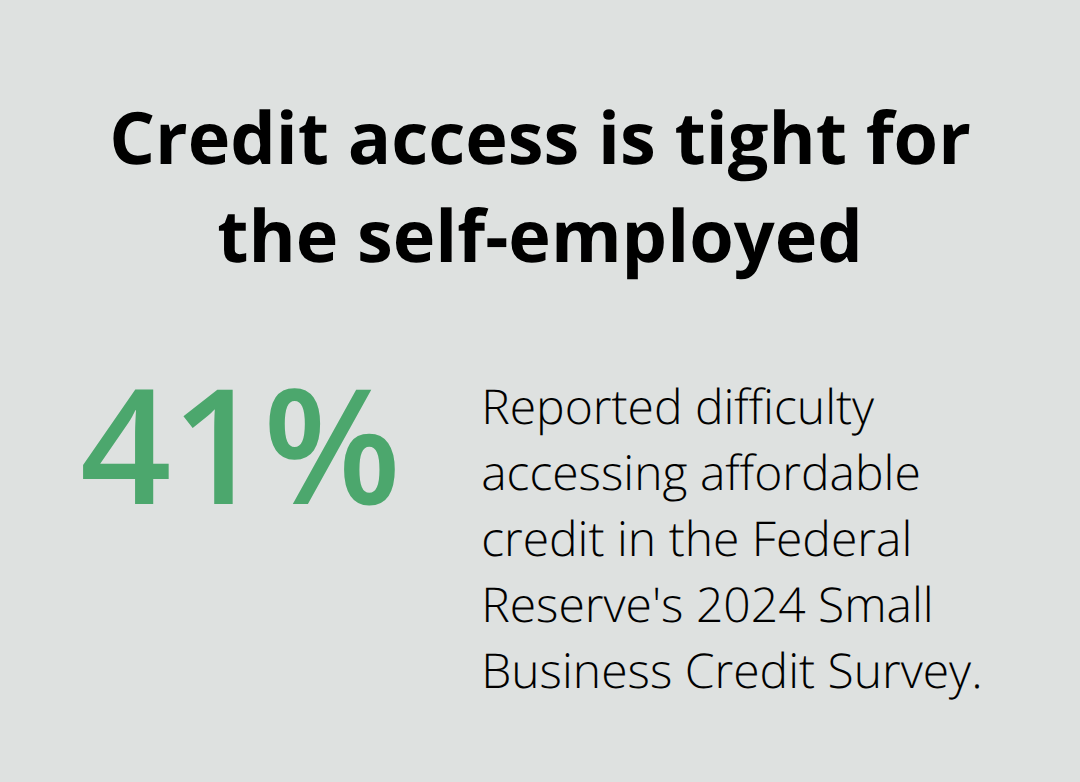
Self-employed workers in Florida face income swings that W-2 employees never experience. A freelancer, contractor, or small business owner might earn $8,000 one month and $2,000 the next, making it nearly impossible to budget for fixed expenses. This unpredictability forces many self-employed workers to rely on credit cards and business lines of credit just to cover gaps between profitable months. The Federal Reserve’s 2024 Small Business Credit Survey found that 41% of self-employed business owners reported difficulty accessing affordable credit, pushing them toward high-interest debt that compounds quickly.
Healthcare and Benefit Costs Drain Cash Flow
Unlike traditional employees who receive steady paychecks and employer-sponsored benefits, self-employed workers shoulder 100% of their healthcare costs, retirement contributions, and payroll taxes. A self-employed person paying $400 to $600 monthly for health insurance while managing irregular income faces a financial squeeze that spirals into debt accumulation. Business expenses pile up separately from personal bills: vehicle maintenance, equipment, software subscriptions, marketing, and office supplies drain cash flow before personal expenses are even considered. Many self-employed workers in Florida exhaust their personal savings within 6 to 12 months of income disruption, then turn to credit cards and business loans to stay afloat. The National Foundation for Credit Counseling reports that the average self-employed person carries $35,000 to $50,000 in unsecured debt by the time they seek relief.
Tax Obligations Compound Financial Strain
The tax burden adds another layer of financial pressure. Self-employed workers must pay both the employer and employee portions of Social Security and Medicare taxes, totaling 15.3% of net income. Filing quarterly estimated taxes means setting aside money that could otherwise pay down debt or cover business operations. When income drops unexpectedly, many self-employed workers cannot afford their tax payments and accumulate IRS debt on top of credit card and business loan balances. This combination of unstable income, lack of employer-provided benefits, mounting business expenses, and tax obligations creates a debt trap that grows faster than most self-employed workers can manage-and Chapter 7 bankruptcy offers a direct path out of this cycle.
How Chapter 7 Stops the Financial Bleeding
The Automatic Stay Halts Collection Immediately
Filing Chapter 7 bankruptcy in Florida triggers the automatic stay, a court order that halts nearly all collection activities the moment your petition is filed. Creditors must stop calling, cease lawsuits, and suspend wage garnishments immediately. If your wages were already being garnished, the automatic stay reverses that process and forces creditors to return funds taken within 90 days of filing. Self-employed workers facing multiple creditors, collection lawsuits, and threatening letters experience genuine breathing room within days of filing.
Which Creditors the Automatic Stay Covers
The automatic stay applies to credit card companies, medical debt collectors, business lenders, and even the IRS for most tax debts (though certain priority tax claims may continue). For a self-employed person juggling irregular income and mounting obligations, this immediate halt to collection pressure often prevents the downward spiral of missed payments that accelerates debt accumulation.
Unsecured Debts Disappear Through Discharge
Chapter 7 bankruptcy discharges unsecured debts, which includes credit cards, personal loans, medical bills, and business lines of credit that many self-employed workers accumulated to cover income gaps. Personal guarantees on business loans may also be discharged, removing your personal liability for debts the business itself cannot repay. This discharge eliminates the obligation to repay these debts entirely, not merely restructure them.
Florida Exemptions Protect Your Business Assets
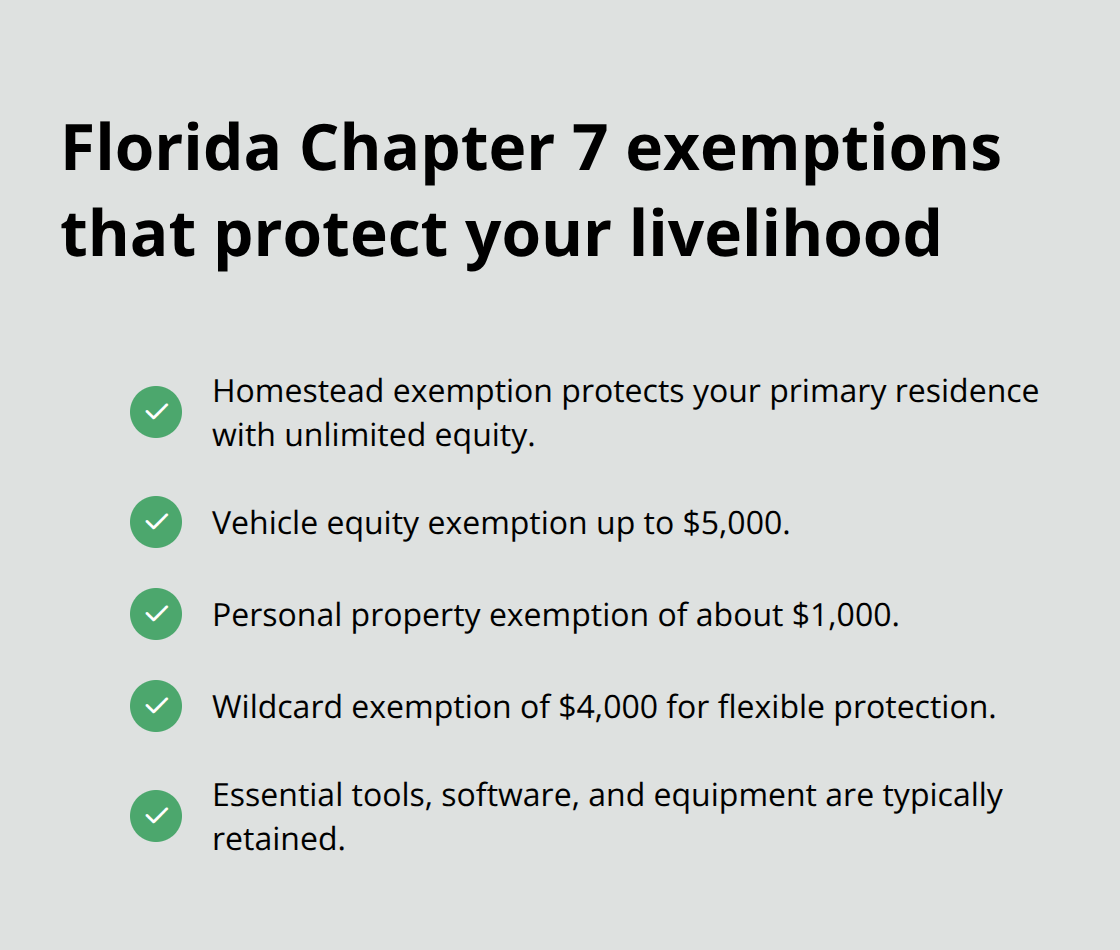
Florida law protects essential business assets through exemptions that shield tools, equipment, and inventory necessary for earning income. The homestead exemption protects your primary residence up to unlimited equity, meaning you keep your home even in Chapter 7. Personal property exemptions cover approximately $1,000 in general items, a $5,000 vehicle equity exemption, and a $4,000 wildcard exemption that provides flexibility for business-related property. A self-employed contractor or small business owner typically retains the tools, software, and equipment needed to resume work immediately after discharge.
Timeline and Next Steps
The Chapter 7 process in the Orlando Division typically concludes within three to five months from filing to discharge, allowing self-employed workers to rebuild credit and restart operations relatively quickly. This compressed timeline means you move from financial crisis to fresh start faster than most debt relief alternatives. Once discharge arrives, the real work of rebuilding begins-and understanding which misconceptions hold you back from filing becomes your next priority.
What Really Happens to Your Credit and Business After Chapter 7
Your Credit Score Recovers Faster Than You Think
Self-employed workers often delay filing Chapter 7 because they believe myths about bankruptcy rather than facts. The most damaging misconception is that bankruptcy permanently destroys your credit score and makes rebuilding impossible. Your credit score actually begins recovering the moment your discharge is finalized. Experian data shows that individuals who file Chapter 7 can raise their credit score by 100 to 200 points within 12 to 18 months of discharge through consistent, on-time payments on secured credit cards or small installment loans.
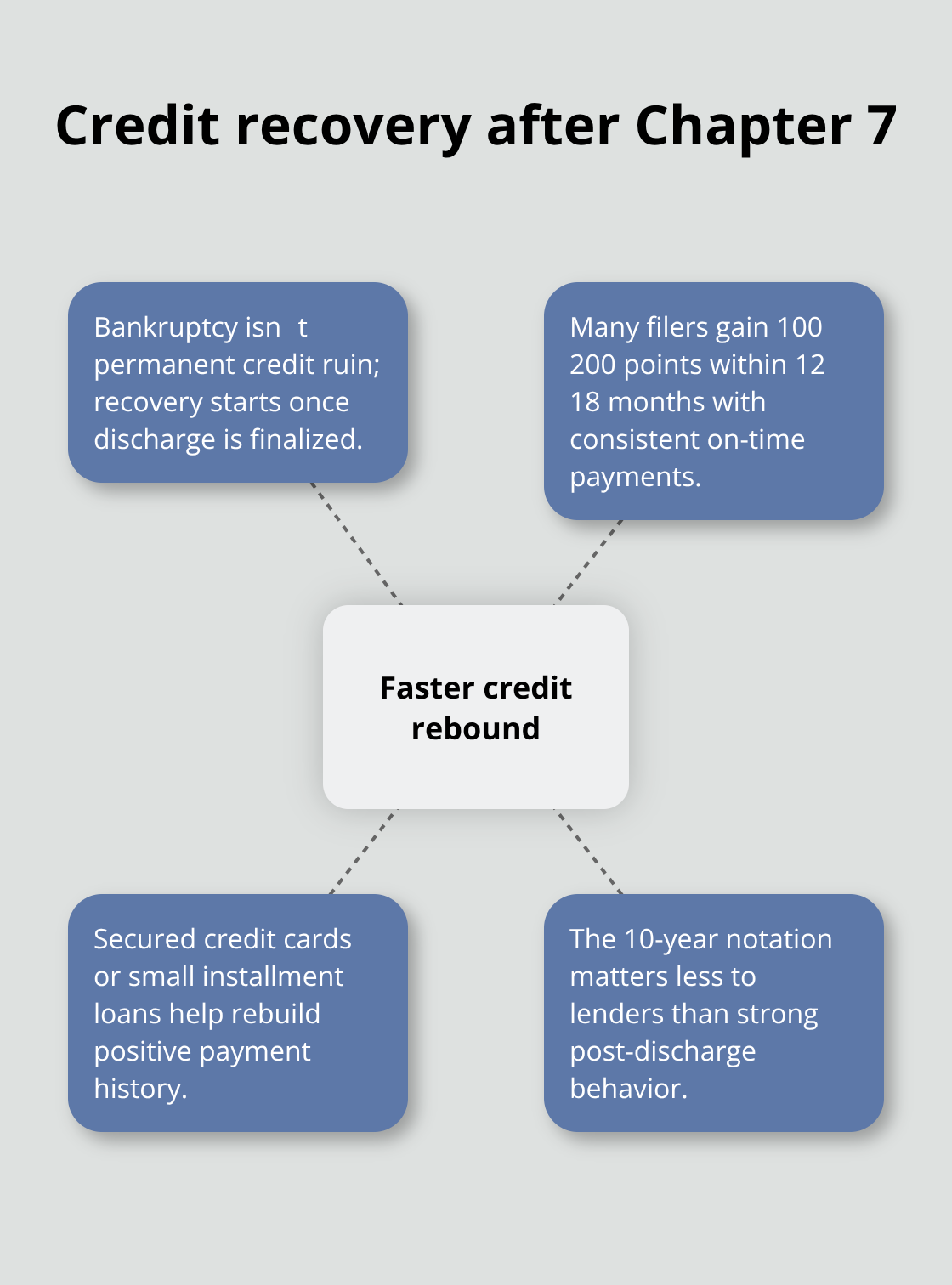
The bankruptcy notation stays on your credit report for 10 years, but lenders care far more about what happens after discharge than the filing itself. A self-employed worker with a 550 credit score at discharge can reach 650 to 700 within two years through timely payments, which is entirely achievable. Many credit unions in Central Florida offer secured card products specifically designed for post-bankruptcy rebuilding, with credit limits starting at $300 to $500. Treat new credit as a tool for recovery, not as permission to repeat past spending patterns.
Your Business Assets Stay Protected
Your business assets face far less risk than most self-employed workers assume. Florida exemptions protect the essential tools and equipment you need to earn income, including vehicles up to $5,000 in equity, business equipment, software, and inventory. A sole proprietor operating as a freelancer or contractor retains everything necessary to restart operations immediately after discharge.
The $4,000 wildcard exemption adds flexibility for additional business property that falls outside standard exemptions. Only if you hold substantial unprotected assets beyond these exemptions would a Chapter 7 trustee consider liquidation, and even then, the trustee prioritizes your ability to earn over maximizing asset sales.
Chapter 7 Works for Self-Employed Filers
Self-employed workers mistakenly believe Chapter 7 is designed only for W-2 employees with steady paychecks. Chapter 7 actually accommodates self-employed filers through the means test, which uses a six-month average of your business income rather than a fixed salary. The means test allows you to deduct ordinary and necessary business expenses (vehicle costs, office supplies, marketing, and equipment maintenance) to calculate your disposable income.
Self-employed individuals filing Chapter 7 in Florida must prepare detailed profit-and-loss statements and provide six months of business bank statements to document income and expenses. This documentation requirement simply reflects the need for accuracy in calculating your financial situation. The bankruptcy trustee at your 341 meeting will ask specific questions about your business income and how you derived your figures, but this scrutiny exists to verify your numbers, not to disqualify self-employed filers. Many self-employed workers have successfully discharged business-related unsecured debt through Chapter 7 while maintaining their ability to operate and earn income post-discharge.
Final Thoughts
Self-employed workers in Florida face mounting financial pressure that grows worse each month you delay action. The cost of living continues rising across Florida, with housing, healthcare, and business expenses consuming larger portions of already-unstable income. Traditional financing options have tightened significantly since 2024, with lenders increasingly reluctant to extend credit to self-employed applicants without substantial collateral or established credit history.
Filing Chapter 7 bankruptcy now stops this downward spiral before it accelerates further. The automatic stay halts collection activities immediately, giving you breathing room to stabilize your finances. Unsecured debts disappear through discharge, eliminating the obligation to repay credit cards, business loans, and medical bills that accumulated during lean months. Chapter protection through bankruptcy reclaims control of your financial future and positions you to rebuild credit within 12 to 18 months.
Florida’s exemptions protect your home, your vehicle, and the business equipment you need to earn income after discharge. If mounting debt threatens your business and your financial stability, contact us to discuss whether Chapter 7 bankruptcy is the right path forward for your situation.