Self-employment brings freedom, but it also complicates a bankruptcy filing. Income fluctuates, business and personal finances blur together, and creditors may target your revenue streams.
We at Harnage Law, PLLC understand these pressures. This guide walks you through Chapter 7 bankruptcy as a self-employed individual in Florida, covering income documentation, asset protection, and the specific challenges you’ll face.
How Your Self-Employment Income Counts in Bankruptcy
The Six-Month Income Average and the Means Test
The bankruptcy court ignores your tax return’s bottom line. What matters is your current monthly income averaged over the six months before you file. For self-employed filers in Florida, the court examines gross business receipts minus ordinary and necessary business expenses for that entire six-month period, not the net profit you reported to the IRS. This distinction matters because legitimate business costs reduce your income calculation without reducing your tax liability.
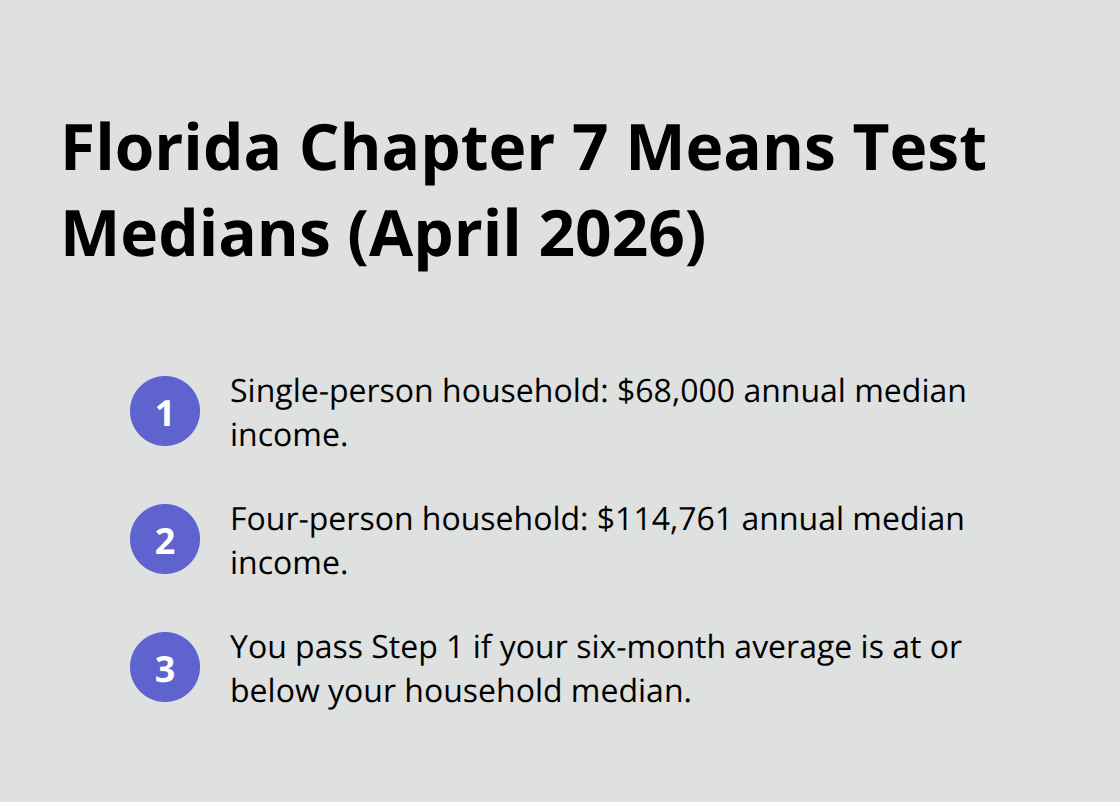
The Means Test determines whether you qualify for Chapter 7 and uses this six-month average to compare your income against Florida’s median income for your household size. As of April 2026, the U.S. Trustee Program set Florida’s median income at $68,000 annually for a single person and $114,761 for a four-person household. If your six-month average falls at or below the median for your household size, you automatically pass the first step and move forward with Chapter 7.
What Happens When You Exceed the Median
If you exceed the median, the court applies allowed deductions to your income to determine whether you have disposable income left after essential expenses. The calculation follows IRS National and Local Standards strictly, which means your housing costs, vehicle payments, and health insurance premiums get deducted using government tables rather than your actual expenses. Many Florida residents qualify for Chapter 7 despite higher current monthly income because high housing costs and significant vehicle loan payments consume the transportation and housing allowances.
Documentation Requirements That Trustees Scrutinize
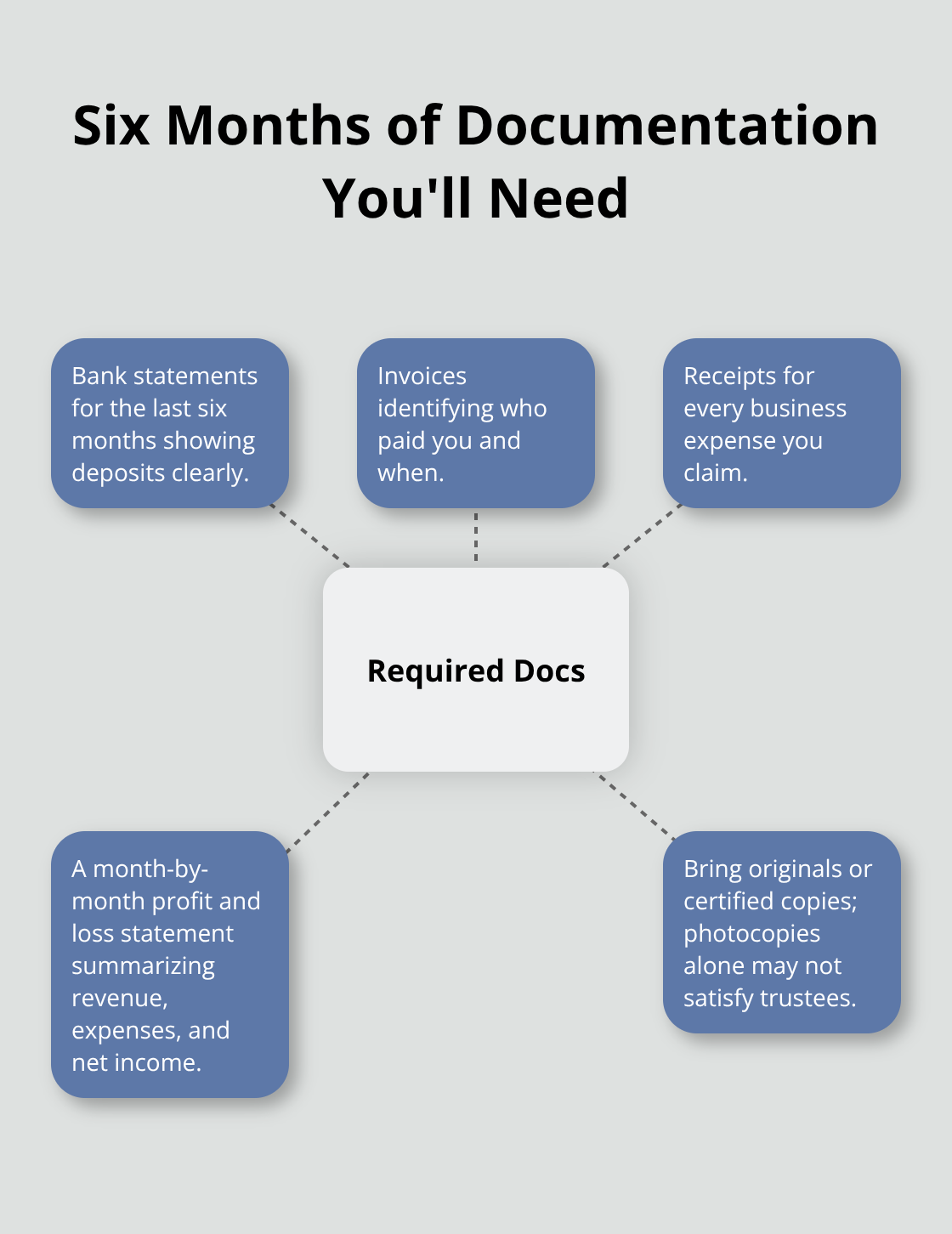
Documentation is where self-employed filers face real scrutiny. You must provide six months of bank statements, invoices, receipts, and a month-by-month profit and loss statement showing gross revenue, total expenses, and net income for each month leading up to your filing. The trustee assigned to your case will compare this documentation against your tax returns and will question inconsistencies. Commingling personal and business finances creates red flags that slow down your case or invite deeper investigation-keep business and personal bank accounts completely separate before filing.
During the 341 meeting of creditors (typically held via Zoom in the Orlando Division), the trustee will ask detailed questions about your income calculation methods, ongoing business operations, and how you determined your expenses. Bring originals or certified copies of documents; photocopies alone won’t satisfy most trustees.
Timing Your Filing to Improve Eligibility
If your income dropped recently due to a job loss or reduced hours, filing one or two months later can shift your six-month average downward and improve your eligibility. Some self-employed filers have failed the Means Test only to pass after a brief delay allowed their income average to include a lower-earning month. This timing strategy requires careful planning with an attorney who understands your specific situation and can evaluate whether waiting benefits your case more than filing immediately.
Protecting Your Assets and Business During Chapter 7
Florida’s Exemption Limits for Self-Employed Filers
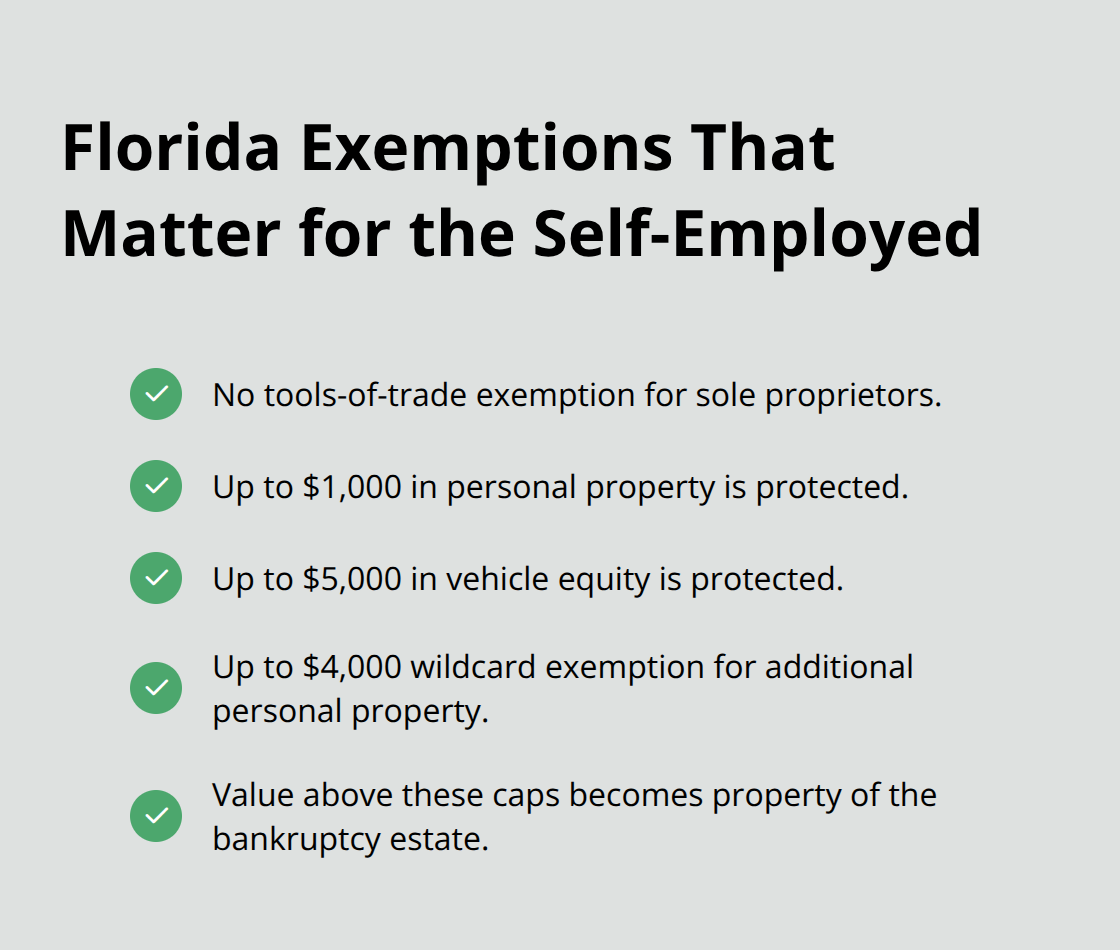
Florida’s bankruptcy exemptions impose real constraints on self-employed filers, and you need to understand exactly what you’ll lose and what stays protected. Unlike some states, Florida offers no tools-of-trade exemption, meaning business equipment owned by a sole proprietor receives no special protection beyond standard personal property limits. You can protect up to $1,000 in personal property, $5,000 in vehicle equity, and up to $4,000 via a wildcard exemption for additional personal property. If your business relies on equipment, vehicles, or machinery worth more than these thresholds, that excess becomes property of the bankruptcy estate and the trustee may sell it to pay creditors.
Incorporation as an Asset Protection Strategy
This reality forces a hard choice: either incorporate your business as an LLC or corporation before filing (which separates business assets from personal liability), or accept that substantial equipment will likely be liquidated. Many self-employed filers in Florida choose to incorporate specifically because it changes asset exposure and liability treatment. The automatic stay, which goes into effect the moment you file, stops creditor actions and personal guarantees on business loans may become dischargeable, but it does not protect unexempt business assets from the trustee’s reach.
Continuing Business Operations During Bankruptcy
Your business operations don’t automatically stop during Chapter 7, but continuing to operate requires careful handling and trustee approval in most cases. The discharge process typically takes three to five months in the Orlando Division, and you cannot simply resume full business operations while your case is pending without addressing whether your business generates income that should flow to the trustee. If your business has minimal assets and all income would be exempt or already accounted for in your Means Test calculation, you may continue operating with minimal disruption. However, if your business generates significant new income during the bankruptcy period, that income becomes part of the estate.
Separating Business and Personal Finances
Before filing, separate your business and personal finances completely-maintain distinct bank accounts, keep detailed records of business expenses separate from personal spending, and document which assets belong to the business versus your household. The trustee will scrutinize commingled finances heavily during the 341 meeting, and mixing accounts invites deeper investigation into what income and assets actually belong to your estate. If you plan to continue operating, discuss this explicitly with your attorney during case preparation so the petition accurately reflects your intent and the trustee understands your situation from the filing date forward.
The documentation you provide during this process-bank statements, business records, and asset inventories-directly influences how the trustee evaluates your case and what happens next with your creditor claims.
Common Challenges Self-Employed Filers Face in Chapter 7
Irregular Income and Documentation Gaps
Irregular income creates the biggest headache for self-employed filers pursuing Chapter 7 in Florida. Unlike W-2 employees who receive consistent paychecks, your revenue fluctuates month to month, and the trustee assigned to your case will demand proof that your six-month average accurately reflects your actual earning capacity. The court does not accept rough estimates or tax return figures alone. You need six months of bank statements showing deposits, invoices documenting who paid you and when, and receipts for every business expense you claim.
If you operated on cash, that becomes a problem immediately because the trustee will question whether your documentation captures all income. The IRS National and Local Standards used in the Means Test calculation depend entirely on the legitimacy and completeness of your business expenses, and any gaps in documentation invite the trustee to reject your deductions and recalculate your disposable income upward, potentially disqualifying you from Chapter 7 altogether.
Many self-employed filers fail at the documentation stage not because their income is too high but because they cannot produce the paper trail the court requires. You must create a month-by-month profit and loss statement for each of the six months before filing, showing gross revenue, itemized business expenses, and net income for each month. This statement must align with your Schedule C tax form and your actual bank records, or the trustee will flag inconsistencies during the 341 meeting and demand explanations that undermine your credibility.
Multiple Income Sources and Tax Obligations
Multiple income sources compound the documentation burden substantially. If you earn income from freelance work, rental properties, consulting, and a part-time W-2 job simultaneously, your current monthly income calculation pulls from all sources, and you must document each one separately with the same rigor. Self-employment taxes on older income debts generally remain non-dischargeable under federal law, which means you cannot eliminate FICA taxes owed to the IRS through Chapter 7, but some income tax debts older than three years may be dischargeable if you filed returns on time.
The trustee will scrutinize whether you paid estimated quarterly taxes on your self-employment income and will question any discrepancies between what you reported to the IRS and what your bank statements show. This alignment matters because inconsistencies signal either careless record-keeping or intentional misrepresentation, both of which damage your case.
Creditor Claims and Business Guarantees
Creditors holding personal guarantees on business loans will file claims against your bankruptcy estate, and while the automatic stay stops their collection actions immediately, the personal guarantee itself may become dischargeable if the underlying business debt qualifies. This reality means your business revenue does not automatically flow to creditors, but it also means the trustee will examine whether your business generates income that should be accounted for in your estate and applied to creditor claims.
The three to five month timeline for Chapter 7 discharge in the Orlando Division gives you limited time to resolve these income and asset questions, so incomplete documentation early in your case creates delays and stress that could have been avoided with thorough preparation before filing.
Final Thoughts
Filing Chapter 7 as a self-employed individual in Florida requires meticulous preparation, but it remains a viable path to debt relief when you understand the specific requirements. Your six-month income average, not your tax return, determines your eligibility, and documentation proves everything. Gather six months of bank statements, invoices, receipts, and a detailed profit and loss statement before your bankruptcy filing, separate your business and personal finances completely, and understand Florida’s exemption limits so you know what assets the trustee will liquidate.
The timeline matters significantly because your case will move through the Orlando Division in three to five months, with the 341 meeting of creditors as the critical milestone where the trustee questions your income calculation and business operations. Multiple income sources, irregular cash flow, and personal guarantees on business loans all complicate your case, but none of them disqualify you if your documentation is complete and your income calculation is accurate. Prepare for detailed scrutiny of how you determined expenses, why your documentation aligns with your tax returns, and whether your business will continue operating during bankruptcy.
We at Harnage Law, PLLC help individuals and families overcome financial challenges through Chapter 7 bankruptcy by discharging qualifying debts, stopping creditor harassment, preventing wage garnishments, and halting lawsuits. Contact Harnage Law, PLLC to discuss your situation and determine whether Chapter 7 is the right option for your circumstances.