Chapter 7 bankruptcy can feel overwhelming when you’re drowning in debt. The Chapter Seven process explained in plain language helps you understand what actually happens when you file, from the moment you submit paperwork to the day your debts disappear.
We at Harnage Law, PLLC have guided hundreds of Floridians through this process. This guide breaks down the timeline, costs, and what the bankruptcy trustee will do with your assets.
What Happens to Your Money and Property When You File Chapter 7 in Florida
The Automatic Stay Stops Collection Actions Immediately
When you file Chapter 7 in Florida, the court immediately freezes most collection actions against you through something called the automatic stay. This court order stops wage garnishments, lawsuits, bank account seizures, and utility disconnections for at least 20 days. If a creditor has already obtained a judgment against you for eviction, the stay’s protection becomes limited, but for most other debts, this breathing room is immediate and powerful. The stay does not, however, stop tax proceedings, criminal cases, or actions to establish paternity.
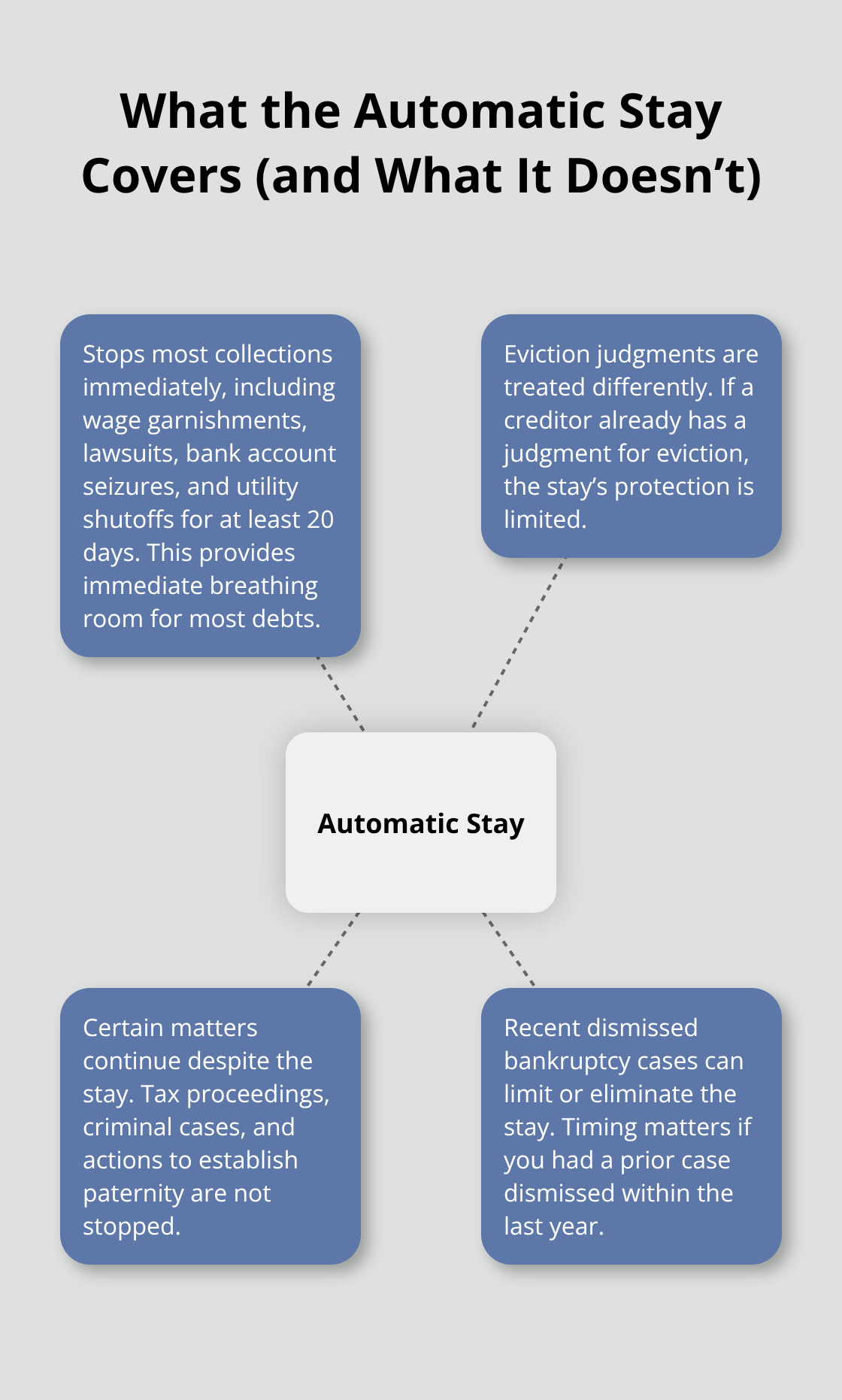
If you had prior bankruptcy cases dismissed within the last year, the stay may not apply at all, so timing matters significantly when you decide to file.
Your Property Enters the Bankruptcy Estate
Your property enters the bankruptcy estate once you file, and a trustee appointed by the court reviews what you own. Florida law protects certain assets from liquidation, including retirement accounts like 401(k) and 403(b) plans, Social Security benefits, unemployment benefits, and workers’ compensation. The homestead exemption shields your primary residence if you have lived in Florida continuously for at least 24 months before filing. You also receive a personal property exemption starting at $1,000, which increases to $4,000 if you do not claim homestead protection.
What the Trustee Does With Nonexempt Assets
The trustee liquidates nonexempt property to pay creditors, but you can attempt to keep nonexempt assets by paying their cash value or negotiating with the trustee. For secured debts like a mortgage, you can either redeem the property by paying what it is worth or reaffirm the debt to keep making payments. You must complete a financial management course before the court releases you from most unsecured debts. Certain obligations like student loans, child support, and alimony survive the bankruptcy and remain your responsibility.
The Timeline From Filing to Discharge
The entire process typically lasts four to six months from filing to discharge. During this period, the trustee reviews your paperwork, identifies assets available for liquidation, and distributes funds to creditors according to bankruptcy law. Once you complete the required financial management course, the court issues your discharge order, which eliminates qualifying debts and closes your case. Understanding what happens to your assets helps you prepare for the next critical phase: determining which debts actually disappear and which ones you must still repay.
Which Debts Disappear in Chapter 7 and Which Ones Stay
Chapter 7 eliminates most unsecured debts, but not all of them. Unsecured debts like credit card balances, medical bills, personal loans, and payday loans vanish when the court issues your discharge order. The U.S. Bankruptcy Code lists specific debts that survive bankruptcy, and understanding this distinction matters because you will remain liable for those obligations long after your case closes. Your income level determines whether you qualify to file Chapter 7 in the first place, and this qualification step happens before you even address which debts disappear.
How the Means Test Determines Your Chapter 7 Eligibility
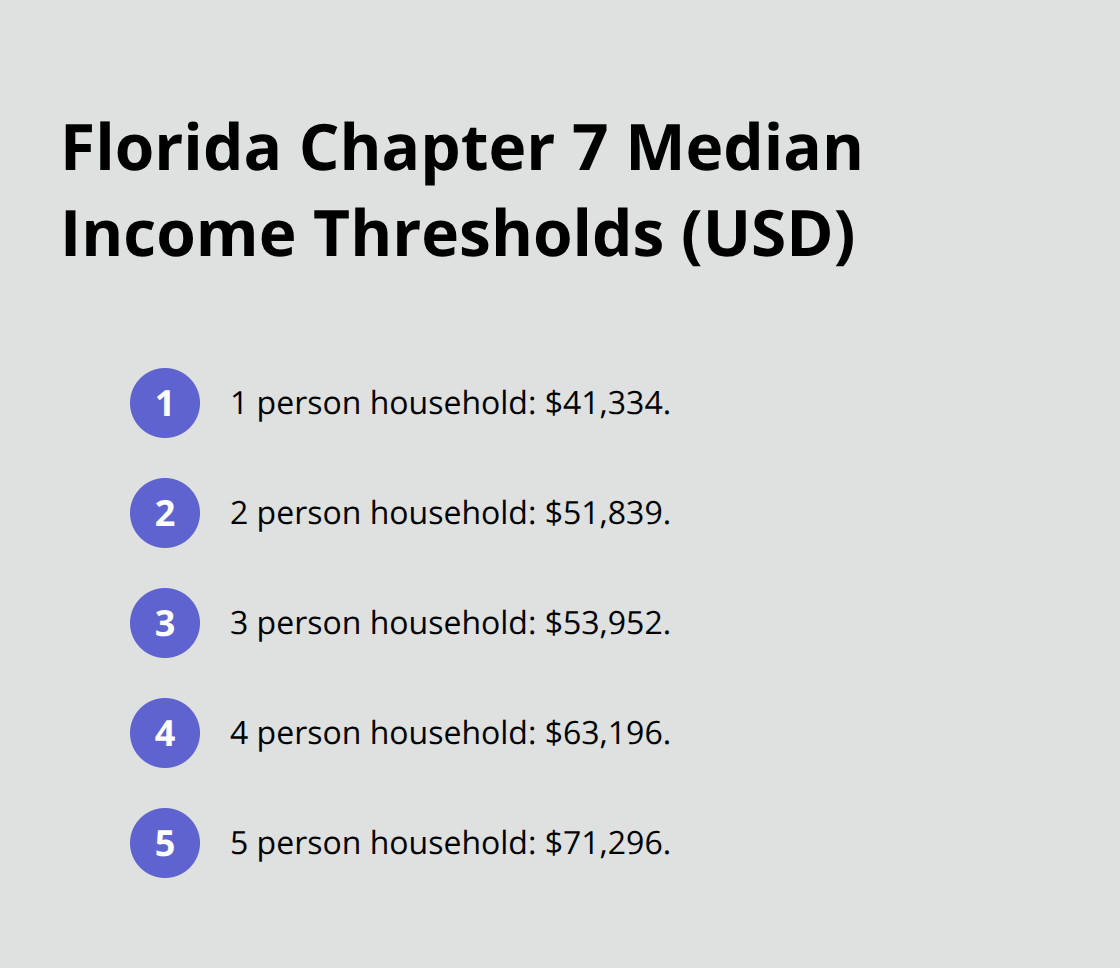
The means test calculates your eligibility by comparing your household income to the Florida median for your family size. According to the Clerk of Court, Florida median income thresholds are $41,334 for one person, $51,839 for two, $53,952 for three, $63,196 for four, and $71,296 for five household members. If your average monthly income over the last six months, multiplied by twelve, falls below these thresholds, you pass the initial income test and proceed to Chapter 7.
If your income exceeds the median, you must complete detailed means test calculations that account for allowed expenses. The calculation determines your disposable income over sixty months: if this total is less than $7,475, you pass and qualify for Chapter 7; if it exceeds $12,475, you fail and must consider Chapter 13 instead; amounts between these figures require further analysis.
What Income and Expenses the Means Test Includes
Your disposable income calculation includes current monthly income from wages, business income, rental income, pensions, and amounts others pay for your household expenses. Allowed expenses come from national standards, Florida-specific standards, and local standards based on Census Bureau and Internal Revenue Service data, so these numbers reflect real spending patterns, not theoretical figures.
Debts That Survive Chapter 7 Bankruptcy
Debts that survive Chapter 7 include most federal student loans, back taxes owed to the IRS or Florida Department of Revenue, child support and alimony obligations, court fines and restitution, and most judgment liens. Student loans stand as the most significant nondischargeable debt for many filers; the only way to eliminate them is through an adversary proceeding that proves undue hardship, a high legal bar that courts rarely grant.
Tax debts can sometimes be discharged if the debt is more than three years old, the return was filed at least two years prior, and you owed taxes at least 240 days before filing, but recent tax years almost always survive. Secured debts like mortgages and car loans technically survive bankruptcy as well, but the distinction matters: you can keep the property by reaffirming the debt and continuing payments, or you can surrender it and eliminate the deficiency if the sale price falls short. Creditors often do not pursue deficiencies on surrendered vehicles or homes, particularly in Florida, making the practical impact different from the technical survival of the debt obligation.
Moving Forward With Your Chapter 7 Filing
Once you understand which debts vanish and which ones remain, the next step involves preparing for the actual filing process. The timeline, costs, and procedural requirements shape how quickly you move from financial crisis to discharge, and knowing what to expect at each stage helps you plan accordingly.
How Long Chapter 7 Takes and What It Costs in Florida
The entire Chapter 7 process in Florida moves faster than most people expect. From the moment you file your petition to the day the court discharges your debts, the typical timeline spans four to six months according to the Clerk of Court. This speed matters because every month you delay filing is another month creditors garnish your wages, seize your bank accounts, or pursue foreclosure. The sooner you file, the sooner the automatic stay halts these collection actions and gives you breathing room. However, the timeline is not guaranteed-complex cases with significant assets or creditor objections can stretch beyond six months.
What You Must Do During the Chapter 7 Process
Your responsibility during this period is straightforward: you must complete the required financial management course, respond promptly to trustee requests for documents, and attend the meeting of creditors, commonly called the 341 meeting. Missing deadlines or failing to cooperate with the trustee can delay your discharge or result in case dismissal, which means creditors resume collection immediately.
Filing Fees and Payment Options
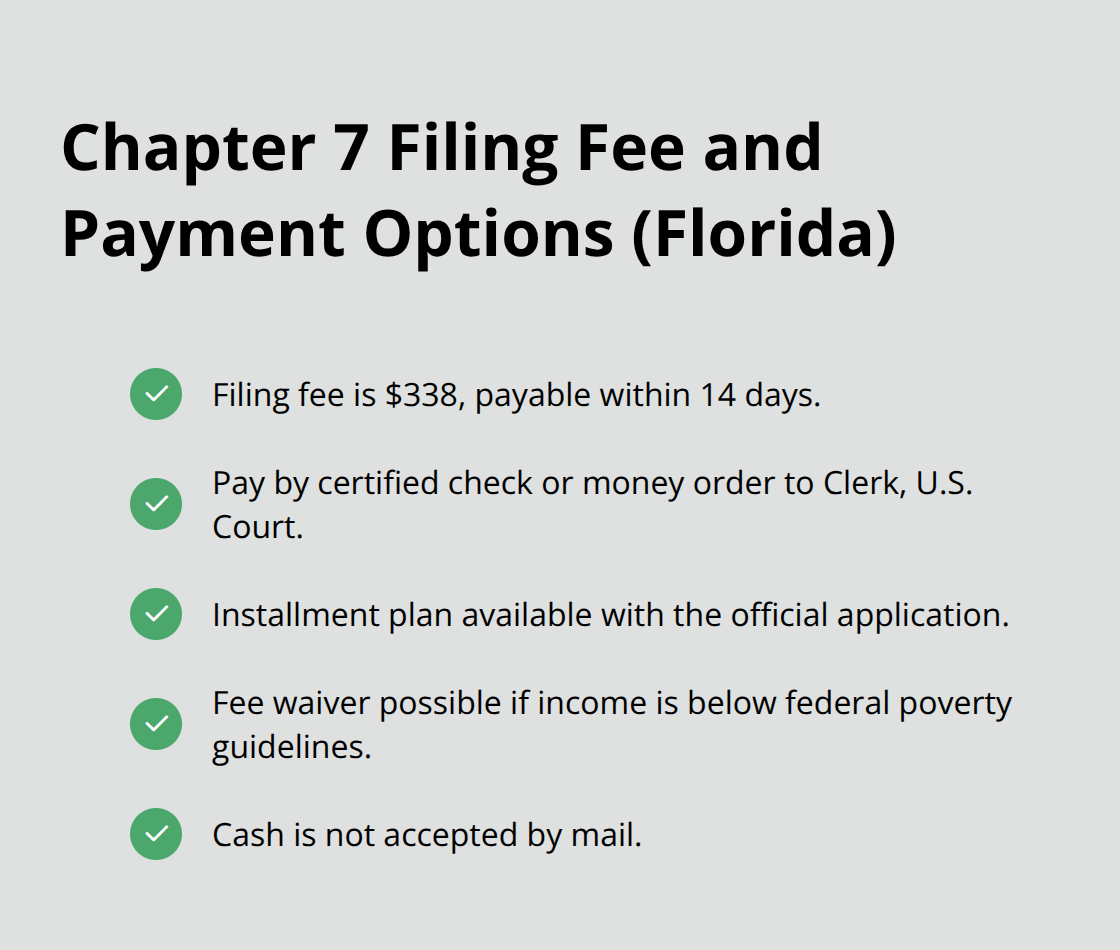
The filing fee for Chapter 7 in Florida is $338 according to the Clerk of Court, and you must remit the exact amount within 14 days by certified check or money order payable to Clerk, U.S. Court-cash is not accepted by mail. If you cannot afford the full fee upfront, you can request to pay in installments using the Official Form Application for Individuals to Pay the Filing Fee in Installments, which allows you to spread payments over time. If your household income falls below the federal poverty guidelines, you can apply to waive the fee entirely using Official Form 103B, though you must meet strict financial thresholds.
Attorney costs vary significantly depending on whether you hire representation or file pro se, but hiring an attorney is strongly recommended because bankruptcy rules are complex and mistakes can cost you assets or delay your discharge. Before filing, you must complete a credit counseling course from an approved agency listed on the U.S. Trustee’s website, and this typically costs between $50 and $200.
Documents and Information the Trustee Requires
The trustee may request your most recent tax return and pay stubs from the last 60 days, and you must provide copies of any payment advices or a statement explaining why they are unavailable. Once you file, the bankruptcy estate takes possession of your nonexempt property, and the trustee schedules the 341 meeting within 21 to 40 days of filing.
The 341 Meeting and Trustee Review
This meeting is brief-usually ten to fifteen minutes-and you answer questions under oath about your finances and assets while the trustee verifies your information against the documents you submitted. Creditors rarely attend these meetings, and when they do, they ask few questions. After the 341 meeting concludes, the trustee has up to 60 days to object to your discharge, though objections are uncommon in straightforward cases.
Discharge and Case Closure
Once the objection period passes and you complete your financial management course, the court issues your discharge order, which eliminates qualifying unsecured debts and closes your case. The discharge is final and permanent-creditors cannot restart collection efforts against you for debts listed in the bankruptcy, and the automatic stay remains in effect throughout the entire process to prevent creditors from interfering with your fresh start.
Final Thoughts
Chapter 7 bankruptcy offers a legitimate path to eliminate unsecured debts and stop creditor harassment within four to six months. The automatic stay halts wage garnishments, lawsuits, and bank seizures immediately upon filing, while Florida’s exemption laws protect your home, retirement accounts, and essential assets from liquidation. Understanding the Chapter Seven process explained throughout this guide means you now know which debts disappear, how the means test determines your eligibility, and what costs and timeline to expect.
The filing fee of $338 is manageable, and payment plans or fee waivers are available if you qualify financially. Your responsibility during the process is straightforward: you complete the required financial management course, attend the 341 meeting, and respond promptly to trustee requests. Most cases conclude without complications, and creditors rarely object to your discharge once the trustee confirms your information.
If your household income falls below the Florida median for your family size, you likely qualify for Chapter 7 without extensive means test calculations. Even if your income exceeds the median, the detailed expense analysis may still result in Chapter 7 eligibility depending on your disposable income over sixty months. Contact Harnage Law, PLLC to schedule a consultation and discuss whether Chapter 7 is the right option for your circumstances.