Mounting debt can feel suffocating, especially when creditors won’t stop calling and your bills outpace your income. Chapter Seven Florida residents facing this situation often wonder if bankruptcy is the right path forward.
We at Harnage Law, PLLC understand that financial hardship doesn’t have a one-size-fits-all solution. This guide walks you through the signs that Chapter 7 might help your family, how the process works, and what comes after discharge.
Signs Your Family Needs Chapter 7 Bankruptcy in Florida
When Debt Exceeds Your Annual Income
Financial strain shows itself in unmistakable ways, and the warning signs often arrive months before families recognize they need help. If your total unsecured debt-credit cards, medical bills, personal loans-now exceeds what you earn in a year, Chapter 7 becomes worth serious consideration. For a Florida household earning $65,000 annually but carrying $85,000 in credit card and medical debt, the math is simple: traditional repayment will take years, and interest keeps growing.
The U.S. Courts report that more than 99% of individual debtors who file Chapter 7 receive a discharge, meaning most people in this situation do find relief through bankruptcy rather than drowning in perpetual minimum payments.
Creditors Are Calling Constantly or Suing
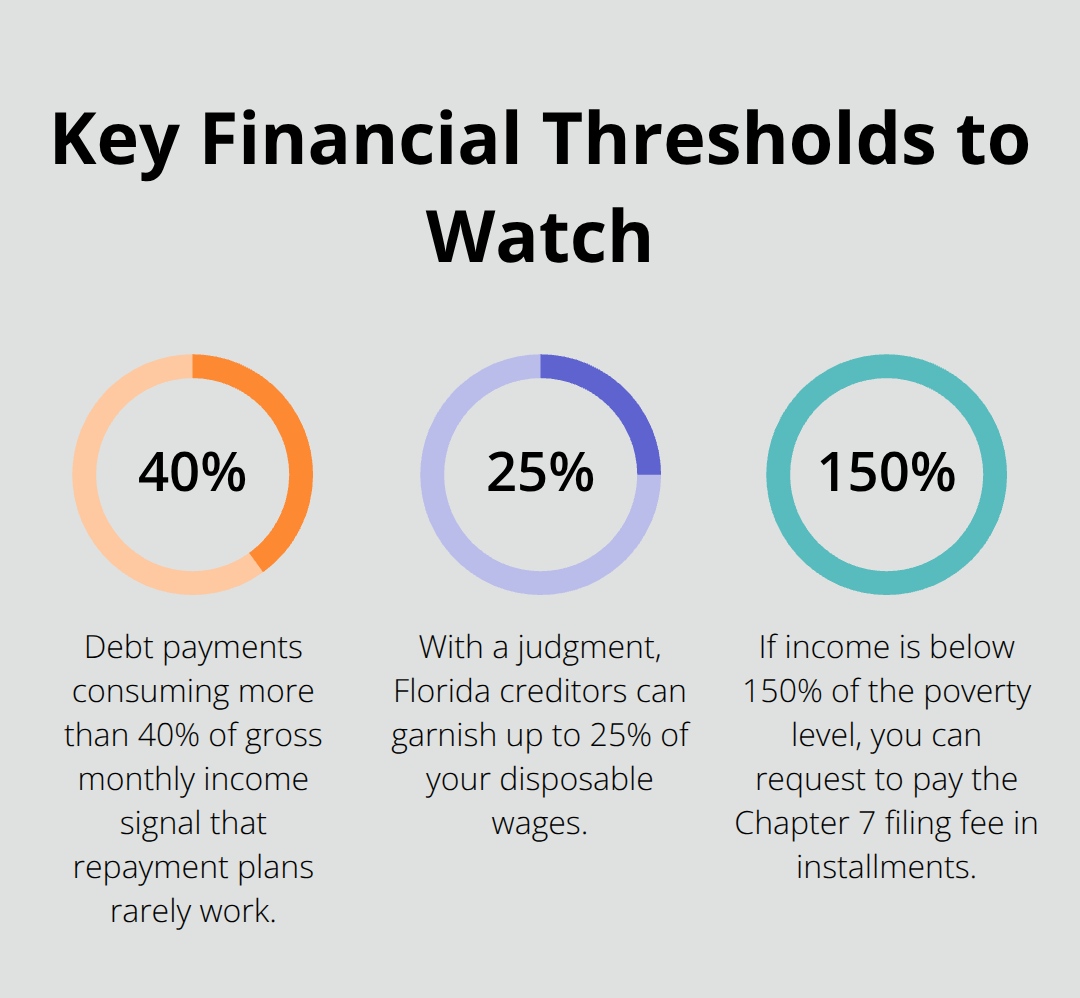
Creditors calling multiple times daily, letters threatening wage garnishment, or lawsuits demanding payment signal that creditors have lost patience and are moving toward court action. Once a creditor obtains a judgment in Florida, they can garnish up to 25% of your disposable wages, making it harder to afford rent, utilities, and groceries. The automatic stay that goes into effect immediately upon filing Chapter 7 stops wage garnishments, repossession attempts, and foreclosure proceedings, giving your family breathing room to stabilize.
You Cannot Pay Basic Living Expenses
When debt payments consume more than 40% of your gross monthly income, financial counselors widely agree that repayment plans alone rarely work. A family spending $2,000 monthly on debt while earning $5,000 gross has only $3,000 left for housing, food, transportation, and childcare-an impossible situation in Florida where median rent alone averages $1,500 to $2,000 for a two-bedroom apartment. Creditor harassment escalates quickly once accounts fall 90 days behind, and the stress of constant calls affects job performance, family relationships, and health. This is not a choice made lightly, but when income stagnates while obligations grow, bankruptcy offers what budgeting and debt consolidation cannot.
Taking Action Before Creditors Do
Waiting for creditors to sue or for garnishment orders to arrive means losing control of your financial situation. Filing Chapter 7 while you still have options gives you agency in the process. Contact Harnage Law, PLLC at 407-749-0080 to discuss whether Chapter 7 fits your circumstances, and bring recent pay stubs, tax returns, and a list of your debts so we can evaluate your situation accurately. Understanding how Chapter 7 actually protects Florida families requires looking at what happens once you file.
How Chapter 7 Bankruptcy Protects Your Florida Family
The Automatic Stay Stops Creditor Actions Immediately
The moment you file Chapter 7 in Florida, the automatic stay takes effect and creditors must halt collection efforts. Wage garnishments stop, phone calls cease, and lawsuits pause. According to the U.S. Courts, this automatic stay under 11 U.S.C. § 362 stops most creditor collection actions against you and your property, giving your family the space to breathe. If a creditor continues calling after receiving notice of your filing, document the violation and report it to the court. The stay typically remains in place through your discharge, which occurs within 60 to 90 days after your 341 meeting of creditors.
Unsecured Debts Disappear Through Discharge
Unsecured debts like credit cards, medical bills, and personal loans vanish through discharge in Chapter 7. The U.S. Courts reports that more than 99% of individual debtors receive a discharge, meaning the vast majority of people filing find complete relief from these obligations. Your liability for discharged debts ends, and creditors cannot pursue collection afterward. Not all debts vanish, however. Child support, alimony, most student loans, recent taxes, and criminal restitution survive discharge, so you remain responsible for these obligations.
Florida Exemptions Protect Your Essential Assets
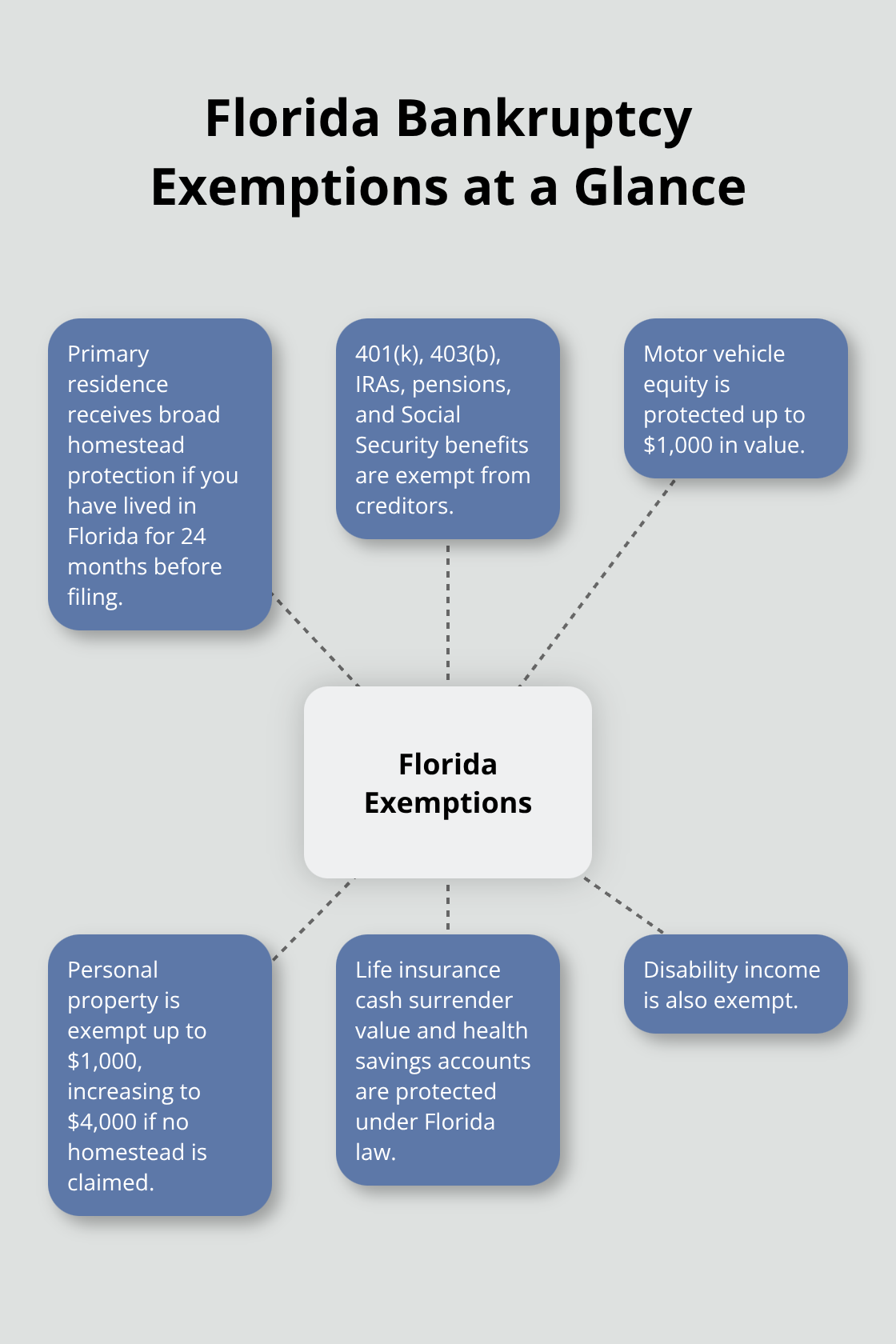
Florida allows you to protect essential assets through exemptions, which operate separately from discharge. Your primary residence receives broad homestead protection under Florida law if you have continuously lived in Florida for at least 24 months before filing. Retirement accounts including 401(k) and 403(b) plans are exempt, as are IRAs, pensions, and Social Security benefits. A motor vehicle qualifies for protection up to $1,000 in value, and personal property starts at a $1,000 exemption, increasing to $4,000 if you do not exempt any homestead land. Life insurance cash surrender value, health savings accounts, and disability income also receive protection under Florida law.
Most Florida Cases Result in No Asset Liquidation
Most Chapter 7 cases in Florida are no-asset cases because property typically qualifies for exemption under state law, meaning the trustee has nothing to liquidate and creditors receive minimal or no distribution. This outcome makes Chapter 7 attractive for Florida residents: you discharge qualifying debts while keeping the assets that matter most to your family’s stability. Understanding exactly which assets you can protect requires knowing the specific filing requirements and timeline that govern Chapter 7 cases in Florida.
The Chapter 7 Process in Florida
Credit Counseling and Document Preparation
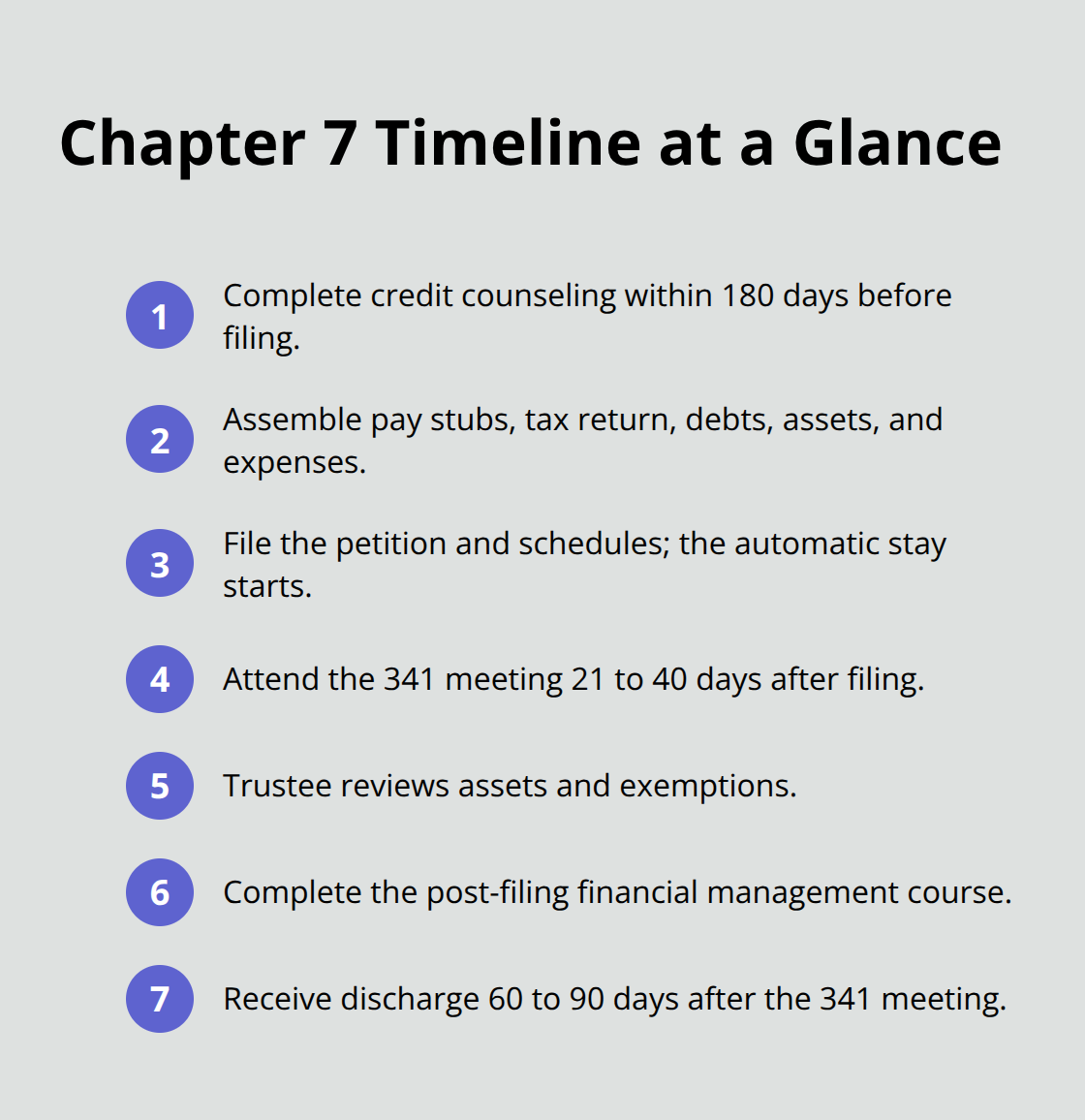
You must complete a credit counseling session with an approved agency within 180 days before filing-this requirement is non-negotiable, and the court will dismiss your case if you skip it. The U.S. Trustee Program maintains the list of approved agencies on their website, and most sessions take 60 to 90 minutes and cost between $50 and $200. Once counseling is complete, gather your documents: the past six months of pay stubs, your most recent tax return, a list of all debts with creditor names and amounts, and a summary of your assets and monthly expenses.
Filing Your Petition and Forms
The filing itself requires completing Official Forms 106A/B (petition and schedules), Form 106Sum (summary), Form 106Dec (declaration), and Form 106E/F (schedules of assets and liabilities). Filing fees are $338 for Chapter 7 as of 2026, though you can request to pay in installments if your income falls below 150% of the poverty level. Once you file with the court clerk in your Florida district, the automatic stay takes effect immediately, even before the judge reviews your petition. The court assigns a Chapter 7 trustee to your case and issues a notice with your case number and trustee’s contact information.
The 341 Meeting of Creditors
Your 341 meeting of creditors typically occurs 21 to 40 days after filing according to the U.S. Courts, and attendance is mandatory-both spouses must attend if filing jointly. The 341 meeting is not a trial but a straightforward examination where the trustee verifies the accuracy of your petition under oath. Bring your Social Security card, driver’s license, and proof of income (recent pay stubs) to this meeting, which usually lasts 5 to 15 minutes for straightforward cases. The trustee will ask standard questions about your income, debts, assets, and whether you understand the consequences of discharge.
Creditors rarely attend 341 meetings unless significant assets are at stake, so you should not expect confrontation.
Asset Review and Discharge Timeline
After the meeting, creditors have 90 days to file proofs of claim, and the trustee reviews which assets are exempt under Florida law and which can be liquidated. In most Florida Chapter 7 cases, all assets qualify for exemptions, making them no-asset cases where creditors receive nothing and the trustee has little work to do. The discharge order typically arrives 60 to 90 days after your 341 meeting, according to the U.S. Courts, releasing you from personal liability on discharged debts. Once discharged, creditors cannot pursue collection, wage garnishment, or lawsuits on those debts. You must also complete a post-filing financial management course before discharge is entered, another requirement the court will not waive. More than 99% of individual Chapter 7 filers receive a discharge, meaning the vast majority of people who file successfully obtain the fresh start they sought.
Final Thoughts
Chapter 7 bankruptcy is not a failure-it is a legal tool that helps families regain control when debt becomes unmanageable. Chapter Seven Florida residents who earn below the state median for their household size likely qualify without passing the means test, while those earning above the median may still qualify if the means test shows insufficient disposable income. Florida exemptions protect your home, retirement accounts, vehicle, and essential personal property in most cases, and more than 99% of individual Chapter 7 filers receive a discharge that stops wage garnishments and creditor calls within days of filing.
Your credit will recover faster than you might expect-many people obtain new credit within two to three years after discharge, and the bankruptcy notation fades from your credit report after ten years. The path forward requires honest assessment of your situation and professional guidance to understand your actual financial position rather than guessing whether bankruptcy makes sense. Gather your recent pay stubs, tax returns, and a complete list of debts, then contact Harnage Law, PLLC at 407-749-0080 for a consultation.
We at Harnage Law, PLLC assist individuals and families in overcoming financial challenges by providing legal guidance and representation through every step of the bankruptcy process. Our goal is helping you discharge qualifying debts, stop creditor harassment, and protect your assets so you can rebuild your financial future. The sooner you take action, the sooner your family can move forward with stability and peace of mind.