
Chapter 7 discharge brings relief, but the real work begins after the court’s decision. What happens after discharge shapes your financial future for years to come. At Harnage Law, PLLC, we’ve guided countless clients through this critical transition period.
This guide walks you through rebuilding credit, managing debt responsibly, and protecting yourself legally in Florida.
Repairing Your Credit Report and Rebuilding from Day One
Your credit report is the first place to look after discharge because errors happen frequently and they cost you money. Pull all three reports immediately from annualcreditreport.com and verify that discharged debts show zero balance with a notation that they were discharged in bankruptcy. Errors are common-creditors sometimes fail to update accounts, or they report balances that should have been eliminated. Dispute any inaccuracies directly with the credit bureaus; Equifax, Experian, and TransUnion all offer free dispute processes online. This step takes two to three hours but prevents years of damage from false reporting.
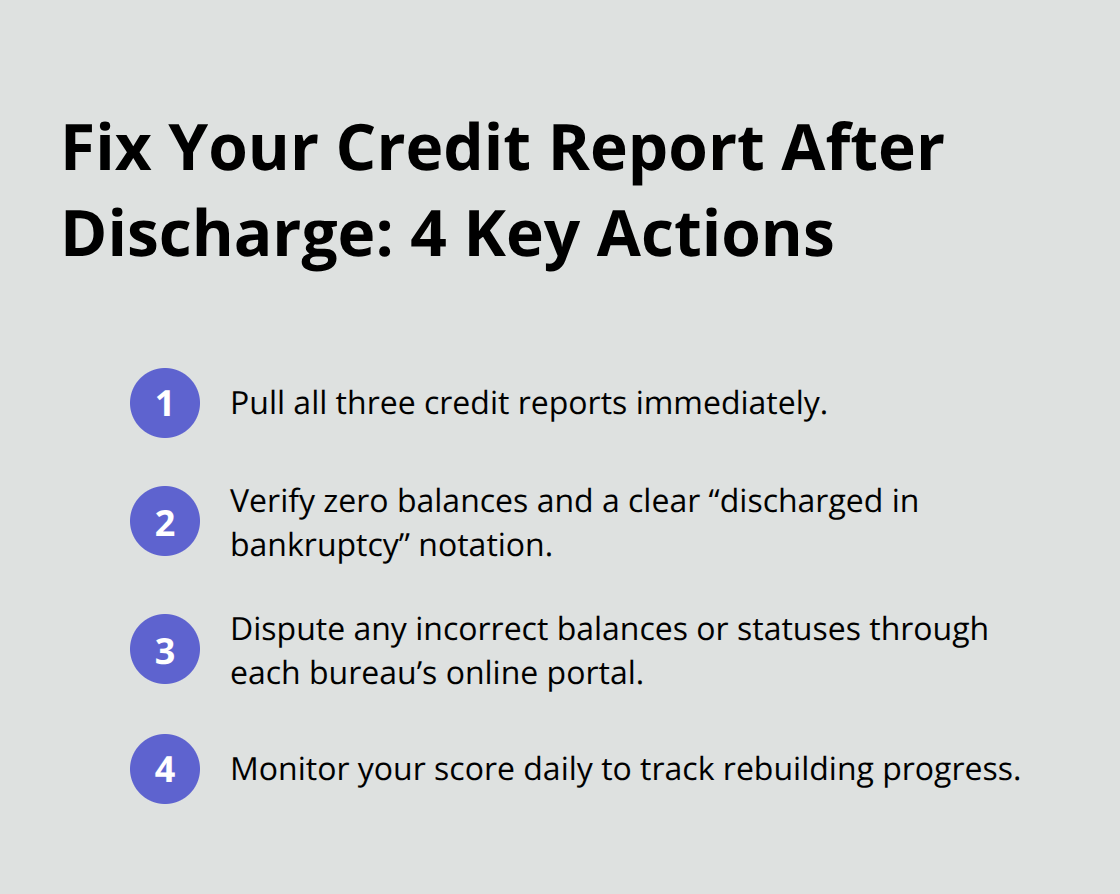
After discharge, your credit score typically drops 160 to 240 points depending on your pre-bankruptcy score, according to FICO research, but this decline is temporary if you act strategically. Start monitoring your score immediately through Equifax Core Credit, which provides daily updates on your VantageScore 3.0, so you can track progress as you rebuild.
The Secured Card Strategy That Actually Works
Secured credit cards are your fastest path forward, not because they’re glamorous but because they force accountability while building positive history. Open a secured card within three to four months of discharge and fund it with a deposit equal to your credit limit-typically $500 to $2,500. The deposit sits untouched while you use the card for small monthly purchases like gas or groceries, then pay the full balance immediately. This demonstrates on-time payment behavior to credit bureaus every single month. Verify the issuer reports to all three major bureaus before applying; some cards report to only one or two, which wastes your effort. Avoid cards with annual fees exceeding $25 because they erode your rebuild progress. Use this card for no more than 10 percent of your available credit to keep utilization low, which credit scoring models reward heavily.
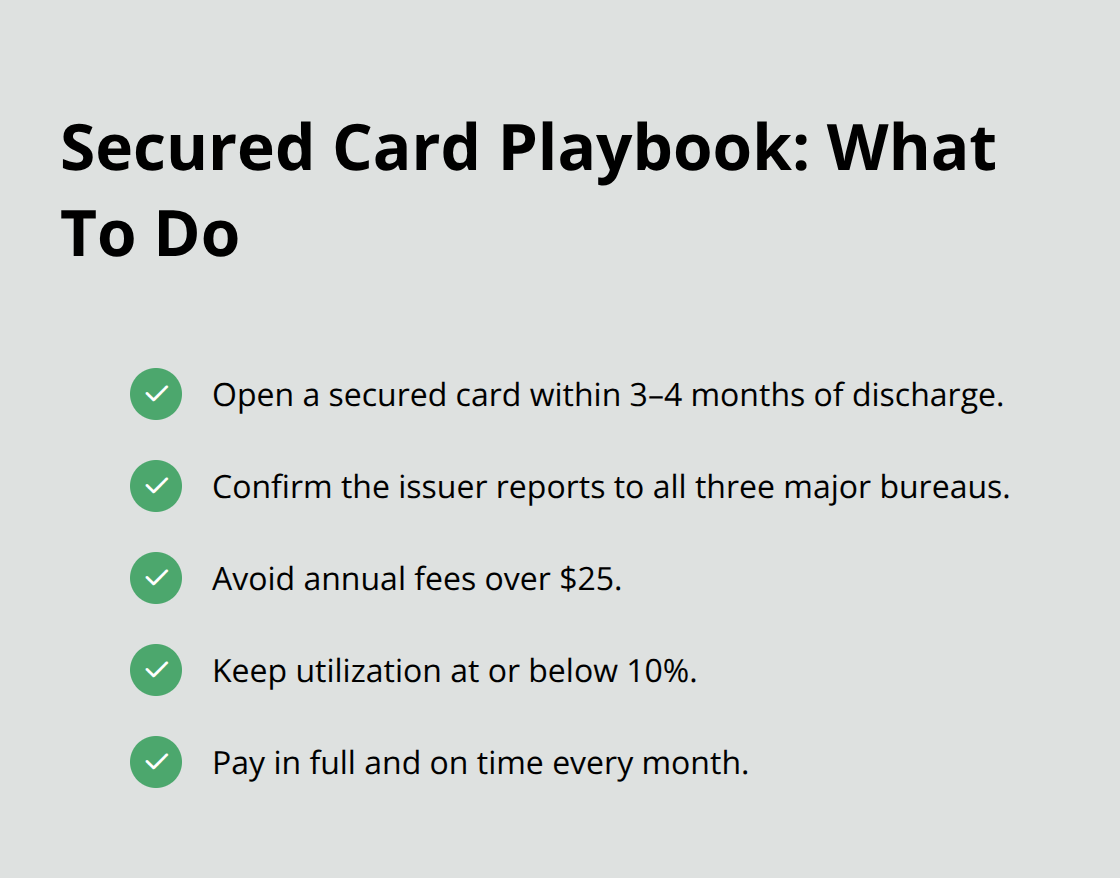
Within twelve months of consistent on-time payments, many issuers upgrade you to an unsecured card with better terms and return your deposit.
Building Your Emergency Fund Prevents Relapse
Simultaneously, build an emergency fund with at least 10 percent of every paycheck. Automate this transfer to a separate account at your bank or credit union so you don’t tap it during financial surprises. This fund prevents you from returning to credit dependence when unexpected expenses arise (job loss, medical bills, car repairs). Without this safety net, you’ll turn back to credit cards or loans the moment an emergency strikes, undoing months of progress. Set a target of three to six months of living expenses, though even $1,000 to $2,000 provides meaningful protection in your first year after discharge. The discipline of saving now shapes your financial stability for the next decade.
How to Build a Budget That Actually Sticks After Chapter 7 Bankruptcy in Florida
Track Your Spending to Find Hidden Money
Tracking your spending after Chapter 7 discharge isn’t optional-it’s the foundation that prevents you from sliding back into debt. Start by reviewing three to six months of bank and credit card statements to identify where your money actually goes, not where you think it goes. Most people discover recurring charges they’ve forgotten about: streaming services, subscription boxes, premium phone plans. Cut these ruthlessly. According to guidance from Debt.org, separating expenses into fixed costs (rent, utilities, insurance), variable costs (groceries, gas), and irregular expenses (car maintenance, medical bills) reveals exactly how much breathing room you have each month. Base your monthly budget on four weeks of take-home pay, not five, so you capture a more realistic picture. This conservative approach prevents you from overspending in months with five pay periods. Once you see the true picture, you’ll find $100 to $300 monthly that most people can redirect toward your emergency fund without lifestyle sacrifice.
Automate Your Emergency Fund Before You Spend
Your emergency fund separates people who rebuild successfully from those who return to credit cards after their first unexpected expense. Automate transfers of at least 10 percent of every paycheck into a separate account at your bank or credit union immediately after payday, before you touch the money. This removes the temptation to spend it and treats savings like a non-negotiable bill. Target three to six months of living expenses, but even $1,500 in your first year provides real protection when your car needs repairs or medical bills arrive. Without this buffer, a $1,000 emergency forces you back to high-interest credit, erasing months of progress. Your long-term financial stability depends on this discipline now.
Set Measurable Milestones and Track Progress Monthly
Set specific, measurable milestones: reach $2,000 within six months, $5,000 within one year, then continue building. Write these targets down and track them monthly through your bank’s app. The psychological win of watching your emergency fund grow fuels continued commitment to your budget and prevents the desperation that leads to poor financial decisions. With your spending tracked and your emergency fund growing, you’re ready to address the debts that remain on your record and understand which ones still carry legal weight.
What Debts Survive Chapter 7 and How to Handle Them in Florida
Discharge eliminates most debts, but not all of them. According to the U.S. Courts, certain obligations cannot be wiped away no matter how thorough your bankruptcy case. Alimony and child support remain your responsibility after discharge because bankruptcy law treats family obligations differently from general creditor claims. Student loans stay with you unless you prove undue hardship through an adversary proceeding, which requires showing that repaying the loan would prevent you from maintaining a minimal standard of living. Criminal restitution and certain tax debts also survive discharge, along with debts you incurred through fraud or willful and malicious injury.
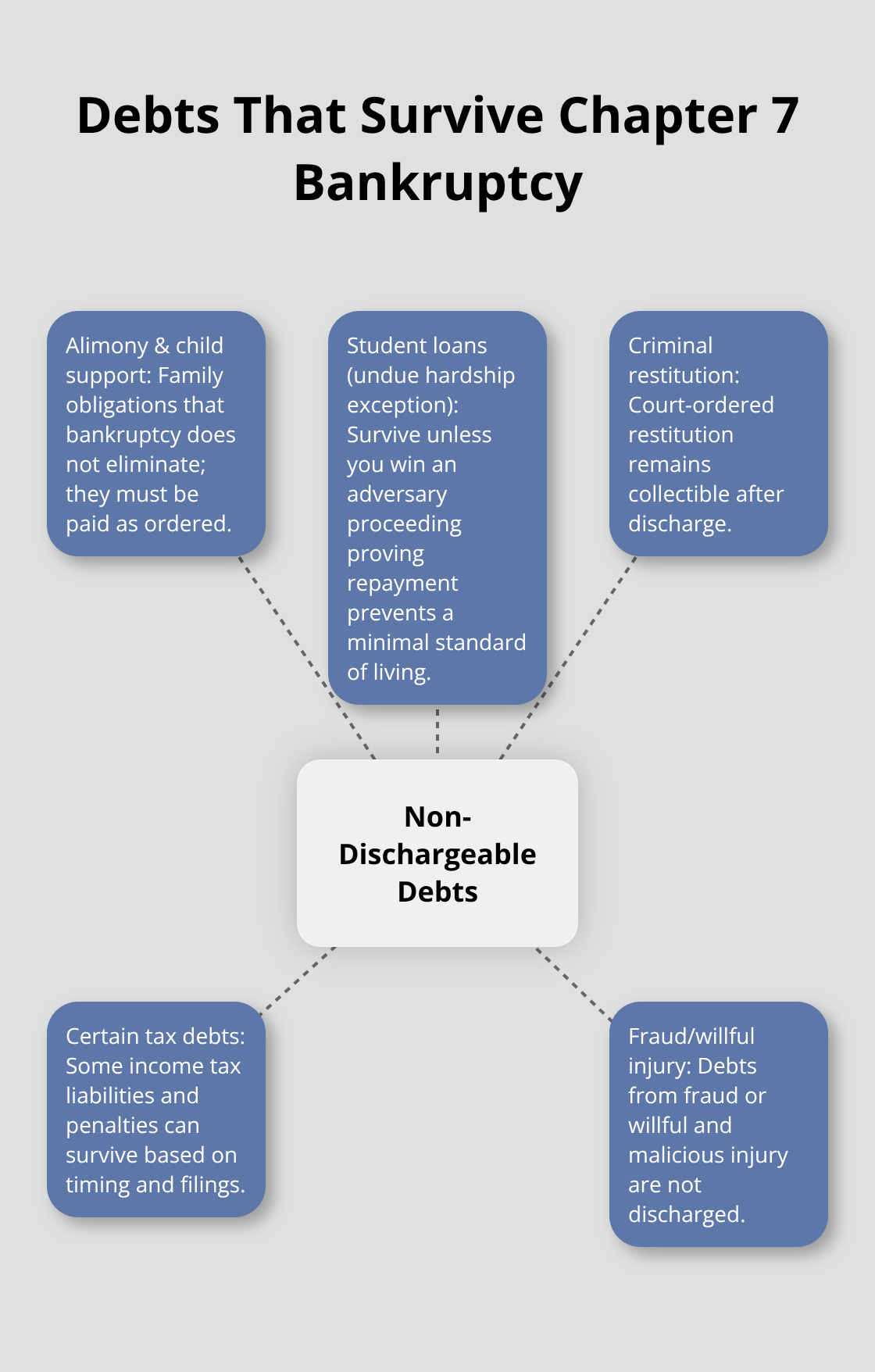
This means you need a specific plan for these remaining obligations rather than assuming discharge solved every financial problem.
Identify Non-Dischargeable Debts in Your Case
Pull your discharge papers and cross-reference them against your creditor list to identify which debts still carry legal weight. Contact each creditor holding a non-dischargeable debt to understand your payment options, whether they offer hardship programs, or if they’ll work with you on a payment plan that fits your budget. Some creditors become more reasonable once they understand you’ve gone through bankruptcy and have genuine intent to address the remaining obligation. This proactive approach prevents surprises later and establishes your commitment to handle what remains.
Stop Illegal Collection Activity Immediately
Creditors cannot legally pursue discharged debts after your discharge date, and federal law prohibits collection activity on eliminated obligations. The Fair Debt Collection Practices Act makes it illegal for collectors to contact you about debts you’ve discharged, and violations carry statutory damages of up to $1,000 plus attorney fees. If a creditor or collector calls about a debt listed as discharged in your bankruptcy papers, send them written notice that the debt was discharged and demand they cease contact immediately. Document everything: save the letters, record the dates and names of collectors who call, and keep notes on what they said. Most violations occur within the first six months after discharge when collectors haven’t updated their records. If harassment continues after your written demand, contact Harnage Law, PLLC because pursuing a Fair Debt Collection Practices Act claim can force creditors to pay your attorney fees and damages.
Verify Accurate Reporting on Your Credit File
Monitor your credit reports quarterly through the free annual reports to verify that creditors report discharged accounts correctly. Accounts should show zero balance and discharge status; if a creditor reports a remaining balance on a discharged debt, dispute it immediately with the credit bureau and include a copy of your discharge papers as evidence. This verification step (which takes roughly one hour per quarter) prevents false reporting from damaging your credit score and protects your legal rights under bankruptcy law.
Final Thoughts
What happens after discharge determines whether you build lasting financial stability or repeat past mistakes. Your credit score will drop 160 to 240 points immediately after discharge according to FICO research, but this decline reverses faster than most people expect. Within twelve months of on-time payments on your secured card and consistent budget discipline, you’ll see measurable improvement. Within four years of responsible credit use, scores above 700 become realistic if you maintain low utilization, pay every bill on time, and avoid new high-interest debt.
The timeline matters because it shapes your access to better financial products. After two years of clean payment history post-discharge, you become eligible for FHA mortgages. After four years, conventional mortgages open up with competitive rates. Government-backed VA loans typically require two years of post-discharge stability for veterans, and these milestones reflect lender confidence that you’ve genuinely changed your financial behavior.
If you’ve already received discharge, start with the credit report review this week, then implement the secured card and emergency fund strategy within the next month. If you haven’t filed yet or face questions about whether Chapter 7 fits your situation, contact Harnage Law, PLLC for a consultation about your options. The work is real, but the results compound month after month as you rebuild what bankruptcy temporarily disrupted.