
Filing Chapter 7 bankruptcy in Florida means attending a 341 meeting, and many people have legitimate chapter seven meeting questions about what happens during this process. The meeting itself isn’t as intimidating as it sounds, but preparation makes a real difference.
At Harnage Law, PLLC, we’ve guided countless clients through this step, and we know exactly what you need to understand before you walk into that room.
Understanding the 341 Meeting in Florida Chapter 7 Bankruptcy
What the 341 Meeting Actually Is
The 341 meeting is a mandatory examination under oath conducted by a court-appointed trustee after you file Chapter 7 bankruptcy in Florida. The name comes from Section 341 of the Bankruptcy Code, and it serves one primary purpose: the trustee verifies that the information in your bankruptcy petition and schedules is accurate and complete. This isn’t a court hearing with a judge present. Instead, it’s an administrative proceeding where the trustee-an impartial official appointed by the U.S. Trustee Program-questions you about your assets, debts, income, and financial history. The trustee’s role is to locate and liquidate non-exempt assets to pay creditors and the government, not to advocate for you.
How Long the Meeting Takes
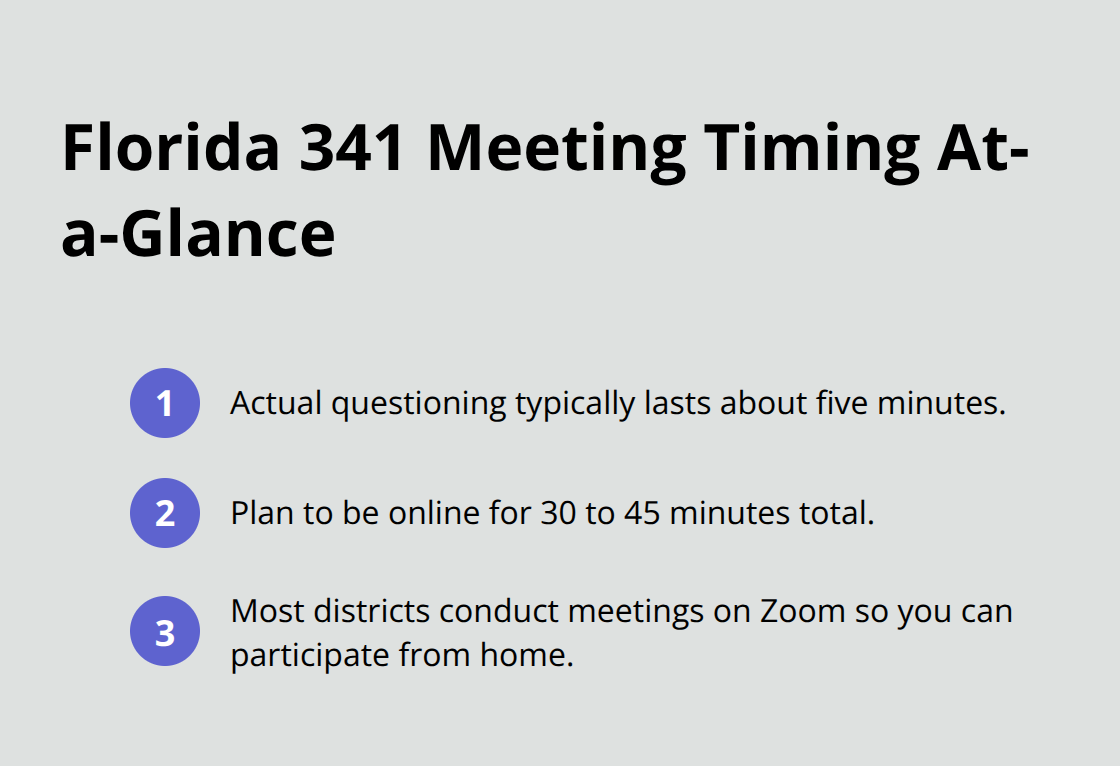
Most 341 meetings in Florida last about five minutes of actual questioning, though you should plan for 30 to 45 minutes of total on-the-line time because multiple cases are often scheduled in sequence. These meetings now take place virtually via Zoom in most Florida districts, including Miami, Fort Lauderdale, and West Palm Beach locations, which means you can participate from home.
When Your 341 Meeting Occurs
The 341 meeting occurs relatively quickly after filing-the court issues your Notice of Chapter 7 Bankruptcy Case within 10 business days, and this notice specifies your meeting date, time, and location along with critical deadlines for creditor objections. Creditors may attend and question you, though in practice they rarely show up.
What You Must Bring and Who Must Attend
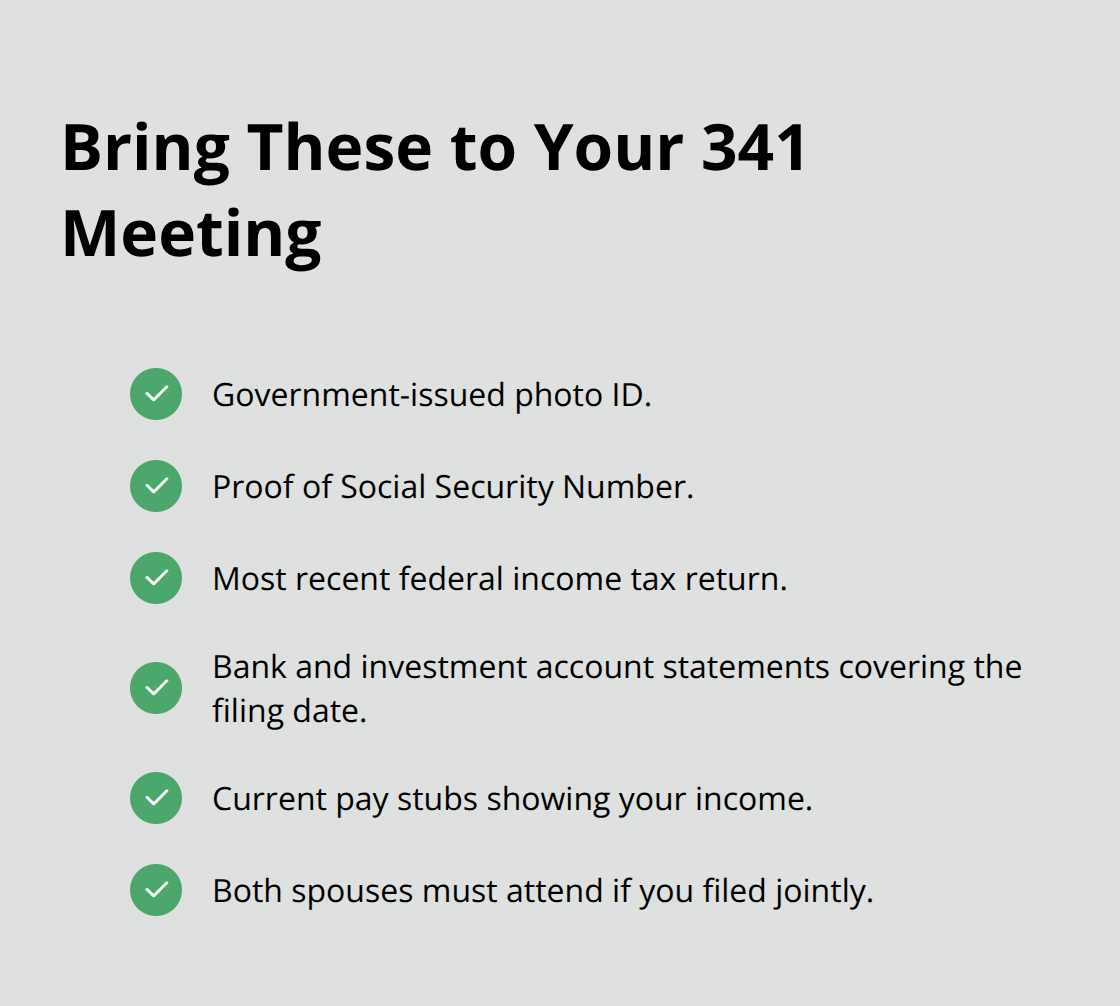
You must arrive prepared with your government-issued photo ID and proof of your Social Security Number, as the meeting cannot proceed without them and rescheduling creates delays. You must also bring documentation of your most recent federal income tax return, statements for all bank and investment accounts covering the filing date, and current pay stubs showing your income. If you file jointly with a spouse, both of you must attend-failure to show up can result in dismissal of your case or the non-attending spouse’s portion.
How Your Testimony Works
The trustee will place you under oath, meaning your testimony is recorded and can be used against you in disputes, so truthful, direct, and brief answers are essential. Understanding what questions the trustee typically asks helps you prepare responses that protect your interests and move your case forward smoothly.
What the Trustee Actually Asks You About
Opening Questions and Schedule Verification
The trustee’s questions follow a predictable pattern rooted in your bankruptcy schedules and financial documents. The trustee starts with basic verification: confirming your name, current address, whether you reviewed the bankruptcy information sheet provided, and whether you moved since filing. Then the conversation shifts to your schedules themselves. The trustee asks you to confirm that you signed all documents, that the information is truthful and correct, and whether you need to amend or add anything. This moment gives you the chance to disclose errors before they become problems.
Income and Employment Questions
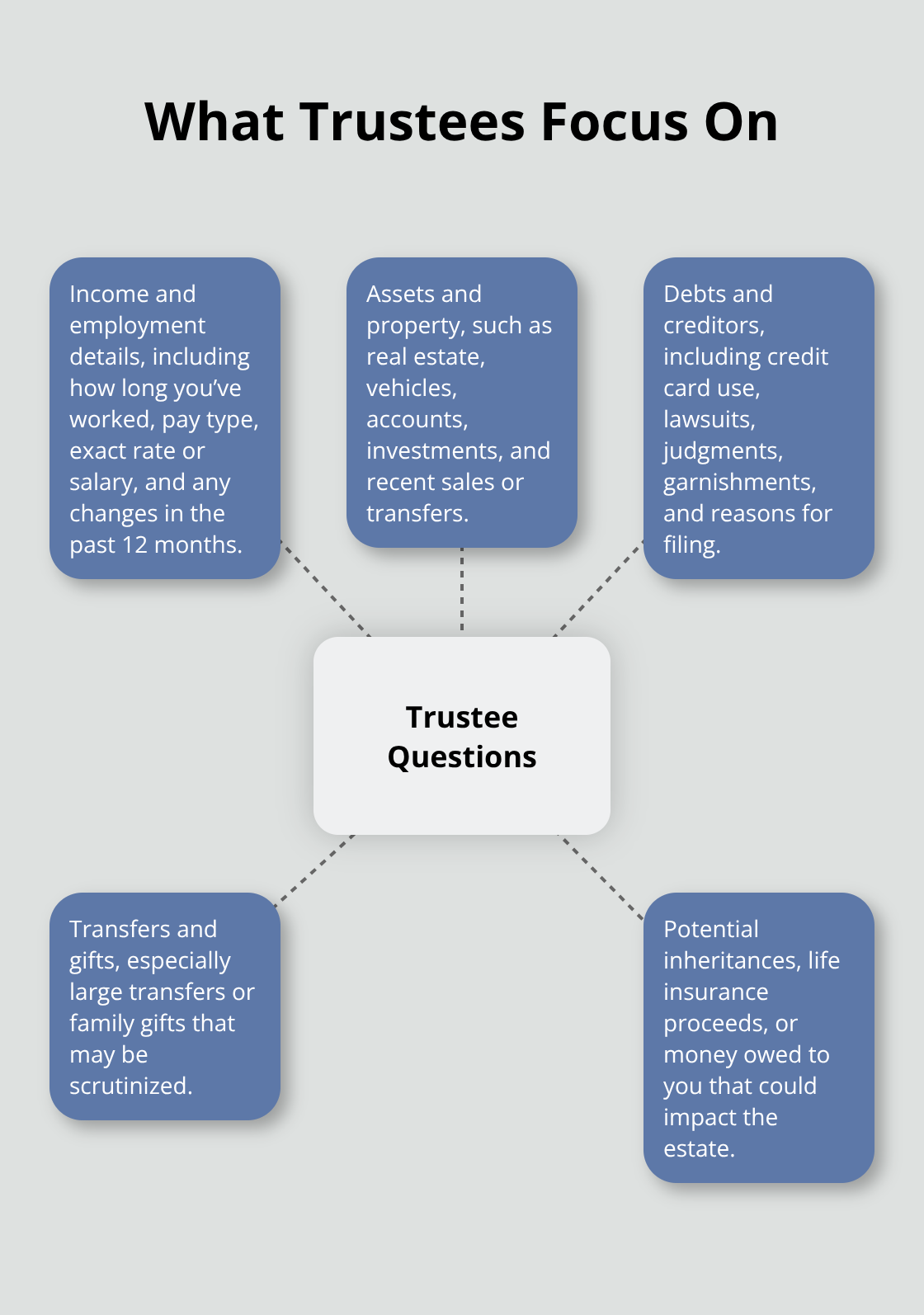
The trustee focuses on three core areas: your income and employment history, your assets and property, and your debts and creditors. For income, the trustee asks how long you worked at your current job, whether you receive hourly or salary pay, your exact rate or annual income, and any income changes in the past 12 months. The trustee also questions 401(k) or IRA contributions within the past year because retirement accounts have specific bankruptcy protections, and the trustee needs to confirm you are not hiding money there.
If you own a business or work for yourself, prepare to discuss the business structure, ownership percentage, and recent financial performance.
Asset and Property Disclosure
On the asset side, the trustee asks you to list everything you own, including real estate, vehicles, bank accounts, investments, and personal property like jewelry or equipment. The trustee specifically asks about property sales, transfers, or donations within the past four years and what happened to the money from those sales. If you received gifts or transfers of $1,000 or more from family within the last four years, the trustee will ask about those too. The trustee also questions whether anyone owes you money, whether you are entitled to inheritance or life insurance proceeds, and whether you serve as a beneficiary or trustee of any trust.
Debt and Creditor Questions
For debts and creditors, the trustee confirms you listed all creditors accurately and asks whether you currently use credit cards or make payments on them. The trustee scrutinizes recent purchases and asks whether any creditors sued you, obtained judgments, or garnished your wages. If you repaid specific debts to family or friends in the year before filing, the trustee will ask detailed questions about those payments because they can be reversed as preferential transfers. The trustee also asks about your reason for filing bankruptcy, and a vague or evasive answer can jeopardize your discharge. A straightforward explanation-such as unemployment, medical problems, or job loss-is what the trustee expects and what protects you legally.
Moving Forward With Confidence
Understanding these question categories helps you prepare responses that protect your interests and move your case forward smoothly. The next section covers how to gather the specific documents the trustee requires and what you should bring to your meeting.
How to Prepare for Your Florida 341 Meeting
Review Your Schedules and Documents
Preparation separates clients who move through their 341 meeting smoothly from those who encounter problems. The trustee will ask questions based directly on information in your bankruptcy schedules, so your first step is to review every single document you filed with the court. Read through your schedules line by line, checking for errors, omissions, or inconsistencies. If you listed an asset incorrectly or forgot to mention a debt, catch it now during your preparation phase, not during the meeting when the trustee places you under oath. The U.S. Trustee Program offers educational videos showing simulated Chapter 7 meetings, and watching these gives you a realistic preview of how the trustee conducts questioning and how other debtors answer.
Gather Required Documents and Identification
Collect your government-issued photo ID and Social Security Number card at least two weeks before your meeting date-without these, the trustee will reschedule your case, creating unnecessary delays. Obtain your most recent federal income tax return or a transcript, statements for all bank and investment accounts covering your filing date, and pay stubs from the past 60 days showing your current income. If the trustee requests documentation of monthly expenses because you meet income thresholds under 11 U.S.C. Section 707(b)(2)(A) or (B), prepare those records including IRS National Standard amounts for food and clothing, education costs for dependents under 18, and any higher home energy expenses you can document. If any required documentation does not exist, write a brief statement explaining why instead of showing up empty-handed.
Answer Questions With Truthfulness and Clarity
Your answers at the 341 meeting must be truthful, brief, and direct-never evasive or padded with unnecessary explanations. When the trustee asks about your reason for filing bankruptcy, provide a straightforward answer such as unemployment, medical problems, or job loss rather than a vague response that raises red flags. If you made significant purchases in the 12 months before filing or transferred property in the past four years, have a clear explanation ready because the trustee will ask about these transactions. Answer with facts, not emotions. If you repaid debts to family or friends in the year before filing, the trustee will scrutinize these payments as potential preferential transfers, so explain the circumstances calmly and factually.
Know Your Employment and Asset Details
Know your employment details: your job title, how long you have worked there, whether you earn hourly wages or a salary, and your exact rate or annual income. If your income changed within the past 12 months, prepare to explain why and when the change occurred. Regarding assets, mentally walk through everything you own-real estate, vehicles, bank accounts, retirement accounts, investments, jewelry, equipment, and even clothing or sentimental items. The trustee wants to know whether you have assets that could be liquidated to pay creditors, so honesty about what you own protects you from accusations of fraud.
Prepare for the Virtual Meeting Format
Confirm you listed all creditors accurately on your schedules, including relatives or anyone you owe money to. If you currently use credit cards or make payments on them, disclose this because the trustee will ask. The meeting itself typically lasts only five minutes of actual questioning, but plan to be online for 30 to 45 minutes because multiple cases are scheduled back-to-back on Zoom in Florida districts like Miami, Fort Lauderdale, and West Palm Beach. Log in a few minutes early, have water nearby, and eliminate distractions from your environment. Speak clearly into your microphone and maintain a calm, respectful tone throughout your testimony.
Final Thoughts
The 341 meeting becomes manageable when you prepare thoroughly and understand what the trustee will ask. Your testimony under oath carries weight, so truthfulness and clarity protect your discharge and your path to financial stability. The trustee’s questions about your income, assets, debts, and financial history follow patterns rooted directly in your bankruptcy schedules, which means reviewing those documents line by line before your meeting eliminates surprises and keeps the process moving forward.
After your 341 meeting concludes, you must complete a post-filing debtor education course from an approved provider within 60 days and file the certificate with the court to obtain your discharge. Once the court grants your discharge, most unsecured debts disappear, though certain obligations like taxes, domestic support, and student loans typically remain non-dischargeable. Your case then moves toward closure as you rebuild your credit and financial stability.
Chapter Seven meeting questions and the entire bankruptcy process feel less overwhelming with proper legal guidance. We at Harnage Law, PLLC help you discharge qualifying debts, stop creditor harassment, prevent wage garnishments, and protect your assets so you achieve a genuine financial fresh start. Contact Harnage Law, PLLC to discuss your Chapter 7 bankruptcy options and receive the legal representation you deserve.