Bankruptcy doesn’t have to mean financial ruin. A fresh start in Florida is possible through Chapter 7 bankruptcy, which eliminates most unsecured debts and gives you a genuine opportunity to rebuild.
We at Harnage Law, PLLC understand that filing for bankruptcy feels overwhelming. This roadmap walks you through what happens, what you keep, and how to move forward with confidence.
What Chapter 7 Actually Does for Your Florida Finances
Chapter 7 bankruptcy stops creditor calls immediately and wipes out most unsecured debts within four to six months. The moment you file, an automatic stay takes effect-creditors must halt collection calls, lawsuits, wage garnishments, and foreclosure proceedings. This breathing room is real and legally binding. In Florida, unresolved debts stay on your credit report for at least eight years, but Chapter 7 compresses that timeline significantly. You receive a discharge order that eliminates credit card balances, medical bills, unsecured personal loans, payday loans, and utility arrears. The Middle District of Florida, which covers 35 of the state’s 67 counties including Tampa Bay, Orlando, Jacksonville, and Miami, processes thousands of Chapter 7 filings annually-making it the third busiest bankruptcy court among the 90 federal districts. This high volume means the local courts have streamlined procedures and judges familiar with the process.
Income and the Means Test Determine Your Eligibility
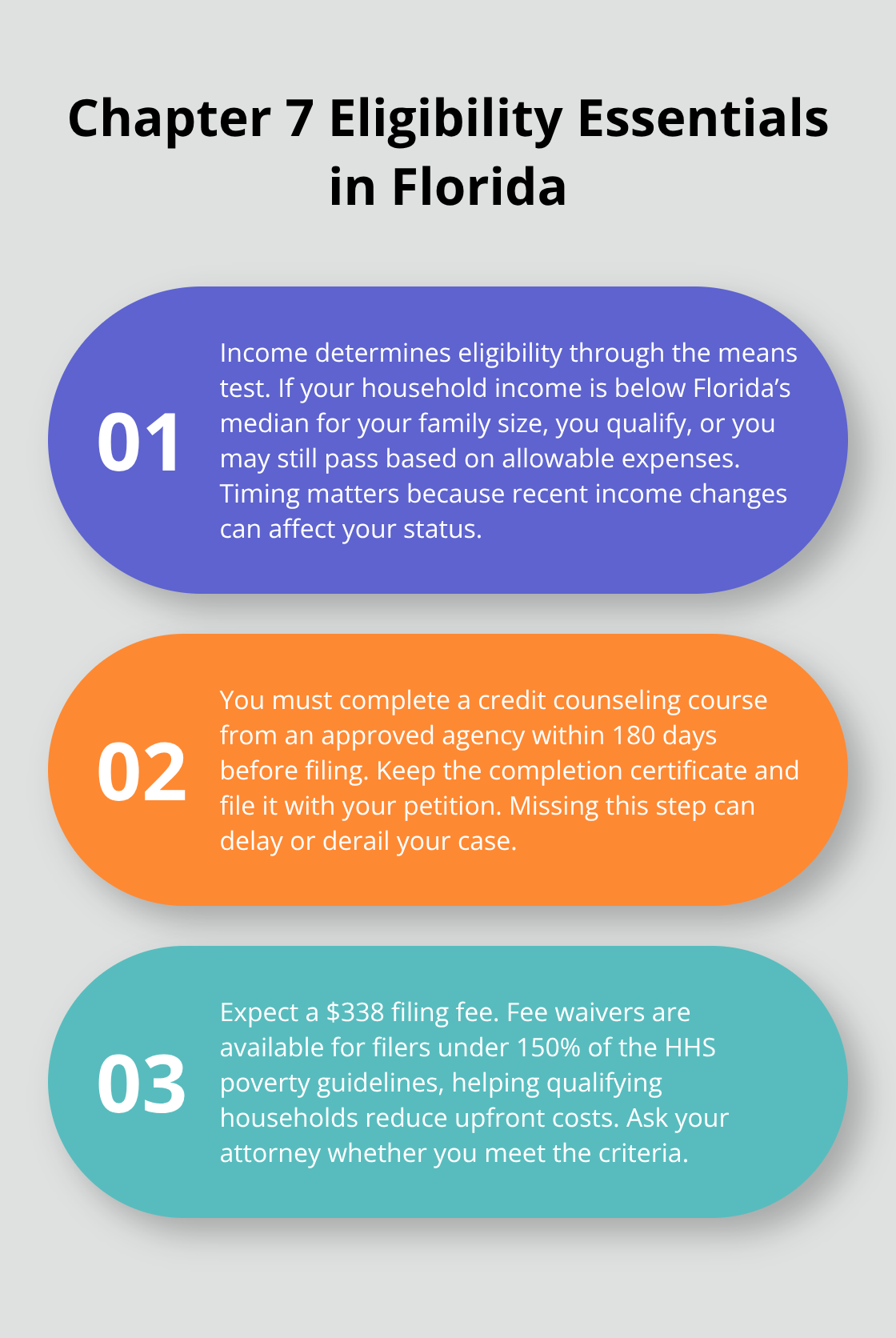
You qualify for Chapter 7 if your household income falls below Florida’s state median for your family size, or if you pass the means test calculation that compares your monthly income against allowable expenses. The means test uses official state median income data, so timing matters-a bonus or inheritance received before filing can push you over the threshold and disqualify you. You must complete a credit counseling course from an approved agency within 180 days before filing and submit the certificate with your petition. The filing fee is $338, though fee waivers exist for those below 150 percent of the poverty guidelines set by the U.S. Department of Health and Human Services.
Debts You Eliminate and Debts That Remain
Chapter 7 eliminates credit cards, medical debt, and personal loans through the discharge order. However, you cannot discharge child support, alimony, most student loans unless you prove undue hardship, income and property taxes, and debts obtained through fraud. Understanding this distinction prevents surprises after your discharge takes effect.
The 341 Meeting and Asset Review Process
After filing, the trustee schedules your 341 Meeting of Creditors within 20 to 40 days; attendance is mandatory, but the meeting typically lasts five to ten minutes and creditors rarely show up. You bring a photo ID and Social Security card, answer questions under oath, and move forward. The trustee reviews your assets to identify anything non-exempt that can be liquidated to pay creditors. Florida exemptions protect your homestead property, certain vehicle equity, and personal property up to specific limits-understanding these protections prevents losing assets you intended to keep.
Objection Deadlines and Your Path to Discharge
Objections to your discharge have strict deadlines: 30 days after the 341 meeting for exemption challenges and 60 days for discharge objections under bankruptcy code sections 523 and 727. Once the discharge order issues, creditors cannot pursue collection on eliminated debts. Within two years after discharge, if you have no derogatory credit, you may qualify for an FHA mortgage-allowing homeownership sooner than most people expect. With your debts eliminated and your assets protected, the real work of rebuilding begins.
Rebuilding Your Financial Life After Discharge
Your Credit Score Recovery Timeline
Your discharge order eliminates qualifying debts, but your credit score takes an immediate hit. Most people see scores drop 130 to 200 points immediately after filing, according to credit reporting data. The good news: recovery happens faster than you think. Within about 24 months after discharge, many people reach a good credit level (typically 670 or higher).
Secured Cards and Authorized User Status
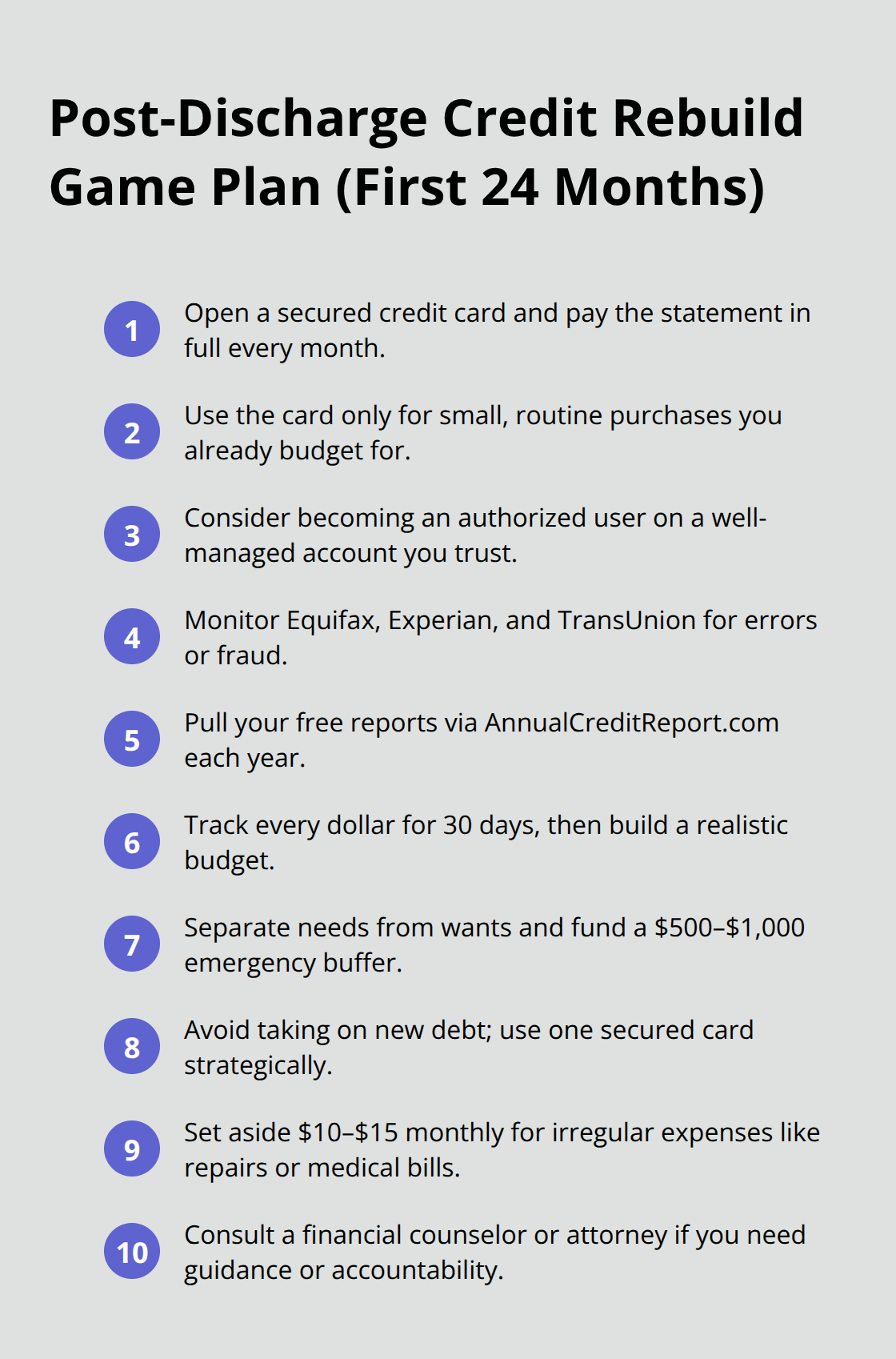
Start rebuilding immediately with a secured credit card, which requires a cash deposit that becomes your credit limit. Use it for small purchases you’d normally make anyway, then pay the balance in full each month. This demonstrates responsible credit behavior to lenders. Alternatively, becoming an authorized user on someone else’s account with good payment history can accelerate your recovery, though this requires careful selection of who you trust.
Monitor Your Credit Reports for Errors
After discharge, monitor your credit report through the major bureaus (Equifax, Experian, TransUnion) to catch errors or fraudulent accounts. You’re entitled to one free report annually from each bureau through annualcreditreport.com. Check these reports obsessively during your first two years post-discharge because inaccuracies can slow your recovery significantly.
Build a Realistic Budget Based on Actual Spending
Creating a realistic budget prevents you from sliding back into debt, and this requires brutal honesty about your spending. Track every dollar for 30 days before building your budget, not estimates you think you spend. Many people discover they hemorrhage money on subscriptions they forgot about, dining out, or impulse purchases. Separate needs from wants ruthlessly: housing, utilities, food, transportation, and insurance are needs; streaming services, restaurant meals, and new clothing are wants that come only after needs are fully covered and you’ve built a small emergency fund of 500 to 1,000 dollars.
Avoid New Debt and Common Financial Pitfalls
Avoid taking on new debt immediately after discharge, even though credit offers will flood your mailbox within weeks. The temptation to rebuild your credit through new loans represents your biggest threat to long-term stability. Instead, pay cash for everything possible and use one secured card strategically. Common mistakes that trap people in future debt include cosigning loans for family members, taking payday loans, and underestimating irregular expenses like car repairs or medical bills. Set aside 10 to 15 dollars monthly for these surprises so they don’t derail your budget when they arrive. If you’re struggling to stick to your plan or unsure about debt management strategies, consulting with a financial counselor or attorney can clarify your options and keep you accountable to your fresh start-and this foundation of financial discipline directly impacts your ability to protect the assets you fought to keep through your bankruptcy case.
Protecting Your Assets and Stopping Creditor Action
Florida Exemptions Shield Your Most Valuable Assets
Florida’s exemption laws protect far more than most debtors realize, and understanding exactly what stays in your hands makes the difference between keeping your home and losing it to the trustee. Your homestead exemption shields unlimited equity in your primary residence as long as you live there, which means even if your house is worth 500,000 dollars, creditors cannot touch it through bankruptcy. Your vehicle receives protection too, up to 1,000 dollars in equity under Florida law, which covers most people’s cars outright since many vehicles are financed. Personal property exemptions protect up to 500 dollars in cash, retirement accounts receive complete protection regardless of balance, and tools of your trade up to 1,000 dollars stay with you if your work depends on them.
The critical action here involves itemizing everything you own before filing and calculating equity carefully, because the trustee will ask detailed questions about asset values at your 341 meeting. Bring current market valuations, loan statements, and documentation proving ownership; vague estimates face challenges. If you own items with significant value outside these exemptions, you face liquidation unless you can claim additional protections.
The Automatic Stay Halts All Collection Activity Immediately
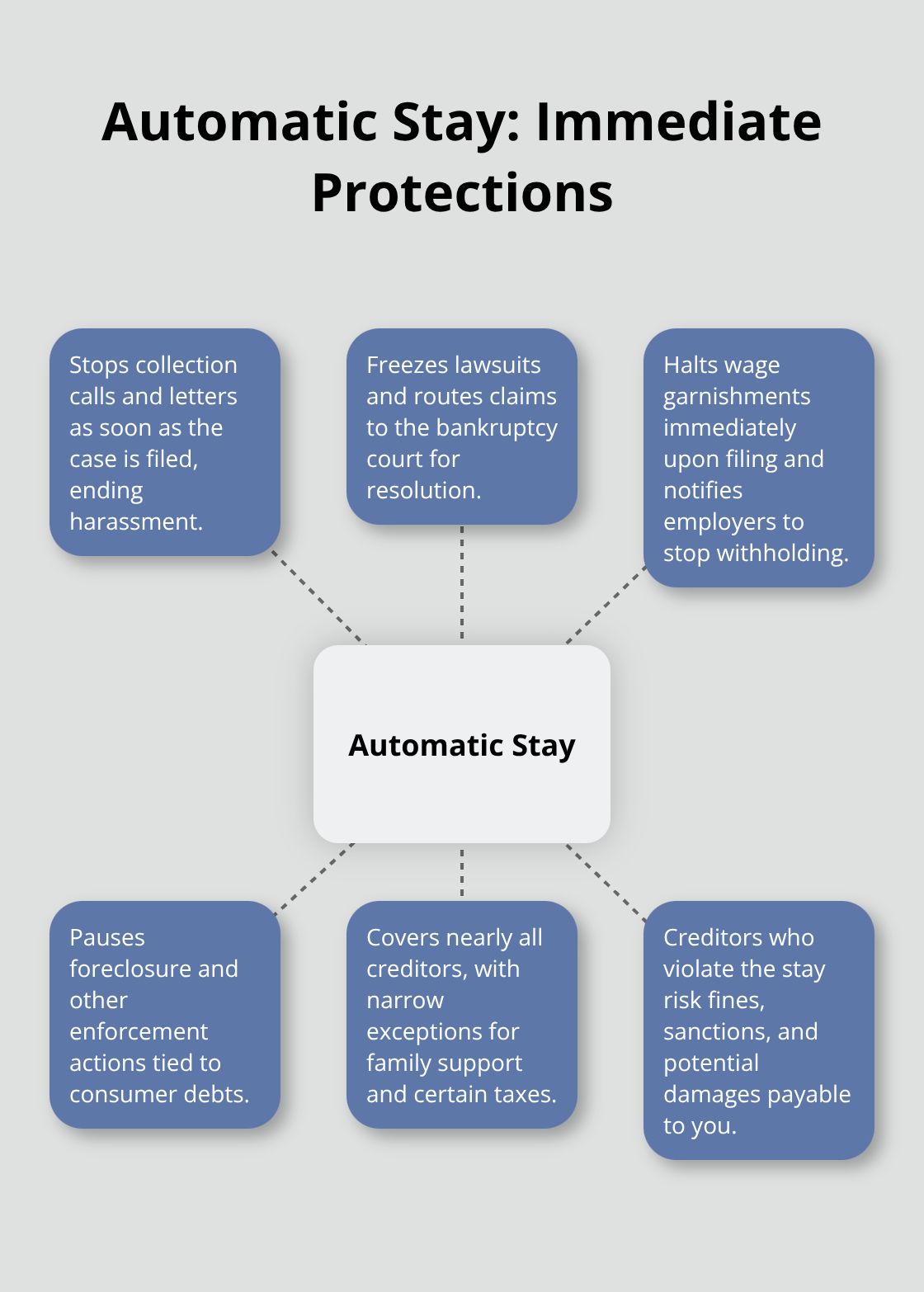
The automatic stay activates the moment you file and stops creditor harassment completely. Creditors cannot call your phone, send letters, file lawsuits, garnish your wages, or foreclose on your home once the bankruptcy is officially filed with the court. This protection is not temporary or conditional; it is absolute and legally enforced.
Wage garnishment becomes impossible because creditors lose all collection rights the instant your petition is docketed. Lawsuits against you are frozen, and any pending cases are transferred to the bankruptcy court where they are typically resolved through the discharge process rather than individual litigation. The automatic stay applies to nearly all creditors, though narrow exceptions exist for family support obligations and certain tax matters that continue outside bankruptcy.
Creditors Stop Calling Within Days of Your Filing
The practical reality is that creditors stop calling within days of your filing because they receive notice from the court. Collection agencies that continue calling after receiving notice face fines and sanctions, which means they have zero financial incentive to harass you further. If you receive a call after filing, get the caller’s name and company, document the date and time, and report it immediately to your bankruptcy attorney because violations of the automatic stay can result in damages paid directly to you.
Pending Lawsuits and Garnishments Halt Through Bankruptcy
Lawsuits pending against you at the time of filing are automatically stayed, meaning the plaintiff cannot continue pursuing the case in regular court; instead, that claim becomes part of your bankruptcy estate and is handled through the discharge process. Garnishment orders already in place stop functioning once the bankruptcy is filed, and your employer receives notice to halt the garnishment immediately.
If your wages were being garnished for credit card debt, medical bills, or personal loans, that garnishment ends. Garnishments for child support and alimony continue because those obligations are non-dischargeable, but consumer debt garnishments stop completely. The timing of your filing matters significantly: if you file before a judgment is entered against you, you avoid the lawsuit entirely and the creditor’s ability to garnish wages. If you wait until after judgment and garnishment begins, the automatic stay still stops it, but you have already suffered wage loss.
Consult an Attorney About Filing Timing
Contact Harnage Law, PLLC about the timing of your filing to prevent garnishment from starting in the first place, particularly if creditors are threatening legal action or you have already been sued.
Final Thoughts
Your fresh start through Florida Chapter 7 bankruptcy eliminates qualifying debts within four to six months and stops creditor harassment immediately through the automatic stay. The real work happens after discharge: you rebuild your credit score to good standing within 24 months, create a realistic budget based on actual spending, and avoid the common mistakes that trap people in future debt. This knowledge transforms bankruptcy from something terrifying into something manageable.
Contact Harnage Law, PLLC for a free case review to assess your eligibility and explore your options for a fresh start Florida bankruptcy. We guide you through every step of this process, help you discharge qualifying debts, stop creditor harassment, and protect your assets so you can rebuild with confidence. Visit Harnage Law, PLLC today to take the first step toward the financial freedom you deserve.