Not everyone qualifies for Chapter 7 bankruptcy in Florida. Understanding the Chapter 7 eligibility criteria is the first step toward determining whether this form of relief makes sense for your situation.
We at Harnage Law, PLLC walk clients through three main qualification areas: income limits, dischargeable debts, and required documentation. This guide breaks down each requirement so you know exactly where you stand.
Chapter 7 Income Limits: How the Means Test Works in Florida
Your Income Against Florida’s Median
The means test acts as the gatekeeper for Chapter 7 eligibility in Florida. It compares your household income to the Florida median income for your family size. If you earn less than the median, you pass immediately and move forward with Chapter 7. The current Florida median income thresholds set by the U.S. Trustee Program are $68,085 annually for a single earner, $89,428 for two people, $108,677 for three people, and $111,819 for four people. Add $11,100 for each additional household member beyond four. These figures apply to cases filed between November 1, 2025 and March 31, 2026.
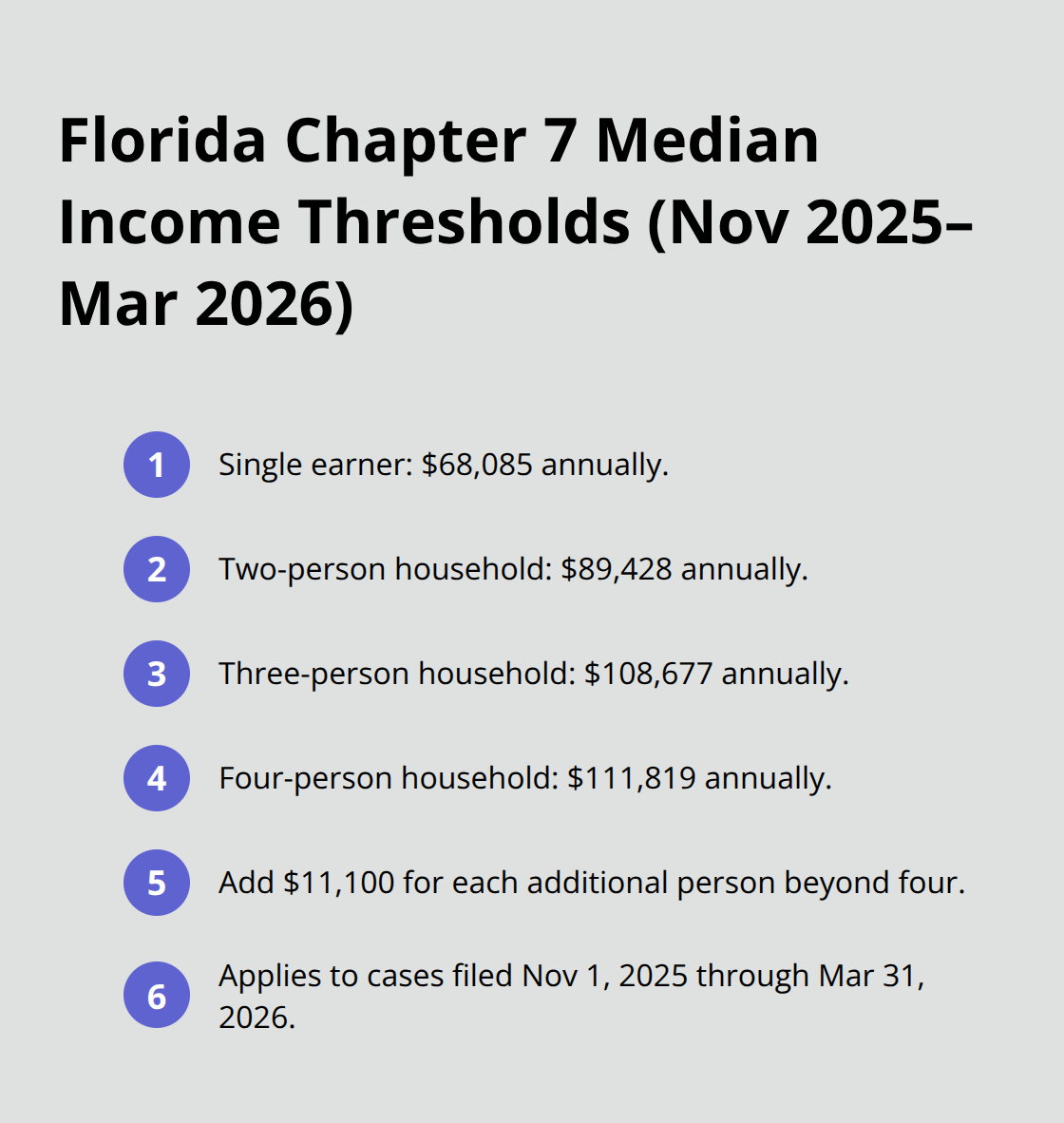
If your household income falls below these thresholds, you’ve cleared the first hurdle. However, if your income exceeds the median for your family size, the analysis becomes more complex and requires calculating your disposable income over the next 60 months.
Calculating Disposable Income
The disposable income calculation determines whether you have money left over after accounting for allowed living expenses and legally required payments. The U.S. Trustee uses national, Florida, and local expense averages from the Census Bureau and IRS to establish baseline figures for housing, utilities, food, transportation, and other necessities. You subtract these allowed expenses from your current monthly income, which is calculated by averaging your last six calendar months of earnings and annualizing that figure.
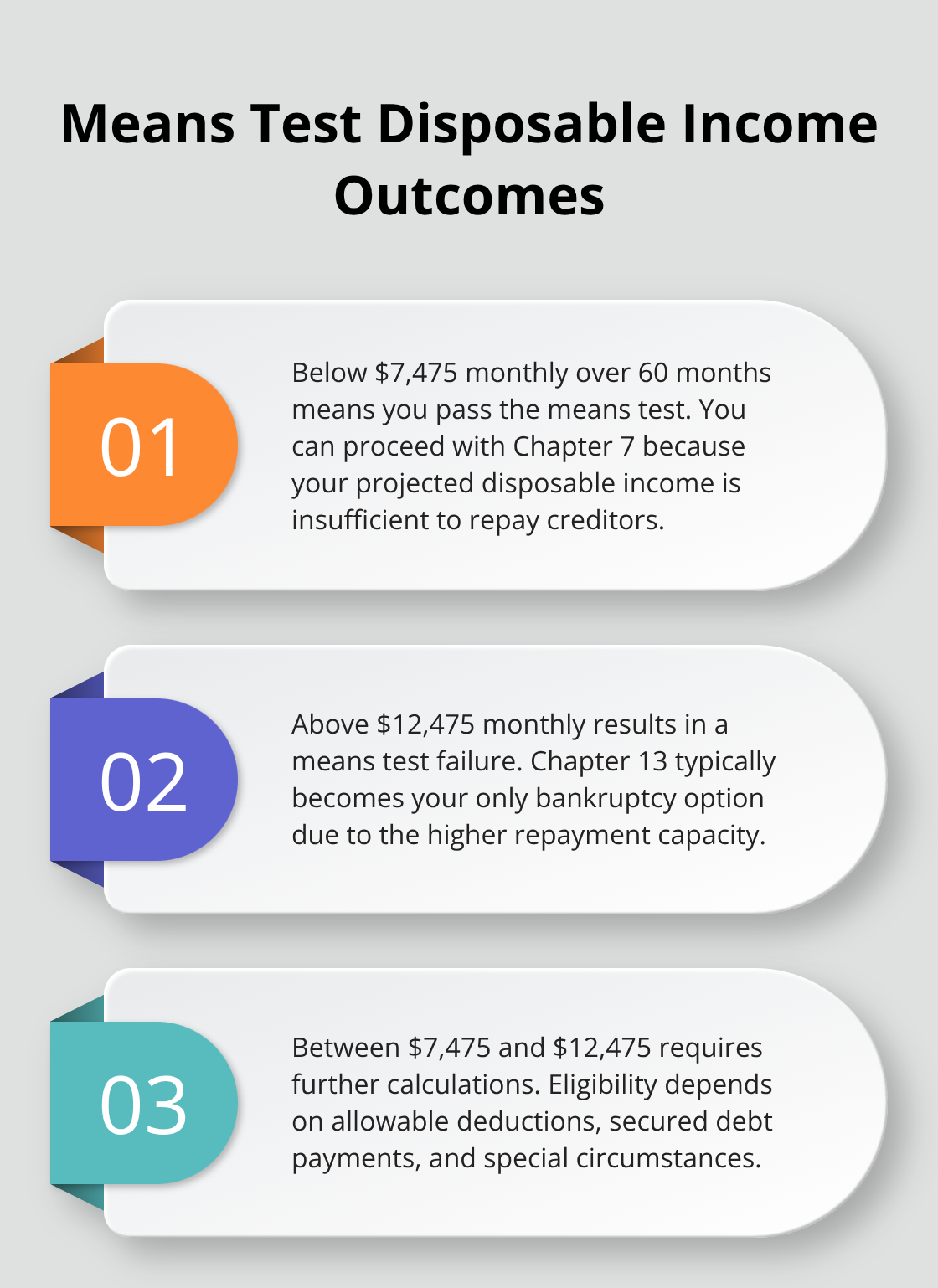
If your projected 60-month disposable income falls below $7,475 monthly, you pass the means test and qualify for Chapter 7. If it exceeds $12,475 monthly, you fail and cannot file Chapter 7-Chapter 13 becomes your only bankruptcy option. Income between these thresholds requires additional calculations to determine eligibility.
Timing Your Filing for Better Results
If your income recently declined, waiting an additional month or two can lower your six-month average, potentially moving you below the median and improving your pass chances. This timing consideration matters because the means test projects your financial situation forward, and a temporary income dip can mean the difference between qualification and disqualification for Chapter 7 relief in Florida. The means test calculation directly influences which debts you can discharge and which ones remain after bankruptcy.
What Debts Disappear in Chapter 7 and What Stays
Unsecured Debts That Discharge Completely
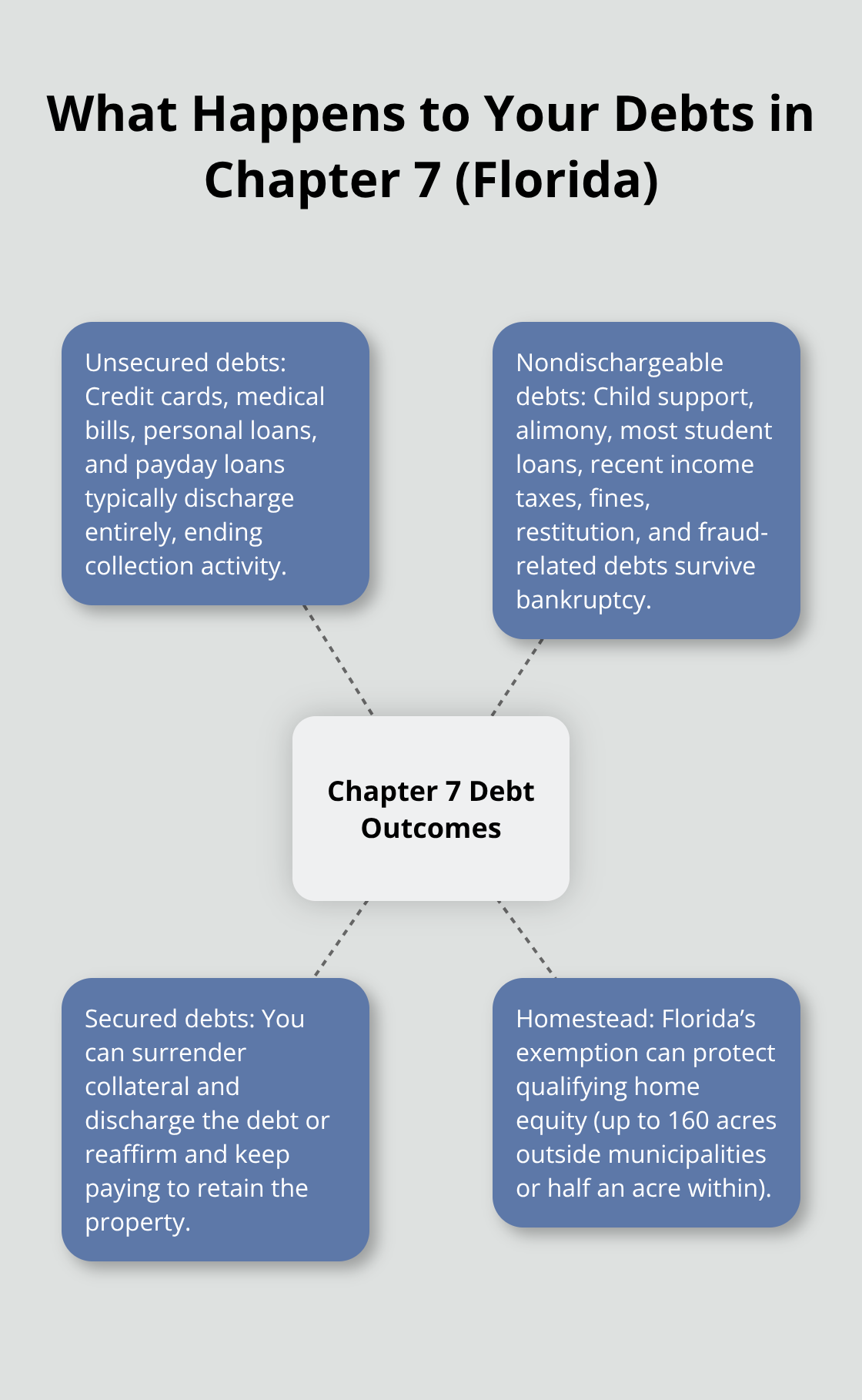
Chapter 7 bankruptcy discharges most unsecured debts, which means you walk away from them without paying anything further. Credit card balances, medical bills, personal loans, and payday loans fall into this category. The Federal Trade Commission reported that the average American carries over $6,000 in credit card debt alone. In Chapter 7, these obligations vanish after discharge, providing immediate relief from creditor calls and collection notices.
Debts That Survive Bankruptcy No Matter What
Certain debts remain your responsibility even after bankruptcy concludes. Child support and alimony obligations never disappear under any circumstances. Student loans typically survive bankruptcy unless you can prove undue hardship, which courts rarely grant. Federal and state income taxes owed within the past three years generally cannot be discharged, though older tax debts may qualify. Court fines, criminal restitution, and debts incurred through fraud all persist after your case closes.
Secured Debts and Your Property
Secured debts tied to collateral operate differently than unsecured debts. If you have a mortgage or car loan, Chapter 7 addresses these through different mechanisms. You can surrender the property and discharge the debt, or you can keep the property if you reaffirm the debt (meaning you agree to continue paying despite the bankruptcy). The decision hinges on whether keeping the asset aligns with your fresh start goals. If your home equity falls within Florida’s generous homestead exemption (unlimited protection for qualifying properties under 160 acres outside municipalities or half an acre within them), you may retain your home while discharging other debts entirely.
Prior Bankruptcy Filings and Waiting Periods
Your recent bankruptcy history directly impacts whether you can file Chapter 7 now. If you received a Chapter 7 discharge within the past eight years, you cannot file Chapter 7 again. If you had a Chapter 13 discharge within the past six years, you also face a waiting period before filing Chapter 7. These timing rules exist because bankruptcy law prevents serial filings that would allow debtors to discharge debts repeatedly without consequence. However, if you filed Chapter 13 more than six years ago or Chapter 7 more than eight years ago, you regain eligibility to file. The U.S. Trustee Program tracks all bankruptcy filings nationally, so prior cases appear in their database regardless of which court handled them.
Understanding Your Complete Debt Picture
Many debtors mistakenly believe all debts vanish in Chapter 7. This misconception leads some filers to discover after discharge that they still owe student loans, child support, or back taxes. Identifying which obligations will discharge and which will remain requires careful analysis of your complete debt picture before you commit to filing. This analysis determines what Chapter 7 actually accomplishes for your specific situation and shapes your overall bankruptcy strategy. With your debt obligations clarified, the next critical step involves gathering the financial documentation that bankruptcy courts require from every filer.
Required Documents and Financial Disclosures for Chapter 7 in Florida
The Complete Filing Package the Court Demands
The bankruptcy court in Florida requires specific documents at filing, and missing even one delays your case significantly. The U.S. Bankruptcy Court demands your Voluntary Petition for bankruptcy, your Statement About Your Social Security Numbers, your Certificate of Credit Counseling (which you must complete within 180 days before filing), and your Creditor Matrix listing every creditor’s name and address. You also need the Summary of Your Assets and Liabilities, Schedules A through J detailing your property and expenses, the Statement of Your Current Monthly Income, the Means Test Calculation forms, and a Declaration About Your Payment Advices showing your last six months of paystubs. If you face eviction, include the Initial Statement About Eviction Judgment. Every signature on these documents must be original wet ink-no photocopies, no electronic signatures, no scans accepted by the court. The filing fee stands at $338, though you can pay in installments if your first payment covers at least half the fee, or request a waiver using Official Bankruptcy Form 103B if your household income falls below federal poverty guidelines.
Income Documentation Requirements
Many filers underestimate how much information the court requires about their finances. The Means Test forms demand six months of income history, which means you should collect paystubs from the last six months before filing. If you are self-employed or have irregular income, collect bank statements and business records showing your actual earnings. The expense section of your Schedules requires documentation of your utilities, insurance, childcare, medical costs, and transportation expenses. The court uses IRS and Census Bureau standards to evaluate what counts as reasonable expenses, so inflating figures or omitting legitimate costs creates red flags during the 341 meeting with the trustee.
Transparency and Accuracy in Your Petition
Transparency matters more than any other aspect of your filing. The trustee has access to your tax returns, credit reports, and bank account records, so inconsistencies between your petition and external records trigger investigation. Provide complete and honest information about all income sources, assets, and liabilities. Misrepresenting your financial situation can result in case dismissal or bankruptcy fraud charges (penalties up to $250,000 in fines and 20 years in prison).
Common Delays and How to Avoid Them
Common filing delays stem from missing paystubs, incomplete creditor addresses on the Creditor Matrix, unsigned documents, or failure to complete the required credit counseling course before filing. The court’s Administrative Order 2020-07 governs specific signature and deadline requirements for the Middle District, Northern District, and Southern District of Florida, so verify which district covers your location. Collect everything before you file rather than scrambling to locate documents after submission.
Final Thoughts
Chapter 7 eligibility criteria in Florida depend on three core factors: your income relative to state medians, your ability to discharge debts, and your willingness to provide complete financial documentation. Verify that your household income falls below the Florida median for your family size or that your disposable income calculation supports Chapter 7 relief. Confirm which debts will discharge and which will remain, particularly student loans, child support, and recent tax obligations (missing this step often surprises filers after discharge).
You must complete an approved credit counseling course within 180 days before filing and pay the $338 filing fee or request a waiver. After filing, you attend the 341 meeting with the trustee, complete a personal financial management course within 60 days, and receive your discharge order typically within four to six months. Gathering six months of paystubs, expense documentation, and a complete creditor list with accurate addresses prevents delays and dismissal.
We at Harnage Law, PLLC help Florida residents navigate Chapter 7 bankruptcy from start to finish, protecting your assets and obtaining discharge. Our firm stops creditor harassment, prevents wage garnishments, and halts lawsuits while you rebuild your financial future. If you’re uncertain whether Chapter 7 makes sense for your circumstances, contact us for a consultation to review your eligibility and explore your options.