Bankruptcy feels overwhelming, but the Chapter 7 process in Florida is more straightforward than most people think. This guide walks you through each stage, from filing to discharge, so you understand exactly what happens next.
We at Harnage Law, PLLC help Florida residents navigate this path with clarity and confidence. You’ll learn what assets you keep, how creditors are handled, and how to rebuild your financial life after discharge.
What Chapter 7 Actually Does for Florida Residents
Eliminating Unsecured Debts
Chapter 7 bankruptcy in Florida eliminates unsecured debts you can no longer pay. This includes credit card balances, medical bills, personal loans, and most other non-secured obligations. The process operates under federal law and files in federal bankruptcy court, not state court. When you file Chapter 7 in Florida, an automatic stay takes effect immediately, stopping creditors from calling, suing, or garnishing your wages. The trustee appointed to your case liquidates non-exempt assets to pay creditors, but Florida’s exemption laws are generous-you keep your primary residence with unlimited equity (subject to size limits), up to $5,000 in vehicle equity per motor vehicle, and retirement accounts protected up to over $1.7 million per person through 2028.
Timeline and Speed
The entire process typically takes 3 to 4 months from filing to discharge. Chapter 7 differs fundamentally from Chapter 13, which requires a repayment plan over 3 to 5 years. Chapter 13 works better if you have a steady income, want to keep property with equity, or need to catch up on mortgage arrears. Chapter 11 is designed for business reorganization and is rarely used by individuals.
Why Florida Residents Choose Chapter 7
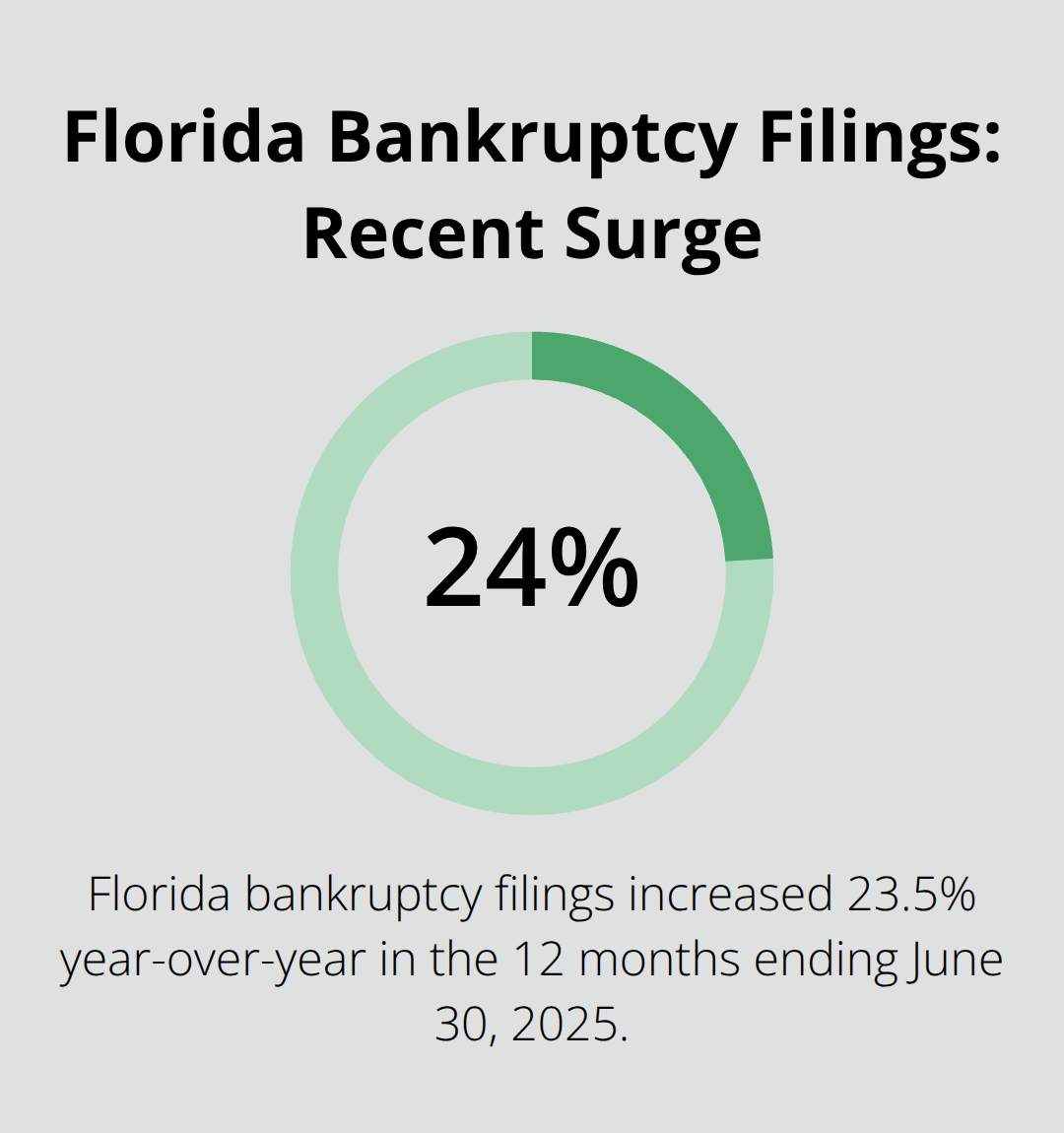
Florida residents file Chapter 7 at significantly higher rates than other chapters-Chapter 7 filings rose from 5,384 in 2023 to 8,635 in 2025 in the Southern District alone, according to court case management data. This upward trend reflects genuine economic pressure: Florida bankruptcy filings overall increased 23.5% in the 12 months ending June 30, 2025, reaching 276,126 filings in the first six months of 2025 alone, per Epiq AACER data cited by Law.com.
People choose Chapter 7 because it offers speed and finality. You avoid a multi-year payment plan; instead, qualifying debts vanish after discharge. This matters most for those with limited income who cannot sustain a Chapter 13 plan. Florida’s strong homestead exemption makes Chapter 7 particularly attractive for homeowners with manageable mortgage payments but crushing unsecured debt.
Immediate Protection from Creditors
The automatic stay protection is immediate and powerful-it stops wage garnishment, lawsuits, and foreclosure notices within days of filing. For residents facing medical debt, credit card defaults, or personal loan defaults, Chapter 7 provides the fastest legal path to a fresh financial start. Understanding these core benefits helps you move forward with confidence as you prepare for the filing stage.
Filing Your Petition and Meeting the Court’s Requirements
Assembling Your Petition Package
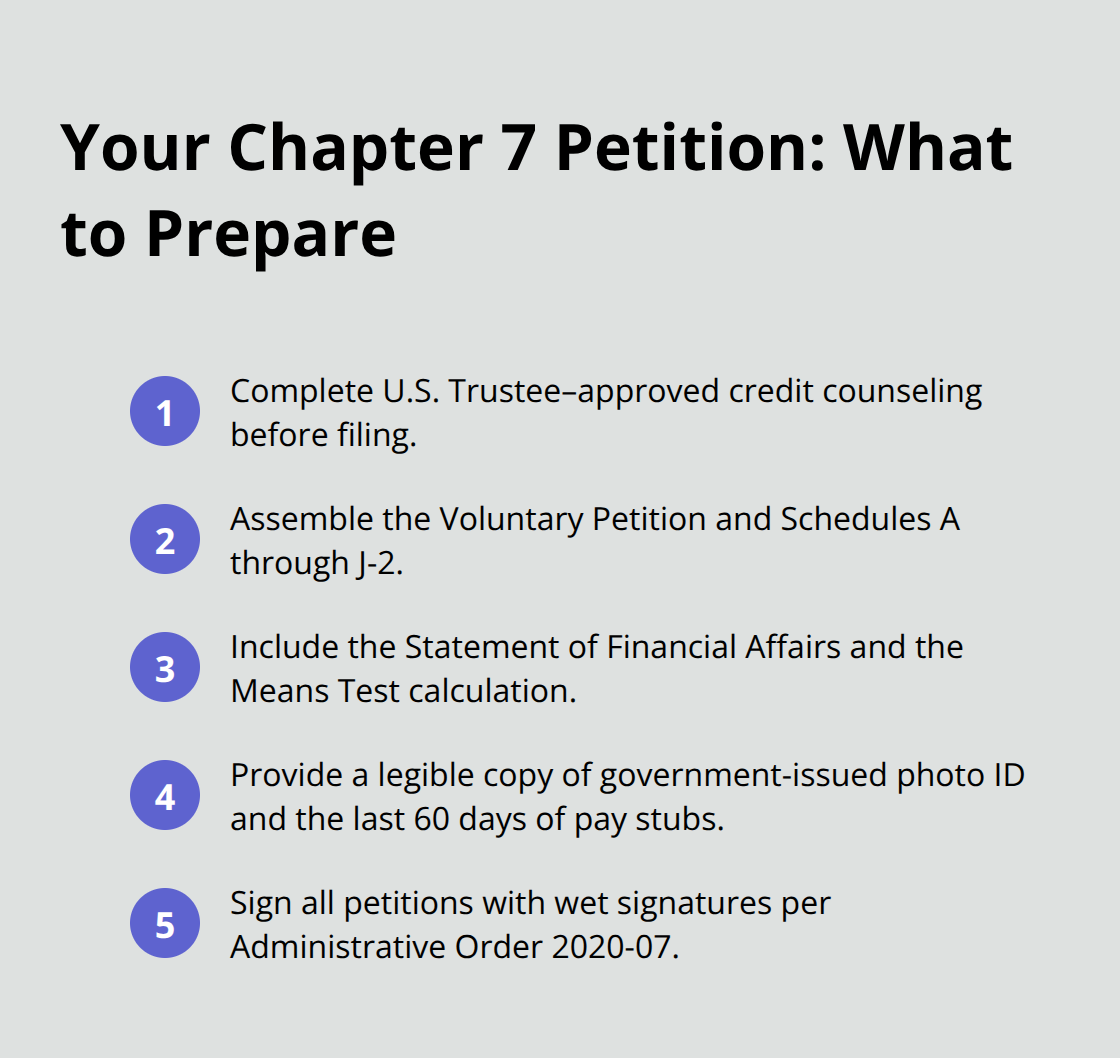
Filing Chapter 7 in Florida requires submitting a complete petition package to federal bankruptcy court in your district-Miami, Fort Lauderdale, or West Palm Beach if you’re in the Southern District. Before you file, complete credit counseling from an agency approved by the U.S. Trustee; skipping this step blocks your filing entirely. The petition itself includes your Voluntary Petition, Schedules A through J-2, a Statement of Financial Affairs, the Means Test calculation, and a legible photocopy of government-issued photo ID. You must also provide the last 60 days of pay stubs and sign all petitions with wet signatures as required by Administrative Order 2020-07.
Missing or incomplete forms delay your case and frustrate the court.
Handling Filing Fees and Payment Options
The filing fee is $338, payable at filing or in installments-the minimum first payment must be at least half the fee. If you cannot afford the fee, file Official Bankruptcy Form 103B to request a waiver based on federal poverty guidelines. Within 14 days of filing, any unpaid balance must reach the court via cashier’s check or money order (cash by mail is rejected).
The Automatic Stay Stops Creditor Actions Immediately
The instant your petition is filed and processed, the automatic stay activates. This court order immediately stops creditors from calling, suing, garnishing wages, or pursuing collection actions. The stay remains active throughout your case, typically 3 to 4 months. Creditors who violate the stay face penalties, though most comply once they receive notice of your filing.
The 341 Meeting and Trustee Questions
About 30 days after filing, you attend the 341 meeting of creditors-a federal requirement where a trustee and any creditors present question you about your income, debts, and assets. Honest, thorough answers matter here; the trustee verifies information against your filed schedules. This meeting is often brief and non-adversarial, especially in consumer cases.
Completing Education and Reaching Discharge
Shortly before discharge, you must complete a follow-up debtor education course, another federal requirement. Once the trustee confirms completion and no objections arise, the court issues your discharge order within 90 to 120 days of filing. This discharge eliminates qualifying unsecured debts permanently-credit cards, medical bills, personal loans, and similar obligations vanish. Secured debts like mortgages and car loans remain, but you keep those assets if you maintain payments or invoke redemption rights under 11 U.S.C. § 722, allowing you to pay the fair market value instead of the full loan balance. Understanding how these protections and requirements work positions you to move forward with clarity as you consider what assets Florida law allows you to retain.
What You Keep and How to Rebuild in Florida
Florida’s Generous Asset Protection Laws
Florida’s exemption laws rank among the most debtor-friendly in the nation, which is why the state attracts residents seeking Chapter 7 protection. Your primary residence receives unlimited equity protection, subject only to a half-acre size limit within municipalities or 160 acres outside them-this means your home stays yours regardless of how much equity you’ve built, provided you meet residency requirements. To claim the full uncapped homestead exemption, you must own the property for at least 1,215 days before filing; if you haven’t reached that threshold, a federal cap of approximately $214,000 applies instead. Vehicle equity up to $5,000 per motor vehicle is protected, or $10,000 for joint filers if both spouses own the vehicle together. Retirement accounts receive exceptional protection, with IRAs and Roth IRAs shielded up to over $1.7 million per person through 2028 due to inflation adjustments.
Redemption Rights Lower Your Vehicle Payoff
If your vehicle loan exceeds its fair market value, Chapter 7 allows you to redeem it under 11 U.S.C. § 722, meaning you pay only what the vehicle is actually worth rather than the full loan balance-a $20,000 loan on a $12,000 car becomes a $12,000 payoff. The Middle District of Florida streamlines this redemption process through a Negative Notice procedure, making it faster than in other districts. This protection matters significantly because it prevents you from losing vehicles unnecessarily to poor planning.
Rebuilding Credit After Discharge
Your discharge eliminates unsecured debts permanently, but your credit report still shows the bankruptcy filing for up to ten years-that record doesn’t vanish, but its impact diminishes significantly after two to three years as you establish new positive payment history. Secured credit cards, which require a cash deposit typically between $500 and $2,500, represent the fastest path to demonstrating creditworthiness; lenders view them favorably because the deposit collateralizes the credit line.
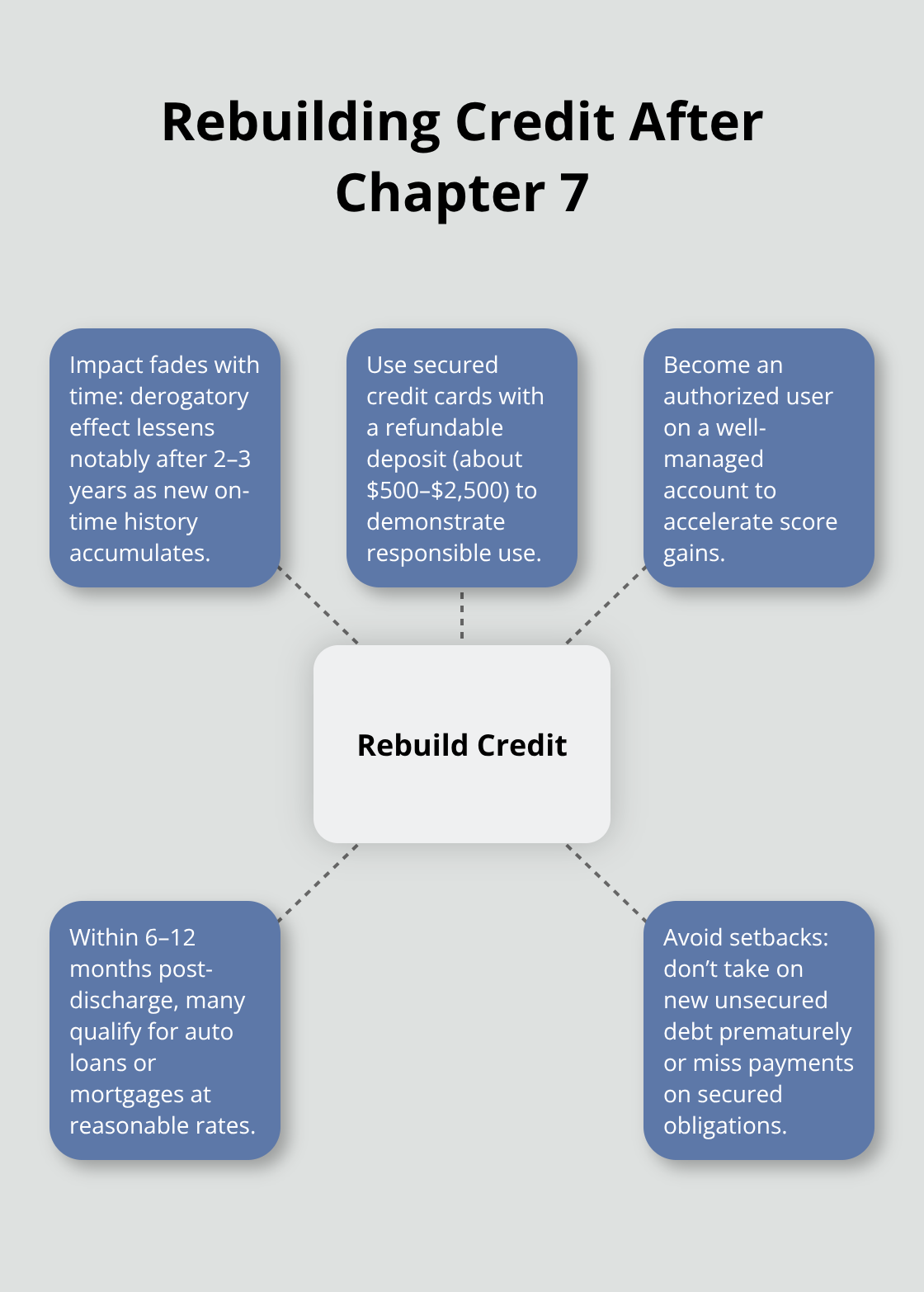
Becoming an authorized user on someone else’s established credit account can boost your score faster than building solo, though this only works if the primary cardholder maintains flawless payment history. Within six to twelve months of discharge, many consumers rebuild their scores enough to qualify for conventional auto loans or mortgages at reasonable rates, particularly if they avoid the common mistakes that derail fresh starts.
Mistakes That Sabotage Your Fresh Start
The biggest mistake is incurring new unsecured debt immediately after discharge-credit card offers flood your mailbox post-bankruptcy, and accepting them before your financial foundation stabilizes repeats the cycle that led to filing. A second critical error involves missing payments on secured debts like mortgages or car loans; the automatic stay protected you during Chapter 7, but that protection evaporates at discharge, so any default on secured obligations risks losing those assets. Third, many debtors fail to monitor their credit report for errors or fraudulent accounts opened in their name during financial distress; pull your free annual report from each of the three bureaus and dispute inaccuracies to prevent phantom debts from sabotaging your recovery. A final avoidable mistake is filing a second Chapter 7 too quickly-federal law imposes an eight-year waiting period between Chapter 7 discharges, so rushing back into debt and filing again simply doesn’t work.
Final Thoughts
Chapter 7 bankruptcy in Florida offers a structured, predictable path to eliminating unsecured debt and rebuilding your financial life. From filing through discharge roughly three to four months later, each stage serves a clear purpose: stopping creditor harassment, protecting your assets under Florida’s generous exemption laws, and positioning you for a genuine fresh start. The automatic stay halts collection actions immediately, the 341 meeting verifies your circumstances, and discharge eliminates qualifying debts permanently.
We at Harnage Law, PLLC guide you through every step of the Chapter 7 process in Florida. We help you complete pre-filing credit counseling, assemble your petition package correctly, prepare for the 341 meeting, and navigate post-discharge debtor education so you can focus on rebuilding rather than defending yourself against collection actions. We also help you understand redemption rights that can lower vehicle payoffs and explain the common mistakes that derail fresh starts after discharge.
Reach out to us for a consultation to assess your eligibility and options. Financial hardship is temporary; the relief Chapter 7 provides is permanent.