
Creditor calls disrupt your sleep, interrupt your work, and create constant anxiety. The harassment feels relentless, but you have legal options that can stop it immediately.
Chapter 7 bankruptcy triggers an automatic stay that halts collection calls the moment you file. At Harnage Law, PLLC, we help Florida residents achieve fewer creditor calls and regain control of their finances through this powerful protection.
How Creditor Harassment Destroys Your Financial Health in Florida
The Daily Impact of Relentless Collection Calls
Creditor calls average 5 to 10 per day for people struggling with debt, according to consumer reports filed with the Federal Trade Commission. These calls start early morning and continue into evening hours, interrupting sleep, work meetings, and family time. The stress compounds quickly-people receiving constant collection calls report higher blood pressure, anxiety disorders, and depression. Families experience tension as financial pressure seeps into relationships. Children sense the stress, and household arguments over money increase. The emotional weight of constant harassment often leads people to avoid answering phones entirely, missing important calls from employers, doctors, and family members. This isolation deepens the psychological toll.
Florida Law Prohibits Collection Harassment
Florida’s Consumer Collection Practices Act prohibits harassment tactics including repeated calls at unusual hours, profane language, threats, and contacting you at work after being told not to. Yet violations remain widespread. Debt collectors break these laws routinely, and you have concrete remedies. Under Florida law, collectors cannot contact you if you’re represented by an attorney, cannot misrepresent debt amounts, and cannot threaten actions they cannot legally take. Violations allow you to sue for actual damages, statutory damages up to 1,000 dollars, court costs, and attorney’s fees. The statute of limitations gives you two years from the violation date to bring a claim.
Federal Protections Add Another Layer
The Fair Debt Collection Practices Act requires debt collectors to identify themselves, send validation notices within five days, cease communication if you request it in writing, and verify the debt within 30 days. FDCPA violations can yield up to 1,000 dollars in statutory damages per violation, plus actual damages and attorney’s fees enforced by the Federal Trade Commission and Consumer Financial Protection Bureau. Combined, Florida and federal law create a robust shield against harassment.
Document Every Violation
Keep a detailed call log with dates, times, and caller names. Save letters and emails. Recording calls is permissible in Florida with proper disclosure since Florida is a two-party consent state-always inform the other party before recording. This documentation strengthens your position if you file a complaint with the Florida Office of Financial Regulation, Florida Attorney General’s Consumer Protection Division, or federal agencies. Yet lawsuits and complaints take time, and the calls continue while you pursue them. Chapter 7 bankruptcy offers immediate relief that stops the harassment from day one.
How the Automatic Stay Stops Creditor Calls Immediately
The Federal Order That Halts Collection Activities
Filing Chapter 7 bankruptcy triggers an automatic stay under 11 U.S.C. Section 362, a court order that halts collection activities the moment you file your petition. This is not a request or negotiation-it is a federal mandate that creditors must follow. The automatic stay prohibits phone calls, letters, lawsuits, wage garnishments, bank levies, foreclosure, and repossession during your bankruptcy case. Creditors who violate the stay face contempt of court charges and liability for actual damages, statutory damages, and attorney’s fees. Most creditors stop calling within days of receiving notice of your filing because their legal teams recognize the stay’s power.
Why Chapter 7 Works Faster Than Other Remedies
The average Chapter 7 case discharges in 3 to 4 months, and the automatic stay remains in effect throughout, giving you months of uninterrupted peace while creditors are legally barred from contact. This immediate protection outpaces filing complaints with the Federal Trade Commission or pursuing FDCPA lawsuits-those remedies take months or years to resolve, while the stay stops calls on day one. You do not wait for agency investigations or court hearings to see results. The protection starts immediately upon filing.
What the Automatic Stay Covers
The automatic stay stops collection calls from original creditors, third-party debt collectors, and debt buyers who purchased your accounts. It halts lawsuits filed against you and stops existing wage garnishments. Utilities stay connected for at least 20 days, giving you breathing room to address service issues. For most unsecured debts-credit cards, medical bills, personal loans-creditors rarely succeed in lifting the stay because they have no collateral at risk.
Limits and Exceptions to the Automatic Stay
The stay does not cover all actions: tax proceedings, property tax liens, and certain family law matters like child support enforcement may continue in some cases. If you filed bankruptcy within the past year and your case was dismissed, the automatic stay may be limited or not apply unless you show good faith. Creditors can petition the court to lift the stay, but they must meet specific legal standards, particularly for secured debts like mortgages or car loans. Once your Chapter 7 case concludes with a discharge, the automatic stay terminates, but the discharge itself provides permanent relief by eliminating most unsecured debts entirely, so creditor calls do not resume for discharged accounts.
Moving From Protection to Permanent Relief
The automatic stay gives you immediate breathing room, but the real power of Chapter 7 lies in what comes next. Understanding how the discharge process works and what debts survive bankruptcy helps you plan your financial recovery with confidence.
How to File Chapter 7 and Stop Creditor Calls
Complete Pre-Filing Requirements Before Your Petition
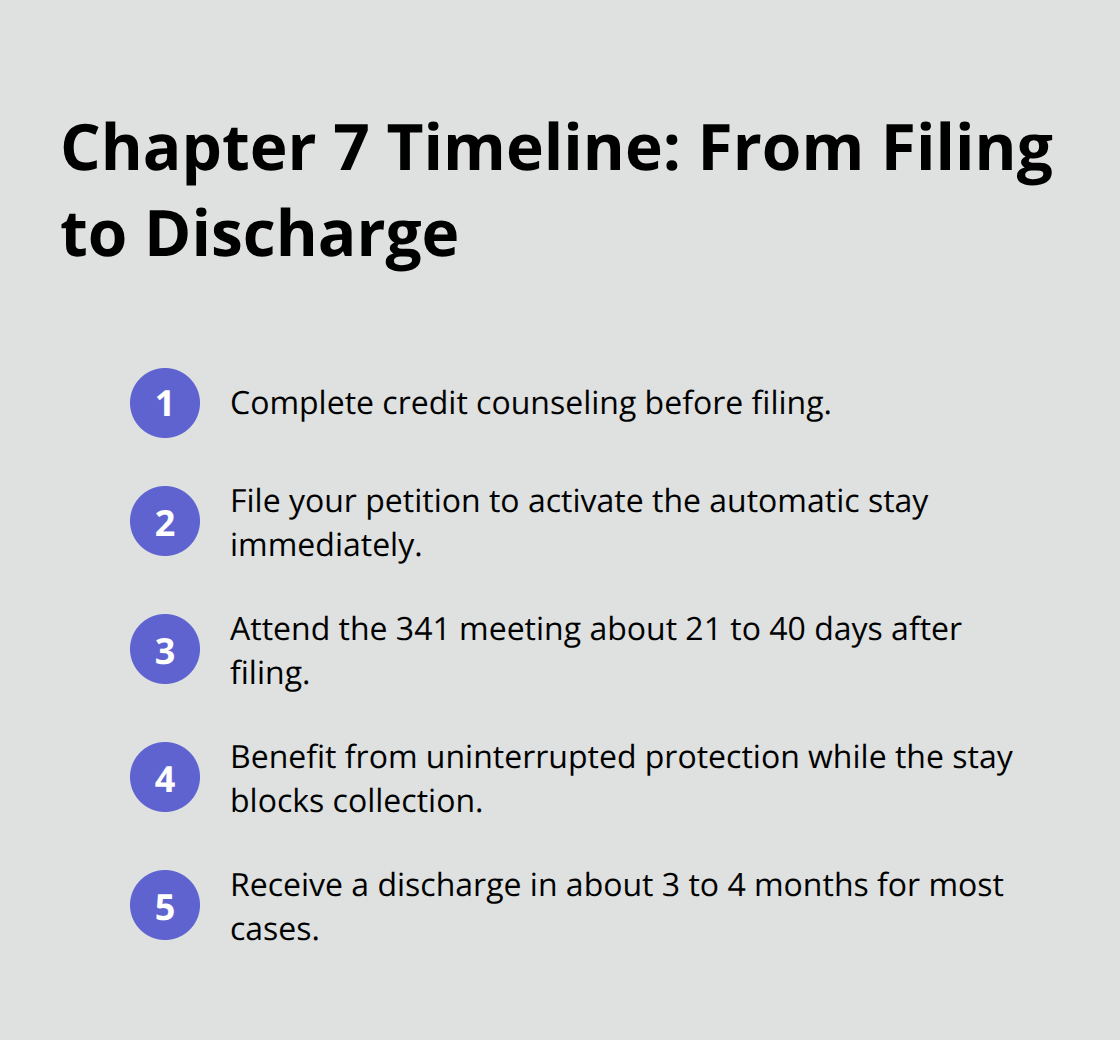
Chapter 7 bankruptcy in Florida requires specific steps, and timing matters. You must complete a credit counseling course from an approved agency before filing your petition-this is a federal requirement, though emergencies allow you to proceed if agencies are unavailable. The petition itself includes detailed schedules listing all assets, liabilities, income, and expenses. Filing fees total 335 dollars, though you can request a waiver if your household income falls below 150 percent of the poverty line, or you can pay in installments if that works better for your budget. Once you file, the automatic stay activates immediately, and creditors receive notice within days.
The 341 Meeting and Timeline to Discharge
The court schedules your 341 meeting, typically occurring 21 to 40 days after filing, where the bankruptcy trustee questions you under oath about your finances. Most Chapter 7 cases discharge in 3 to 4 months, meaning your debts are eliminated and creditors have no legal basis to contact you afterward. During those months, the automatic stay keeps collection calls completely stopped. The automatic stay remains in effect throughout your case, providing uninterrupted protection while creditors are legally barred from contact.
Privacy and Workplace Protection
Many people worry about whether filing affects their job, but in most cases, employers are never notified unless you have a Chapter 13 wage deduction plan (which does not apply in Chapter 7). The filing itself remains largely private-only the court and creditors see your case details. You can file without your workplace knowing about it, allowing you to stop harassment without workplace complications.
Communicating Your Filing Status to Debt Collectors
Creditors who receive notice of your Chapter 7 filing must stop contact automatically. If a collector calls after receiving notice, that violates the automatic stay and exposes them to contempt charges and liability for damages. If a collector calls before learning of your filing, you can inform them that you have filed for Chapter 7 and provide your case number, which you receive when you file. Do not engage in lengthy conversations or make promises about payment-simply state you have filed Chapter 7 and have legal representation. If you retain a bankruptcy attorney before filing, creditors who know you are represented must stop contacting you directly and must speak only with your attorney (this is required under Florida law).
Working With Your Bankruptcy Attorney Throughout the Process
Your attorney handles all court communications, responds to creditor motions, and represents you at the 341 meeting. They also advise you on which assets are protected under Florida exemptions, helping you keep your home, vehicle, and personal property to the maximum extent allowed. Your attorney protects you from missteps and ensures compliance with court deadlines, guiding you through every step of the Chapter 7 process so creditor calls stop and stay stopped while your case moves toward discharge.
Final Thoughts
Creditor calls destroy your peace, but Chapter 7 bankruptcy stops them immediately through the automatic stay, which halts collection activities the moment you file your petition. The stay protects you for 3 to 4 months while your case moves toward discharge, and once your debts are eliminated, the harassment ends permanently because creditors have no legal basis to contact you about discharged accounts. Fewer creditor calls in Florida means reclaiming your sleep, your focus at work, and your family relationships without constant dread.
The process is straightforward: complete credit counseling, file your petition, attend your 341 meeting, and receive your discharge. Chapter 7 offers relief far faster than pursuing complaints or lawsuits against collectors, and the automatic stay protects you throughout the entire process. You do not have to endure relentless collection calls or financial pressure alone.
We at Harnage Law, PLLC help individuals and families overcome financial challenges through Chapter 7 bankruptcy by providing legal guidance and representation that stops creditor harassment, prevents wage garnishments, and halts lawsuits. Contact us today to explore how Chapter 7 can give you a fresh financial start, and visit our Chapter 7 bankruptcy guide to learn more about your options and schedule your free consultation.