Creditor lawsuits in Florida can feel overwhelming, but you have a powerful legal tool to stop them immediately. Chapter 7 bankruptcy triggers an automatic stay that halts collection actions, lawsuits, and creditor harassment the moment you file.
We at Harnage Law, PLLC help people reclaim their financial stability by using Chapter 7 to stop creditor lawsuits and start fresh. This guide shows you exactly how the process works and what relief you can expect.
How Creditor Lawsuits Develop in Florida
The Timeline of a Creditor Lawsuit
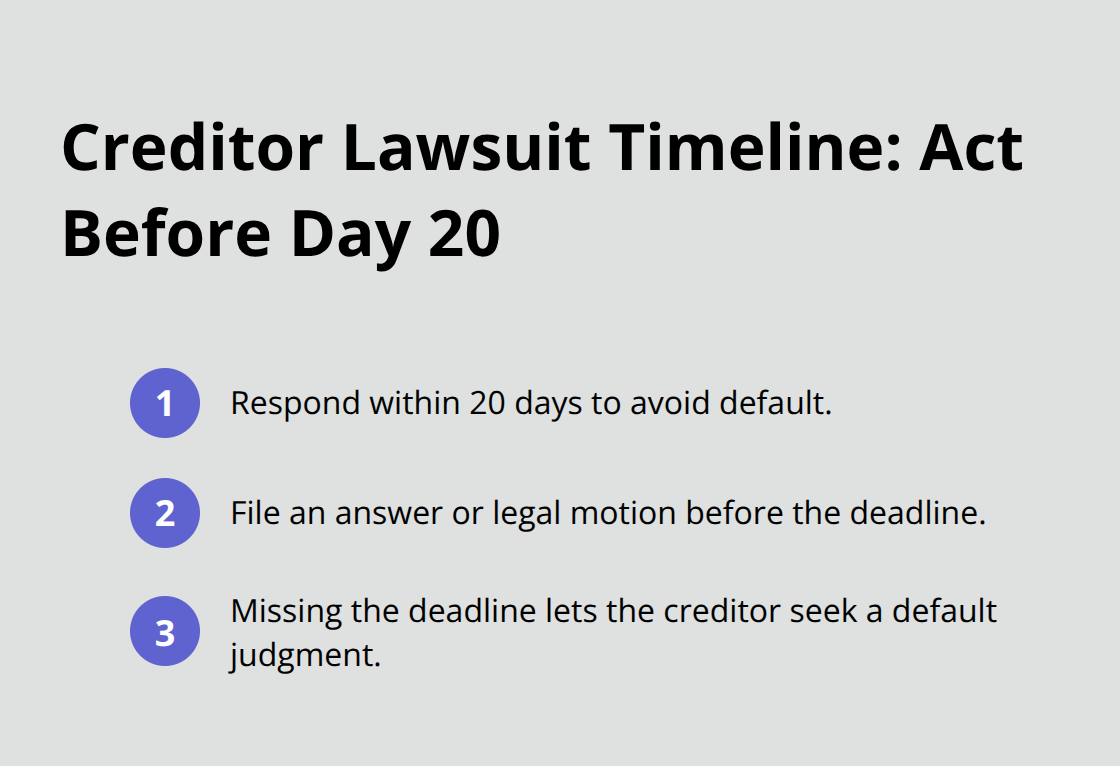
A creditor lawsuit in Florida typically unfolds over several months, giving you a critical window to act before a judgment becomes final. The process starts when a creditor files a complaint in civil court, which triggers a summons directed at you. You have 20 days from the date of service to respond with an answer or other legal motion, according to Florida’s Rules of Civil Procedure. Many people ignore this deadline entirely, which is a serious mistake. If you fail to respond within 20 days, the creditor can request a default judgment, meaning the court sides with the creditor without hearing your defense.
What Default Judgments Mean for Your Finances
Default judgments are devastating because they give creditors legal authority to garnish your wages, freeze your bank accounts, and place liens on your property. Once a judgment is entered, the creditor moves from the lawsuit phase into the collection phase, where their power expands significantly. At this point, reversing the damage becomes much harder and more expensive.
Acting When You Receive a Summons
When you receive a summons, the document includes the creditor’s allegations about the debt, the amount claimed, and your court date. This moment marks your critical opportunity to take action. Ignoring the summons does not make the lawsuit disappear-it guarantees you will lose by default. Filing for Chapter 7 bankruptcy before a judgment is entered stops the lawsuit immediately through the automatic stay, which halts all collection actions the moment your case is filed with the court.
How Chapter 7 Protects You After Judgment
If a judgment already exists, Chapter 7 still protects you by stopping wage garnishments and collection efforts, though the judgment itself may survive discharge depending on the debt type. The timeline matters enormously: filing early prevents pre-judgment steps like garnishments and liens that become much harder to reverse later. Acting the moment you receive a summons rather than waiting for a judgment to be entered expands your options dramatically, since that final court decision locks in the creditor’s power.
Understanding how quickly creditor lawsuits escalate shows why the automatic stay works so powerfully in your favor. When you file Chapter 7, the court immediately halts these collection actions and gives you breathing room to address your debt through the bankruptcy process.
How Chapter 7 Stops Creditor Lawsuits in Florida
The Automatic Stay Takes Effect Instantly
Filing Chapter 7 bankruptcy stops creditor lawsuits the moment your petition reaches the court clerk’s desk. Under 11 U.S.C. §362, the automatic stay becomes effective instantly and halts virtually all collection actions without requiring you to ask for it or wait for a judge’s order. This means phone calls stop, letters cease, wage garnishments freeze, bank account levies reverse, and active lawsuits pause immediately. If a creditor continues contacting you after filing, they violate federal law and face contempt of court charges plus damages.
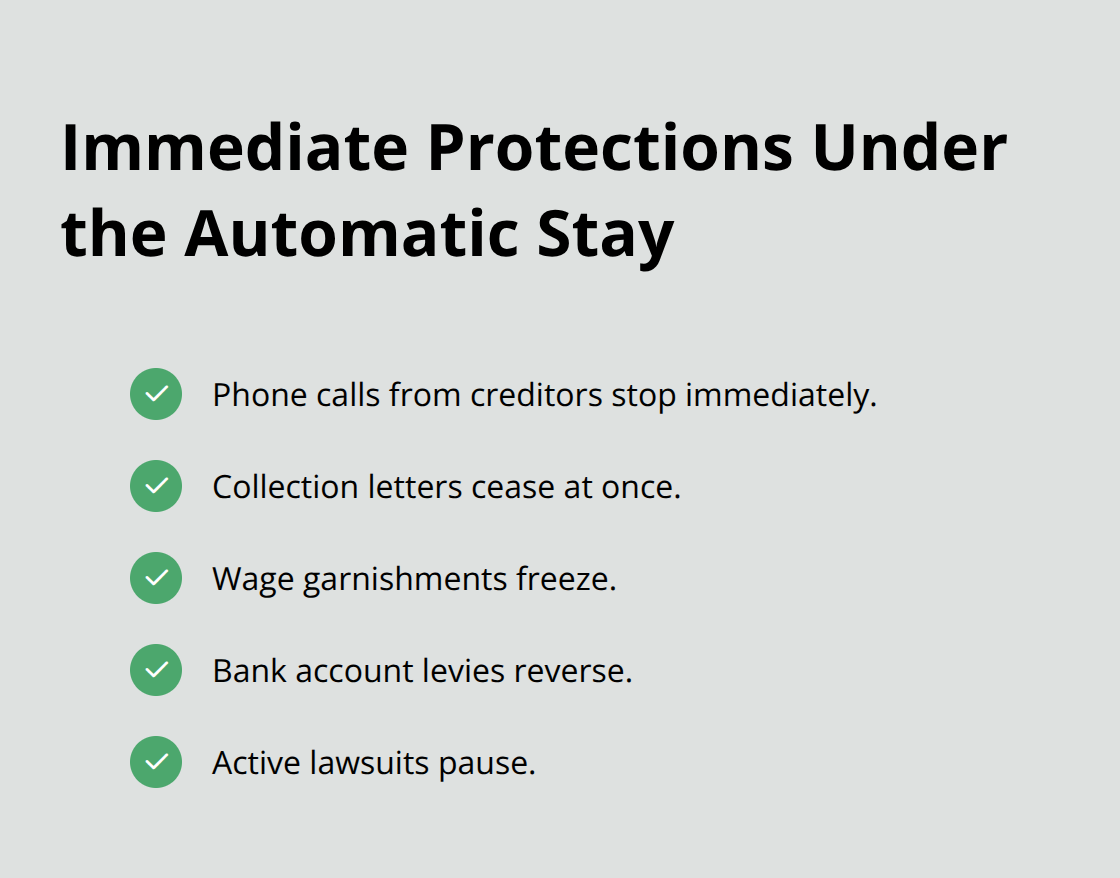
The power of this immediate protection cannot be overstated because it gives you breathing room before judgments lock in permanent wage garnishments or liens on your property.
Why Filing First Matters More Than Resolving the Lawsuit
Many people delay filing because they believe they need to resolve the lawsuit first, but that logic works backward. Filing first stops the lawsuit and puts you in control rather than letting the creditor’s legal machinery run unchecked. The moment you file, the court halts all collection efforts related to your case, shifting the power dynamic entirely in your favor.
How Long the Automatic Stay Protects You
The automatic stay remains in place throughout your entire Chapter 7 case, typically lasting 3 to 4 months from filing to discharge according to the U.S. Courts. During this period, creditors cannot pursue collection actions related to dischargeable debts like credit card balances, medical bills, personal loans, and most other unsecured obligations. Certain debts fall outside this protection, including child support, alimony, recent taxes, and criminal restitution, so creditors pursuing those debts may continue collection efforts.
What Happens When Your Case Concludes
Once your Chapter 7 case concludes with a discharge, the automatic stay technically ends, but the discharge itself provides permanent protection by legally eliminating your obligation to pay those debts. If a creditor attempts to collect after discharge, they violate the discharge injunction and face serious legal consequences. The timing of your filing matters significantly because creditors who obtain judgments before your bankruptcy filing can still attempt post-discharge collection on non-dischargeable debts, making early action substantially more advantageous.
Moving Forward with Your Discharge
The discharge eliminates your personal liability for most debts and marks the beginning of your financial recovery. Understanding which debts will be discharged and how the stay protects your specific situation throughout the entire process helps you move forward with confidence. Your next step involves learning how to rebuild your financial life after Chapter 7 and protect the assets you keep through the bankruptcy process.
Rebuilding Your Financial Life After Chapter 7 in Florida
Understanding Your Discharged Debts
Your Chapter 7 discharge eliminates most unsecured debts permanently, but the real work of financial recovery starts after the court issues your discharge order. The discharge itself provides lasting protection because creditors cannot legally pursue you for those eliminated debts, and any attempt to collect violates the discharge injunction under 11 U.S.C. §524. Credit card balances, medical bills, personal loans, and most unsecured obligations vanish completely, giving you immediate breathing room in your monthly budget. Child support, alimony, recent tax debts, and student loans typically survive discharge, so you need to plan for ongoing payments on these obligations. The Federal Trade Commission reports that consumers who ignore post-discharge debt planning often face unnecessary collection attempts, so clarifying your remaining obligations before creditors resume contact matters significantly.
Protecting Your Assets Through Bankruptcy
Florida exemptions allow you to keep your primary residence (up to $175,000 in equity according to Florida Statutes §222.03), your vehicle, household furnishings, and retirement accounts like 401k plans and IRAs, meaning these assets generally survive Chapter 7 intact. Taking inventory of what you own and understanding which items the law protects helps you move through bankruptcy with confidence about what stays with you. Your creditors cannot touch these protected assets once your discharge becomes final, providing real security for your family’s stability.
Rebuilding Your Credit Score After Discharge
Your credit score will drop significantly after filing, typically declining 130 to 200 points according to Experian data, but rebuilding starts immediately after discharge. Secured credit cards with $500 to $1,000 deposits help you establish positive payment history within months rather than years, and most lenders report secured card activity to all three credit bureaus. Paying all bills on time after discharge matters far more than your bankruptcy history because recent payment patterns outweigh past delinquencies in credit calculations.
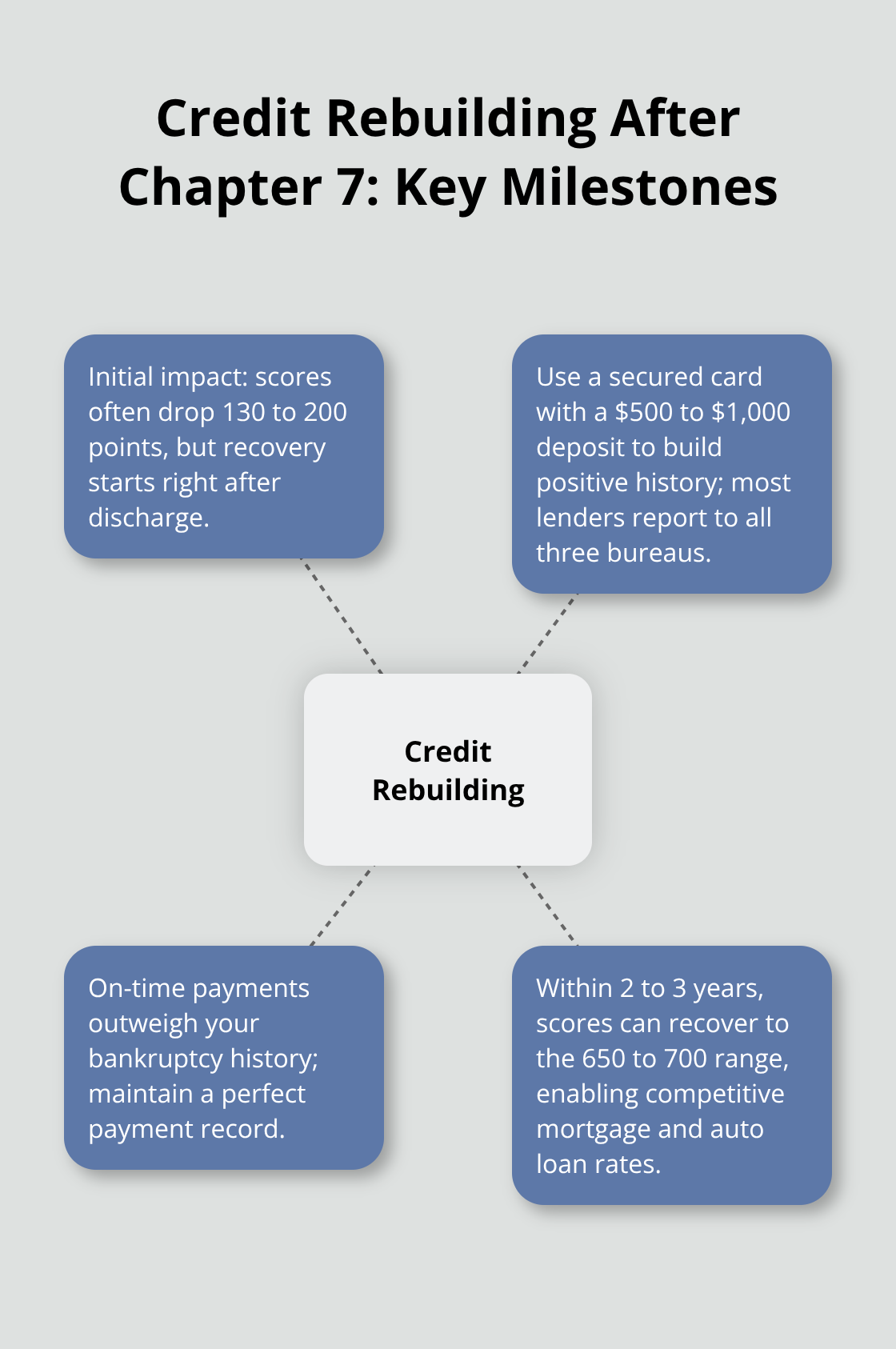
Within two to three years of consistent on-time payments, your score can recover to the 650 to 700 range, making you eligible for competitive mortgage and auto loan rates again.
Taking Action to Protect Your Progress
The key difference between successful post-bankruptcy rebuilding and continued financial struggle is treating your fresh start as an actual reset rather than simply waiting for time to pass. Avoid new debt immediately after discharge, maintain emergency savings of at least $1,000, and address any creditor violations of the discharge injunction promptly. These steps protect the progress you have earned through bankruptcy and position you for long-term financial stability.
Final Thoughts
Chapter 7 bankruptcy stops creditor lawsuits in Florida by triggering the automatic stay the moment you file, halting collection actions, wage garnishments, and harassment immediately. This legal protection gives you breathing room to address your debt through the bankruptcy process rather than watching creditors escalate their collection efforts unchecked. Your discharge eliminates most unsecured debts permanently, meaning creditors lose their legal right to pursue you for those obligations after the court issues your final order.
The long-term benefits of stopping lawsuits through Chapter 7 extend far beyond the immediate relief from collection calls and court dates. Your credit score begins recovering within months of discharge as you establish positive payment history, and within two to three years of consistent on-time payments, you can reach competitive lending rates again. You reclaim control over your financial future by eliminating the constant stress of collection efforts and the threat of wage garnishments that drain your paycheck.
If creditor lawsuits are overwhelming your finances, the time to act is now rather than waiting for judgments to lock in permanent collection authority. Contact Harnage Law, PLLC to discuss how Chapter 7 bankruptcy can stop your lawsuits and provide the financial relief you need to move forward.