Chapter 7 bankruptcy isn’t the only path forward when debt becomes overwhelming. We at Harnage Law, PLLC know that Florida residents have several debt relief options worth considering.
This guide walks you through Chapter 7, Chapter 13, debt consolidation, and alternatives that might work better for your situation. The right choice depends on your income, assets, and long-term financial goals.
Your Three Main Debt Relief Paths in Florida
Chapter 7 bankruptcy offers the fastest route to debt discharge, typically resolving your case within 4 to 6 months. The process liquidates nonexempt assets to pay creditors, but Florida’s homestead exemption is exceptionally generous-it protects unlimited value in your primary residence up to half an acre in a city or 160 acres elsewhere, provided you owned the home for at least 1,215 days before filing. Many Florida Chapter 7 cases qualify as no asset cases, meaning you keep your exempt property while discharging unsecured debts like credit cards and medical bills. The Means Test determines eligibility by comparing your average monthly income to the local area median; if your income falls below that threshold, you generally qualify. If your income exceeds the median, the test calculates disposable income after allowed expenses to determine whether Chapter 7 remains viable or whether Chapter 13 becomes necessary.
When Chapter 13 Makes More Sense
Chapter 13 restructures your debts into a repayment plan lasting 3 to 5 years, allowing you to keep assets with substantial equity that might be at risk in Chapter 7. This chapter offers two powerful tools unavailable in Chapter 7: cramdowns reduce secured debt (like a car loan) to the vehicle’s actual value, and lien stripping removes junior liens on real estate when the home’s value doesn’t cover the first mortgage. Many debtors pay only a fraction of unsecured debts under a confirmed plan-sometimes pennies on the dollar-while protecting income and property.
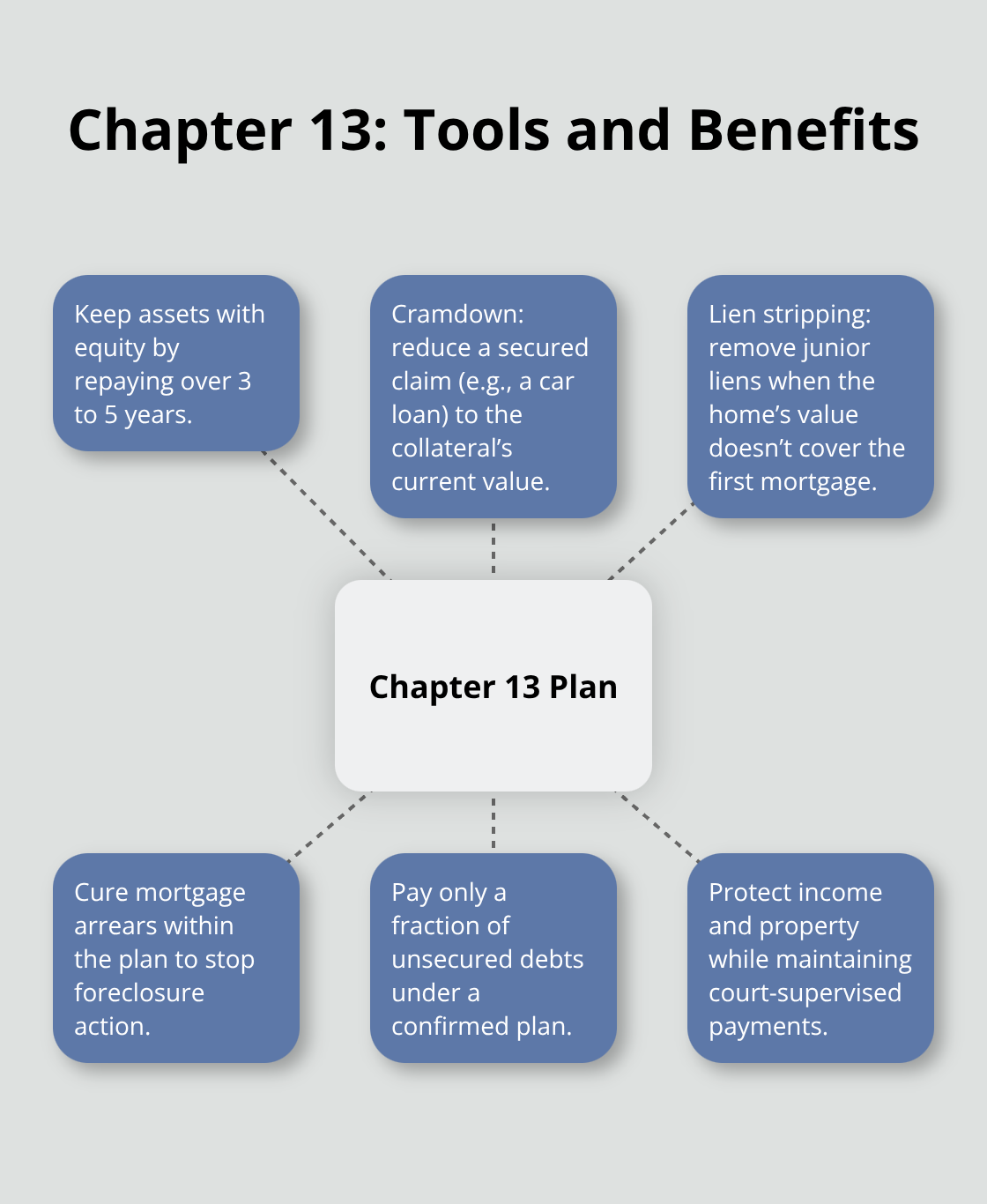
For homeowners facing mortgage arrears, Chapter 13 restructures payments or cures delinquency within the plan itself.
Debt Consolidation as an Alternative Path
Consolidating debts combines multiple high-interest accounts into a single lower-rate loan, simplifying your monthly obligations and potentially saving thousands in interest. Personal loans, balance transfers, home equity lines of credit, and refinancing all serve as consolidation vehicles; the key is securing a lower rate than your current debts carry. This approach works best when you’ve stabilized your income and can commit to the repayment timeline without accumulating new debt.
Credit Counseling and Debt Management Plans
Nonprofit credit counseling agencies-found through credit unions, universities, the U.S. Cooperative Extension Service, or military financial managers-develop debt management plans that may lower interest rates or waive fees. These plans typically run 48 months or longer and require monthly deposits to the counseling organization for distribution to creditors. Verify that any counselor is accredited, ask about fees upfront, and interview multiple options before committing.
Understanding these three paths sets the stage for evaluating which option aligns with your financial situation and long-term goals. The next section examines how Chapter 7 bankruptcy actually works in Florida, including the liquidation process, eligibility requirements, and what you can expect from start to finish.
How Chapter 7 Bankruptcy Works in Florida
The Filing Process and Asset Protection
Florida’s Chapter 7 process starts the moment you file your petition with the bankruptcy court. The court assigns a trustee who reviews your assets, income, and debts to determine what gets liquidated and what you keep under Florida’s exemption laws. Most Florida filers experience no asset cases, meaning the trustee finds nothing of value to sell after applying exemptions.
Your homestead exemption alone protects unlimited equity in your primary residence up to half an acre in a city or 160 acres elsewhere, provided you owned the home for at least 1,215 days before filing. If you haven’t met that residency requirement, exemptions from your prior state may apply instead. Beyond the home, Florida protects retirement accounts including IRAs and 401(k)s completely, wages up to $750 per week if you’re the head of household, disability and Social Security benefits when kept separate, and one vehicle up to $1,000 in equity.
Eligibility Requirements and the Means Test
The Means Test determines whether you qualify for Chapter 7 at all. This test compares your average monthly income over the past six months to the local area median income for your family size. If you fall below the median, you pass the test automatically.
If you exceed the median, the court calculates disposable income after allowed living expenses and debt payments. Disposable income above a threshold of $8,175 over 60 months means Chapter 7 may not be available, and Chapter 13 becomes the required path instead.
Timeline, Costs, and Mandatory Requirements
The entire process typically concludes within 4 to 6 months from filing to discharge. You’ll attend a mandatory meeting of creditors, called the 341 meeting, about 20 to 40 days after filing, where the trustee and creditors can ask questions about your finances. Most creditors don’t attend.
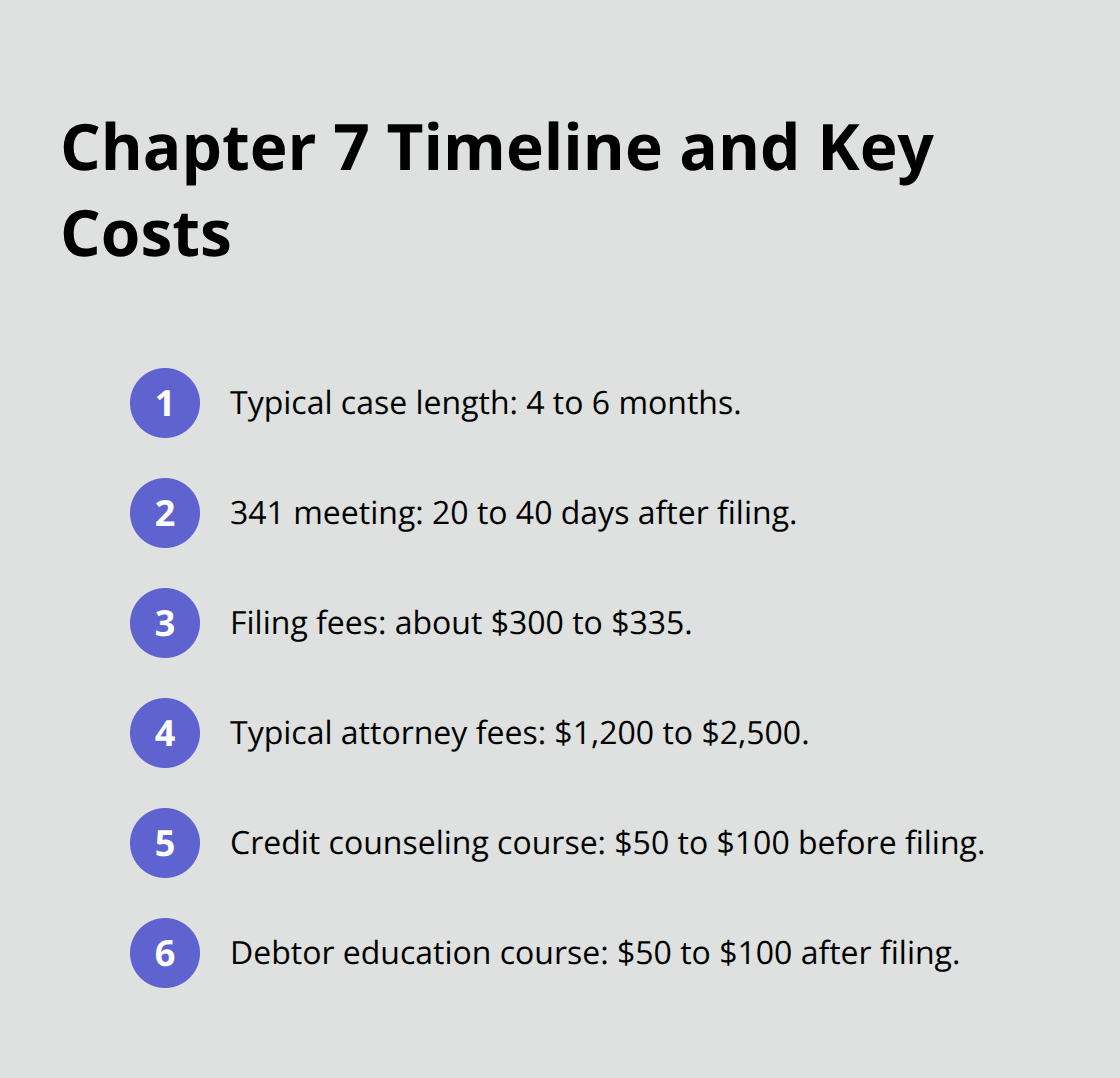
Filing costs approximately $300 to $335 in court fees plus attorney fees, which vary but typically range from $1,200 to $2,500 depending on complexity. You must also complete a credit counseling course from a government-approved provider before filing and a debtor education course afterward, each costing between $50 and $100. These mandatory courses aren’t optional despite their modest cost.
What Happens After the 341 Meeting
After the 341 meeting, if no issues arise, the court issues a discharge order that eliminates unsecured debts like credit cards, medical bills, and personal loans. Secured debts like mortgages and car loans require different handling. If you want to keep the car or home, you must continue making payments and maintain the lien. If you stop paying, the creditor can repossess or foreclose regardless of the bankruptcy.
Understanding what stays and what goes prevents surprises during the process. However, Chapter 7 doesn’t work for everyone-some filers have too much income or assets to qualify. The next section examines Chapter 13 bankruptcy, which offers a completely different approach for those who don’t fit Chapter 7’s requirements or who need to protect substantial assets.
Beyond Chapter 7: When Other Paths Work Better
Direct Negotiation With Your Creditors
Not every Florida resident qualifies for Chapter 7, and not every situation calls for it. If your income exceeds the Means Test threshold or you have substantial assets you want to protect, negotiating directly with creditors or pursuing a debt management plan often produces better outcomes than bankruptcy. These alternatives require discipline and planning, but they avoid the long-term credit damage that bankruptcy creates.
Contact your credit card issuer, medical provider, or personal lender and request a lower interest rate or extended repayment terms. Most creditors would rather restructure a payment plan than write off the account entirely. Document everything in writing and get confirmation of any agreement before you make the first adjusted payment. The Federal Trade Commission reports that creditors frequently agree to rate reductions or temporary payment holidays when approached early, before collection activity begins.
Many people assume they need a debt settlement company to negotiate, but you can handle this yourself without paying third-party fees that eat into your savings. If a creditor refuses to work with you, move forward with other options, but never stop trying until you exhaust every reasonable approach.
Formal Debt Management Plans Through Nonprofit Agencies
Nonprofit credit counseling agencies offer debt management plans that formalize negotiations with multiple creditors simultaneously. These agencies, accredited through the National Foundation for Credit Counseling or the Financial Counseling Association, typically charge between $0 and $50 per month for their services. The counselor works with your creditors to reduce interest rates, waive late fees, and extend repayment timelines, then you make a single monthly deposit to the agency for distribution to creditors.
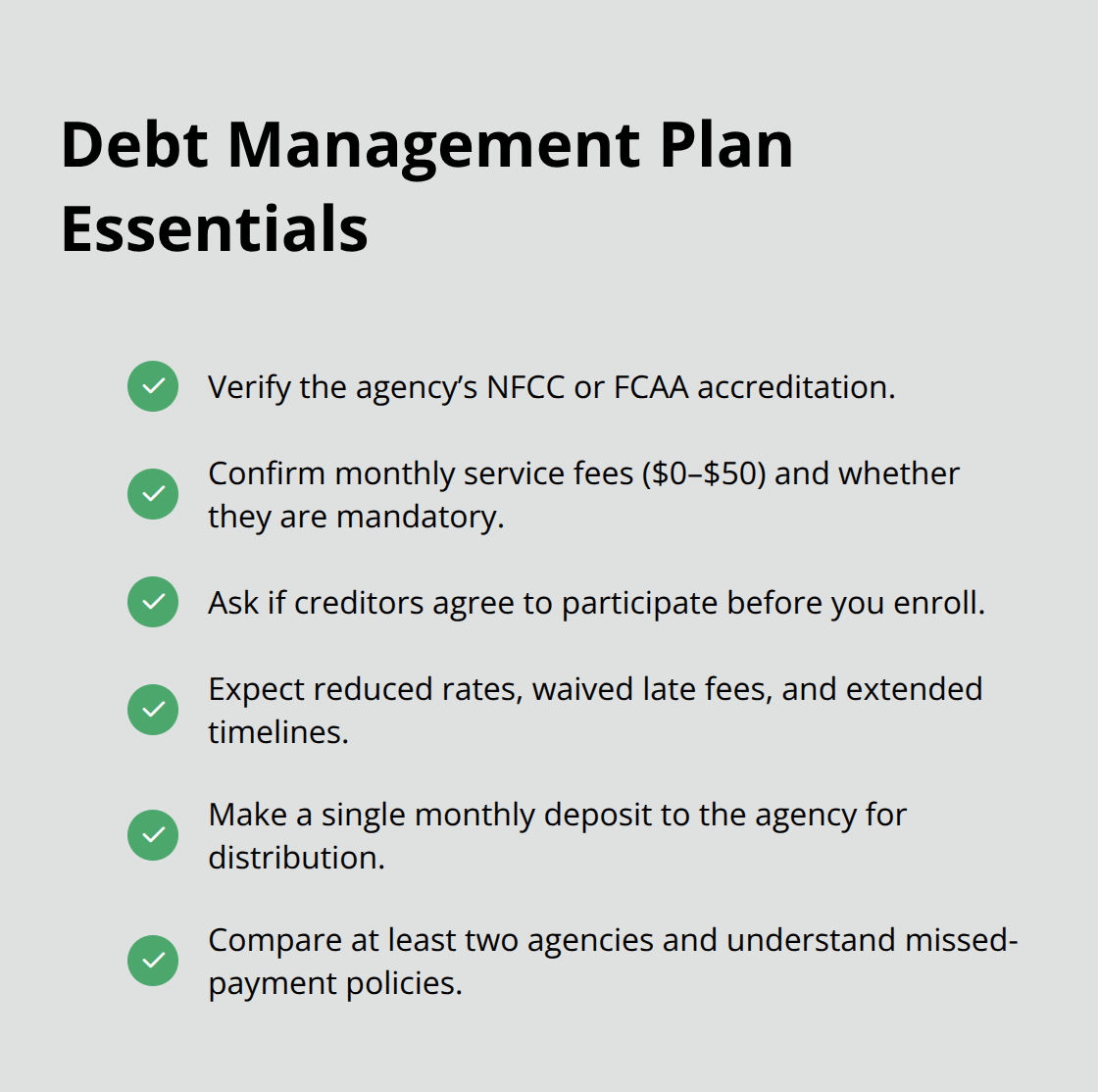
Plans typically run 48 to 60 months, and completing one demonstrates financial responsibility to future lenders. The catch is that creditors must agree to participate, and some refuse, particularly if you’ve already fallen behind. Before enrolling, ask about the counselor’s accreditation, whether fees are mandatory or voluntary, and what happens if you miss a payment. Interview at least two agencies before deciding, since quality varies significantly.
How Debt Management Plans Compare to Settlement Programs
Unlike debt settlement programs that require you to stop paying and damage your credit further, debt management plans keep accounts current and minimize credit score impact. Florida residents should verify that any counselor complies with state regulations and holds proper licensing. Debt management plans work best when you have stable income and manageable debt levels (rather than overwhelming balances that settlement might address).
The choice between negotiating independently, enrolling in a formal debt management plan, or pursuing bankruptcy depends on your creditor relationships, income stability, and whether you have assets worth protecting outside of exemptions.
Final Thoughts on Your Florida Debt Relief Options
The path forward depends entirely on your income, assets, and how quickly you need relief. Chapter 7 offers the fastest discharge within 4 to 6 months if you earn below the local area median and have minimal nonexempt assets. Chapter 13’s 3 to 5 year repayment plan protects property with substantial equity while discharging a portion of unsecured debt, making it ideal for homeowners and those with higher incomes.
Consolidation works when you have stable income and can secure a lower interest rate than your current debts carry. Debt management plans through nonprofit agencies suit those who want to avoid bankruptcy’s credit impact but need formal creditor negotiations. Each Florida debt relief option produces different long-term outcomes: Chapter 7 stays on your credit report for 10 years but offers immediate relief, while Chapter 13 also appears for 10 years but demonstrates repayment commitment to future lenders.
We at Harnage Law, PLLC help Florida residents evaluate which option aligns with your goals and financial reality. Contact us for a free consultation to review your situation and determine the best path forward. Our team stops creditor harassment, prevents wage garnishments, and protects the assets Florida law shields.