Chapter 7 bankruptcy wipes out most of your debts, but it also damages your credit score significantly. The good news is that rebuilding credit after Chapter 7 is entirely possible with the right strategy.
At Harnage Law, PLLC, we’ve guided countless Florida residents through this process. This guide shows you exactly how to recover financially and move forward.
What Happens to Your Credit When You File Chapter 7 in Florida
Your credit score will drop immediately after filing Chapter 7 bankruptcy, typically falling between 100 and 200 points depending on your starting score, total debt amount, and payment history leading up to the filing. If you started with a strong score above 750, expect a steeper decline. If your score was already damaged from missed payments or charge-offs, the impact may feel smaller in raw points but represents further damage to an already weakened profile. The Administrative Office of the U.S. Courts reports that hundreds of thousands of bankruptcies are filed annually across the country, yet many filers mistakenly believe their credit is already destroyed before filing-when in reality, the bankruptcy itself causes the primary damage. This immediate hit is painful, but it matters far less than what happens next.
Your Credit Report After Discharge
The Chapter 7 bankruptcy stays on your credit report for 10 years from the filing date, but this does not mean your credit will remain poor for that entire period. Lenders look at recent behavior much more heavily than older information, so your score can begin recovering within 12 to 24 months if you take deliberate action. The bankruptcy notation itself becomes less influential over time, particularly after three to four years of clean payment history. What actually damages your long-term credit more than the bankruptcy filing itself are the missed payments, charge-offs, and collection accounts that often precede bankruptcy. After discharge, those prior delinquencies remain on your report, but they age and lose impact. Your credit report will also show zero balances on all discharged debts, which is actually positive-it demonstrates that those obligations no longer exist. The key is ensuring your report is accurate. You can access free copies from AnnualCreditReport.com and should verify that all discharged debts show zero balance and that no errors exist from the three bureaus (Equifax, Experian, and TransUnion).
Payment History Rebuilds Your Score Fastest
Payment history accounts for about 35 percent of your FICO score, making it the single most powerful factor in your recovery. Every on-time payment you make after discharge, whether on a secured credit card, credit-builder loan, or remaining obligations like car loans or mortgages, directly rebuilds your score. This is not theoretical-it is the mechanical reality of how credit scoring works. Starting immediately after discharge, set up automatic payments on any bills you have remaining. Missing even one payment during your recovery period can set you back months. Within the first two months after discharge, you should also review your credit reports carefully and dispute any inaccuracies with the bureaus. Many filers discover that creditors have reported incorrect information, and removing these errors can provide an immediate modest boost to your score. With payment history as your foundation, the next step involves choosing the right credit-building tools to demonstrate your financial responsibility to lenders.
How to Rebuild Credit Fast After Chapter 7
Open a Secured Credit Card Within Your First Month
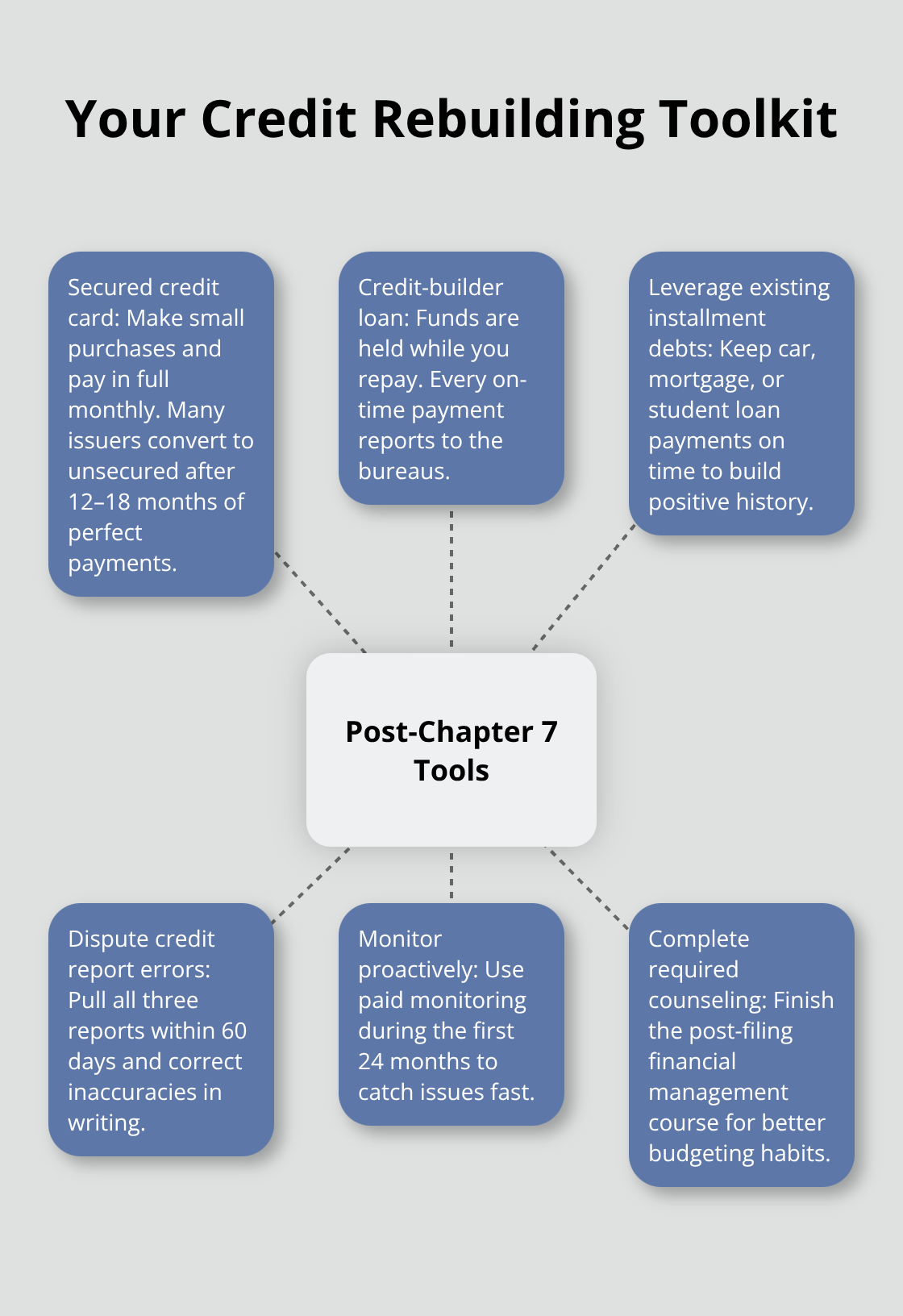
The first action after discharge is opening a secured credit card within the first month. A secured card requires a cash deposit, typically between $500 and $2,500, which becomes your credit limit. This deposit sits in a restricted account while you use the card for small purchases. The critical part is charging only what you can pay off each month in full. If you deposit $1,000, charge no more than $100 per month and pay it completely by the due date. This demonstrates to credit bureaus that you handle borrowed money responsibly. After 12 to 18 months of perfect payments, most issuers automatically convert your secured card to an unsecured card and return your deposit. Discover, Capital One, and various credit unions offer secured cards that report to all three bureaus, so verify this before applying.
Combine a Credit-Builder Loan with Your Secured Card
Simultaneously, apply for a credit-builder loan from your local bank or credit union. These loans place your borrowed funds in a restricted savings account while you make monthly payments toward yourself. A typical $1,000 credit-builder loan with a 12-month term costs around $50 to $80 in interest, and every payment reports to the bureaus as on-time. This dual approach of a secured card plus a credit-builder loan creates two separate positive payment records within your first 90 days, accelerating your score recovery considerably.
Starting your credit recovery immediately after discharge is the difference between a three-year rebuild and a seven-year crawl.
Leverage Your Existing Debts and Obligations
Your remaining debts and obligations become your most powerful recovery tools. If you have a car loan, mortgage, or student loans that survived bankruptcy, these accounts now work for you. Make every payment on time, every single time. Set up automatic payments through your bank so you never miss a due date, even by accident. One missed payment during your first 18 months of recovery can erase six months of progress.
Verify Your Credit Report and Dispute Errors
Within 60 days of discharge, obtain your free credit reports and check each bureau’s record carefully. Verify that all discharged debts show zero balance and that no creditor has incorrectly reported a debt as still active. If you find errors, file disputes directly with the bureaus in writing, not through their websites. The bureaus have 30 days to investigate and remove inaccurate information. Many filers discover that charge-offs or collection accounts were incorrectly reported post-discharge, and removing these can provide an immediate 10 to 30 point boost.
Request Credit Limit Increases to Lower Your Utilization
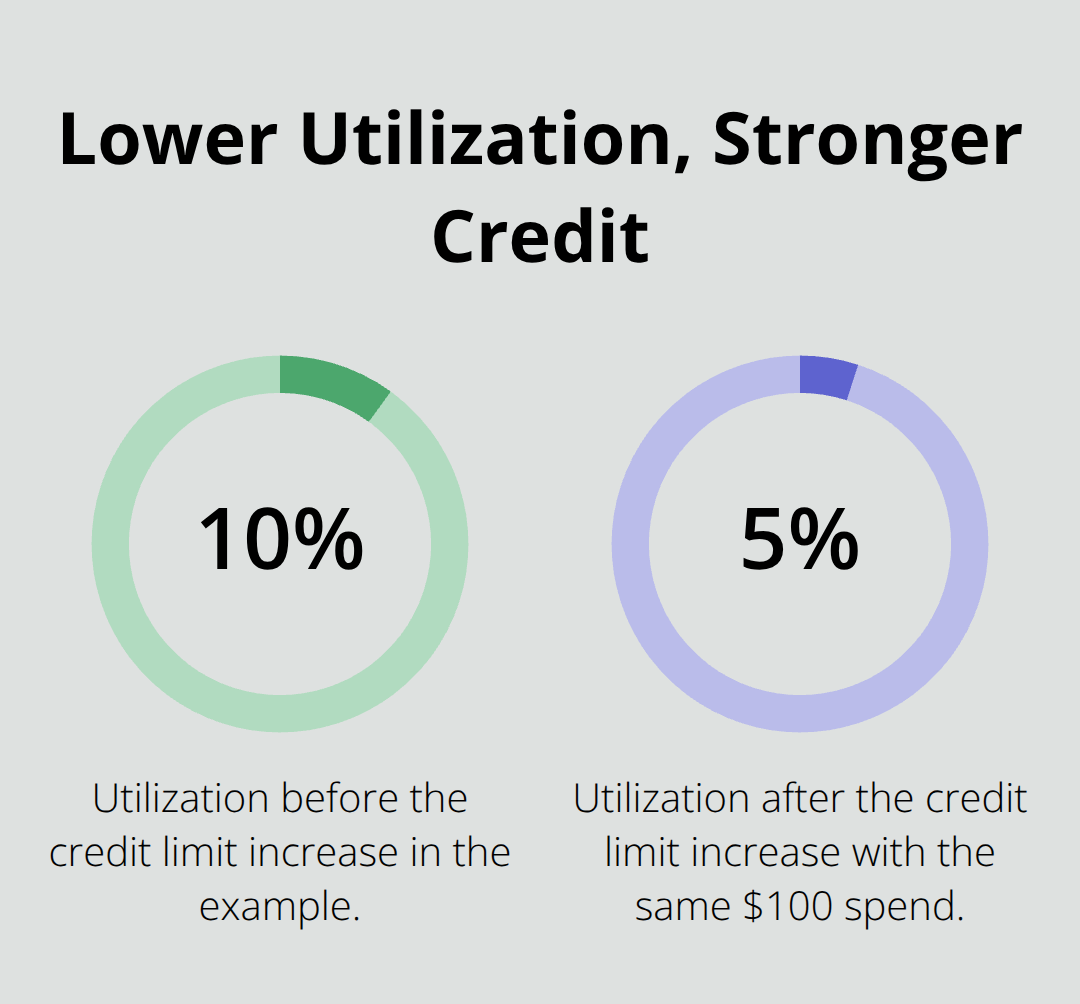
After six months of on-time payments, request a credit limit increase on your secured card without a hard inquiry if the issuer offers this option. A higher limit lowers your utilization ratio automatically, which accounts for 30 percent of your score. If your secured card limit increases to $2,000 but you still charge only $100 monthly, your utilization drops from 10 percent to 5 percent, further strengthening your profile. These tactical moves position you to qualify for unsecured credit and better terms on future loans, which opens the door to the next phase of your financial recovery.
Finding the Right Tools and Support for Your Florida Recovery
Access Your Credit Reports and Dispute Errors Immediately
Access to accurate credit information forms your foundation for rebuilding after discharge. Start with AnnualCreditReport.com, which provides one free credit report per year from each of the three bureaus at no cost. Pull all three reports immediately after your discharge is finalized, not just one. Many filers check only Equifax or Experian and miss errors on TransUnion, which can cost them points and delay recovery.
Once you have your reports, spend time comparing them side by side. You will often find discrepancies between bureaus, such as one showing a discharged debt as still active while another shows it correctly as zero balance. File disputes in writing with any bureau reporting inaccurate information. The Federal Trade Commission handles complaints about credit reporting errors, and writing directly to the bureaus creates a paper trail stronger than online dispute forms. After 30 days, follow up to confirm the inaccuracy was removed. If a bureau ignores your dispute or refuses to remove a legitimate error, the FTC complaint process becomes your leverage.
Monitor Your Credit with Paid Services
Paid credit monitoring services like Experian Boost or Equifax Complete offer real-time alerts when new accounts open or inquiries hit your report, which catches fraudulent activity faster than waiting for your annual free report. These services typically cost $10 to $20 monthly and provide value during your first 24 months of recovery when you are most vulnerable to identity theft.
Complete Your Required Credit Counseling Course
Credit counseling through an approved agency is not optional in Florida if you filed Chapter 7. Federal law requires you to complete a personal financial management course after filing, with the certificate due within 60 days of your first creditors meeting. The U.S. Trustee website lists all approved providers in Florida, and most charge between $50 and $100 for the course.
Choose a provider offering one-on-one counseling, not just an online video. A counselor can review your post-discharge budget, help you identify spending patterns that led to bankruptcy, and create a realistic plan to avoid debt cycling. Many approved agencies in Florida also offer follow-up sessions at no additional cost, which you should take advantage of.
Work with Lenders Who Accept Post-Bankruptcy Applicants
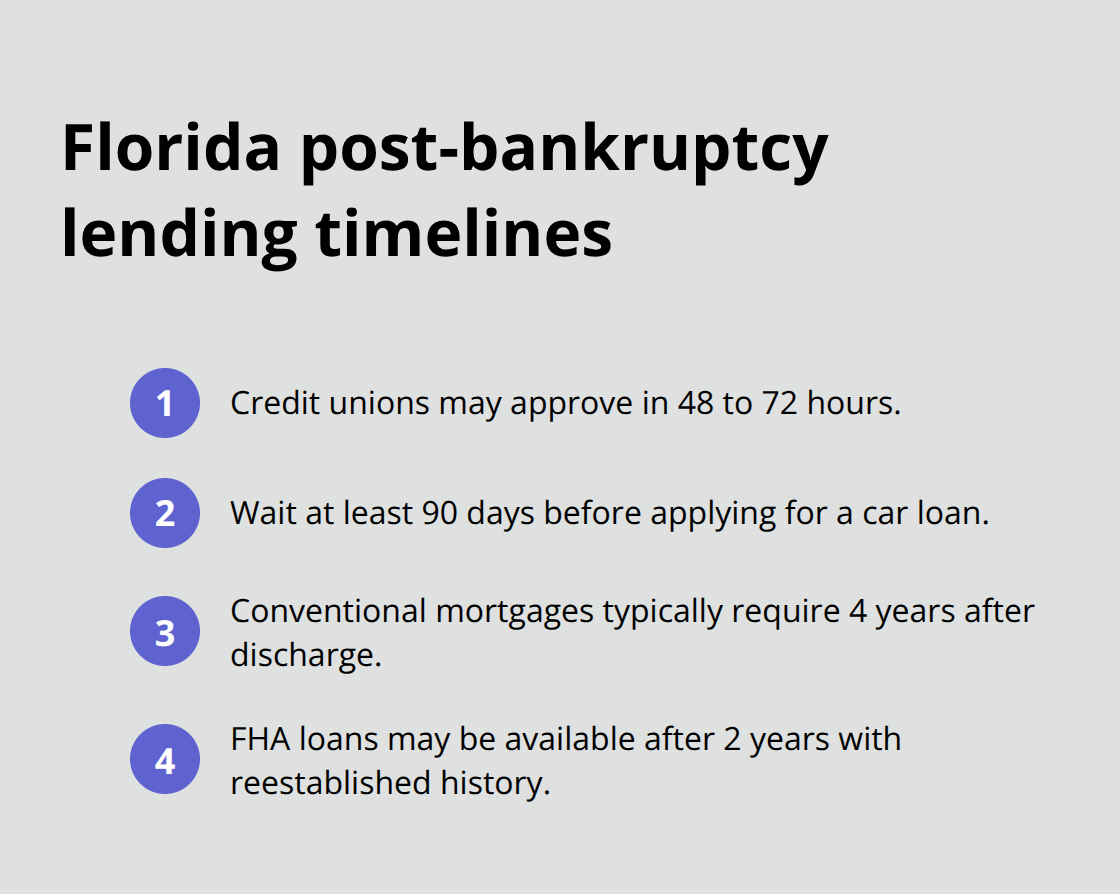
Local credit unions typically move faster than national banks when you apply after bankruptcy. Florida credit unions like Suncoast Credit Union and CenturyLink Federal Credit Union have explicit post-bankruptcy lending programs with approval timelines of 48 to 72 hours. They understand that bankruptcy is a legal reset, not a character flaw, and price their products accordingly. You will pay higher interest rates initially, but after 12 months of perfect payments, refinancing to better terms becomes possible.
Car lenders like Carvana and CarMax specialize in post-bankruptcy auto loans, though their rates run 8 to 12 percent higher than prime rates. Wait at least 90 days after discharge before applying for a car loan if possible, as your credit score will have improved enough to qualify for better terms. Mortgage lenders in Florida typically require 4 years after Chapter 7 discharge for conventional loans, but FHA loans may be available after 2 years if you have reestablished payment history.
Contact lenders directly rather than applying online, because pre-qualification conversations with loan officers reveal which programs you actually qualify for before a hard inquiry hits your credit.
Final Thoughts
Your financial fresh start after Chapter 7 is not a distant dream-it is an achievable reality with consistent action. The bankruptcy discharge eliminates your qualifying debts, but your credit recovery depends entirely on the steps you take in the months following discharge. Starting within your first 30 days with a secured credit card and credit-builder loan, combined with perfect payment history on all remaining obligations, positions you to see measurable score improvement within 12 months.
The timeline for rebuilding credit after Chapter 7 follows a predictable pattern if you stay disciplined. Your first 90 days focus on establishing new positive accounts and verifying your credit report accuracy. Within 24 to 36 months of discharge, conventional mortgage lenders become accessible, and your credit profile shifts from recovery mode to stability.
Pull your free credit reports from AnnualCreditReport.com this week, dispute any errors you find, and apply for your secured credit card and credit-builder loan within 30 days of discharge. Set up automatic payments on every bill you have, review your budget to prevent future debt accumulation, and commit to the 12-month credit-rebuilding plan outlined in this guide. If you need legal guidance navigating your Chapter 7 filing or have questions about protecting your assets during bankruptcy, we at Harnage Law, PLLC are here to help-contact us to discuss how we can guide you through the bankruptcy process and position you for financial recovery.