
Creditors don’t stop calling just because you’re struggling financially. The constant pressure from collection agencies, wage garnishment threats, and mounting debt can feel overwhelming.
Florida Chapter 7 protections offer a legal path to stop these actions immediately. At Harnage Law, PLLC, we help clients understand how bankruptcy shields them from creditors and provides a genuine fresh start.
What Chapter 7 Actually Stops
The Automatic Stay Halts Collection Immediately
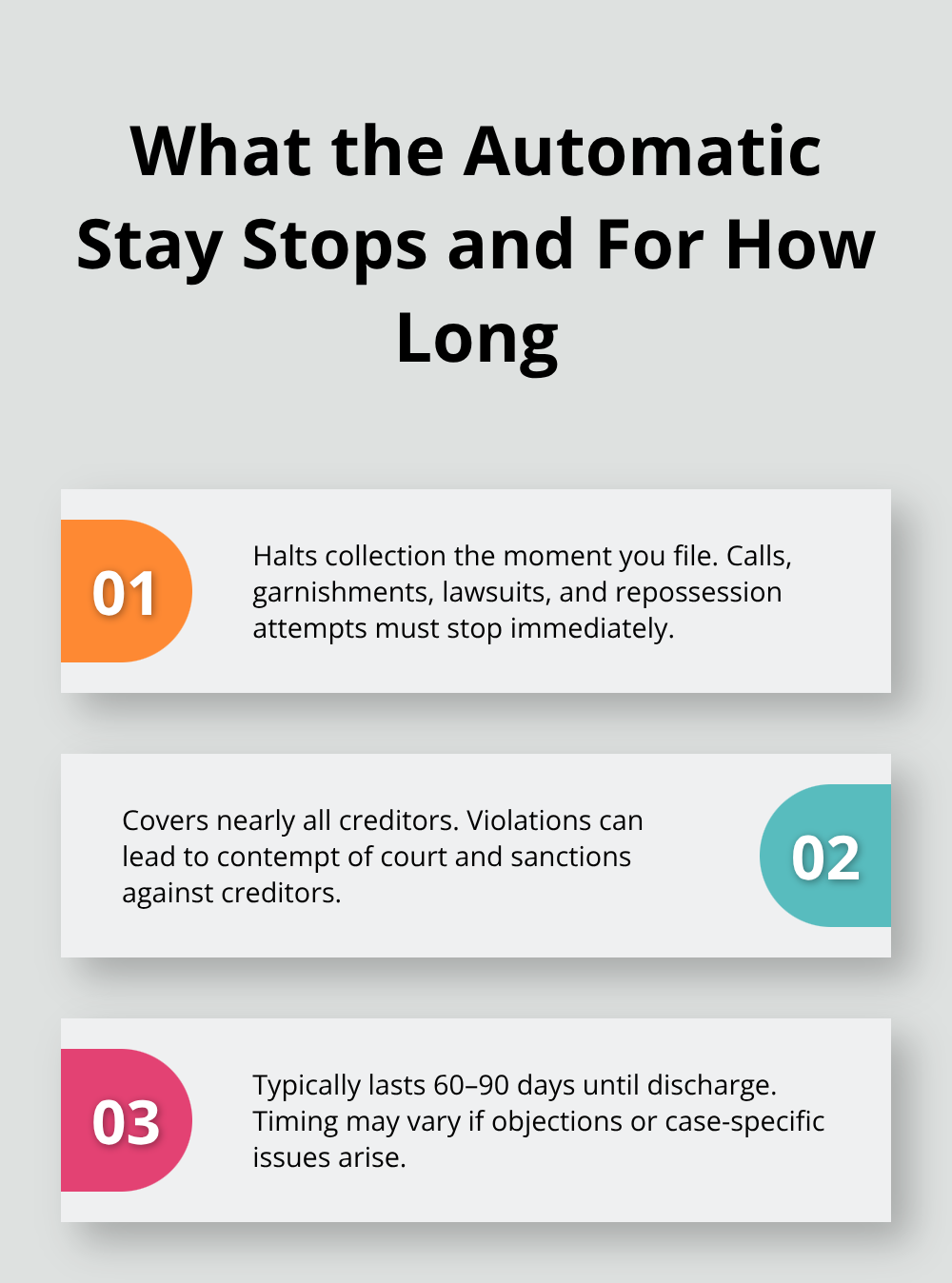
Filing Chapter 7 bankruptcy triggers an automatic stay, which is a court order that halts most collection activities the moment your petition is filed. This stay stops creditor calls, wage garnishment, lawsuits, and repossession attempts immediately. The automatic stay applies to nearly all creditors, from credit card companies to medical providers, and violating it can result in contempt of court charges against creditors. The stay remains in effect throughout your Chapter 7 case, typically lasting 60 to 90 days before discharge, though the timeline depends on your specific situation and whether objections arise.
Discharge Eliminates Qualifying Debts Permanently
Debt discharge is the core reason most people file Chapter 7. Once your case concludes, the court issues a discharge order that wipes out qualifying debts entirely, meaning creditors can no longer pursue collection. Credit card balances, personal loans, medical bills, and similar unsecured debts are discharged and gone permanently. However, certain debts survive discharge under 11 U.S.C. Section 523, including alimony and child support obligations, most taxes, student loans in most cases, and debts for willful or malicious injury. The discharge typically becomes final 60 to 90 days after the meeting of creditors, according to U.S. Courts guidance, unless a creditor files an objection to discharge. After discharge, creditors have no legal right to contact you about those debts or attempt further collection.
Florida Exemptions Shield Your Essential Assets
Florida exemptions shield your essential assets throughout the Chapter 7 process so you can keep what matters most. The homestead exemption protects unlimited home equity up to half an acre in a city or 160 acres elsewhere, provided you have owned the property for at least 1,215 days before filing. Retirement accounts including IRAs, 401(k)s, and pension payments remain fully exempt up to $1,711,975 per person for filings between April 1, 2025 and March 31, 2028, according to 11 U.S.C. Section 522. Motor vehicle equity up to $5,000 in a single vehicle stays protected, and personal property up to $1,000 or $4,000 (if not using homestead exemption) remains yours.
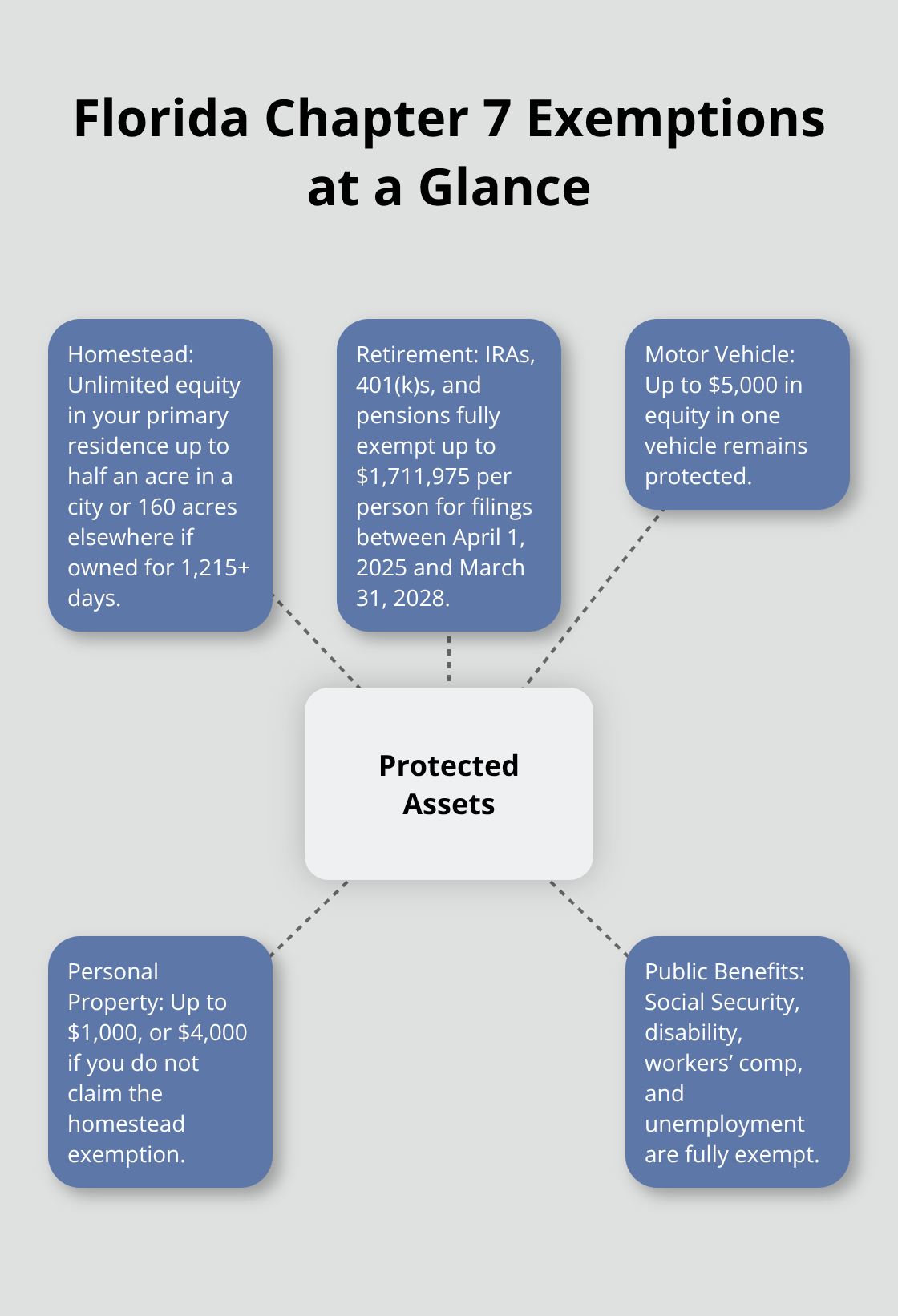
Social Security, disability benefits, workers compensation, and unemployment benefits are fully exempt and cannot be touched by the bankruptcy trustee.
How These Protections Work Together
The automatic stay, discharge, and exemptions work in tandem to create a comprehensive shield against creditor actions. While the stay stops collection immediately, exemptions protect your property from the trustee’s liquidation process. The discharge then eliminates your personal liability for qualifying debts permanently. Understanding how these three elements interact helps you see the full scope of Chapter 7 protection. The next section examines Florida-specific exemptions in greater detail and shows which assets receive the strongest legal protection under state law.
Florida’s Asset Shield in Chapter 7
The Homestead Exemption Protects Unlimited Home Equity
Florida’s homestead exemption stands apart as one of the nation’s most protective bankruptcy laws, making Chapter 7 filing in Florida fundamentally different from other states. The homestead exemption protects unlimited equity in your primary residence up to half an acre within a municipality or 160 acres elsewhere, with no dollar cap whatsoever, provided you owned the property for at least 1,215 days before filing. A home worth $500,000, $1 million, or more receives full protection if you meet the ownership timeline. If you haven’t owned your home for 1,215 days (roughly 3 years and 4 months), a federal cap of $214,000 applies instead, which still shields most modest homes but leaves higher-value properties partially exposed.
Retirement Accounts and Motor Vehicles Stay Protected
Retirement accounts receive equally strong protection under Florida law. IRAs, 401(k)s, 403(b)s, and pension payments remain fully exempt up to $1,711,975 per person for bankruptcy filings between April 1, 2025 and March 31, 2028 according to 11 U.S.C. Section 522. Motor vehicle equity up to $5,000 in a single vehicle stays protected, and personal property including furniture, appliances, and family heirlooms up to $1,000 (or $4,000 if you don’t claim the homestead) remains yours.
Wage Garnishment and Income Protections
Chapter 7 halts any wage garnishment that creditors initiated before filing through the automatic stay. Florida law also limits how much creditors can garnish from your paycheck even outside bankruptcy: if you’re the head of a household, 100% of wages up to $750 per week remain protected, while others keep 75% of earnings or 30 times the federal minimum wage (whichever is greater). Social Security, disability benefits, workers compensation, and unemployment compensation cannot be seized by a trustee or creditor under any circumstances. Alimony and child support payments receive the same protection, so if you receive these funds for your own support or a dependent’s needs, they stay off-limits to the bankruptcy estate.
Insurance and Medical Account Protections
Health Savings Accounts and prepaid medical savings accounts maintain their exempt status throughout your case. Life insurance proceeds payable to a named beneficiary remain fully protected regardless of the policy’s cash value. These protections ensure that your safety net for medical expenses and family security stays intact during the bankruptcy process.
How Exemptions Layer With the Automatic Stay
The automatic stay stops collection actions immediately while exemptions prevent the trustee from liquidating your essential assets to pay creditors. These protections work simultaneously to create a layered defense that shields both your income and your property. Understanding which specific assets qualify for protection helps you prepare for what happens next in your Chapter 7 case.
Which Debts Disappear in Chapter 7
Unsecured Debts That Discharge Completely
Chapter 7 discharge eliminates most unsecured debts permanently, but not all debts qualify for elimination. Credit card balances typically vanish through discharge, and according to U.S. Courts data, credit card debt represents one of the largest debt categories wiped out in Chapter 7 cases. Personal loans, payday loans, and lines of credit all disappear when your discharge order is entered. Medical bills accumulated from hospital stays, emergency room visits, and ongoing treatment are discharged and cannot be collected afterward.
Secured Debts Require Different Handling
The key distinction lies between unsecured and secured debts: unsecured debts like credit cards and medical bills have no collateral backing them, so the creditor cannot repossess property if you stop paying. Secured debts like mortgages and car loans are backed by collateral, meaning the creditor can take back the home or vehicle if payments stop. Chapter 7 discharge eliminates your personal liability for unsecured debts, but secured debts typically require you to either reaffirm the debt to keep the property or surrender the collateral.
Debts That Never Discharge
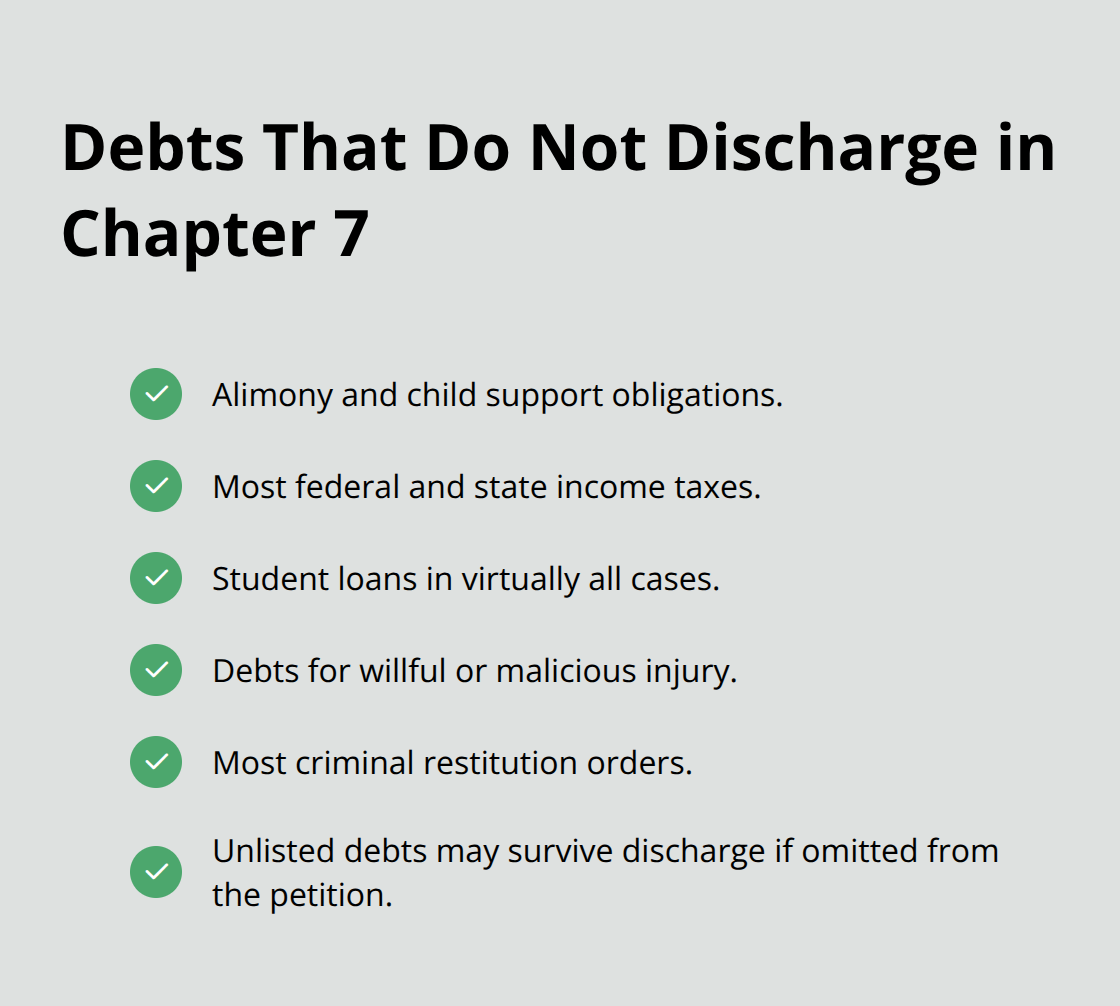
Certain debts never discharge under 11 U.S.C. Section 523, including alimony and child support obligations, most federal and state income taxes, student loans in virtually all cases, debts for willful or malicious injury, and most criminal restitution orders. If a creditor fails to list a debt on your bankruptcy petition, that debt may survive discharge, which is why accuracy in filing matters tremendously.
The Practical Impact of Discharge
Chapter 7 provides immediate relief from constant collection calls and threats while permanently eliminating qualifying debts. Once your discharge is entered, creditors cannot contact you about discharged debts or attempt further collection under any circumstances. Violating this prohibition can result in contempt of court charges and potential liability for damages. Most people filing Chapter 7 find that credit card debt, medical bills, and personal loans represent the bulk of eliminated debt, creating genuine breathing room to rebuild without these obligations hanging over them.
Final Thoughts
Filing Chapter 7 bankruptcy requires careful planning and accurate legal guidance to protect what matters most. We at Harnage Law, PLLC understand the stress you face when creditors call constantly, wages are garnished, and debt feels insurmountable. Our role is to guide you through every step while maximizing your Florida Chapter 7 protections and ensuring your petition is filed accurately with all exemptions properly claimed.
The fresh start after bankruptcy discharge is real and achievable for most filers. Once your discharge order is entered, creditors cannot contact you about eliminated debts, wage garnishment stops, and collection lawsuits end. You rebuild without the constant pressure that brought you to bankruptcy in the first place, and we help you understand what comes after discharge so you move forward with confidence.
Contact Harnage Law, PLLC to discuss your Chapter 7 options and receive compassionate guidance through financial hardship. We work to shield your financial foundation while eliminating qualifying debts permanently, and we help you reclaim stability after discharge.
