Chapter 7 bankruptcy offers Florida residents a path to eliminate unsecured debts and get a fresh financial start. This chapter 7 overview for Florida covers everything you need to know about the process, from eligibility requirements to what happens after discharge.
At Harnage Law, PLLC, we’ve helped countless Floridians navigate this option and understand whether it fits their situation.
What Chapter 7 Bankruptcy Actually Does in Florida
Chapter 7 bankruptcy in Florida is a liquidation process where a court-appointed trustee sells your nonexempt assets to pay creditors, and then the court discharges most remaining debts. According to the U.S. Courts, this gives you a fresh financial start by eliminating unsecured debts like credit cards, medical bills, and personal loans. The process typically takes three to six months from filing to discharge.
Florida’s broad exemptions mean most people who file Chapter 7 keep most or all of their property, making it far more protective than many realize. The automatic stay kicks in immediately upon filing, which stops wage garnishments, foreclosure proceedings, and creditor collection calls the day your petition reaches the court.
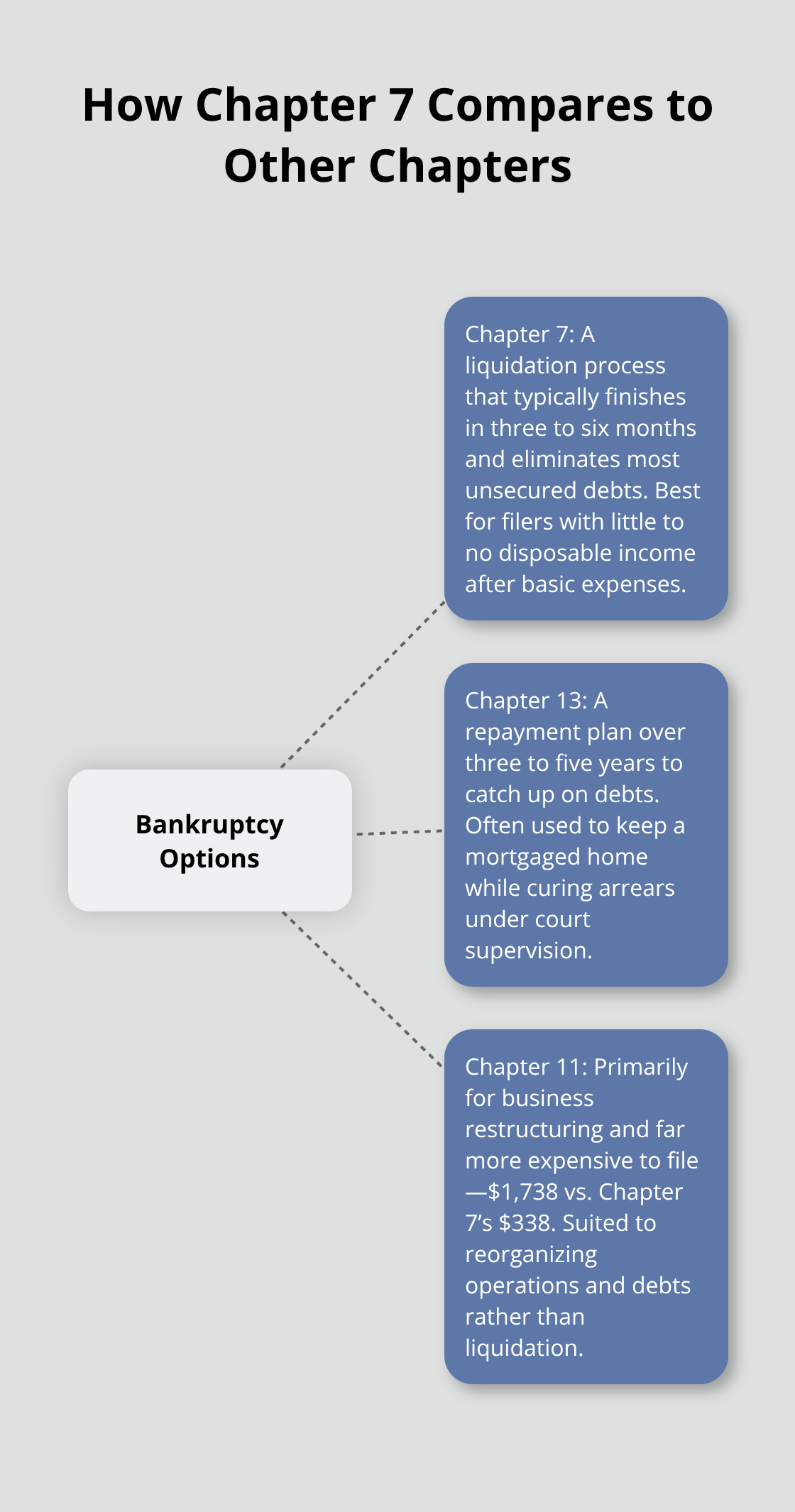
How Chapter 7 Compares to Chapter 13
Chapter 7 differs fundamentally from Chapter 13, which requires you to repay debts over three to five years through a court-approved plan. If you have no disposable income after basic living expenses, Chapter 7 eliminates debts entirely rather than forcing a repayment obligation. Chapter 13 makes sense if you want to keep a mortgaged home and catch up on missed payments, but Chapter 7 is faster and simpler if you’re ready for a genuine fresh start.
Chapter 7 Versus Chapter 11
The U.S. Courts note that Chapter 7 also differs from Chapter 11, which is designed for business restructuring and costs far more in filing fees-$1,738 compared to Chapter 7’s $338. Florida residents with regular income but insufficient money after expenses benefit most from Chapter 7 because the means test determines eligibility using actual expense standards from the IRS and Census Bureau rather than arbitrary figures.
The Means Test and Your Eligibility
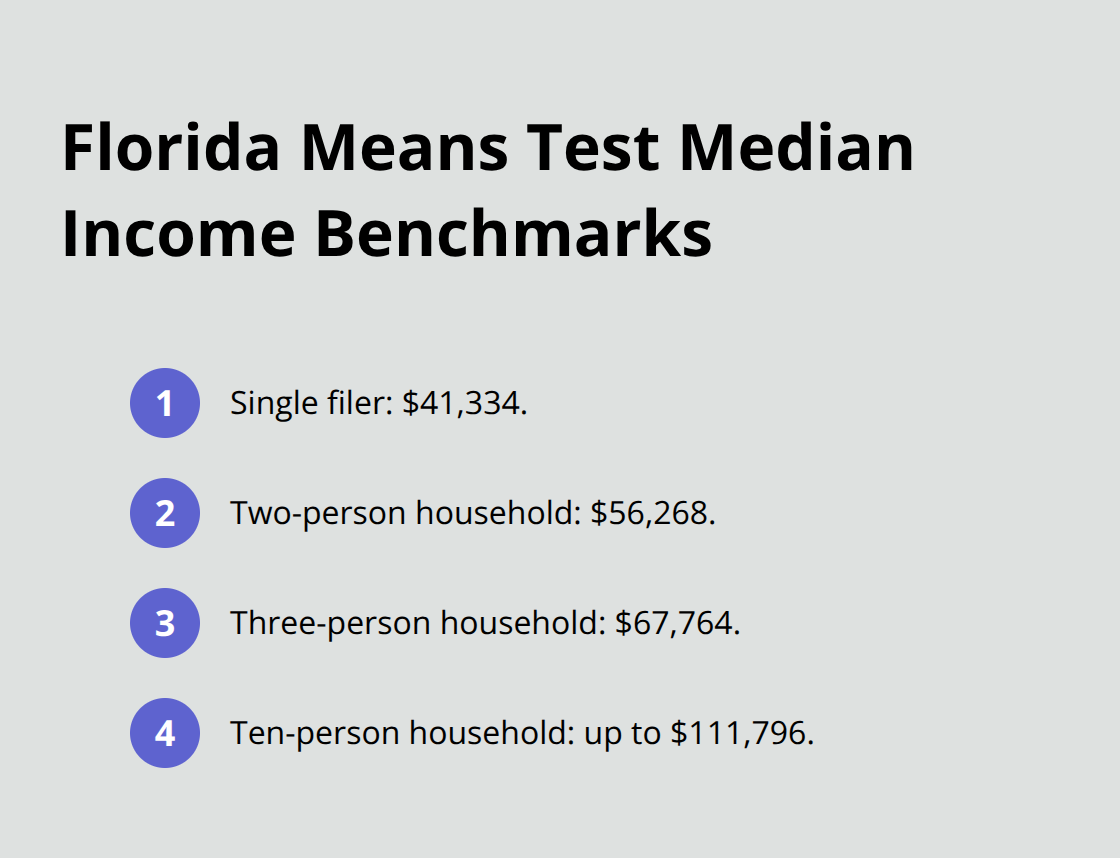
If your monthly income falls below Florida’s median for your household size (ranging from $41,334 annually for single filers to $111,796 for ten-member households according to current federal guidelines), you automatically qualify without completing complex calculations. Understanding where you stand on the means test determines whether Chapter 7 remains available to you or whether Chapter 13 becomes your path forward.
How to Get Started with Chapter 7 in Florida
Credit Counseling and Pre-Filing Requirements
You must obtain credit counseling from an agency approved by the U.S. Trustee before filing your petition. The U.S. Trustee maintains the official list of approved agencies on their website, so verify any provider there rather than relying on third-party directories. You’ll submit the counseling certificate to the court along with your petition. Gather your documentation at the same time: your Social Security number, recent government-issued photo ID, a complete list of all creditors with their addresses and amounts owed, and detailed information about your assets and liabilities.
Filing Fees and Payment Options
The filing fee totals $338, though you can request installments if needed-you must pay at least half at filing using Local Form Application for Individuals to Pay the Filing Fee in Installments. If your income falls below the poverty guidelines, you can request a fee waiver by filing Official Bankruptcy Form 103B. The court requires wet signatures on original documents; unsigned copies won’t be accepted. You’ll also need to submit your petition with all required schedules, including your Statement of Financial Affairs and a complete creditor matrix.
Understanding the Means Test for Your Situation
Your income level determines whether you face the means test calculation. If your average monthly income over the last six months falls below Florida’s median for your household size-$41,334 for single filers, $56,268 for two members, $67,764 for three members, and up to $111,796 for ten-member households-you automatically qualify without further testing. If you exceed the median, you must complete the means test using Official Forms 122A-1 and 122A-2, which compares your income against IRS and Census Bureau expense standards. The calculation determines whether you have disposable income available to repay creditors; if your average monthly income over the next 60 months drops below $7,475, you pass and can file Chapter 7.
Disabled veterans with debts incurred during active duty or homeland defense activities may also qualify regardless of income.
The 341 Meeting and Trustee Review
After filing, the court schedules a 341 meeting of creditors within 21 to 40 days where you answer questions under oath about your finances and assets. The Chapter 7 trustee then reviews your property and decides whether to liquidate any nonexempt assets. Most Florida cases are no-asset cases where creditors receive nothing, meaning your exemptions protect virtually everything you own.
Discharge and Final Steps
Discharge typically arrives 60 to 90 days after the creditors’ meeting, though you must complete an approved debt education course within 60 days after that meeting and file certification of completion to finalize your discharge. Once the trustee completes the asset review and creditors have their opportunity to object, the path forward becomes clear-and understanding what debts actually disappear and what assets you protect under Florida law shapes your entire financial recovery.
Debts Disappear and Assets Stay Protected in Chapter 7 Florida
Which Debts the Court Eliminates
Chapter 7 discharge wipes out most unsecured debts, but federal law carves out specific obligations that survive bankruptcy regardless of circumstances. Credit card balances, medical bills, personal loans, and payday loans vanish through discharge according to 11 U.S.C. § 523. However, child support and alimony obligations remain your responsibility forever-the bankruptcy code explicitly protects these claims. Most federal and state income taxes cannot be discharged unless they meet strict age and payment requirements, typically requiring the tax debt to be at least three years old. Student loans present a harder barrier; you can only discharge them if you prove undue hardship through a separate proceeding, which courts rarely grant. Criminal restitution, court-ordered fines, and debts arising from willful or malicious injury also survive discharge.
Understanding Non-Dischargeable Debts
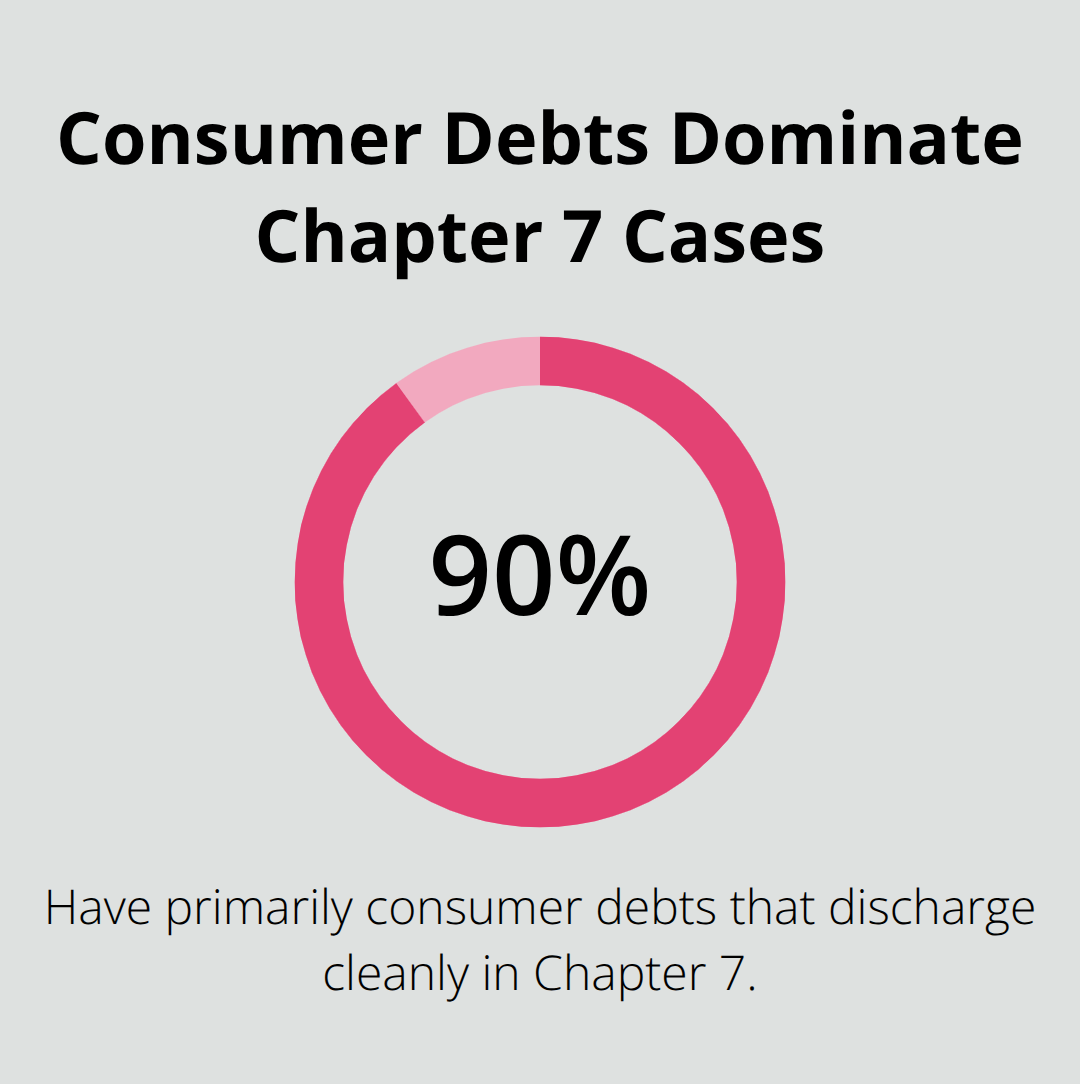
The practical reality is that roughly 90 percent of Chapter 7 filers have primarily consumer debts that discharge cleanly. You must identify any non-dischargeable obligations before filing so you understand your post-bankruptcy financial picture. This step prevents surprises after discharge arrives and helps you plan for obligations that will persist after your case closes.
Florida’s Homestead and Asset Protections
Florida’s exemption laws protect far more property than most people realize, which is why the state attracts filers from across the country. Your primary residence receives unlimited homestead protection from unsecured creditors under Florida law, meaning your home equity stays safe even if you owe substantial credit card debt. Florida allows you to protect up to $1,000 in cash, your vehicle up to certain value limits, household furnishings and goods, tools of your trade, and retirement accounts including IRAs and 401(k)s. The state also protects life insurance proceeds, disability income, and certain annuity contracts.
How No-Asset Cases Work in Florida
Most Chapter 7 cases in Florida are no-asset cases where the trustee liquidates nothing because exemptions shelter everything you own. The means test does not strip away these protections; it only determines whether you qualify to file Chapter 7 in the first place. If you earn above Florida’s median income, you still receive the same exemption protections-the means test addresses repayment ability, not asset protection.
Protecting Your Financial Future
Understanding exactly which assets the trustee might pursue and which exemptions apply to your specific situation turns the technical bankruptcy code into real protection for your home, vehicle, and financial future. Florida residents benefit from some of the strongest asset protections in the nation when they file Chapter 7.
Final Thoughts
Chapter 7 bankruptcy in Florida eliminates unsecured debts while protecting most of your assets through strong state exemptions. The process moves quickly-typically three to six months from filing to discharge-and the automatic stay stops creditor harassment and wage garnishments immediately. Your income level determines eligibility through the means test, but Florida’s broad exemptions mean you keep far more property than filers in other states.
Chapter 7 makes sense when you have minimal disposable income after basic living expenses and want a genuine fresh start rather than a repayment plan. If you earn below Florida’s median income for your household size, you automatically qualify without complex calculations. Even if you exceed the median, the means test may still allow Chapter 7 if your disposable income falls below the required threshold.
The next step involves gathering your financial documents and verifying your income against Florida’s median thresholds. Contact an attorney who handles Chapter 7 cases to review your specific situation, understand which debts will discharge, and confirm which assets your exemptions protect. We at Harnage Law, PLLC help Florida residents navigate this Chapter 7 overview Florida process by providing legal guidance through every stage of bankruptcy.