
Filing for Chapter 7 bankruptcy in Florida involves more than just the court filing fee. Understanding all the costs upfront helps you prepare financially and avoid surprises.
We at Harnage Law, PLLC break down every expense you’ll encounter, from court fees to mandatory counseling courses. This guide shows you exactly where your money goes and what payment options are available.
What Makes Up Your Florida Chapter 7 Filing Costs
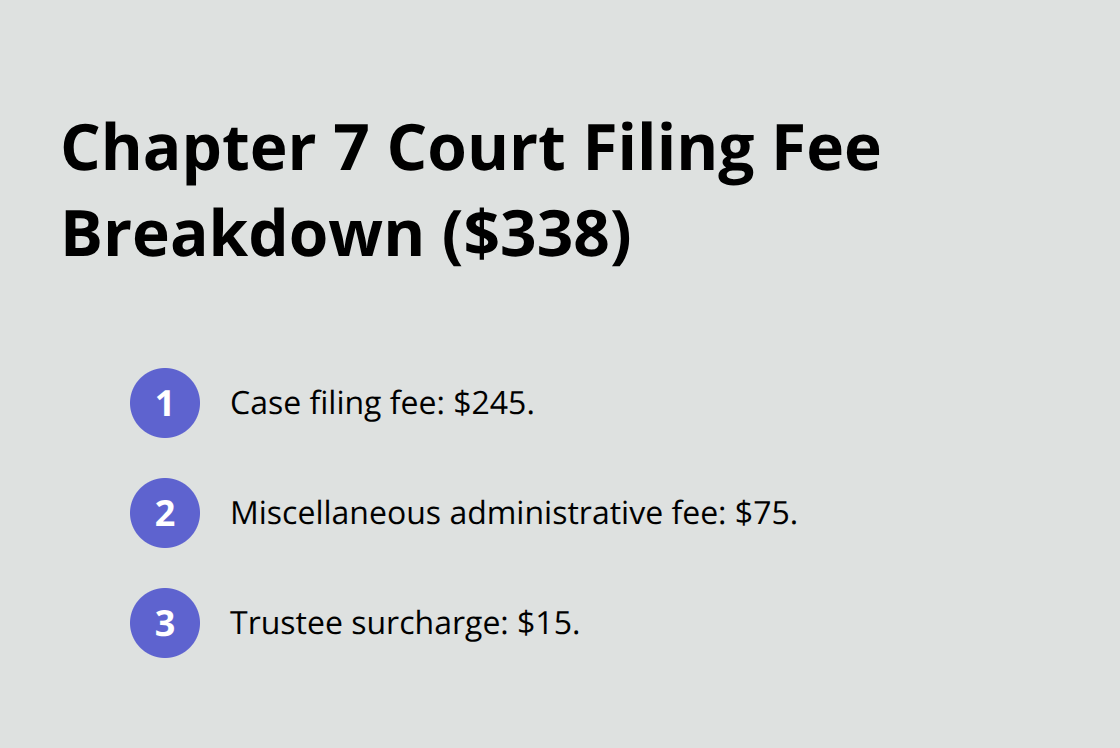
The court filing fee for Chapter 7 bankruptcy in Florida is $338, according to the U.S. Courts fee schedule effective December 2024. This breaks down into three components: a $245 case filing fee, a $75 miscellaneous administrative fee, and a $15 trustee surcharge. However, this $338 amount represents only the court’s portion of your total filing costs.
Many people mistakenly believe this fee covers everything, then face sticker shock when additional expenses arrive. The reality is that the court fee is typically the smallest part of what you’ll pay. If you’re filing jointly with a spouse, you pay only one filing fee rather than two, which saves you $338 immediately. For those with income at or below 150 percent of the federal poverty guidelines, the court may waive the filing fee entirely, though this requires a formal request.
Breaking Down the Real Cost Structure
Beyond the court’s $338 fee, you’ll encounter several other mandatory expenses. Credit reports, asset verification checks, and tax record reviews are standard parts of the filing process and add to your upfront costs. Attorney fees for Chapter 7 representation in Florida typically range from $1,500 to $2,500 or higher depending on case complexity, with simpler cases on the lower end and those involving multiple properties or vehicles pushing toward the higher range. You’ll also need to complete a credit counseling course before filing, which costs approximately $20, and a debtor education course after filing, which runs about $15. These course fees vary by provider, and low-income filers may qualify for waivers. The total financial commitment usually lands between $2,000 and $2,500 for straightforward cases, though more complex situations can exceed this range.
Payment Flexibility That Actually Works
The court allows you to pay the $338 filing fee in up to four installments, with the final payment due within 120 days and possible extensions to 180 days. This flexibility exists because the court recognizes that most people filing for bankruptcy don’t have thousands of dollars sitting in savings. You can start your case and receive a case number for the initial amount shown, which immediately triggers the automatic stay and stops wage garnishments, lawsuits, and creditor calls even before full payment is complete. Wage garnishment cases offer an accelerated filing option: if you have verifiable income of at least $3,500 monthly, you can file for $150 plus the standard court fees, with the remaining balance paid through a post-filing plan over four months. Payment methods accepted by the court include money order, cashier’s check, official check payable to Clerk U.S. Court, or electronic payment via debit card or ACH transfer. Personal checks and cash are not accepted. This payment structure means you don’t need to save the entire amount before starting the process, which is a significant advantage for people drowning in debt.
What Happens When You Can’t Afford the Full Amount
If your income falls below 150 percent of the federal poverty guidelines, you can request a fee waiver that eliminates the $338 court filing fee entirely. The court evaluates these requests on a case-by-case basis, and you must submit the request with your petition. Even if your income exceeds this threshold, you still have options. The four-installment payment plan is built into the filing form by default, so you don’t need special permission to use it. Some filers also qualify for discounted attorney fees based on case complexity or financial hardship, though this varies by firm. The key is to discuss your financial situation openly with your attorney so they can identify all available options for your specific circumstances.
Understanding these costs upfront allows you to plan your finances and move forward with confidence. Once you know what to expect in terms of fees and payment options, the next step involves learning how to actually submit your payment and what happens immediately after you file.
How to Pay Your Filing Fees in Florida Chapter 7
Accepted Payment Methods and Timing
The court accepts money orders, cashier’s checks, official checks payable to Clerk U.S. Court, and electronic payments via debit card or ACH transfer. Personal checks and cash are not accepted, so you must plan your payment method in advance.
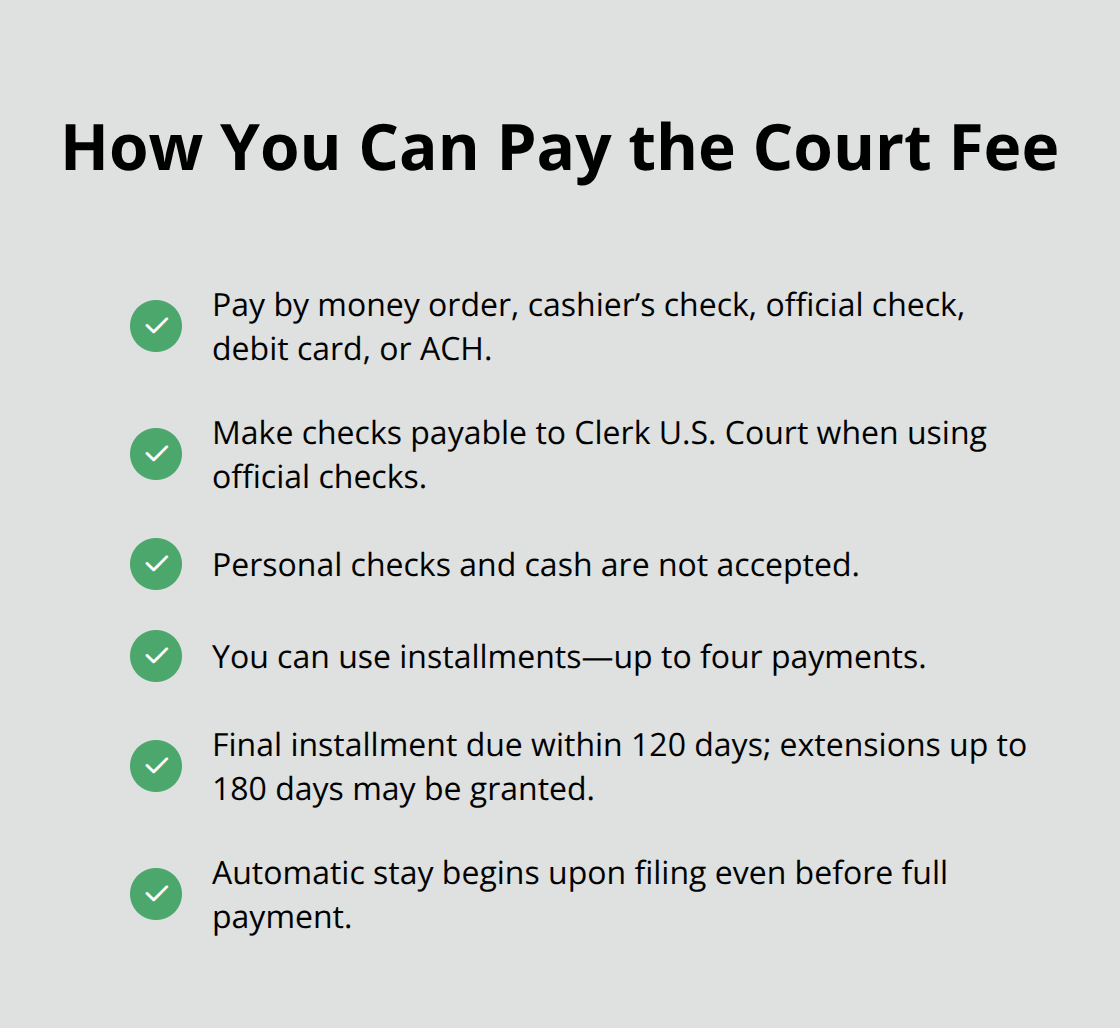
The most important aspect of the payment process is that you don’t need to pay the $338 filing fee in full before you file. You can split the fee into up to four installments through a payment plan built directly into the filing form, with the final payment due within 120 days and extensions available up to 180 days upon request. This structure allows you to file immediately and receive your case number, which triggers the automatic stay and stops wage garnishments, lawsuits, and creditor calls right away-even if you haven’t paid the entire amount yet.
Accelerated Filing for Wage Garnishment Cases
If you have verifiable monthly income of at least $3,500, you can file for just $150 initially with the remaining balance paid through a post-filing plan spread across four months. Most clients pay around $175 bi-weekly after filing under this arrangement. This option exists specifically for people facing immediate wage garnishment threats who need protection quickly. The accelerated approach gets your case number and automatic stay in place without waiting to accumulate the full filing fee.
Fee Waivers and Income-Based Relief
If your household income sits at or below 150 percent of the federal poverty guidelines, you can request a complete fee waiver that eliminates the $338 court filing fee entirely. The court evaluates these requests individually when you submit them with your petition, requiring documentation of your income. Even if you don’t qualify for a waiver, the installment option remains available to everyone regardless of income level, making it the most accessible payment path for most filers.
Attorney Fee Options and Flexibility
Some Florida bankruptcy attorneys offer sliding scale fees or discounted rates based on case complexity and financial hardship. You should ask about these options during your initial consultation to understand what your specific situation qualifies for. The key difference between filing with an installment plan versus a full upfront payment is timing, but both approaches get you the same immediate protection from creditors. Your attorney can help you determine which payment arrangement works best for your circumstances and explain how the timing affects your case progression.
Once you understand your payment options and select the method that fits your budget, you’ll want to know what other costs extend beyond the court filing fee itself.
What Costs Hide Beyond the Court Filing Fee
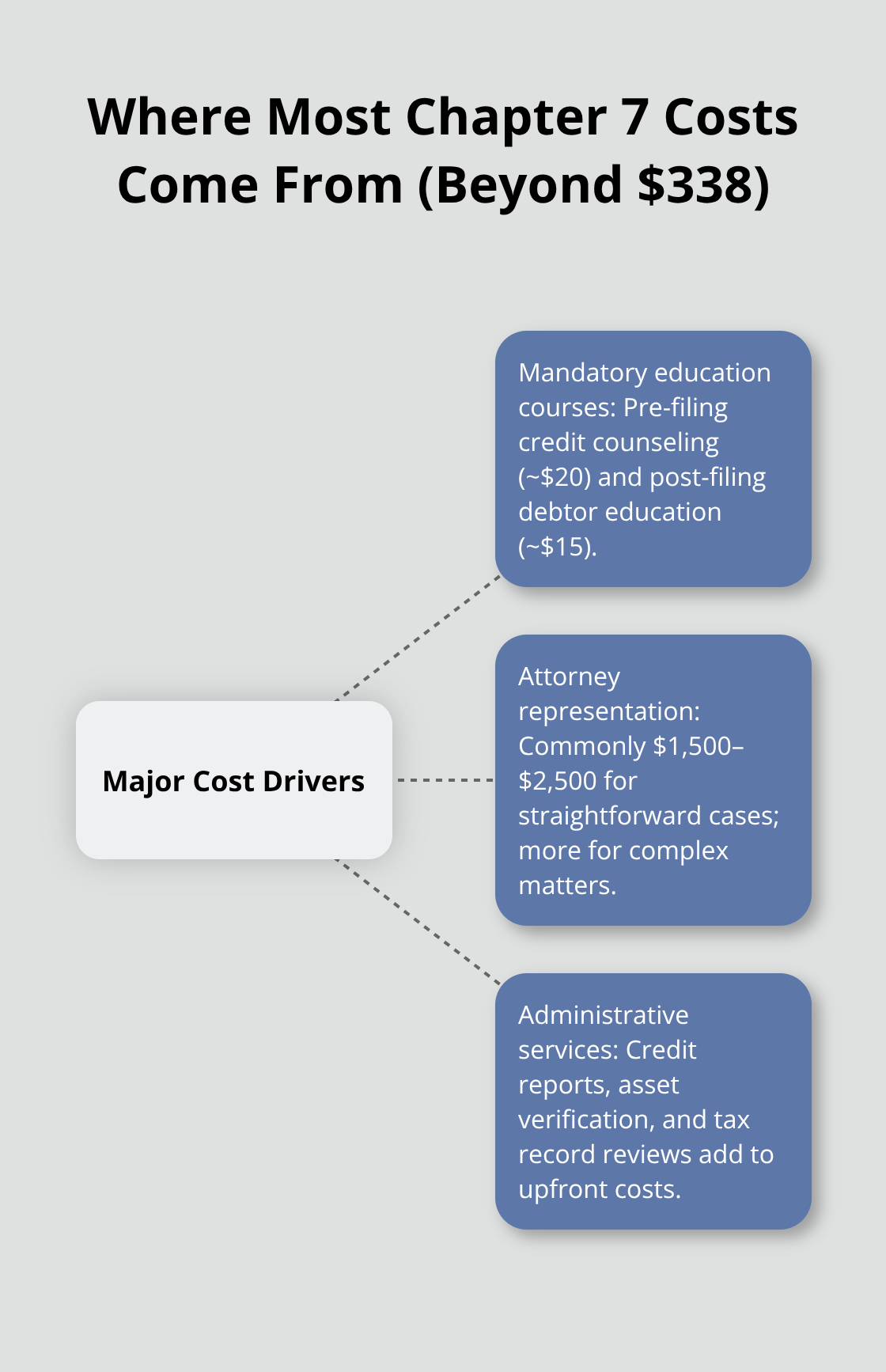
The $338 court filing fee represents only a fraction of your total Chapter 7 bankruptcy expense in Florida. Most filers encounter three additional cost categories that significantly impact their budget: mandatory education courses, attorney representation, and administrative services.
Credit Counseling and Debtor Education Requirements
Federal bankruptcy law requires you to complete a credit counseling course before filing and a debtor education course after filing. Pre-filing counseling typically costs $20, while post-filing education runs about $15 according to course provider pricing. Some providers offer these courses online within hours, while others charge premium rates for expedited completion. Low-income filers can request waivers or deferrals of these course fees if they demonstrate financial hardship, though you’ll need to petition the court and provide income documentation.
Attorney Fees and Legal Representation Costs
The real financial weight in your filing comes from attorney fees. Florida Chapter 7 representation typically costs between $1,500 and $2,500 for straightforward cases, with complex situations involving multiple properties, vehicles, or business interests pushing well beyond this range. A high-volume bankruptcy practice with refined systems and processes can offer lower fees than solo practitioners or attorneys handling only occasional bankruptcy cases. This matters because inexperienced practitioners who handle just a few bankruptcy cases yearly lack the efficiency to pass savings to clients. You should verify an attorney’s bankruptcy experience through PACER (the Public Access to Court Electronic Records system run by the U.S. judiciary) to confirm they actually file cases regularly. Some firms offer sliding scale fees or discounted rates based on case complexity, and you can request that an attorney match a written offer from another firm.
Miscellaneous Administrative Expenses
Beyond courses and legal representation, miscellaneous administrative expenses accumulate during the filing process. Credit reports cost money to obtain, asset verification checks require resources, and tax record reviews add to your expenses. These supporting documents are essential for accurate filing and cannot be skipped. Notary fees, document copies, and transmission costs typically remain small individually but accumulate across the entire process.
How Payment Timing Affects Your Total Costs
Payment timing significantly affects your total cost structure. If you pay attorney fees upfront, you reduce the number of post-filing installments needed for the court fee. If you use the four-month post-filing plan, you spread costs across multiple months, which may feel more manageable but doesn’t reduce the total amount owed. The accelerated wage garnishment filing option, available when you have verifiable monthly income of at least $3,500, allows you to file for just $150 initially with remaining balance paid bi-weekly at approximately $175 after filing. This approach reduces your upfront burden significantly and stops wage garnishments within weeks according to client testimonials.
Understanding Your Total Financial Commitment
Total out-of-pocket costs for a straightforward Florida Chapter 7 filing typically land between $2,000 and $2,500 when combining court fees, attorney representation, courses, and administrative expenses. More complex cases easily exceed this range. The filing process includes obtaining credit reports and performing asset checks and tax verification as standard components, ensuring all documentation meets court requirements.
Final Thoughts
Filing for Chapter 7 bankruptcy in Florida requires understanding the full financial picture, not just the $338 court filing fee. Your total investment typically ranges from $2,000 to $2,500 for straightforward cases, combining court costs, attorney representation, mandatory counseling courses, and administrative expenses. More complex situations involving multiple properties or vehicles will push beyond this range.
Payment flexibility exists at every stage of Chapter Seven filing fees. You can split the court fee into four installments, use accelerated filing options if you face wage garnishment, and request fee waivers if your income qualifies. The automatic stay takes effect immediately upon filing, stopping wage garnishments, lawsuits, and creditor calls even before you’ve paid the entire amount.
We at Harnage Law, PLLC help individuals and families overcome financial challenges through personalized legal guidance and representation. Contact us for a free bankruptcy evaluation to discuss your options and get clarity on what your case will cost.