Debt can feel overwhelming, especially when creditors won’t stop calling and your financial situation keeps getting worse. A Florida Chapter 7 filing offers a legitimate way to eliminate qualifying debts and start fresh.
We at Harnage Law, PLLC understand that filing for bankruptcy is a serious decision. This guide walks you through exactly what happens, why people file, and what to expect from start to finish.
What Happens When You File Chapter 7 in Florida
The Automatic Stay Stops Creditor Collections Immediately
Filing Chapter 7 in Florida triggers an immediate legal protection called the automatic stay. The moment your petition reaches the court, creditors must stop all collection activities-phone calls, letters, wage garnishments, and lawsuits all cease. This protection applies across the board, whether you owe credit card companies, medical providers, or personal lenders. The automatic stay gives you breathing room to focus on the bankruptcy process without constant creditor pressure. Certain debts like child support or some tax obligations may have limited exceptions to this protection, which is why understanding your specific situation matters before filing.
Understanding the Median Income Test
Florida uses two tests to determine Chapter 7 eligibility. The Median Income Test compares your household income to Florida’s median. As of May 2025, a single person in Florida needs to earn under $63,916 annually, while a family of four must stay below $104,626. If your income falls below these thresholds, you likely qualify immediately. To calculate your average income, add up your earnings from the past six months, divide by six to get your monthly income, then multiply by 12 to annualize the figure. This straightforward calculation determines whether you move forward or proceed to the next eligibility test.
The Means Test Evaluates Your Expenses
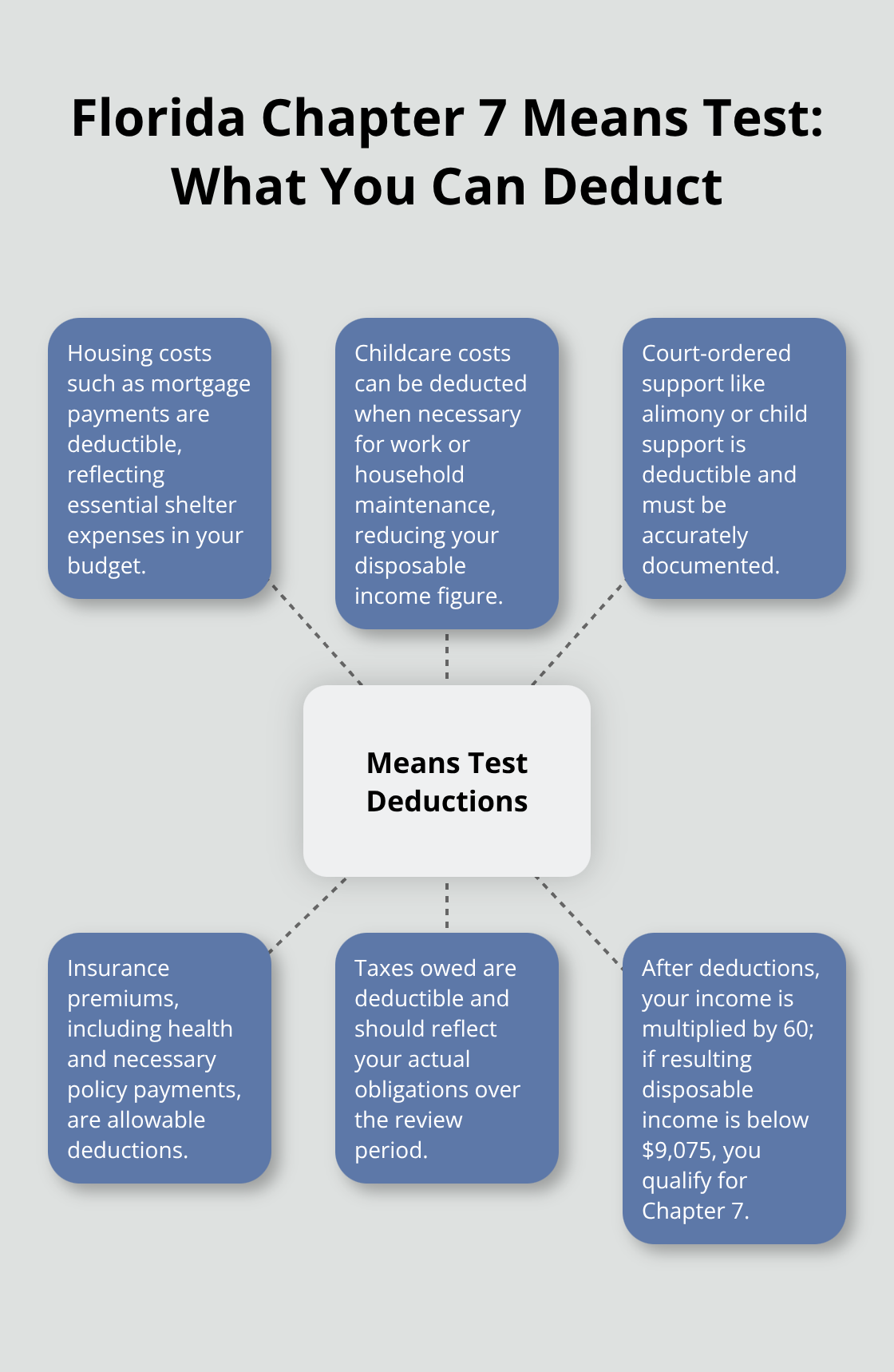
If your income exceeds the median, you move to the Means Test, which evaluates whether your expenses are high enough to prevent meaningful debt repayment. This test allows you to deduct legitimate expenses like mortgage payments, childcare costs, court-ordered support, insurance premiums, and taxes. After subtracting these allowable expenses from your income and multiplying by 60, if your disposable income falls below $9,075, you qualify for Chapter 7. The calculation requires accurate documentation of your actual expenses over the past six months, but the process itself remains straightforward once you gather the necessary records.
The Timeline from Filing to Discharge
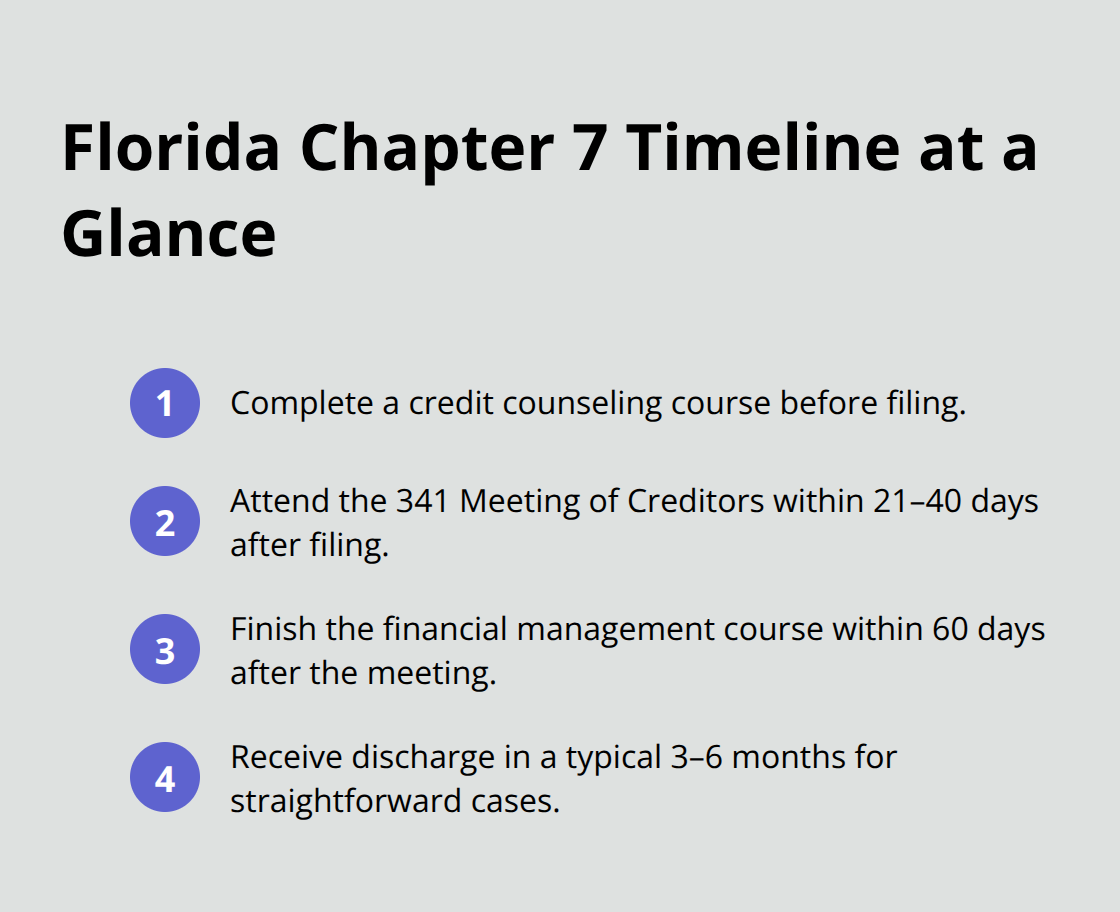
Once filed, your case moves through a defined timeline. You must complete a credit counseling course from an approved agency before filing, and the court requires you to attend a Meeting of Creditors within 21 to 40 days. This meeting, also called the 341 meeting, involves a trustee reviewing your finances and creditors asking questions (most creditors don’t attend). After this meeting, you complete a financial management course within 60 days to qualify for discharge. The entire process typically concludes within three to six months for a straightforward Chapter 7 case, and your eligible debts-credit cards, medical bills, personal loans, and judgments-are then discharged, meaning you’re no longer legally obligated to pay them.
Understanding these mechanics prepares you for what comes next: recognizing the specific reasons why Florida residents turn to Chapter 7 when their financial situations become unmanageable.
Why Florida Residents Turn to Chapter 7
Medical Debt Drives Most Bankruptcy Filings
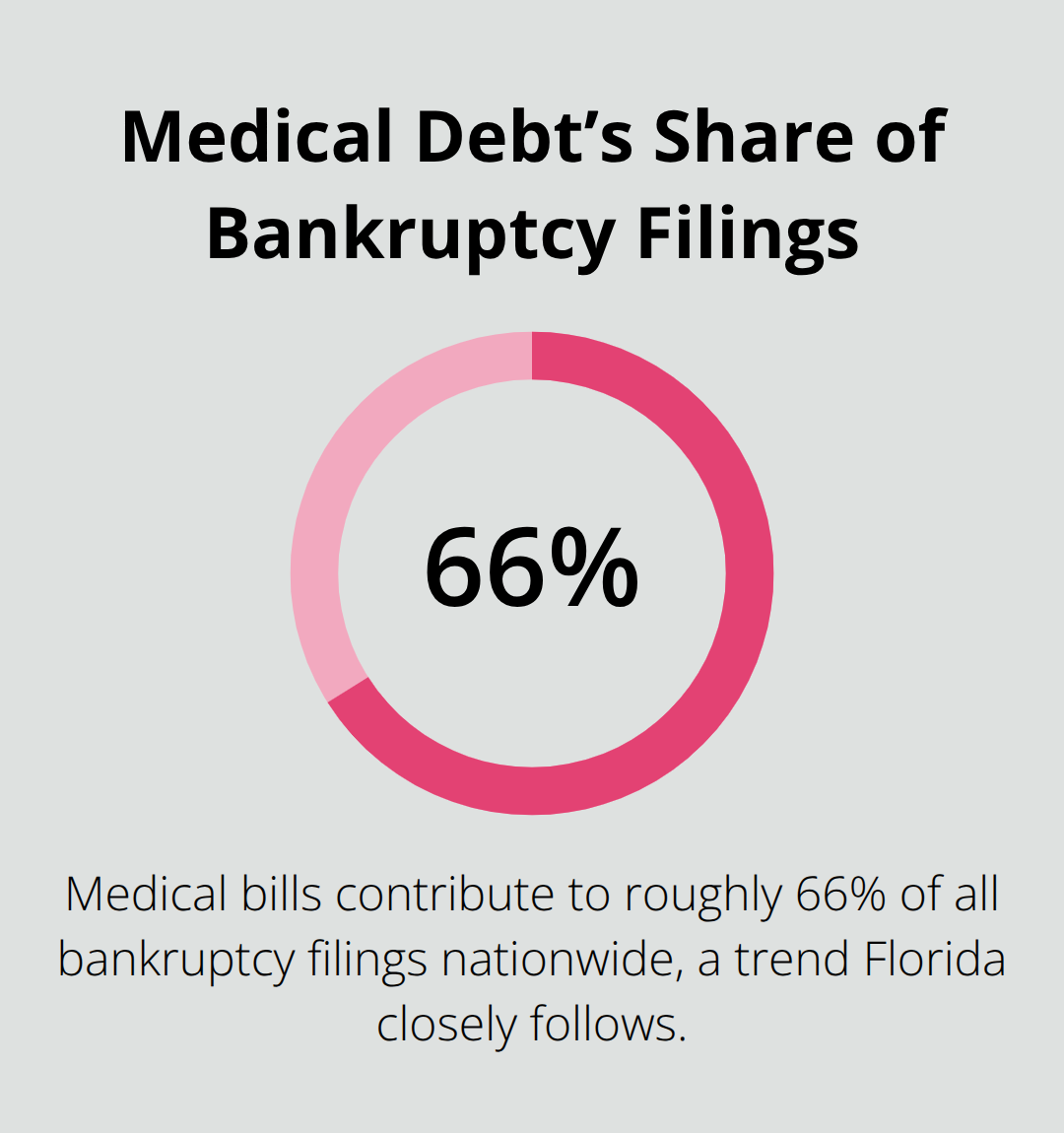
Medical debt stands as the leading reason Florida residents file for Chapter 7 bankruptcy. The American Journal of Public Health reports that medical bills contribute to roughly 66% of all bankruptcy filings nationwide, and Florida follows this pattern closely.
A single hospitalization without insurance generates $10,000 to $50,000 in bills, and even with insurance, out-of-pocket maximums, deductibles, and uncovered services create crushing debt. Emergency room visits, cancer treatment, cardiac procedures, and chronic illness management drain savings rapidly. Creditors pursuing medical debt garnish wages, freeze bank accounts, and file lawsuits without hesitation. One serious illness transforms a financially stable household into one drowning in debt, making Chapter 7 the only realistic path forward for many Floridians.
Credit Card Debt and Personal Loans Create Impossible Cycles
Credit card debt and personal loans represent the second major category driving Chapter 7 filings in Florida. The Federal Reserve reports that the average American household carries nearly $7,000 in credit card debt, and high-interest rates compound the problem monthly. A $10,000 credit card balance at 22% interest generates $1,833 in annual interest charges alone, making minimum payments virtually useless for actual debt reduction. Personal loans from online lenders often carry rates exceeding 30%, trapping borrowers in cycles where payments barely cover interest. The mathematics become impossible-borrowers pay month after month without reducing principal, watching their financial situation deteriorate despite their efforts.
Job Loss and Reduced Income Trigger Financial Collapse
Job loss and reduced income create the final trigger that pushes people toward bankruptcy. When employment ends suddenly, the combination of lost wages, continued expenses like mortgage or rent, and existing debt becomes mathematically impossible to manage. Florida’s economy relies heavily on tourism and hospitality, industries prone to seasonal layoffs and sudden closures. A single job loss often means the difference between struggling with debt and facing complete financial collapse. Chapter 7 allows Floridians facing these circumstances to discharge credit card balances, personal loan obligations, and medical bills, freeing up income for essential living expenses and preventing foreclosure or homelessness. Understanding these common triggers helps explain why so many Floridians turn to bankruptcy-and what happens next in the actual filing process.
What Actually Happens During Your Florida Chapter 7 Case
The 341 Meeting: Your Trustee Reviews Your Finances
The bankruptcy process unfolds in predictable stages once your petition reaches the court. Within 21 to 40 days after filing, the court schedules your Meeting of Creditors, formally called the 341 meeting under Section 341 of the bankruptcy code. This meeting brings together you, a bankruptcy trustee assigned to your case, and potentially your creditors, though in practice most creditors skip these meetings entirely. The trustee’s role is straightforward: verify that your financial disclosures are accurate and identify any nonexempt assets that could be liquidated to pay creditors. You’ll answer questions about your income, expenses, assets, and debts under oath, so honesty is non-negotiable. The meeting typically lasts 10 to 15 minutes for straightforward cases.
Credit Counseling Requirements Before Your Meeting
Before the 341 meeting occurs, you must complete a credit counseling course from an agency approved by the U.S. Trustee, and you’ll receive a certificate proving completion that gets filed with the court. These courses cost between $50 and $100 and cover budgeting basics, debt management alternatives, and the bankruptcy process itself. Most providers offer online completion within hours, making this requirement manageable even for busy schedules. The certificate becomes a mandatory filing document, so plan to complete this course early in your bankruptcy timeline.
Financial Management Course and Discharge
After the 341 meeting concludes, your case enters the final phase where you complete a financial management course within 60 days to qualify for discharge. This second course, also approved by the U.S. Trustee, focuses on rebuilding credit and financial planning post-bankruptcy and costs roughly $50 to $100. Once you file this certificate with the court, your eligible debts are discharged, meaning creditors can no longer pursue collection. From filing date to discharge typically takes three to six months for uncontested Chapter 7 cases, though complications can extend the timeline.
Asset Evaluation and Trustee Objections
The trustee may object to your exemption claims if they believe you’ve undervalued assets or mischaracterized property, which is why accuracy in your initial filing matters significantly. If the trustee identifies nonexempt property, they’ll liquidate it and distribute proceeds to creditors according to bankruptcy priority rules. Throughout this process, working with a bankruptcy attorney protects your exempt assets and ensures you navigate filing requirements correctly, preventing costly mistakes that could delay your discharge or result in asset loss.
Final Thoughts
Chapter 7 bankruptcy offers Florida residents a legitimate path forward when debt becomes unmanageable. The process follows clear, predictable steps: you pass the income tests, attend the 341 meeting, complete two short courses, and receive a discharge that eliminates qualifying debts. Your automatic stay stops creditor harassment immediately, your exempt assets remain protected under Florida law, and your debts get discharged within months, not years.
Many people delay filing because they fear the unknown, imagining worst-case scenarios that rarely materialize. A Florida Chapter 7 filing removes this uncertainty because the federal bankruptcy code defines each stage precisely. Your exempt assets stay protected through Florida’s generous homestead exemptions and retirement account protections, so the reality proves far more straightforward than the anxiety surrounding financial crisis suggests.
A bankruptcy attorney catches exemption mistakes before they cost you property, ensures your paperwork meets court requirements, and handles trustee objections if they arise. If you’re drowning in medical bills, credit card debt, or personal loans, contact us to discuss your situation and learn whether Chapter 7 qualifies as your path to financial recovery.