Chapter 7 discharge in Florida wipes out most of your unsecured debts, giving you a genuine fresh start. We at Harnage Law, PLLC know that understanding what happens to your assets, which debts disappear, and how to rebuild afterward makes all the difference.
This guide walks you through the entire process-from discharge basics to practical steps for recovery.
What Gets Discharged in Your Chapter 7 Case
Chapter 7 discharge in Florida eliminates your personal liability for most unsecured debts, meaning creditors cannot pursue you for payment after the court grants your discharge. This happens roughly 60 to 90 days after your 341 meeting of creditors, according to the U.S. Bankruptcy Court for the Northern District of Florida. The discharge is a court order that stops collection efforts permanently-creditors cannot sue you, garnish your wages, or contact you about discharged debts. However, the discharge does not erase liens on property, so a creditor can still foreclose on a home or repossess a car if you have not reaffirmed the debt or surrendered the asset.
Debts That Disappear Under Chapter 7
Credit card debt ranks among the largest debts eliminated in Florida Chapter 7 cases, including overdue balances and accumulated fees. Medical bills, which represent a leading cause of bankruptcy filings in the United States, typically vanish in full, giving you relief from healthcare-related debt that insurance did not cover. Unsecured personal loans, including payday loans, disappear through discharge, as do outstanding utility bills for electricity, gas, and water. Judgments tied to unsecured debts like credit cards or personal loans also get discharged, which stops creditors from enforcing those judgments against your bank accounts or property. If you operated a sole proprietorship business with unsecured debts, those business debts can be discharged as well, allowing you to close that chapter without lingering obligations.
Debts That Survive Chapter 7
Some debts refuse to disappear, no matter how much financial relief you seek. Child support and alimony obligations never get discharged under federal bankruptcy law, and this applies regardless of your financial circumstances. Most taxes cannot be discharged, though narrow exceptions exist for older tax debts that meet specific age and filing requirements; current and recent tax debts almost always survive.
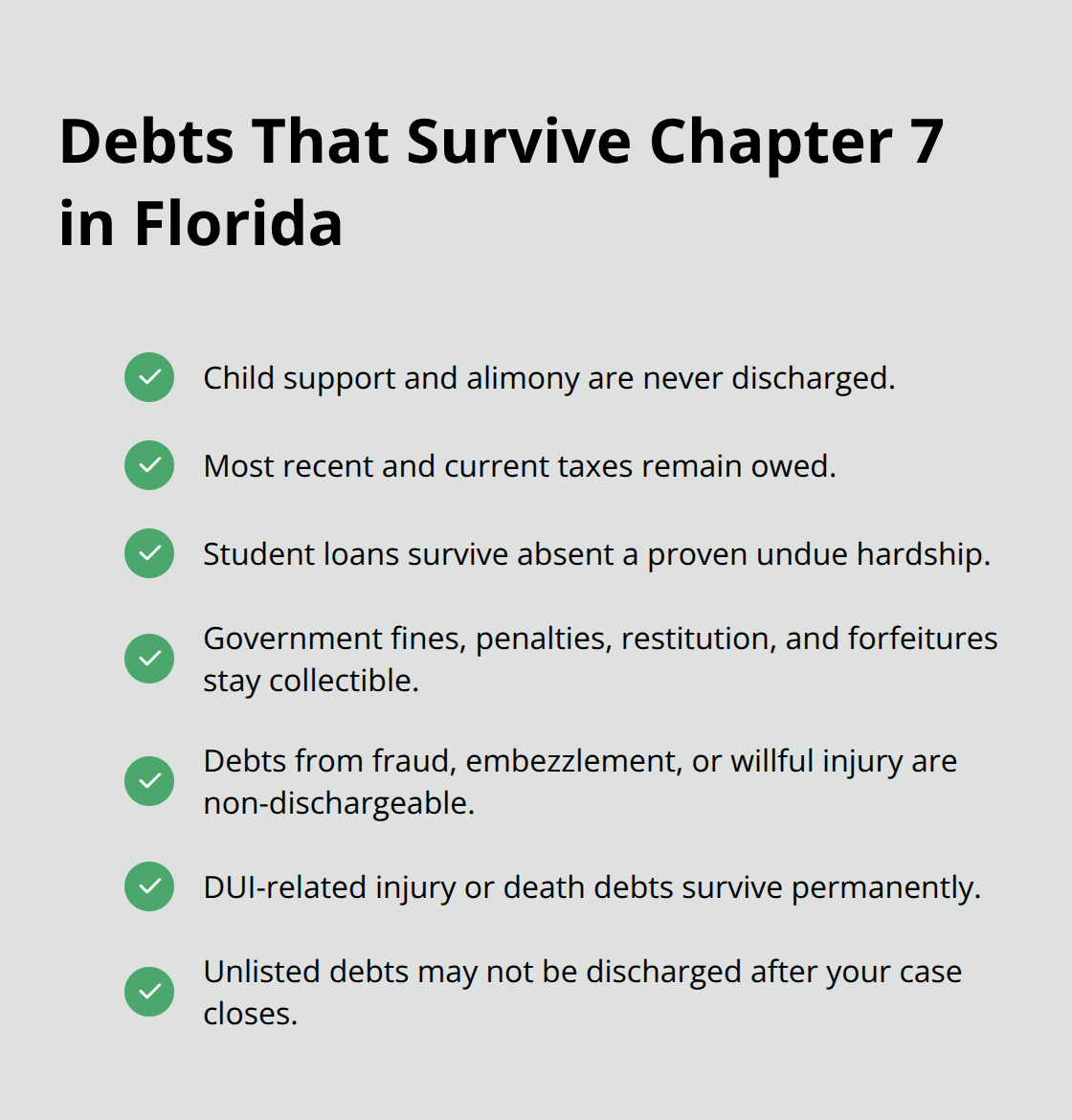
Student loans are generally not dischargeable unless you prove undue hardship, a legal standard that courts interpret very strictly and rarely grant. Fines, penalties, criminal restitution, and forfeitures imposed by government agencies remain your responsibility after discharge. Debts incurred through fraud, embezzlement, or intentional harm to another person or their property are also non-dischargeable. Debts from personal injury or death caused by operating a vehicle while intoxicated survive discharge permanently. Finally, any debt you failed to list in your bankruptcy schedules may not get discharged, which is why accuracy when filing your petition protects you.
Why Accuracy in Your Petition Matters
The debts you list in your bankruptcy schedules determine what gets discharged and what survives. Omitting a debt from your schedules-whether intentionally or by mistake-can leave you liable for that obligation after your case closes. Courts take the accuracy of your petition seriously, and creditors can challenge the discharge of debts they believe were improperly listed or concealed. This is why working through the filing process carefully prevents costly mistakes that could haunt your fresh start.
How Long Chapter 7 Discharge Takes in Florida
Your Chapter 7 case moves through a defined timeline, and understanding each phase helps you prepare mentally and financially for what lies ahead. The discharge itself arrives roughly 60 to 90 days after your 341 meeting of creditors, according to the U.S. Bankruptcy Court for the Northern District of Florida, but the entire process from filing to discharge typically spans four to six months. The court’s interactive timeline tracker, available in English and Spanish on the official bankruptcy court website, shows you exactly where you stand at each stage. Most people move through this timeline without complications, but missing deadlines or failing to complete required steps delays your discharge indefinitely.
Filing Fees and Payment Options
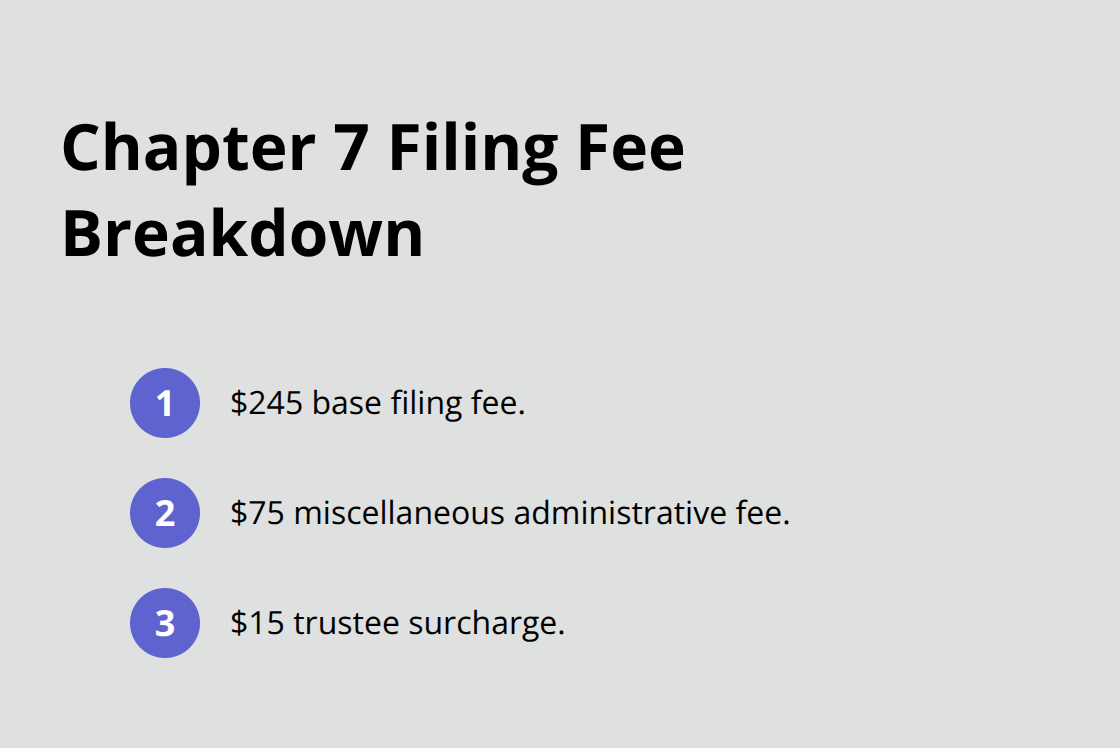
The standard filing fee totals $335 ($245 base fee, plus $75 miscellaneous administrative fee, and $15 trustee surcharge). You can request installment payments if you cannot pay upfront, and low-income filers may qualify for a complete fee waiver under Local Rule 1006-1.
Planning your payment strategy early removes one obstacle from your path forward.
Your First 14 Days: Critical Deadlines
You must file your Certificate of Credit Counseling with the court within 14 days of filing your petition-this is an absolute deadline with no extensions. Simultaneously, you file your complete petition package including Lists of Creditors, Schedules of Assets and Liabilities, Schedule of Income and Expenditures, and Statement of Financial Affairs. Accuracy in these documents protects you from complications later.
Days 20 to 40: Preparing for Your 341 Meeting
Your Statement of Intention must reach the court within 30 days after filing, which tells the court whether you plan to keep or surrender secured property like your home or car. Your 341 meeting of creditors occurs about 20 to 40 days after filing, and you must bring photo identification, your original schedules, and your most recent federal tax return (due at least seven days before the meeting). You stand under oath at this meeting, so answers must be truthful and complete.
Days 50 to 90: Completing Required Steps
After the meeting, you have 30 days to perform your Statement of Intention by either reaffirming the debt or surrendering the property. You must complete a post-petition Financial Management Training Course and file Form B423 within 60 days of the first date set for your 341 meeting-this course can be completed in person, online, or by phone, and you receive a Certificate of Completion from your provider. Reaffirmation agreements, if you choose to keep secured property, must be finalized within 60 days after the first date set for your 341 meeting. Once you complete these steps and no objections arise, your discharge enters, typically 60 to 90 days after your 341 meeting. Failure to comply with any deadline delays your discharge, so marking these dates on your calendar and following up with your trustee prevents unnecessary setbacks.
What Happens After Your Discharge Enters
The discharge order stops all collection efforts permanently and releases you from personal liability for discharged debts. However, liens on property survive the discharge, meaning creditors can still enforce those liens unless you reaffirm or surrender the asset. Understanding what debts vanish and which obligations remain helps you move into the next phase of your financial recovery with clarity about your true obligations.
What Assets Stay Protected in Chapter 7 in Florida
Florida law shields specific assets from liquidation during Chapter 7 bankruptcy, and knowing which property remains yours is essential to planning your fresh start. Florida exemptions are generous compared to many states, and the U.S. Bankruptcy Court for the Middle District of Florida confirms that Florida residents can claim either state exemptions or federal exemptions under 11 U.S.C. § 522, but not both. Your primary residence receives substantial protection through the homestead exemption, which covers unlimited equity in your home as long as it is your principal residence and located in Florida. This means if you own your home outright or have significant equity, that equity stays protected even in Chapter 7.
Property You Keep in Chapter 7
Your personal vehicle up to a certain value remains yours if you either reaffirm the debt or if the vehicle’s equity falls within exemption limits. Household furnishings, clothing, and personal items are fully exempt, so your everyday possessions do not face liquidation. Tools used in your trade or profession receive protection up to a specified amount, allowing you to keep equipment necessary for your livelihood. Retirement accounts including IRAs and 401(k) plans are largely protected from creditors, though this protection has limits depending on the account type and balance. Life insurance policies and their cash surrender values receive exemption protection in many cases, preserving this financial safety net for your family.
Why Most Chapter 7 Cases Involve No Asset Sales
The practical reality of Chapter 7 is that most cases involve no asset liquidation at all. According to data from the U.S. Trustee Program, the vast majority of Chapter 7 cases filed in Florida are no-asset cases, meaning the trustee finds no nonexempt property to sell and distribute to creditors. This happens because debtors properly claim exemptions that shield their assets from the bankruptcy estate. When you file your petition, your attorney helps you identify which assets qualify for exemption and how to claim them correctly on your schedules.
How to Protect Your Property Through Proper Exemption Claims
Mistakes in claiming exemptions can result in losing property you intended to protect, which is why accuracy in your exemption claims directly affects what you keep. Florida allows you to protect a reasonable amount of personal property, including up to $1,000 in miscellaneous items beyond your specifically listed exempt property. If you own property in multiple states or moved to Florida recently, the timing of your move may affect which exemptions apply, making legal guidance critical before filing. The trustee will review your exemptions and may object if they believe you have improperly claimed protection for nonexempt assets, so honesty and precision when listing your property prevents disputes that could delay your discharge or result in losing assets you intended to keep.
Final Thoughts on Your Chapter 7 Discharge in Florida
Your Chapter 7 discharge in Florida marks the end of one financial chapter and the beginning of another. The hard work of filing, attending your 341 meeting, and completing required courses pays off when that discharge order arrives, but your fresh start depends on what you do next. Within the first month after discharge, pull your credit reports from all three bureaus and verify that discharged debts now show zero balances-dispute any errors you find, as inaccurate reporting can slow your recovery unnecessarily.
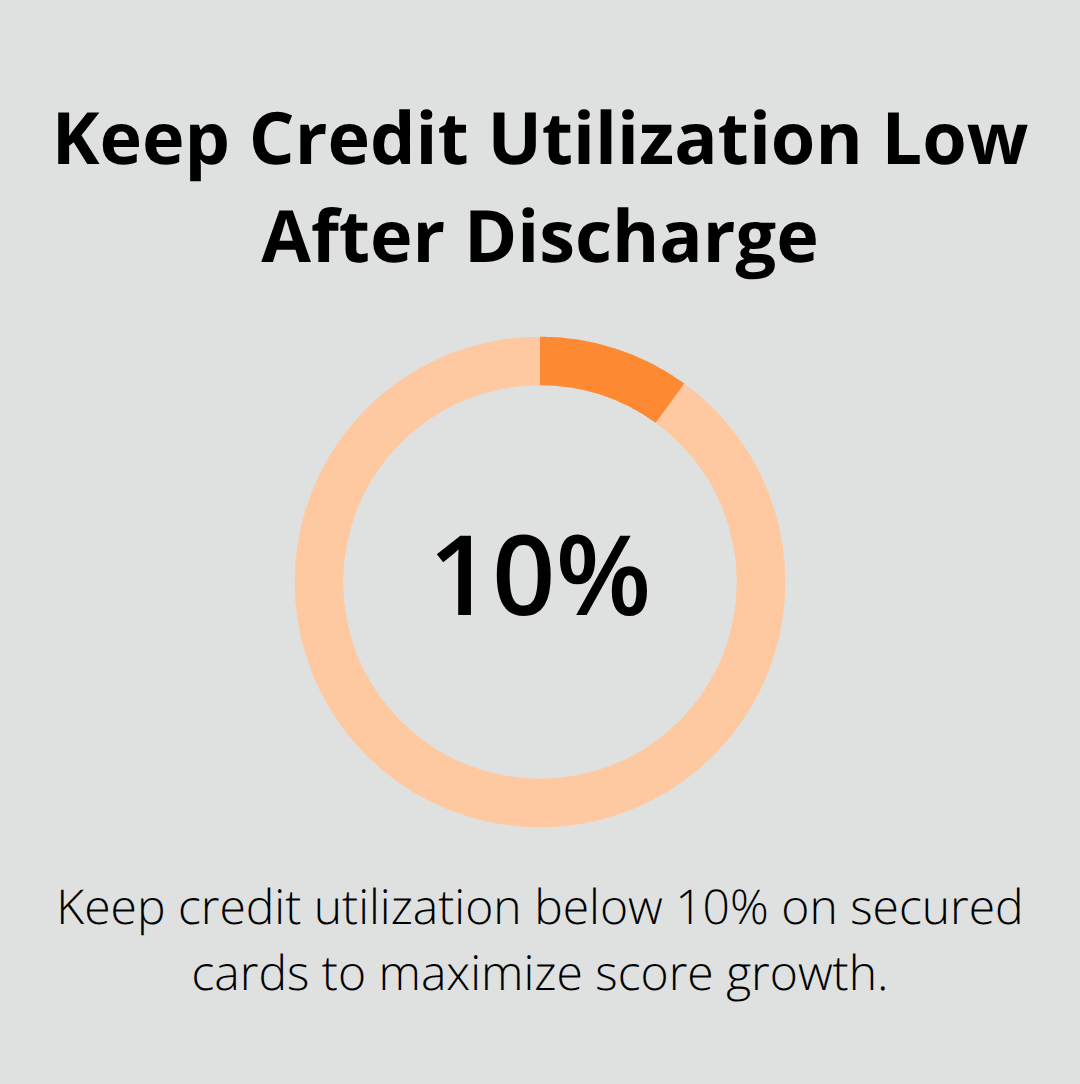
Within three to four months, apply for a secured credit card or credit-builder loan to form the foundation of your rebuilding strategy. Keep your credit utilization below 10% on secured cards to maximize score growth, and pay every bill on time because payment history drives your credit score more than any other factor. Avoid payday loans and high-risk lending products that trap you in debt cycles and undermine long-term progress.
Most people see meaningful credit score improvements within the first year after discharge if they maintain disciplined financial habits, since Chapter 7 bankruptcy typically lowers your score by 100 to 200 points initially but consistent positive behavior reverses this damage faster than you might expect. Live on a budget and build a small emergency fund to reduce reliance on new credit. If you need guidance reviewing your credit report or planning your financial recovery after Chapter Seven discharge in Florida, contact us for a free consultation to discuss your next steps.