Chapter 7 bankruptcy in Florida offers a path to eliminate unsecured debts and get a fresh financial start. The process involves six key steps, from evaluating your situation to receiving your discharge order.
At Harnage Law, PLLC, we’ve guided many Florida residents through this journey. This guide walks you through each phase so you know exactly what to expect.
What Chapter 7 Bankruptcy Means for Florida Residents
Chapter 7 bankruptcy is a liquidation process that allows individuals to discharge most unsecured debts and start fresh financially. Unlike Chapter 13, which requires a repayment plan lasting three to five years, Chapter 7 typically concludes within four to six months with no ongoing payments to creditors after discharge. The key difference is that Chapter 7 focuses on eliminating debt rather than restructuring it, making it ideal if you cannot afford to repay what you owe. Chapter 13 works better if you need to prevent foreclosure, stop car repossession, or catch up on mortgage payments through a structured repayment plan.
Your eligibility for Chapter 7 hinges on the means test, which examines your income over the prior six months and compares it to Florida’s median income for your household size. For a one-person household, Florida’s median income is $41,334 annually; for four people, it reaches $83,117. If your six-month average income falls below the median, you pass the means test automatically and can file Chapter 7. If your income exceeds the median, you must complete additional calculations to determine whether disposable income would exceed $7,475 over sixty months-the threshold that disqualifies you from Chapter 7.
The entire process from filing to receiving your discharge order typically takes three to four months in Florida courts, though the timeline varies depending on court schedules and case complexity. Understanding these fundamentals prepares you to evaluate your financial situation and determine whether Chapter 7 aligns with your circumstances.
Step 1: Evaluate Your Financial Situation
Calculate your total monthly income from all sources over the last six months, then average that figure to determine your true monthly earnings. The means test uses your six-month average income multiplied by twelve to assess Chapter 7 eligibility. Next, list every debt you owe and separate unsecured debts like credit cards and medical bills from secured debts tied to property such as mortgages and car loans. Unsecured debts are what Chapter 7 can eliminate, so identifying which debts qualify for discharge shows you what relief you’ll actually receive. Not all debts disappear in bankruptcy-child support, alimony, most student loans, and recent taxes survive Chapter 7, so if student loan debt represents your largest financial problem, Chapter 7 may not solve it.
Assess what you own and understand Florida’s exemption laws, which determine what property you keep versus what a trustee may sell. Florida offers strong protections: unlimited homestead exemption on your primary residence if you’ve owned it for at least 1,215 days and it measures no larger than 0.5 acres in a city or 160 acres elsewhere. You can protect up to $5,000 in equity in one vehicle, plus retirement accounts up to $1,711,975 per person for cases filed between April 1, 2025 and March 31, 2028 under federal law.
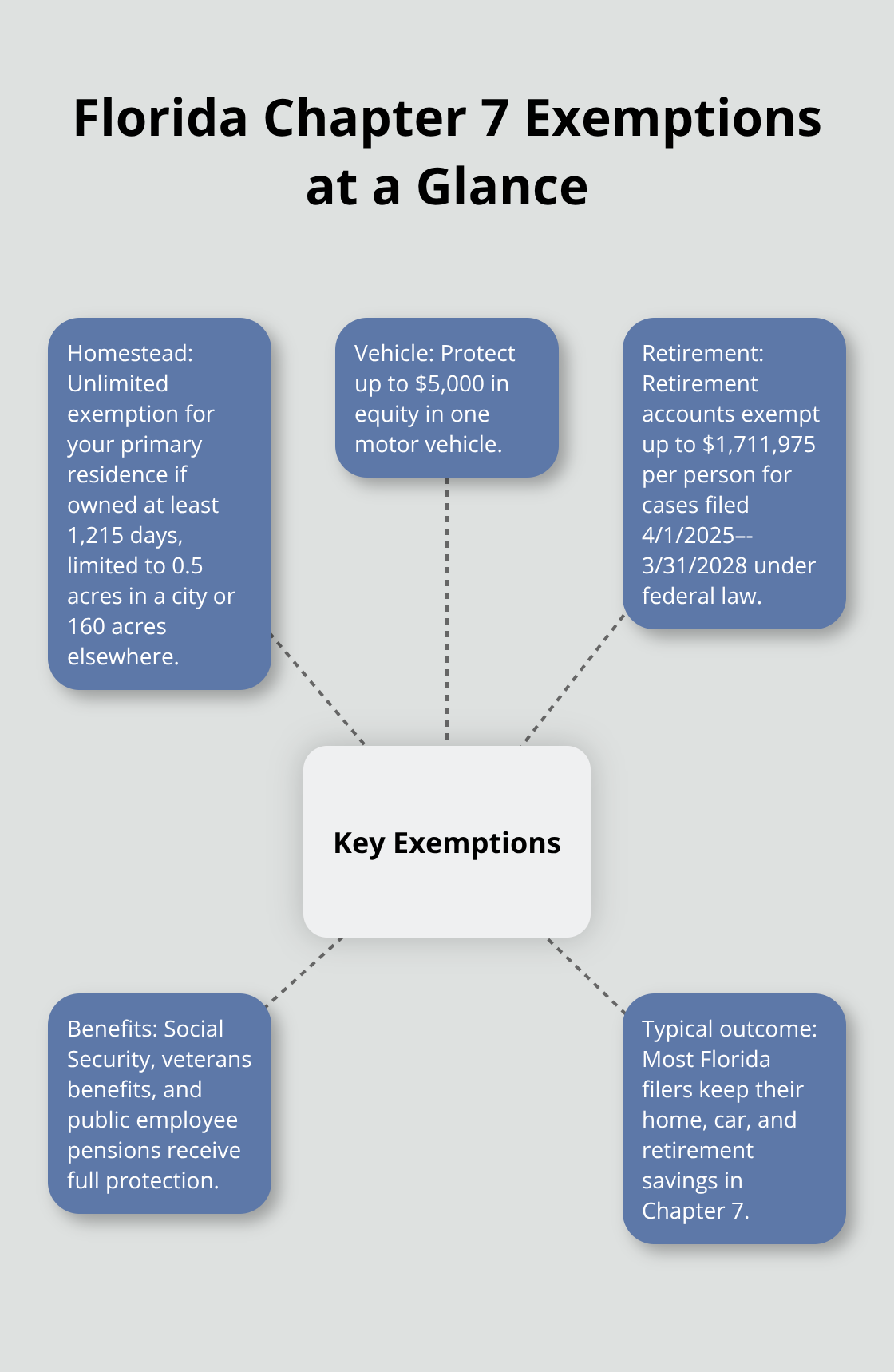
Social Security, veterans benefits, and public employee pensions receive full protection under Florida statute. Most Florida residents keep their home, car, and retirement savings in Chapter 7, making the process far less devastating than many people fear-which is why gathering your documentation next becomes the practical foundation for moving forward.
Step 2: Organize Your Financial Records
The Florida bankruptcy court requires specific documentation to process your petition, and gathering these materials before filing accelerates the entire process. You’ll need pay stubs or payment advices from the last 60 days to verify current income, along with your last two years of federal tax returns to establish your income history. The means test calculation depends on averaging your income over six calendar months, so having complete documentation prevents delays and ensures accurate eligibility assessment. Bank statements from the last two to three months show your liquid assets and spending patterns, which the trustee will review to understand your financial position. Credit card statements, loan documents, and bills for all debts must be compiled into a single list organized by creditor name and account number.
Property ownership requires documentation too: gather your mortgage deed or rental agreement, vehicle titles, and any valuations for items of significant value like jewelry, art, or collections. The bankruptcy estate includes everything you own at the filing date, so the trustee needs clear evidence of what property exists and its condition. If you own your home, bring documentation proving your purchase date and down payment to establish whether you qualify for Florida’s unlimited homestead exemption (which requires 1,215 days of ownership). Organize these materials in a single folder before your initial consultation, making it easier to complete the official bankruptcy forms accurately and reducing the risk of filing errors that could delay your discharge. With your financial records compiled and ready, you can move forward to the next critical requirement: completing the mandatory credit counseling course that Florida law demands before you file your petition.
Step 3: Complete Your Credit Counseling Before Filing
Florida law mandates that you complete credit counseling from an approved agency within 180 days before filing your Chapter 7 petition. The U.S. Trustee Program maintains the official list of approved agencies on its website, organized by district. Most agencies offer courses both online and in-person, with sessions typically lasting one to two hours. The counseling covers budgeting basics, debt management alternatives, and an honest assessment of whether bankruptcy makes sense for your situation. You receive a certificate of completion immediately after finishing, which you must file with the bankruptcy court as proof of compliance.
Costs vary by agency, ranging from $0 to $50 for the counseling course, though many agencies offer free or low-cost options for those with income below 150 percent of the poverty level. Some agencies charge more if you request expedited completion or special accommodations. The counseling session remains neutral-agencies present all options, including debt management plans, Chapter 13 alternatives, and Chapter 7 itself. If you complete the course and decide Chapter 7 isn’t right, you can still file under another chapter or pursue non-bankruptcy solutions. The certificate remains valid for 180 days, giving you flexibility to file whenever you’re ready.
Complete this requirement early rather than waiting until the last moment, as scheduling delays with popular agencies could jeopardize your filing timeline. Once you hold your certificate of completion in hand, you’ll move forward to the next critical phase: preparing and filing your official bankruptcy petition with the Florida bankruptcy court.
Step 4: File Your Petition With the Bankruptcy Court
The official bankruptcy forms required for Chapter 7 filing in Florida come directly from the U.S. Courts website, and you must use current versions only-older or forms from other districts will face rejection by the clerk’s office. You’ll complete Schedules A through H to list all property, Schedule I for income, Schedule J for expenses, the Statement of Financial Affairs, and Official Form B22A which calculates your means test eligibility. The Southern District of Florida Clerk requires legible photocopies of government-issued photo identification and original wet signatures on all documents, along with a creditor matrix listing every debt in the exact format the court specifies. Within 60 days of filing, you must provide recent pay stubs or payment advices to verify current income, and any documents missing at filing must be submitted within 14 days to avoid dismissal. Intentionally misclassifying property to claim false exemptions carries fraud penalties up to $250,000 and 20 years in prison, so complete each schedule honestly and thoroughly.
The filing fee totals $338 according to the Southern District of Florida Clerk, payable through cashier’s check or money order made payable to Clerk, U.S. Court with your case number written on the instrument. If you file electronically, you have 14 days to remit the fee, and you can apply to pay in installments through the Local Form Application for Individuals to Pay the Filing Fee in Installments, with both joint petitioners signing if filing together-the minimum upfront payment is half the fee ($169). Fee waivers exist if your income falls below 150 percent of the poverty level, obtained through filing Official Bankruptcy Form 103B with poverty guidelines linked directly on the form. Once the clerk accepts your petition, the automatic stay activates immediately, stopping wage garnishments, creditor lawsuits, collection calls, and most foreclosure proceedings.
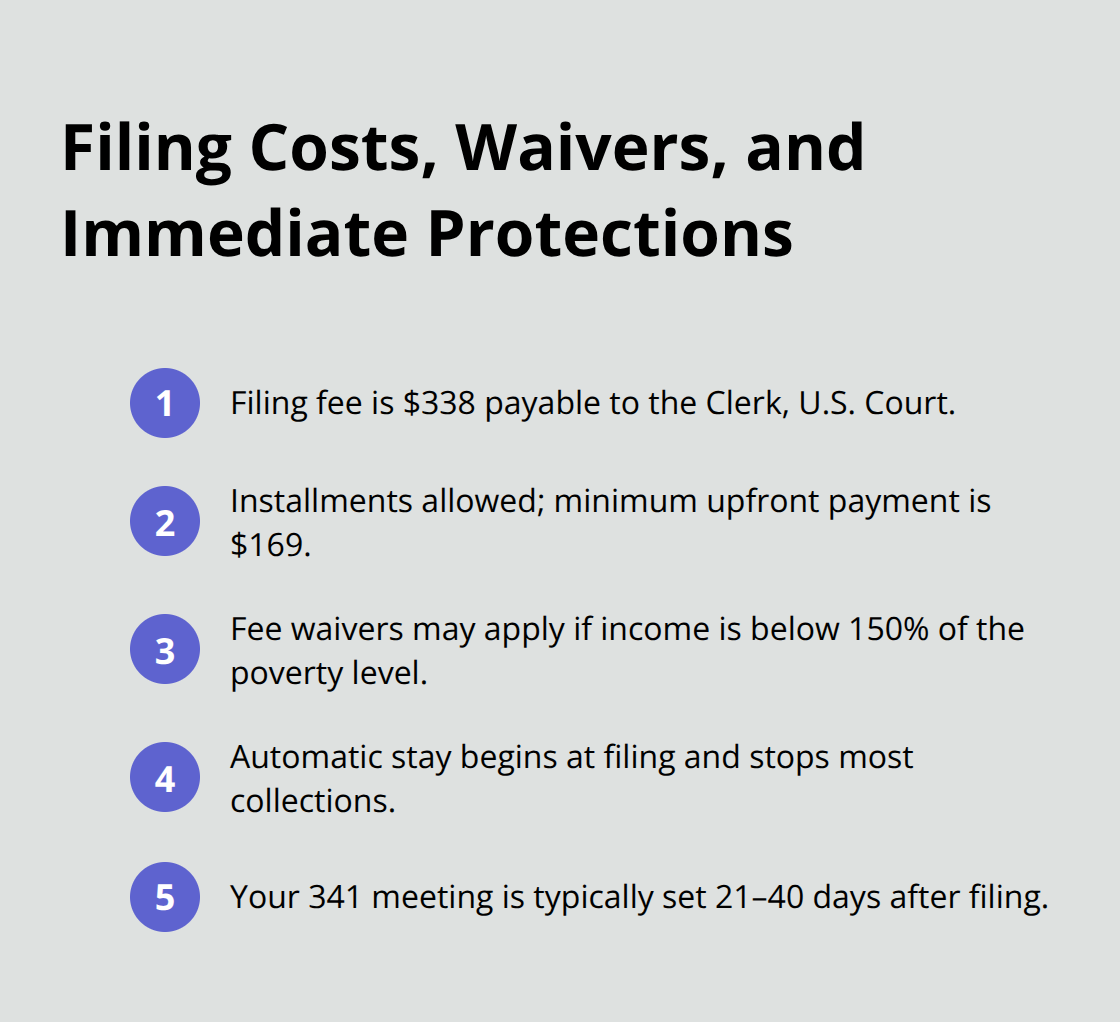
This protection gives you breathing room while the trustee prepares for your 341 meeting, typically scheduled 21 to 40 days after filing, where you’ll answer questions about your finances and assets.
Fifth Step: The 341 Meeting With Your Trustee
The 341 meeting of creditors occurs 21 to 40 days after you file your petition and represents the only required court appearance for most Chapter 7 cases. Your bankruptcy trustee conducts this meeting to verify your financial information, examine your assets, and determine what property can be liquidated to pay creditors. The meeting typically lasts 5 to 15 minutes per case, though complex situations involving significant assets or disputed exemptions may extend the timeline. Creditors rarely attend these meetings-the American Bankruptcy Institute reports that in the vast majority of Chapter 7 cases, no creditors show up to question the debtor. You must attend in person unless the court grants an exception, and failure to appear results in automatic case dismissal, leaving you unprotected from collection efforts.
Prepare answers to straightforward questions about your income, expenses, debts, and property ownership before attending. The trustee will ask whether your financial information on the filed schedules is accurate, whether you own property not listed, whether you transferred assets in the past two years, and whether you understand which debts survive bankruptcy like student loans and child support. Bring original documents including your government-issued photo ID, recent pay stubs, bank statements, and property deeds or vehicle titles to verify ownership and values. The trustee may challenge your exemption claims if property values seem understated or if you appear to have hidden assets, so honest and complete documentation prevents delays and demonstrates good faith. After the meeting concludes, the trustee completes their investigation and moves toward discharge, provided no fraud indicators or unresolved asset questions remain-which brings you to the final requirement before you receive your fresh financial start.
Step 6: Complete Your Financial Management Course and Obtain Discharge
After your 341 meeting concludes, you must complete a Personal Financial Management Course within 60 days to qualify for your discharge order. This second required course differs from pre-filing credit counseling and focuses on budgeting, financial planning, and rebuilding after bankruptcy rather than exploring alternatives. Approved agencies are listed on the U.S. Trustee Program website, and most offer online completion within hours, making scheduling convenient around your work and family obligations. Costs typically range from $0 to $50 depending on the agency and your income level, with free or reduced options available for those meeting poverty guidelines. You receive a certificate immediately upon completion, which you file with the bankruptcy court to confirm you’ve satisfied this final requirement.
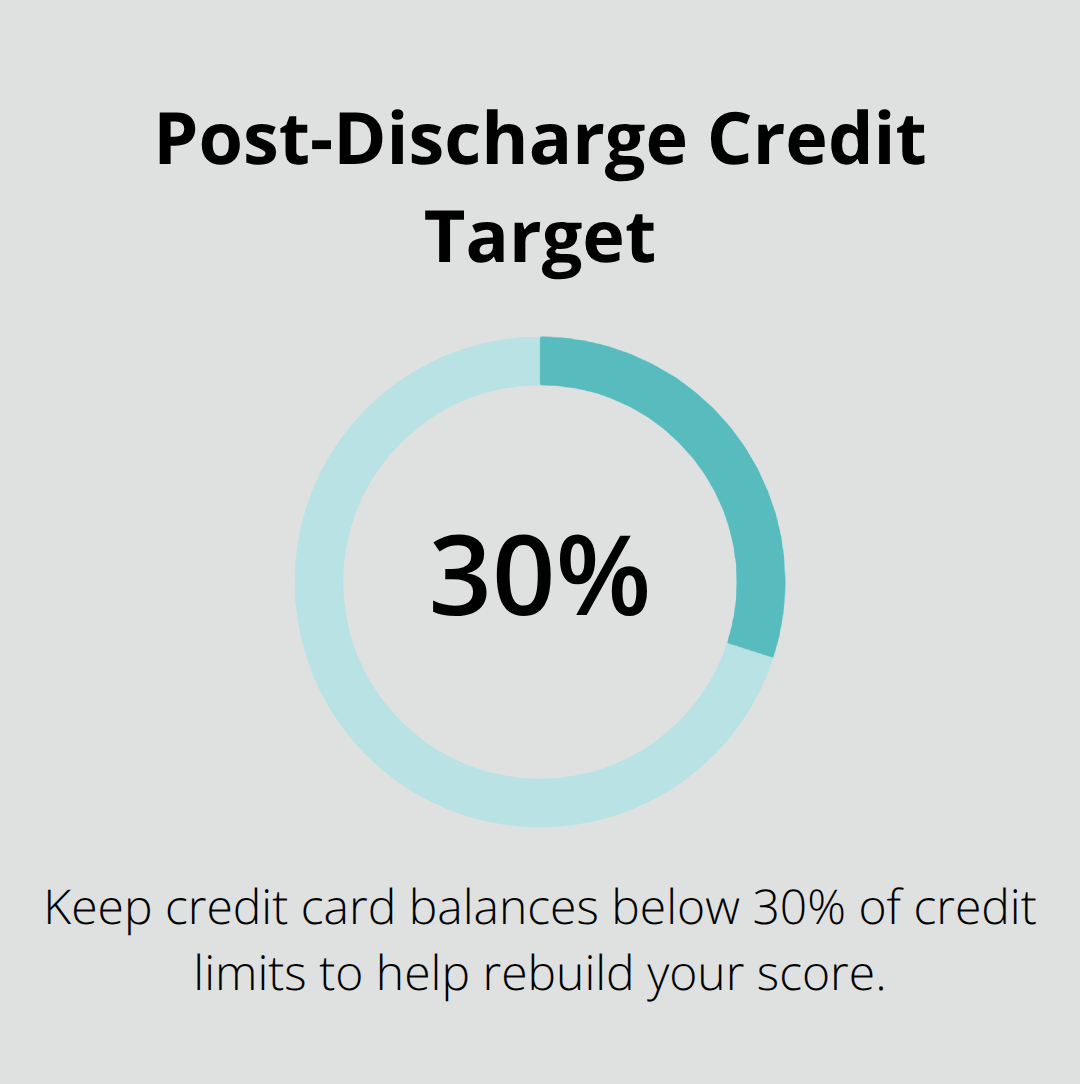
Your discharge order arrives within weeks of filing your financial management course certificate, though the exact timeline depends on court processing speed and whether the trustee identifies any issues requiring clarification. The Southern District of Florida typically issues discharge orders within 60 to 90 days after your 341 meeting in straightforward cases with no asset liquidation. Once discharged, creditors cannot pursue collection efforts, wage garnishments, or lawsuits on those obligations. Your credit score will initially drop due to the bankruptcy filing, but you can rebuild it immediately through secured credit cards, becoming an authorized user on someone else’s account, or obtaining a credit-builder loan that reports to all three bureaus. Most people see meaningful score recovery within two to three years (maintaining on-time payments, keeping credit card balances below 30 percent of limits, and avoiding new delinquencies) and position themselves for mortgage or auto loan approval sooner than many expect.
With your discharge finalized, you now face the practical reality of rebuilding your financial stability and understanding how bankruptcy affects your future borrowing capacity.
Moving Forward After Your Chapter 7 Bankruptcy in Florida
Your discharge order marks a beginning, not an ending. The bankruptcy filing appears on your credit report for ten years, but its impact on your borrowing ability diminishes significantly after two to three years of responsible financial behavior. Lenders focus more on your recent payment history than on the bankruptcy itself, meaning you can qualify for mortgages, auto loans, and credit cards sooner than many people assume. Start rebuilding immediately with a secured credit card that reports to all three bureaus, keep your balance below 30 percent of the limit, and make every payment on time.
Avoid the patterns that led to bankruptcy in the first place. Create a realistic monthly budget that accounts for all expenses, build an emergency fund of at least $1,000 to prevent future reliance on credit cards, and track your spending regularly. Many people who file Chapter seven bankruptcy Florida cases struggle because they lack basic budgeting discipline rather than facing unavoidable hardship. The financial management course you completed before discharge provides foundational tools, but sustained effort matters more than any single course.
Filing for bankruptcy again is possible, but timing restrictions apply. You cannot file another Chapter 7 for eight years after your previous discharge, and you cannot file Chapter 13 for two years after a Chapter 7 discharge. If financial crisis strikes again before these periods expire, contact Harnage Law, PLLC to explore whether Chapter 13 or other alternatives might address your situation.