
Chapter 7 bankruptcy offers a fresh start, but not all debts disappear in the process. Understanding what debts are dischargeable is the first step toward making an informed decision about your financial future.
At Harnage Law, PLLC, we help Florida residents navigate which obligations will be wiped away and which ones will remain your responsibility. This guide breaks down the debts you can eliminate and those you cannot.
Debts That Disappear in Florida Chapter 7 Bankruptcy
Unsecured debts form the backbone of what Chapter 7 eliminates, and this category covers most of the financial obligations that burden Florida residents. Credit card balances-including all accumulated interest and fees-vanish completely in Chapter 7. Medical debt presents another substantial relief opportunity; according to data from the American Journal of Public Health, medical bills trigger approximately 66.5% of bankruptcies nationwide, making medical debt discharge one of the most impactful benefits of Chapter 7. Personal loans from banks or credit unions, payday loans, and outstanding utility bills for electricity, gas, and water all fall into the dischargeable category. Judgment debts tied to credit cards or unsecured personal loans can be eliminated as well.
Understanding Dischargeable Debts
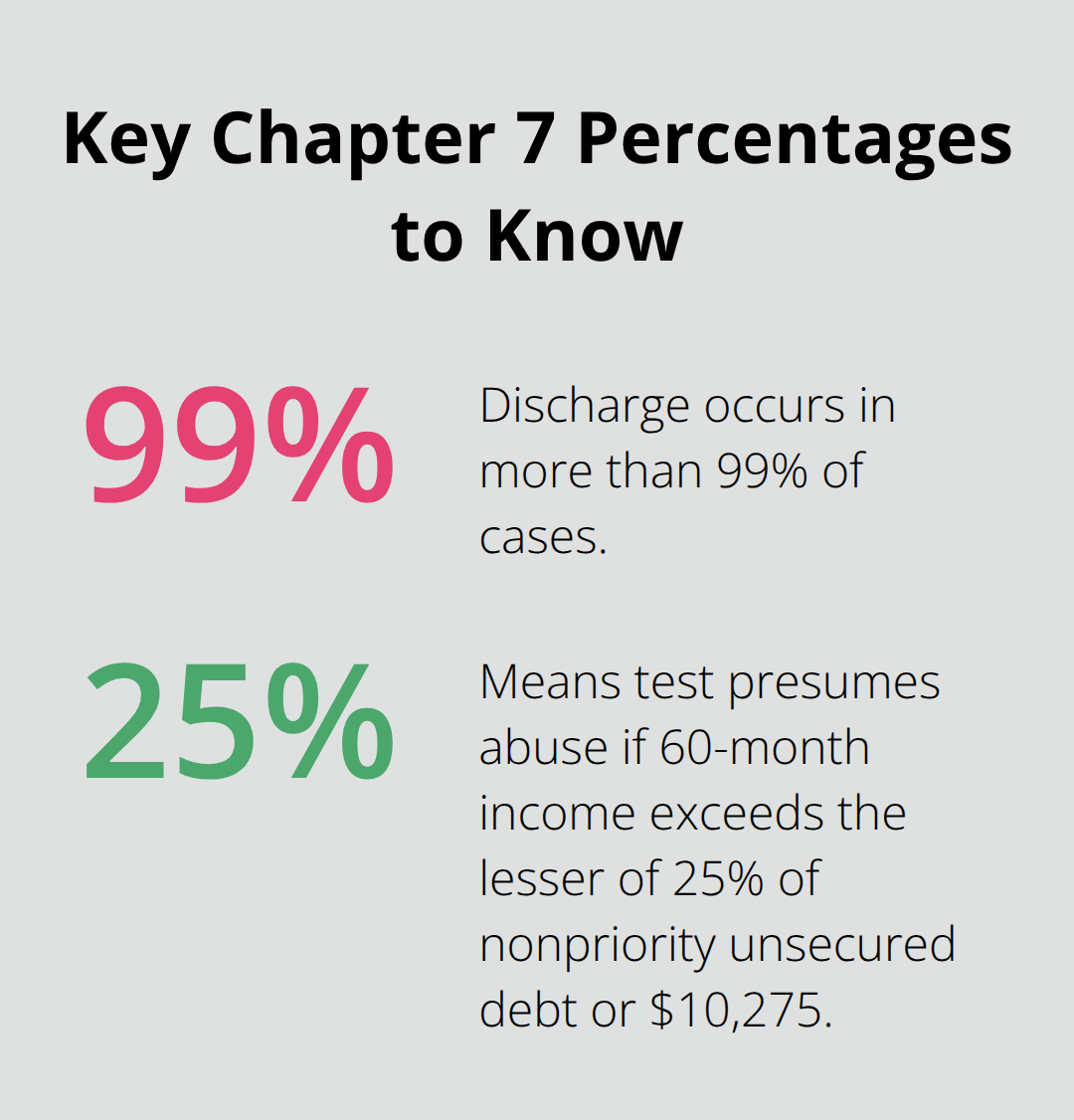
The federal bankruptcy code at 11 U.S.C. § 727 establishes that discharge in Chapter 7 releases you from personal liability for most unsecured debts. Discharge occurs in more than 99% of cases approximately 60 to 90 days after your creditors’ meeting. This happens automatically without requiring you to prove hardship or negotiate settlements.
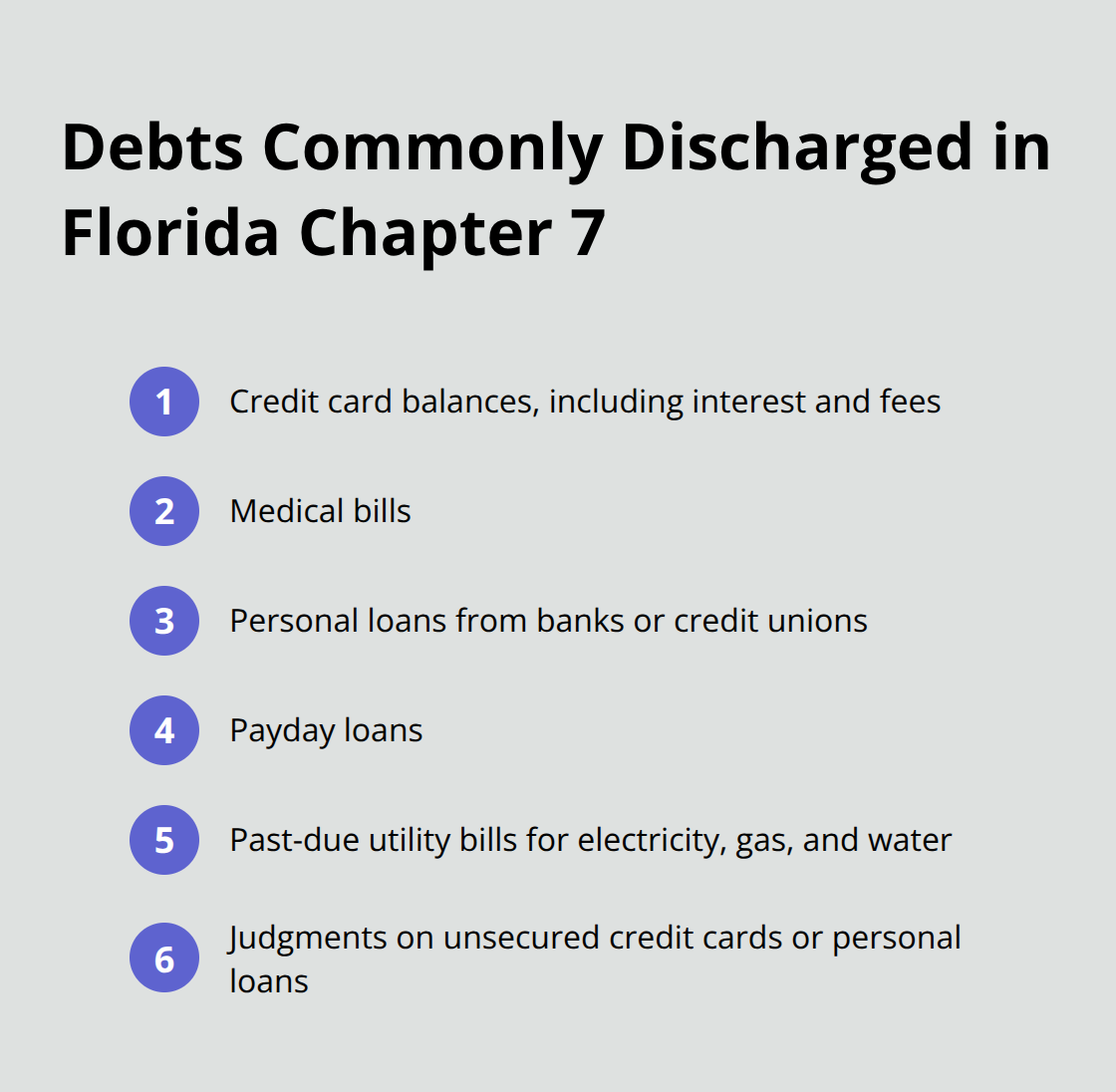
The key distinction is that these debts carry no collateral attached to them, meaning creditors have no right to seize your property after discharge occurs.
How Liens Survive Discharge
The discharge does not erase liens on secured property like homes or vehicles; secured creditors retain the right to collect on collateral unless you reaffirm the debt to keep the property or surrender the collateral entirely. If you own a home with a mortgage or a vehicle with a car loan, those liens survive the discharge, but your personal liability for the underlying debt vanishes if you surrender the property. This mechanism provides genuine relief while protecting creditors’ collateral interests.
What Happens Next in Your Case
The discharge order arrives in the mail approximately four months after you file, confirming that most of your unsecured debts no longer require payment. However, certain obligations remain your responsibility regardless of the discharge-and understanding which debts survive the process determines your true financial fresh start.
Debts That Survive Chapter 7 Discharge in Florida
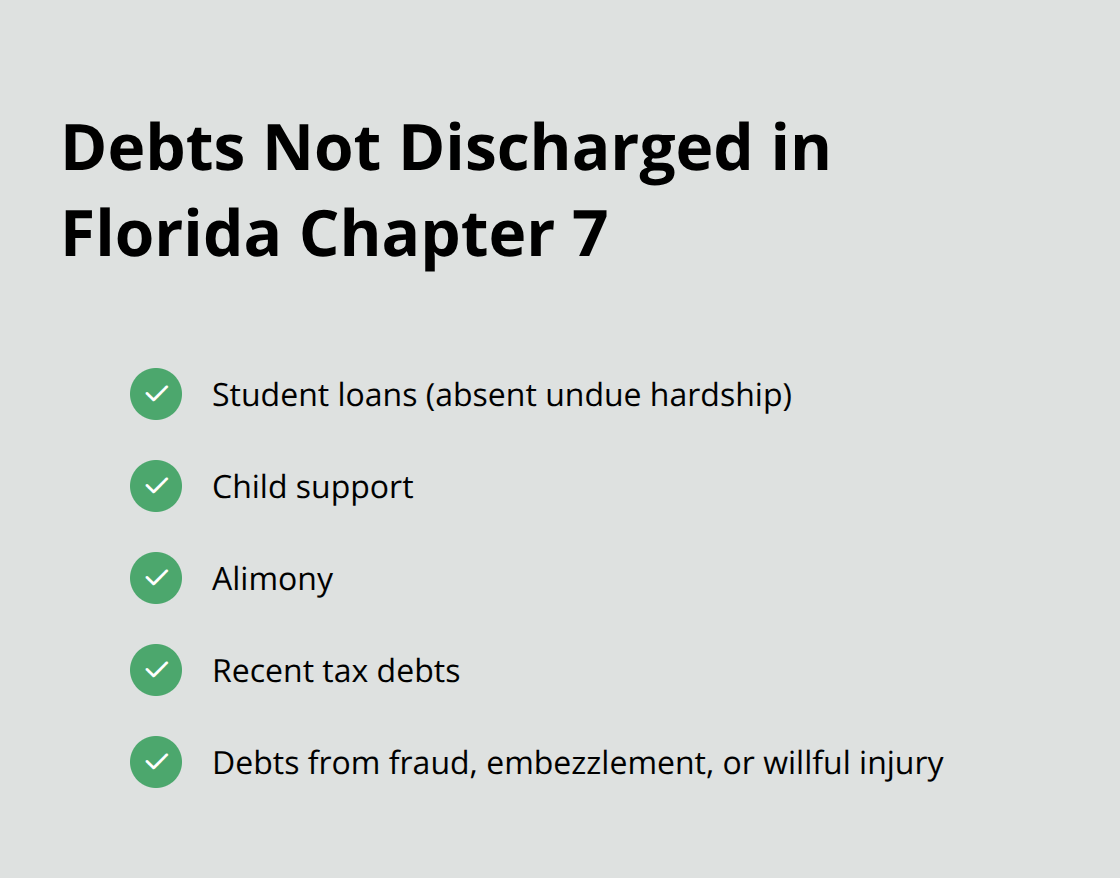
Certain obligations refuse to disappear when your Chapter 7 discharge arrives, and federal law draws hard lines around which debts must remain your responsibility. Student loans present the most common non-dischargeable debt; according to the Federal Reserve, outstanding student loan debt exceeded 1.7 trillion dollars as of 2024, and the vast majority cannot be eliminated in Chapter 7 unless you can demonstrate undue hardship-a legal standard so stringent that fewer than 1% of debtors successfully discharge student loans through bankruptcy. Child support and alimony obligations never vanish under any circumstances; 11 U.S.C. § 523(a)(5) explicitly protects domestic support obligations, meaning courts will not discharge these payments regardless of your financial condition.
Tax Debt and Fraud-Related Obligations
Tax debt creates another permanent fixture on your financial landscape; while older tax debts meeting specific criteria may discharge, recent taxes almost always survive, and the Internal Revenue Service maintains aggressive collection authority even after your discharge order arrives. Debts stemming from fraud, embezzlement, or willful injury to persons or property also remain non-dischargeable when creditors file timely objections and prove their claims in court.
The Reality of Incomplete Relief
The practical consequence of these non-dischargeable debts means your Chapter 7 discharge provides incomplete financial relief. If you owe $50,000 in student loans, $15,000 in back child support, and $8,000 in recent tax debt, your discharge eliminates credit cards and medical bills but leaves you responsible for that $73,000. Reviewing your complete debt picture before filing allows you to understand which obligations will persist after discharge. This clarity prevents unrealistic expectations and allows you to plan realistically for your post-bankruptcy financial future.
Chapter 13 as an Alternative Strategy
Some debtors file Chapter 13 bankruptcy instead of Chapter 7 when non-dischargeable debts dominate their obligations, since Chapter 13 allows you to include non-dischargeable debts in a court-approved repayment plan spread across three to five years. Understanding this distinction between Chapter 7 and Chapter 13 treatment of non-dischargeable debts fundamentally shapes whether Chapter 7 actually solves your financial crisis or merely addresses a portion of it. The discharge process itself moves forward regardless, but knowing which debts survive that discharge determines your true financial outcome.
The Path From Filing to Discharge in Florida Chapter 7
Timeline and Initial Steps
The discharge process in Florida Chapter 7 bankruptcy unfolds over approximately four months, and understanding each stage prevents surprises and unrealistic expectations about timing. You file your petition with the bankruptcy court, and within 21 to 40 days, you attend the creditors’ meeting-formally called the 341 meeting under Federal Rule of Bankruptcy Procedure 2003. At this meeting, you appear under oath and answer questions from the trustee and any creditors who show up about your finances, assets, and debts. The trustee administers your estate and liquidates nonexempt assets to pay unsecured creditors, though most individual Chapter 7 cases are what bankruptcy professionals call no-asset cases with little or no distribution to creditors. Cooperation and producing requested records at this meeting matters significantly because failure to cooperate can lead to case dismissal.
Pre-Filing Requirements and the Means Test
Before you file, you must complete credit counseling from an approved provider, and this requirement has limited exceptions only for genuine emergencies or when approved counseling resources are unavailable in your area. The means test determines whether your income qualifies for Chapter 7 or whether the court presumes abuse; if your current monthly income over 60 months exceeds the lesser of 25 percent of your nonpriority unsecured debt or $10,275, the court may dismiss your case or force conversion to Chapter 13. Filing fees total $335 when combined-a $245 filing fee, a $75 miscellaneous administrative fee, and a $15 trustee surcharge-and you can request installment payments or a waiver if your household income falls below 150 percent of the federal poverty level for your family size.
The Discharge Order and Its Protections
The discharge order arrives approximately four months after you file, following the 60 to 90-day window after your creditors’ meeting when objections can be filed and resolved. This order releases you from personal liability for discharged debts and creates a permanent injunction prohibiting creditors from collecting on those obligations; violations of this injunction result in civil contempt penalties against creditors. Discharge occurs in more than 99 percent of cases, making it the typical outcome rather than an exception. However, you must complete a financial management course before discharge issues, with limited exceptions for disability, incapacity, or active military duty in a combat zone. The discharge notice mails to all creditors, the trustee, and you, but it does not itemize which specific debts are nondischargeable-you must review your schedules and the nondischargeability rules to identify surviving obligations.
Post-Discharge Protections and Enforcement
After discharge, you gain protection from employment discrimination solely because you filed bankruptcy or because of any discharged debt; federal law prohibits both governmental units and private employers from discriminating against you based on bankruptcy filing. If creditors attempt collection after discharge, you can move to reopen the case to enforce the discharge injunction and hold them accountable. This timeline and these protections create the structure within which your financial fresh start actually begins.
Final Thoughts
Chapter 7 bankruptcy in Florida eliminates most unsecured debts like credit cards, medical bills, personal loans, and utility bills through a discharge order that arrives approximately four months after filing. However, understanding what debts are dischargeable versus which obligations survive the process separates realistic financial planning from disappointment. Student loans, child support, alimony, recent tax debt, and debts arising from fraud remain your responsibility regardless of discharge, meaning your fresh start applies only to qualifying debts.
If Chapter 7 addresses only a portion of your obligations, Chapter 13 bankruptcy may offer a better solution by allowing you to include non-dischargeable debts in a court-approved repayment plan spanning three to five years. The choice between these two paths depends entirely on your specific debt composition and income level. Calculate whether Chapter 7 actually solves your crisis or merely addresses part of it before you commit to filing.
We at Harnage Law, PLLC help Florida residents analyze their complete financial situation and determine whether Chapter 7 bankruptcy offers the fresh start they need. Contact us at https://chapter7florida.com/contact to discuss your circumstances and learn how we can guide you through the bankruptcy process with clarity and confidence.