Chapter 7 bankruptcy wipes out most of your debts, but it also damages your credit score. The good news is that rebuilding credit after Chapter 7 in Florida is absolutely possible, and many people see meaningful improvement within two to three years.
We at Harnage Law, PLLC help clients understand that a Chapter 7 discharge is a fresh start, not a financial dead end. This guide walks you through the concrete steps to rebuild your financial life.
What Happens to Your Credit Score After Chapter 7
The Immediate Impact on Your Score
Chapter 7 discharge eliminates your debts, but the immediate credit score impact is real. The Federal Trade Commission reports that filing Chapter 7 typically drops your score by 130 to 240 points right away, with higher starting scores often experiencing larger drops. Someone with a 750-point score might fall to 510, while someone starting at 650 might land around 420. This hit stings, but it’s temporary. The bankruptcy itself stays on your credit report for 10 years from the filing date, not the discharge date, but the damage weakens significantly after the first two years as you build new positive payment history.
How Long Negative Items Stay on Your Report
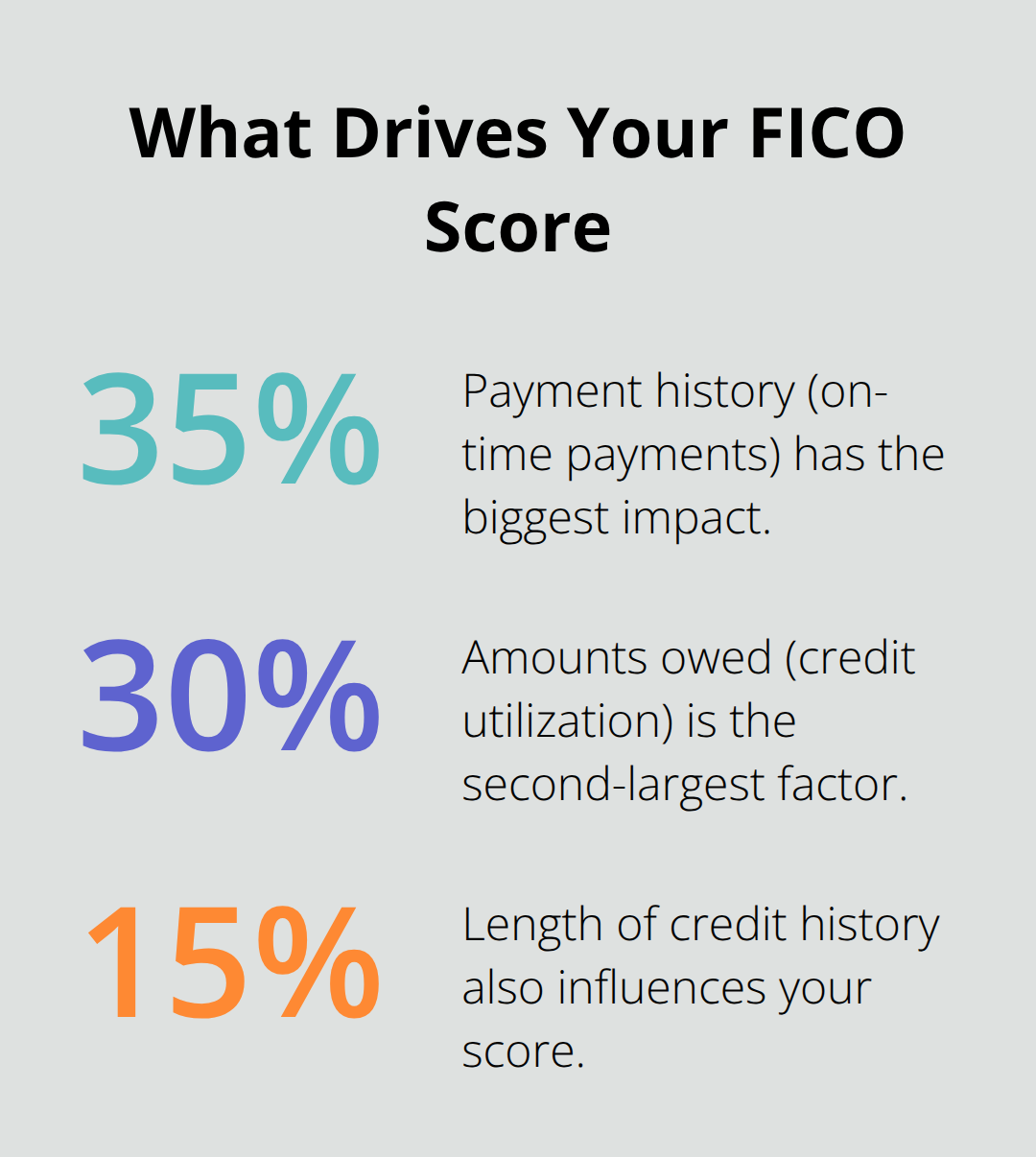
Individual accounts discharged in bankruptcy disappear from your report about 7 years after their original delinquency dates, meaning they typically vanish roughly 3 years before the bankruptcy record itself expires. Your credit score is built on five components: payment history counts for 35 percent, amounts owed for 30 percent, length of credit history for 15 percent, new credit for 10 percent, and credit mix for 10 percent. After Chapter 7, payment history becomes your most powerful rebuilding tool.
Your Recovery Timeline in Florida
The data shows that most Florida residents see their scores plateau around 18 to 24 months post-filing and then begin steady growth. Within the first recovery year, automated payments help you hit about 95 percent on-time payments, driving roughly 5 to 10 point monthly increases. Secured credit cards obtained within 6 to 12 months after discharge deliver 50 to 80 points of annual improvement with perfect payment history, especially when you keep utilization below 10 percent.
Factors That Shape Your Rebuild Speed
After year two, the bankruptcy impact diminishes as you accumulate new positive credit history, accelerating your overall recovery. Your pre-bankruptcy credit profile shapes how fast you rebound: high-score filers lose more points initially but recover faster due to established credit management habits, while low-score filers start from a weaker base and rebuild more slowly. Disciplined borrowers often reach 650-plus credit scores within 36 months (roughly three years) by focusing on on-time payments and controlled credit use. The timeline differs based on your actions, but understanding these recovery patterns helps you set realistic expectations as you move forward with concrete rebuilding strategies.
How to Rebuild Credit After Chapter 7 in Florida
Start with a Secured Credit Card Within Your First Month
Start rebuilding immediately after discharge-waiting costs you months of potential credit recovery. Within the first month, apply for a secured credit card with a deposit between $200 and $500. Capital One Secured, Discover it Secured, OpenSky, and Mission Lane all report to all three major credit bureaus, meaning your responsible use directly impacts your FICO score. Use the card for small, budgeted purchases only (think $20 to $50 monthly) and pay the full balance before the due date. This approach keeps your credit utilization below 10 percent, which drives 5 to 10 point monthly increases in your first recovery year according to the Consumer Financial Protection Bureau. Many issuers upgrade you to an unsecured card after 12 to 18 months of perfect payments, returning your deposit without closing the account.
Consider Credit-Builder Loans as an Alternative Path
Credit-builder loans offer another option if you cannot qualify for a card. Credit unions and fintech lenders typically require $300 to $1,000 held in savings while you make monthly payments of $25 to $100. These loans add payment diversity to your credit mix and deliver 20 to 30 point improvements within six months because you build a new positive payment history from scratch. The structured repayment schedule forces discipline and creates measurable progress on your credit file.
Monitor Your Credit Report Quarterly for Errors
Monitoring your credit report matters far more than most people realize because roughly 25 percent contain errors that artificially tank your score. Pull free reports from annualcreditreport.com quarterly during your first two years post-discharge and dispute any inaccuracies immediately-the Federal Trade Commission reports that errors resolve in about 30 days and can boost scores by 20 to 40 points quickly. Verify that all discharged debts show zero balance and that accounts you kept current still report correctly.
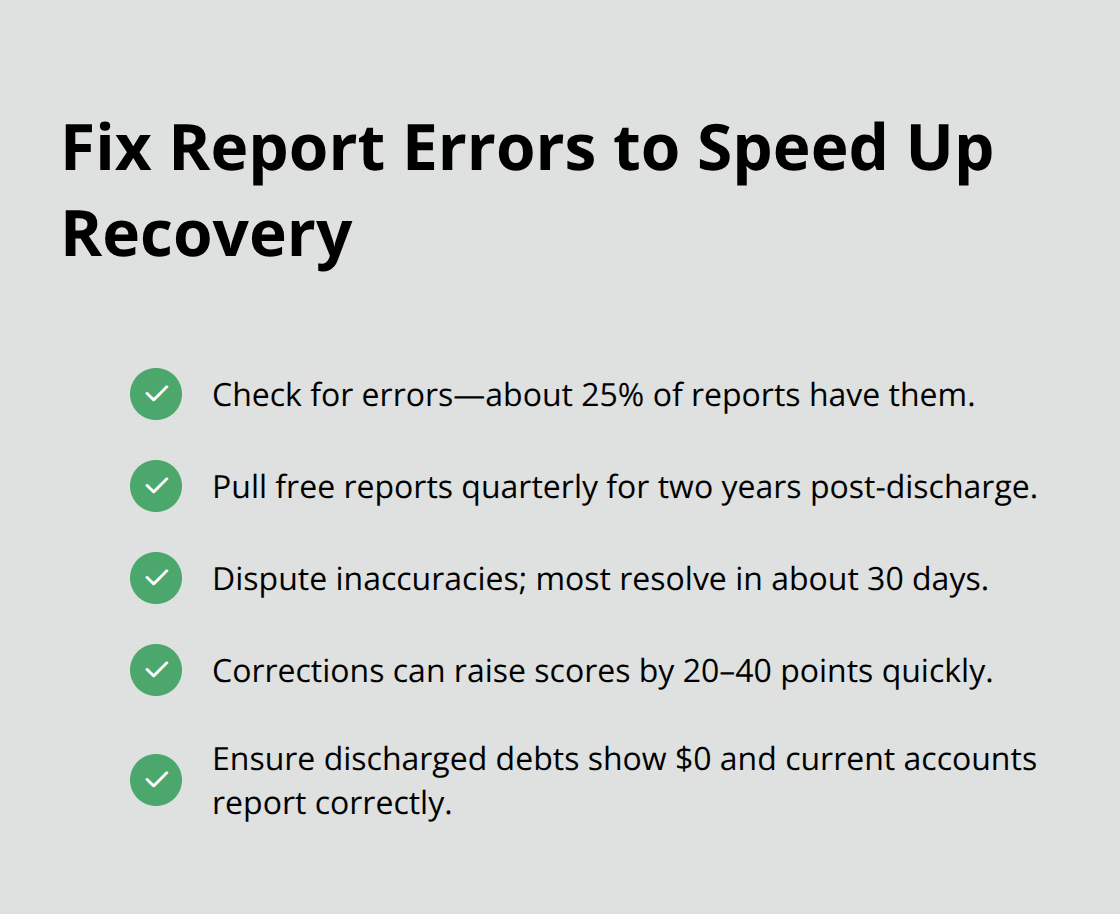
This verification step protects your rebuilding progress from hidden mistakes.
Automate Payments and Build Your Emergency Fund
Automate every payment-bills, credit card minimum, everything-because missing even one payment wipes out months of rebuilding progress. Payment history represents 35 percent of your FICO score, making it your single most powerful recovery lever. Set up automatic payments through your bank or creditor websites at least five days before each due date to account for processing delays. Avoid payday loans or high-risk lenders entirely; these cost 400 percent annual interest or higher and trap you in debt cycles that erase your fresh start. Build a $500 to $1,000 emergency fund immediately so unexpected expenses do not force you back into credit reliance.
Understand What Comes Next in Your Recovery
Florida residents rebuilding after Chapter 7 who maintain this discipline consistently reach 650-plus scores within 36 months. Your next step involves learning how to accelerate this recovery even further through strategic financial decisions and professional guidance when needed.
Accelerate Your Recovery With Strategic Creditor Management and Professional Support
Stop Illegal Creditor Harassment After Chapter 7 Discharge
Creditor harassment after Chapter 7 discharge violates the Fair Debt Collection Practices Act, yet roughly 40 percent of discharged debtors report continued collection attempts on accounts listed in their bankruptcy filing. When a collector calls, emails, or sends letters about a debt you discharged, you have the right to demand they cease contact immediately and report violations to the Consumer Financial Protection Bureau and your state attorney general. Document every contact with dates, times, and content because this evidence proves violations and strengthens your complaint.
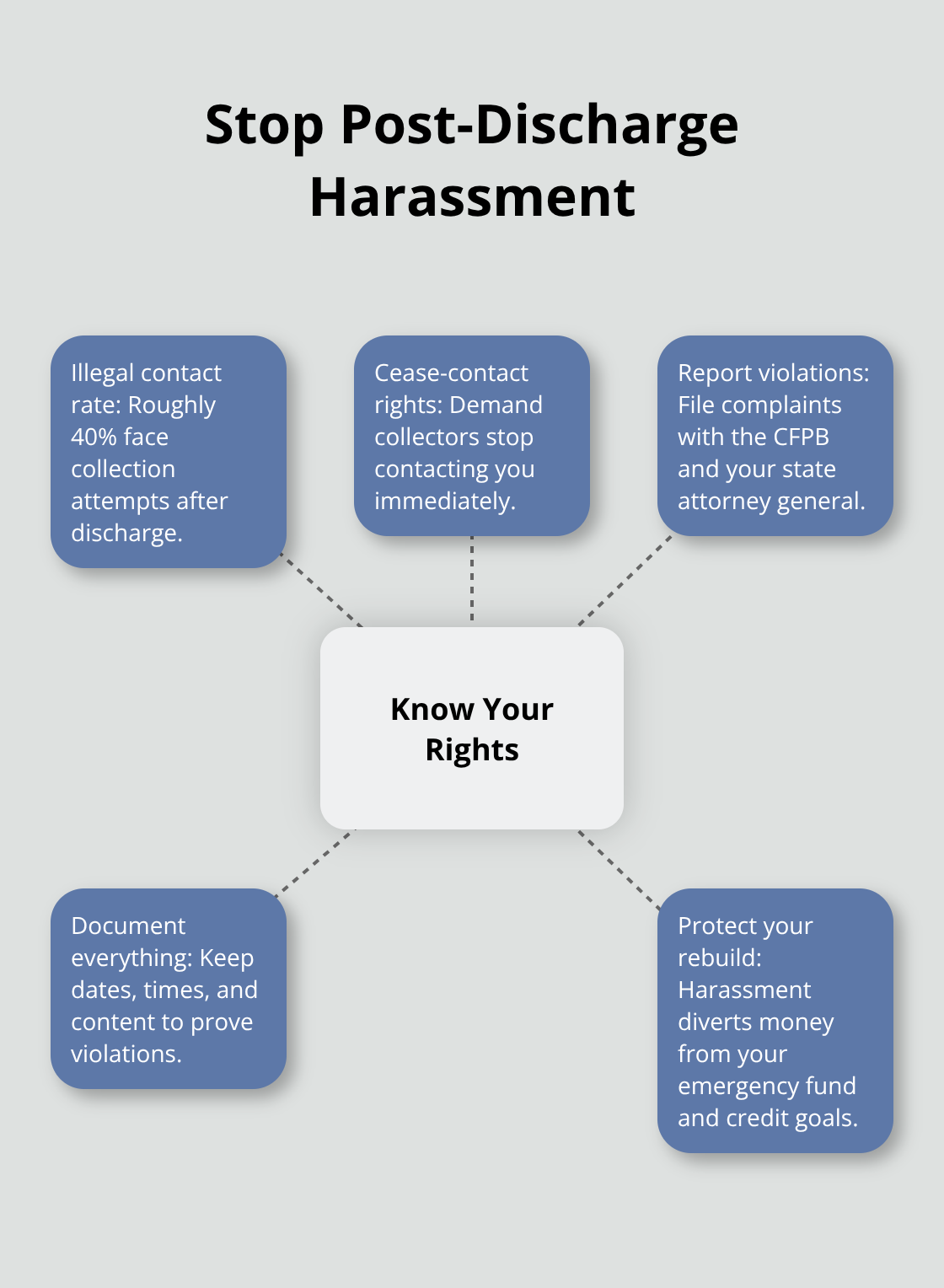
Many collection agencies exploit the confusion surrounding bankruptcy discharge to pressure people into paying debts they no longer owe legally, which undermines your fresh start and diverts money from your emergency fund and credit rebuilding efforts.
Access Nonprofit Credit Counseling Services
Nonprofit credit counseling through organizations like the National Foundation for Credit Counseling delivers measurable results that accelerate your recovery. The NFCC reports that participants following a structured debt management plan pay off remaining debts about 23 percent faster than those negotiating alone, and Memphis-based nonprofits like GMFEC have helped clients reduce debt by over 5 million dollars while improving credit scores by an average of 599 points. These counselors are free or low-cost, unlike predatory credit repair firms that charge upfront fees without delivering results. A counselor works with you to build a zero-based monthly budget, identify spending leaks, and create a realistic savings plan that avoids the payday loan trap entirely.
Build a Disciplined Financial Plan With Professional Guidance
Professional counselors teach you which creditors offer hardship programs if you face unexpected expenses during your rebuilding phase. They also help you structure your spending so that your emergency fund grows steadily without competing with your credit card payments. This combination of stopping illegal harassment and building a disciplined financial plan with professional oversight compresses your recovery timeline by 12 to 18 months compared with attempting to rebuild alone. The structured approach keeps you accountable and prevents the common mistakes that derail rebuilding efforts (missed payments, excessive new credit applications, high utilization rates).
Your Fresh Financial Start
Chapter 7 discharge eliminates qualifying debts and stops creditor harassment immediately, giving you breathing room that most people never experience after years of financial stress. The long-term benefit extends far beyond the initial relief: you regain control over your income and can direct money toward building wealth instead of servicing debt. Within three years of disciplined rebuilding, you’ll qualify for better credit terms, lower interest rates on car loans, and eventually mortgage approval.
A zero-based budget forms the foundation of your fresh start and prevents the spending patterns that led to your original financial crisis. Use budgeting tools like YNAB or EveryDollar to track expenses in real time and sync with your bank accounts, ensuring automated payments never miss and your emergency fund grows steadily. Your budget should allocate money in this order: essential expenses first, then automated debt payments, then emergency savings, then discretionary spending.
Professional legal guidance protects your rights when you face complex situations during your Chapter Seven rebuild credit recovery. If creditors continue contacting you about discharged debts, if you encounter wage garnishment threats, or if you’re unsure whether you qualify for Chapter 7, a bankruptcy attorney clarifies your options and safeguards your fresh start. Contact Harnage Law, PLLC for a free consultation to discuss your specific circumstances and create a clear path forward toward lasting financial stability.