Filing Chapter 7 in Florida offers a path to eliminate unsecured debts and start fresh. The process involves specific steps, paperwork requirements, and legal protections that vary by state.
We at Harnage Law, PLLC understand that bankruptcy can feel overwhelming. This guide walks you through each phase so you know exactly what to expect.
What Chapter 7 Bankruptcy Actually Does
Chapter 7 bankruptcy is a federal court process that eliminates unsecured debts you cannot pay. When you file, the court appoints a trustee to review your finances and liquidate non-exempt assets if necessary to pay creditors. The unsecured debts-credit cards, medical bills, personal loans, and similar obligations-get discharged, meaning you no longer owe them legally. The process typically takes three to six months from filing to discharge.
How the Automatic Stay Protects You
An automatic stay activates immediately upon filing, which stops wage garnishments, collection calls, lawsuits, and creditor harassment. This protection remains in place throughout your case, giving you breathing room to move forward. The stay is one of the most powerful tools in bankruptcy law, and it takes effect without any additional action on your part.
The Means Test Determines Your Eligibility
Not everyone qualifies for Chapter 7. The means test calculates whether your income is low enough to proceed with Chapter 7 rather than Chapter 13, which requires a repayment plan. You complete Form B122A-1, which reports your current monthly income from all sources-wages, self-employment, rental income, and benefits. The form uses Census Bureau data and IRS expense multipliers to determine whether you have disposable income available to pay creditors.
If your income falls below your state’s median income for your household size, you pass the means test automatically. If your income exceeds the median, the form calculates your disposable income using standardized expenses. High disposable income can disqualify you from Chapter 7 and force you into Chapter 13 instead. This calculation is mechanical and fact-based, not subjective.
Florida Exemptions Protect Your Property
Florida has opted out of federal bankruptcy exemptions, meaning state-specific protections apply to your case. Your home qualifies for homestead exemption protection, which is substantial in Florida. Motor vehicles receive up to a $1,000 exemption, and personal property gets a $1,000 exemption, or $4,000 if you claim no homestead.
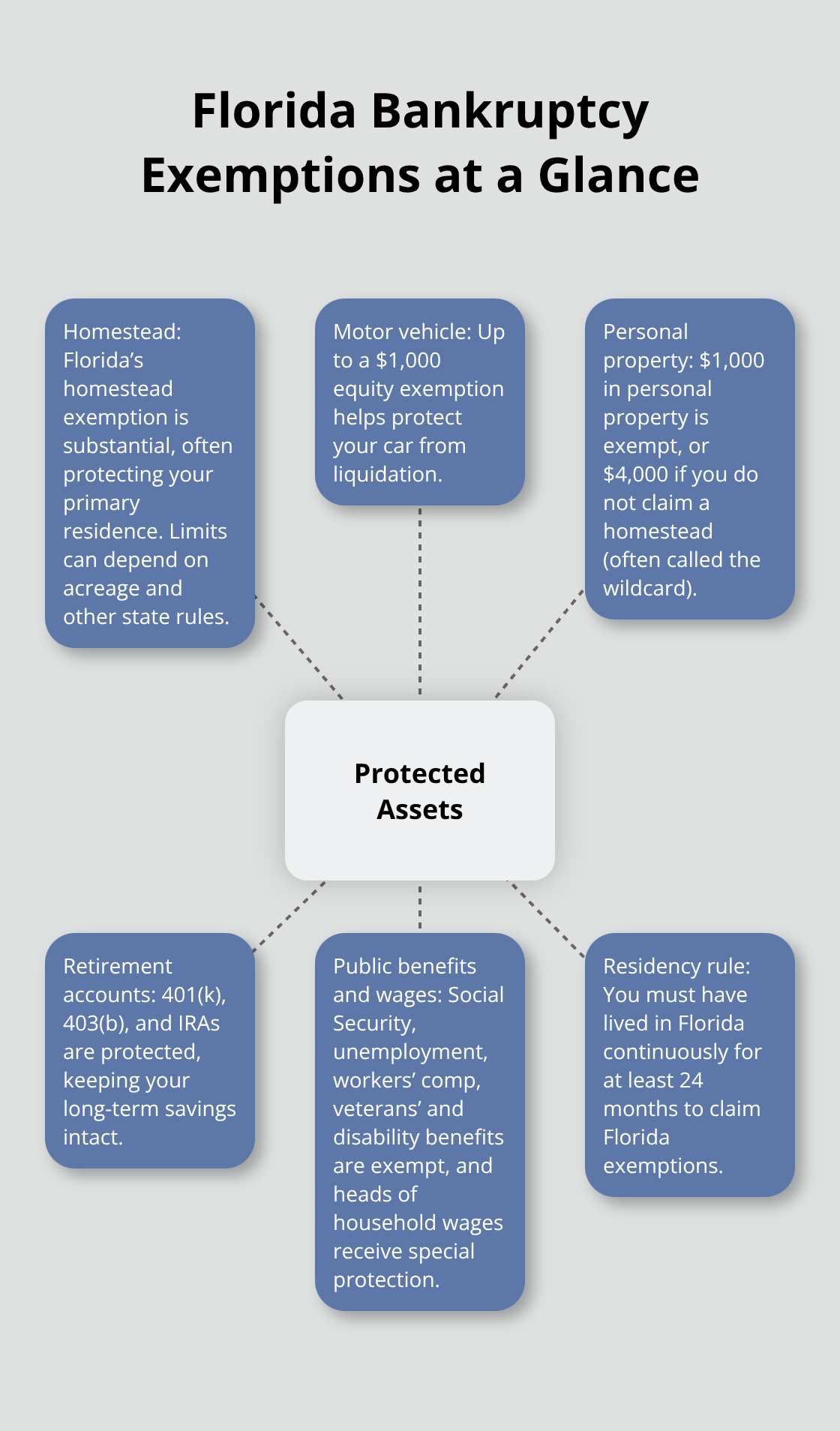
Retirement accounts including 401(k) plans, 403(b) plans, and IRAs are fully protected. Florida also exempts Social Security benefits, unemployment benefits, workers’ compensation, veterans’ benefits, disability benefits, and wages for heads of household. These exemptions mean the trustee cannot seize these assets to pay creditors. You must have lived in Florida continuously for at least 24 months before filing to claim Florida exemptions. If you meet this residency requirement, your protected assets remain yours after discharge.
What Happens Next in Your Case
Understanding these protections and eligibility rules sets the foundation for your filing. The next phase involves gathering the specific financial documents and information the court requires before you submit your petition.
Getting Your Documents and Finances Ready
Collect Your Financial Records
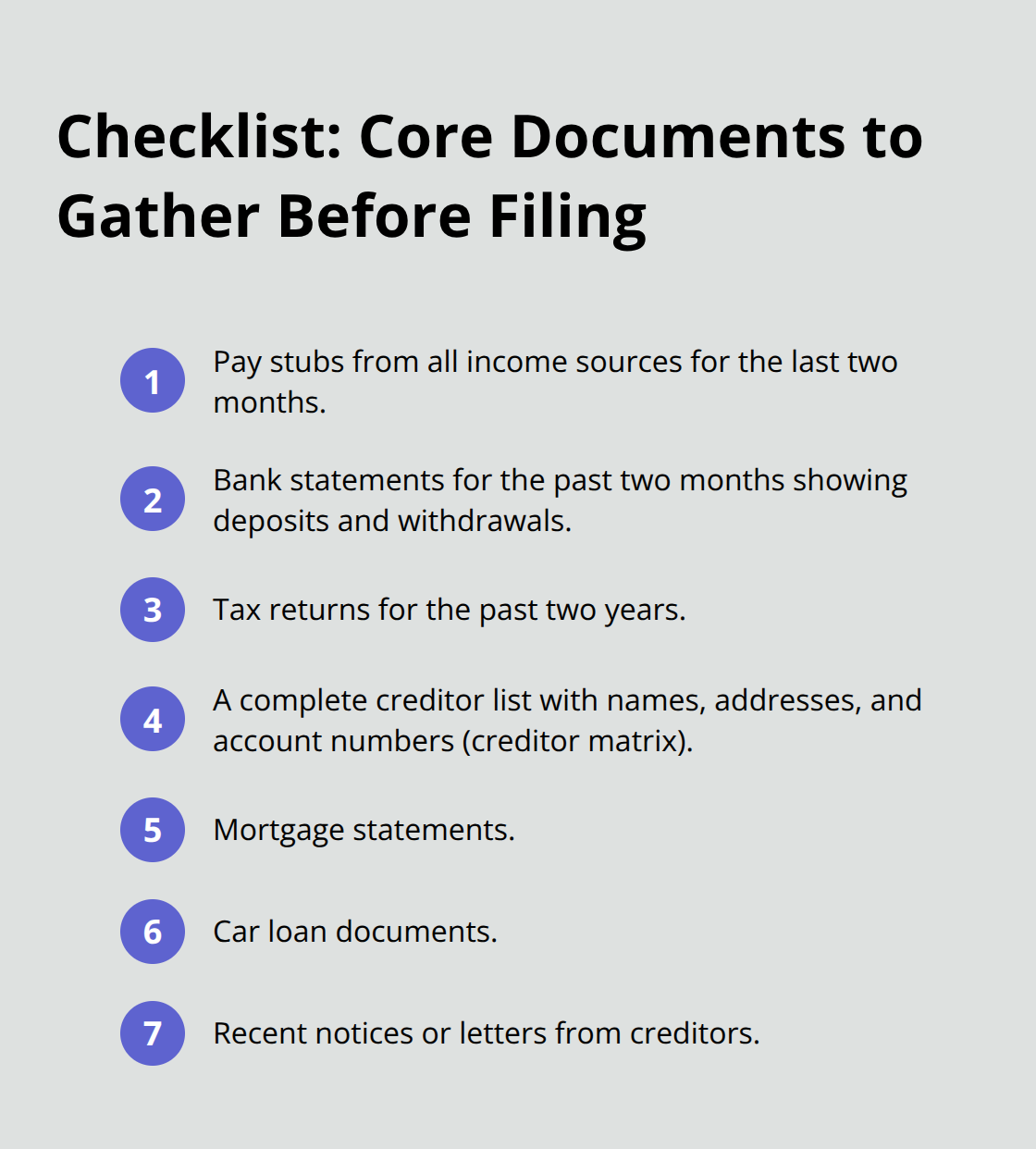
Gathering the right financial documents before filing Chapter 7 in Florida is non-negotiable. The bankruptcy court requires specific paperwork, and missing documents delay your case or force you to refile. Collect two months of recent pay stubs from all income sources, bank statements from the past two months showing deposits and withdrawals, and tax returns from the past two years. You’ll also need a list of all debts with creditor names, addresses, and account numbers-this becomes your creditor matrix filed with the court. Mortgage statements, car loan documents, and any notices from creditors belong in your pile as well.
Calculate Your Current Monthly Income
The court uses Form B122A-1 to calculate your current monthly income from wages, self-employment, rental income, Social Security, disability benefits, and any other recurring money you receive. This form pulls data from Census Bureau statistics and IRS expense multipliers to determine whether you qualify for Chapter 7. Gathering this documentation takes time, but it prevents delays once you file. The Northern District of Florida Bankruptcy Bar Association reports that incomplete filings are a leading cause of case complications, which is why thorough preparation matters.
Complete Your Credit Counseling Course
Before you can file your petition, federal law requires you to complete a credit counseling course from an approved agency listed on the U.S. Trustee’s website. This course typically takes one to two hours and covers budgeting, debt management alternatives, and financial planning. You receive a certificate upon completion, which you must file with your petition.
Understand Filing Fees and Payment Options
The filing fee for Chapter 7 in Florida is $338, due at the time you file. If you cannot afford this upfront, you can request to pay in installments using Local Form Application for Individuals to Pay the Filing Fee in Installments, with a minimum of half the fee due initially. A fee waiver is available through Official Bankruptcy Form 103B if your income falls below the federal poverty guidelines for your household size.
Work with a Bankruptcy Attorney
A bankruptcy attorney who understands Florida law and local court procedures prepares all required forms, ensures your exemptions are correctly claimed under Florida’s state-specific rules, and represents you at the meeting of creditors. Your attorney also advises whether Chapter 7 is truly the right option or if Chapter 13 might better serve your situation. This professional guidance typically costs between $1,000 and $2,500 depending on case complexity, though some attorneys offer payment plans. Once your documents are organized and your credit counseling certificate is in hand, you’re ready to move into the actual filing phase and submit your petition to the court.
What Happens When You Actually File Your Chapter 7 Petition in Florida
Submitting Your Petition and Triggering the Automatic Stay
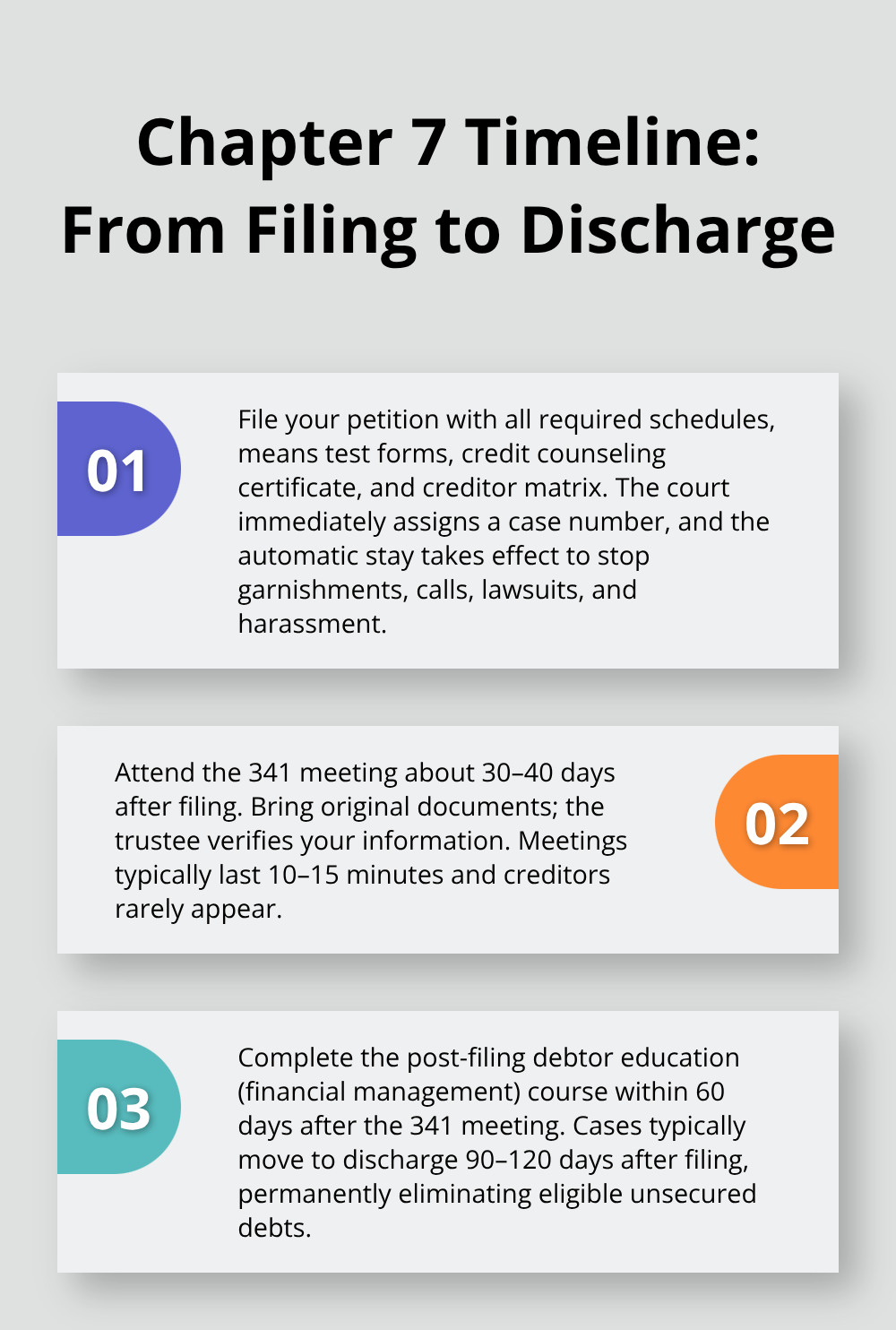
You submit your signed petition, all required schedules, the means test calculation, your credit counseling certificate, and the creditor matrix to the bankruptcy court. The filing fee of $338 is due at submission unless you’ve arranged installment payments or received a fee waiver. The court assigns a case number immediately, and this activates the automatic stay that stops wage garnishments, collection calls, lawsuits, and creditor harassment right away.
The trustee assigned to your case receives all your financial documents and starts reviewing them to determine whether you have non-exempt assets to liquidate. Most Chapter 7 cases in Florida involve no asset liquidation because debtors’ property falls within state exemptions, but the trustee must conduct this review regardless. Your attorney files all paperwork correctly and prevents missing documents, which stops delays that plague pro se filers. The Northern District of Florida Bankruptcy Bar Association reports that incomplete filings are a leading source of complications, so having an attorney handle submission details matters significantly.
Attending the Meeting of Creditors
Approximately 30 to 40 days after you file, you attend the meeting of creditors, officially called the 341 meeting. This is not a courtroom proceeding but a trustee-conducted examination where the trustee asks questions about your income, debts, assets, and financial situation. Your attorney attends with you and helps answer questions accurately. Bring original financial documents to this meeting because the trustee may request to verify information from your petition. Most meetings last 10 to 15 minutes, and creditors rarely attend.
Moving Toward Discharge After the Trustee Review
After the meeting, the trustee completes their asset review and issues a report. If no assets are available for liquidation, the case moves toward discharge. Before discharge occurs, you must complete a second credit counseling course focused on personal financial management, and you file a certification proving completion within 60 days after the 341 meeting date.
Receiving Your Discharge Order
The discharge hearing typically happens 90 to 120 days after you file, though actual timing varies. The judge reviews your case, and if all requirements are satisfied, issues a discharge order that permanently eliminates your unsecured debts. This discharge is permanent and cannot be reversed. Once the discharge order is entered, your case closes and creditors have no further legal right to collect on discharged debts.
Your Fresh Start After Filing Chapter 7 Florida
Your discharge order eliminates unsecured debts permanently, but your financial recovery continues long after the court closes your case. Your credit score will drop 130 to 200 points immediately after discharge, though this decline reverses within months as you demonstrate responsible credit behavior. Secured credit cards, which require a cash deposit, help you rebuild your credit history without excessive risk, and consistent on-time payments raise your score steadily toward the 650+ range within two years.
Monitoring your credit report matters significantly after discharge. Request your free annual report from all three bureaus at annualcreditreport.com and verify that discharged debts are marked correctly. Errors on your report slow your recovery, so dispute any inaccuracies immediately with the credit bureau.
Create a realistic monthly budget that prioritizes essential expenses first, then allocates remaining income toward savings and modest credit use. Avoid the spending patterns that created your original financial crisis, and build an emergency fund of one to three months of expenses to prevent future debt accumulation. If questions arise about your discharge or your post-bankruptcy financial strategy, contact us to discuss how we can help you protect your fresh start.