Creditors calling at all hours, threatening wage garnishment, and ignoring bankruptcy laws-this is the reality for thousands of Floridians drowning in debt. Chapter 7 creditor harassment doesn’t have to be your normal.
Filing for Chapter 7 bankruptcy activates an automatic stay that stops collection calls, lawsuits, and threats immediately. We at Harnage Law, PLLC help you enforce this protection and hold creditors accountable when they break the rules.
What Counts as Creditor Harassment Under Federal Law
Abusive Calls and Messages Violate Your Rights
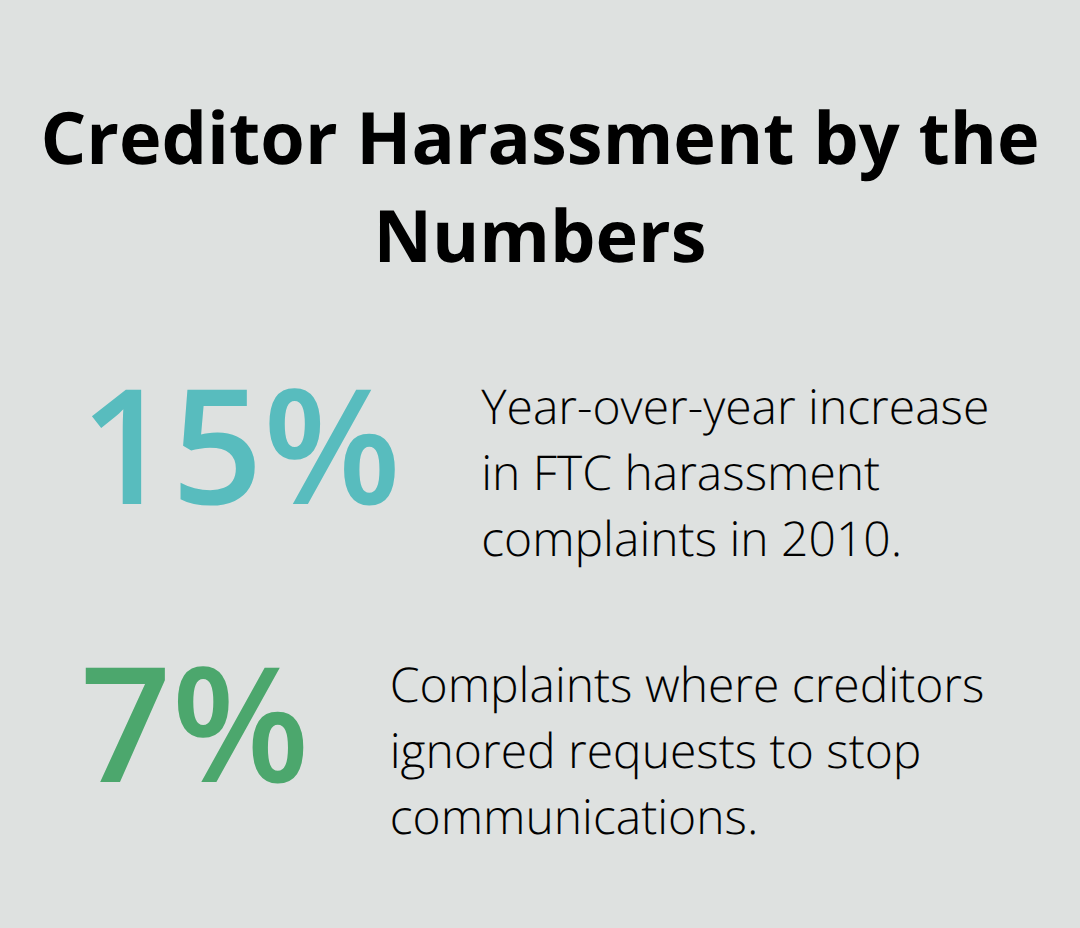
Creditors crossing the line happens constantly in Florida. The Federal Trade Commission received over 140,000 creditor harassment complaints in 2010 alone, with numbers climbing 15% from the previous year. Many violations go unreported because people don’t realize they have legal protections. Under the Fair Debt Collection Practices Act, debt collectors cannot call you before 8 a.m. or after 9 p.m. in your time zone, yet countless Floridians receive calls at midnight or 6 a.m.
They cannot call your workplace if you tell them your employer prohibits such contact, but collectors ignore this restriction regularly. They cannot use profane or abusive language, threaten wage garnishment without a court judgment, or contact family members to embarrass you into paying.
Misrepresentation and Deceptive Tactics
Misrepresenting the debt ranks among the most frequent violations the FTC documents. Collectors call about amounts you never owed or debts already discharged in bankruptcy. They simulate legal documents, impersonate government officials, or claim authority they don’t possess. These tactics pressure you into paying debts that may not even be valid. The Telephone Consumer Protection Act adds another layer of protection-when creditors continue calling after you revoke consent to contact your cell phone, that violation carries per-call damages of $500 to $1,500.
Florida Law Provides Stronger Protections
Florida’s Fair Consumer Collection Practices Act goes further than federal rules. State law prohibits collectors from calling with such frequency that it constitutes harassment, publishing your name as a deadbeat, or threatening arrest when no legal basis exists. The statute of limitations to sue under Florida law runs two years from the violation, while federal FDCPA claims must be filed within one year. Winning a case means collectors pay your actual damages for emotional distress or economic harm, plus statutory damages up to $1,000, court costs, and attorney fees. You can pursue these damages even if you still owe the debt.
Documentation Builds Your Case
Documentation matters enormously when you face ongoing harassment. Keep a dated log with call times, caller ID screenshots, and voicemail recordings-this builds a powerful case if you need to sue or file complaints with the Florida Attorney General’s Consumer Protection Division, the Federal Trade Commission, or the Consumer Financial Protection Bureau. These records demonstrate a pattern of violations and strengthen your position significantly. Once you understand what harassment looks like legally, the next critical step involves stopping it through Chapter 7 bankruptcy‘s automatic stay mechanism.
How Chapter 7 Bankruptcy Stops Creditor Harassment in Florida
The Automatic Stay Takes Effect Immediately
Filing Chapter 7 bankruptcy activates an automatic stay under 11 U.S.C. Section 362, which takes effect the moment your petition reaches the court. This federal court order immediately prohibits creditors from calling, sending collection letters, filing lawsuits, garnishing wages, levying bank accounts, or repossessing property. The automatic stay applies to original creditors like credit card companies and banks, not just third-party debt collectors.
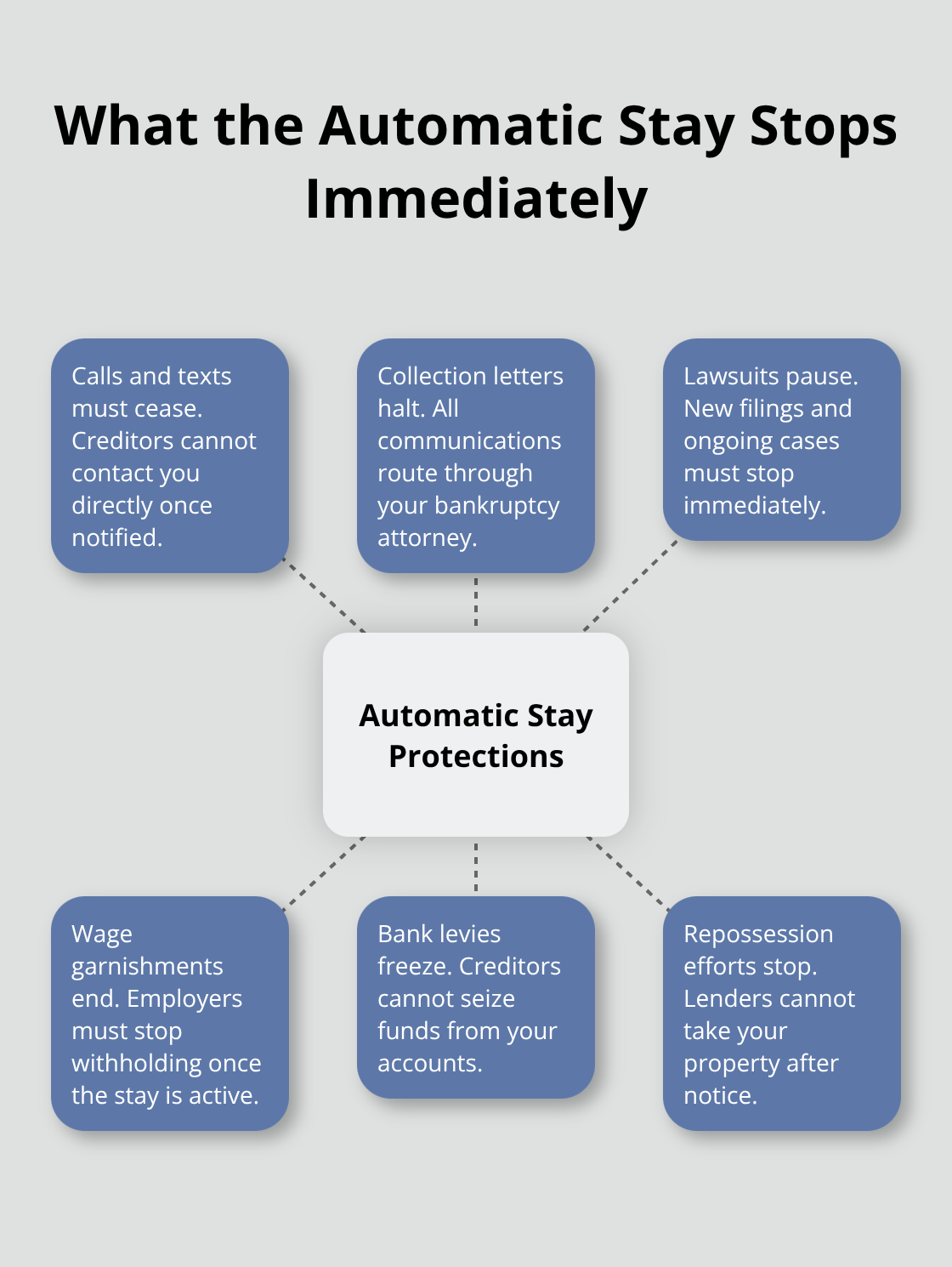
Once legitimate collectors receive notice of your filing, they must stop all contact with you directly and redirect all communication through your bankruptcy attorney.
Violations Carry Real Consequences
If a creditor keeps calling after receiving notice, that violation of the automatic stay can result in contempt sanctions, actual damages for the harassment you endured, attorney fees, and potentially punitive damages in egregious cases. The Federal Trade Commission documented that creditor harassment complaints exceeded 140,000 in 2010, climbing 15% year-over-year, yet most people don’t realize the automatic stay provides immediate relief from this pressure. When a creditor violates the stay, record the date, time, caller ID, and content of their contact. This evidence becomes the foundation for sanctions that can put money directly in your pocket while also sending a message that violations have real consequences.
Understanding the Stay’s Scope and Exceptions
The automatic stay’s scope is remarkably comprehensive but does have narrow exceptions. Certain tax proceedings, criminal matters, and family support obligations can proceed despite the stay, but these rarely apply to typical consumer debt situations. Child support and alimony collection continues, as does enforcement of recent tax liens, but credit card companies, medical debt collectors, and personal loan creditors cannot touch you once the stay activates. Creditors sometimes test the boundaries by claiming they didn’t receive notice or by arguing their collection isn’t covered, but these arguments fail repeatedly in court.
The key to enforcing your rights rests on immediate documentation. When you file Chapter 7, your petition stops the harassment machine that has controlled your life. What happens next requires understanding how to handle creditors who refuse to comply with the law-and what steps you take when violations occur.
How to Stop Creditor Harassment Through Chapter 7 Filing
The Automatic Stay Activates Upon Filing
Chapter 7 bankruptcy in Florida requires submitting a petition that triggers the automatic stay immediately upon filing, not upon court approval. The moment your attorney submits your case, the stay becomes active and creditors must stop calling. The filing process involves completing detailed financial documents including schedules of assets, liabilities, income, and expenses. The Consumer Financial Protection Bureau enforces compliance with these filing requirements, ensuring your petition meets federal standards. Once filed, you receive a case number and your attorney notifies all creditors listed in your petition. Creditors typically receive this notice within days, and legitimate collectors stop contacting you immediately upon receipt.
Documentation Protects Your Rights After Filing
If a creditor continues calling after receiving notice, that violation creates a documented pattern you can use against them. Keep records of every post-filing contact with dates, times, and caller information because these violations often result in settlements in your favor before trial. Photograph caller ID screens with timestamps, save voicemails, and record the dates and times of each contact attempt. If a creditor calls multiple times daily after your filing, that pattern strengthens your case considerably.
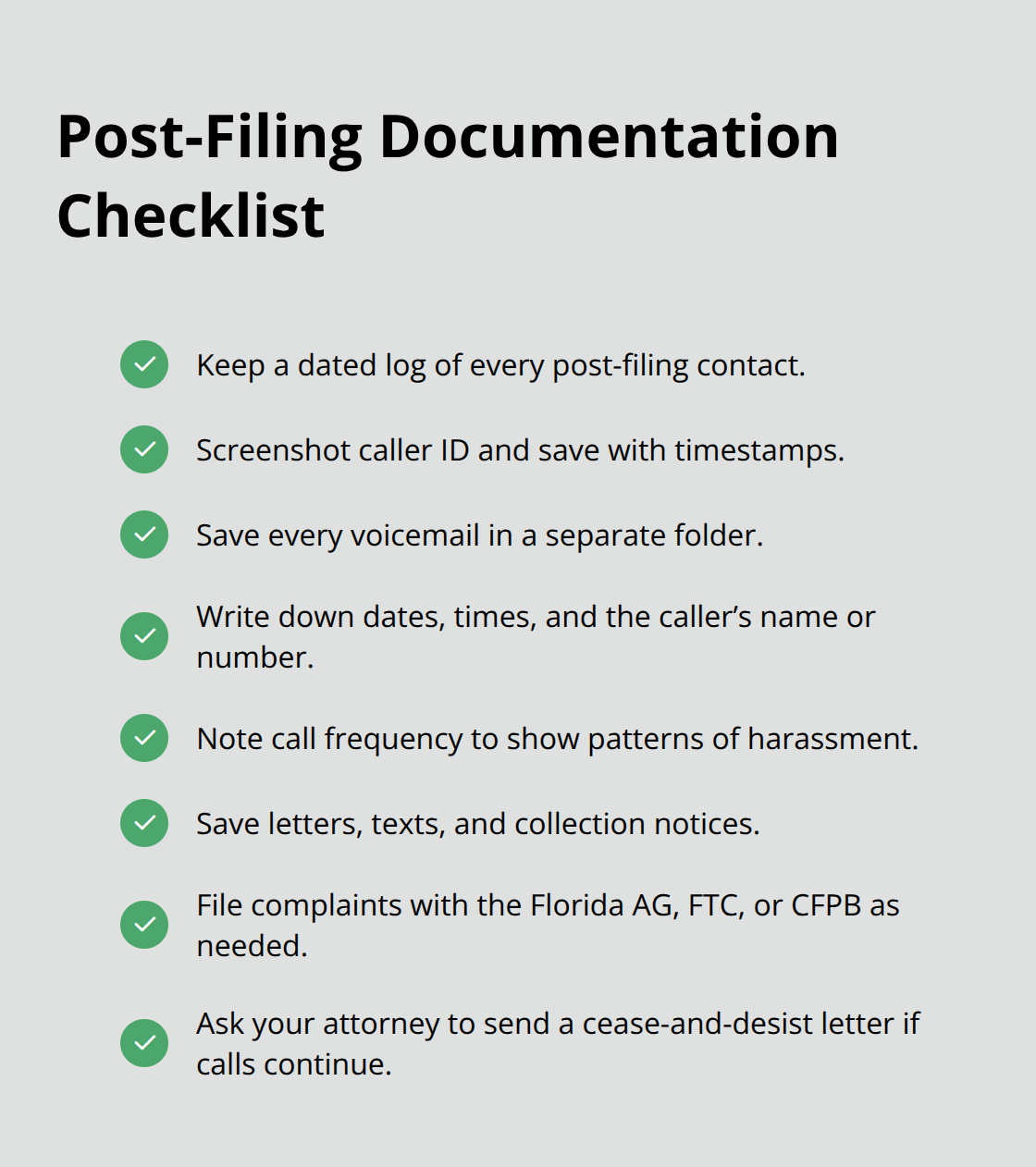
This documentation becomes critical evidence if you need to pursue enforcement action.
Enforcing Violations Through Legal Action
When creditors ignore the automatic stay, your next action involves sending them a formal cease-and-desist letter from your bankruptcy attorney demanding they stop all contact immediately. If violations continue after this letter, your attorney can file a motion for sanctions against the creditor in bankruptcy court. The Federal Trade Commission reported that about 7% of all complaints involve creditors ignoring requests to stop communications, yet this percentage jumps significantly after bankruptcy filing when creditors should know better. Violations of the automatic stay can result in actual damages for emotional distress, statutory damages up to $1,000 per violation, and recovery of your attorney fees. Florida courts take automatic stay violations seriously because the stay represents the debtor’s fundamental right to a fresh start.
Why Creditors Test the Boundaries
Creditors sometimes test the boundaries by claiming they didn’t receive notice or by arguing their collection isn’t covered, but these arguments fail repeatedly in court. The automatic stay’s scope is remarkably comprehensive (certain tax proceedings, criminal matters, and family support obligations can proceed despite the stay, but these rarely apply to typical consumer debt situations). Child support and alimony collection continues, as does enforcement of recent tax liens, but credit card companies, medical debt collectors, and personal loan creditors cannot touch you once the stay activates. Understanding these exceptions helps you recognize when a creditor’s claim of exemption holds water and when it doesn’t.
Final Thoughts
Chapter 7 creditor harassment stops the moment you file for bankruptcy. The automatic stay eliminates the constant calls, threatening letters, and collection pressure that have dominated your life, and this protection carries real legal force behind it. Creditors who ignore the stay face sanctions, damages, and attorney fees that put money back in your pocket.
We at Harnage Law, PLLC help you navigate this process from start to finish. We handle the paperwork, represent you in court, and hold creditors accountable when they violate the automatic stay so you can focus on rebuilding your financial life. Contact Harnage Law, PLLC today to discuss whether Chapter 7 fits your situation and take back control from your creditors.