Filing for Chapter 7 bankruptcy in Florida is overwhelming, and finding the right help shouldn’t add to that stress. We at Harnage Law, PLLC understand that Chapter 7 resources in Florida are scattered across courts, nonprofits, and law firms.
This guide walks you through exactly where to find reliable support, what to expect when working with a bankruptcy professional, and the concrete steps to move forward.
Finding the Right Chapter 7 Bankruptcy Attorney in Florida
Local Bar Associations and Referral Services
The Florida Bar’s lawyer referral service provides one of the most direct routes to finding a qualified attorney. Local county bar associations throughout Florida maintain referral lists filtered by practice area, and many allow you to search by location and specific bankruptcy experience. However, a bar referral alone doesn’t tell you whether an attorney has handled dozens of Chapter 7 cases or just a handful. When you contact candidates, ask directly how many Chapter 7 cases they’ve closed in the past two years and request references from recent clients. This matters because bankruptcy law has specific procedural requirements, filing deadlines, and creditor management tactics that differ significantly from general practice.
Online Directories and Transparent Fee Structures
Online directories and law firm websites offer transparency that phone calls cannot. Sites like Avvo, Justia, and Google Business profiles display client reviews, case outcomes, and attorney backgrounds with ratings visible to the public. Focus on recent reviews rather than older ones, since bankruptcy law and local court procedures evolve.
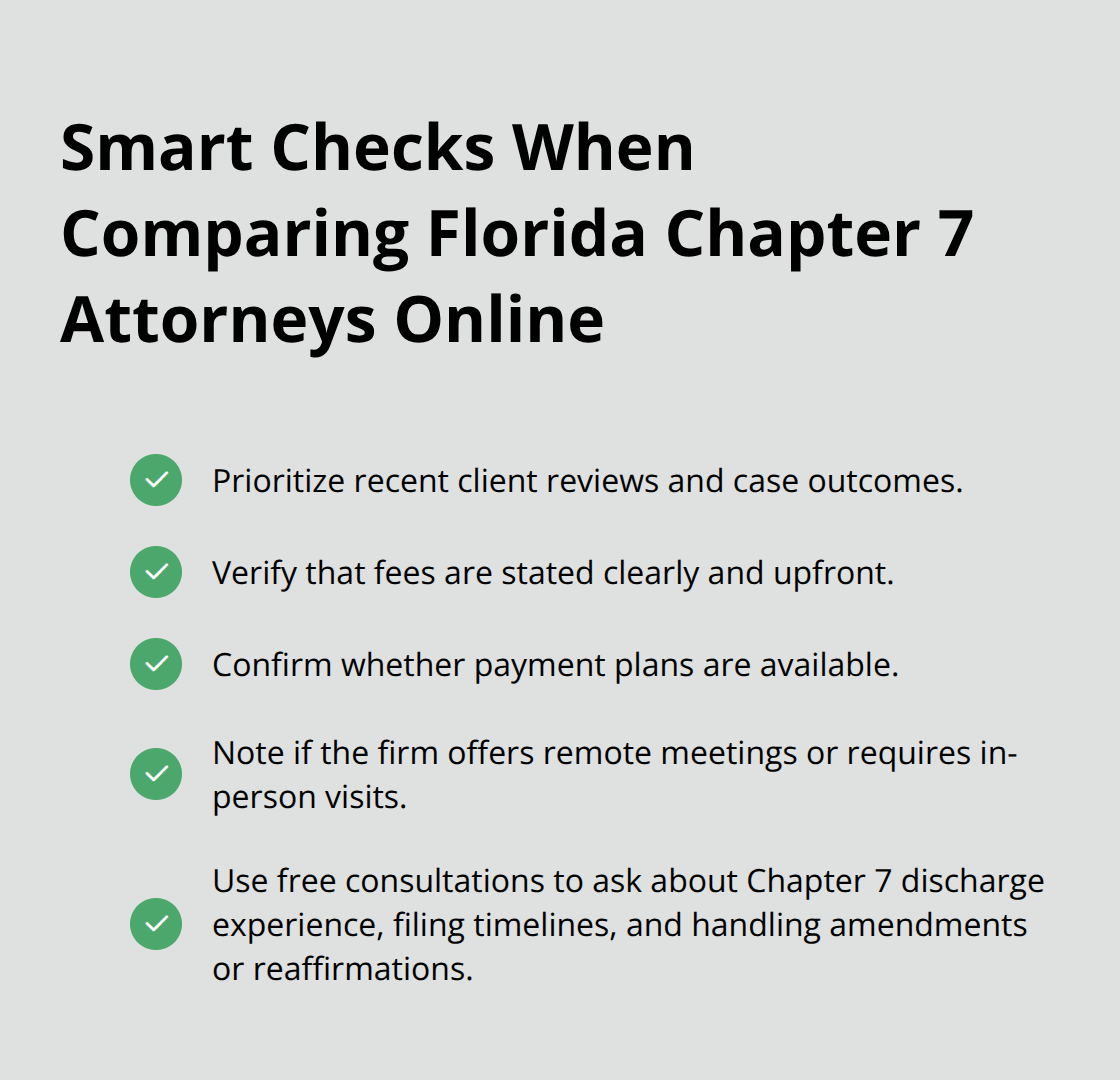
Look for firms that clearly state their fee structure upfront, whether they offer payment plans, and if they handle cases remotely or require in-person meetings. Many Florida firms advertise free initial consultations, which you should use to ask about their experience with Chapter 7 discharge cases, their timeline for filing after your first meeting, and whether they’ll handle amendments or reaffirmation agreements if needed.
Getting Recommendations from Financial Professionals
Recommendations from financial advisors, credit counselors, or even friends who’ve filed Chapter 7 carry weight because they come from people who’ve observed the attorney’s work firsthand. Credit counseling agencies approved by the U.S. Trustee often work alongside bankruptcy attorneys and can point you toward firms with solid track records. These professionals see how attorneys communicate with clients, meet deadlines, and handle complications that arise during the bankruptcy process. When you speak with a potential attorney, ask about their relationships with credit counseling providers and whether they’ve worked with the trustee assigned to your case division (Tampa, Orlando, Jacksonville, or another Florida location).
Government Resources and Free Help for Florida Bankruptcy Filers
Court Resources and Filing Information
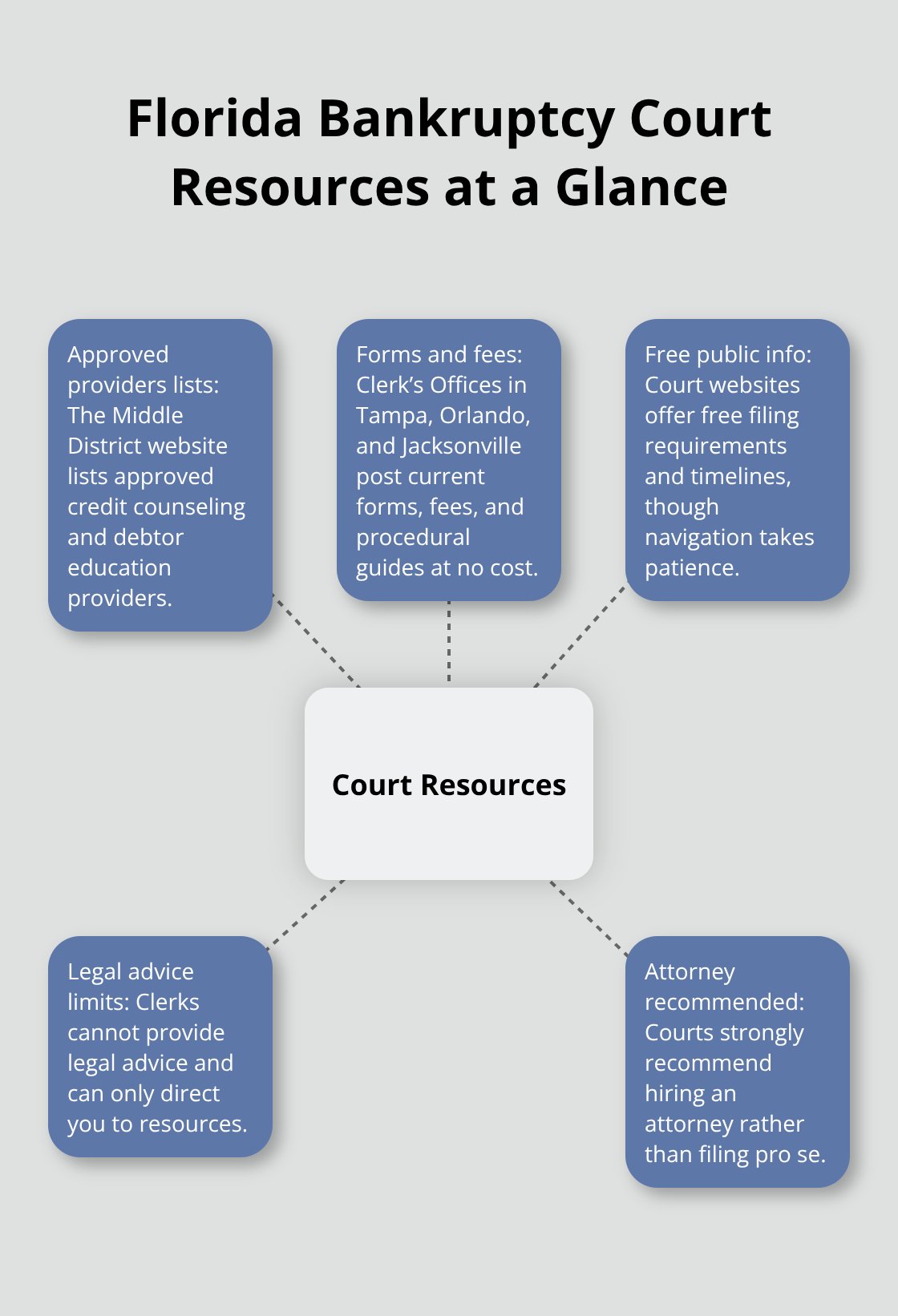
Florida courts provide accessible bankruptcy information through the Middle District of Florida’s official website, which hosts approved credit counseling providers, debtor education course providers, and detailed filing requirements specific to your county division. The Clerk’s Office in Tampa, Orlando, and Jacksonville maintains current forms, fee structures, and procedural guidelines at no cost. Navigating court websites requires patience since bankruptcy procedures involve multiple forms and deadlines, but this information remains free and publicly available. The court strongly recommends hiring an attorney rather than filing pro se, though if you proceed without one, the Clerk’s Office staff cannot provide legal advice-they can only direct you to resources.
Free Legal Assistance Through Volunteer Programs
The P.L.A.N. program (Pause for Legal Assistance Now) operates through the Northern District of Florida and connects you with volunteer attorneys who answer bankruptcy questions at no cost. Call 866-944-6421 to speak with a volunteer who addresses administrative and general legal help. This service does not create an attorney-client relationship and does not substitute for detailed legal representation, but it removes the guesswork from understanding basic filing requirements and timelines.
Legal aid organizations throughout Florida provide free or reduced-rate Chapter 7 representation to qualifying individuals. The Pro Bono Initiative connects eligible filers with volunteer attorneys who handle cases at no charge. The Reaffirmation Assistance Program pairs volunteer lawyers with debtors facing reaffirmation hearings, offering specialized help on whether to reaffirm debts after discharge.
Credit Counseling and Approved Providers
Credit counseling agencies approved by the U.S. Trustee are mandatory before filing and cost between $50 and $150 depending on the provider. These same agencies often recommend bankruptcy attorneys they’ve worked with successfully, providing a vetted referral source. The U.S. Trustee maintains searchable lists of all approved credit counseling and debtor education providers in Florida, ensuring you complete required courses from legitimate sources and receive certificates the court recognizes for discharge purposes.
Once you’ve identified potential resources and gathered information about your options, the next step involves understanding what actually happens when you work with a bankruptcy professional.
What to Expect When Working with a Chapter 7 Bankruptcy Professional in Florida
Initial Consultation and Case Evaluation
Your first meeting with a bankruptcy attorney sets the tone for your entire case. The attorney will ask detailed questions about your income, debts, assets, and recent financial transactions. Bring documentation including tax returns from the past two years, recent pay stubs, bank statements, credit card statements, and a list of all debts with creditor names and amounts owed. The attorney will run your income against the means test, which uses Census and IRS data to determine whether you qualify for Chapter 7 or must pursue Chapter 13 instead.
This conversation should clarify the attorney’s fee structure upfront-whether they charge a flat rate or hourly fees and if payment plans are available. Many Florida firms charge between $1,000 and $2,500 for straightforward Chapter 7 cases, though complex situations involving reaffirmation agreements or asset complications cost more. The attorney will explain that you must complete a credit counseling course from an approved U.S. Trustee provider before filing and a separate debtor education course after filing to obtain your discharge. Ask specifically about their timeline for filing after your consultation, since delays between initial meetings and actual filing can affect your case if creditors accelerate collection actions during that period.
Filing Requirements and Documentation
After you hire an attorney, your role shifts to gathering documents and responding to requests quickly. The attorney will prepare your bankruptcy petition, which includes your Voluntary Petition, Schedules A through H, Statement of Financial Affairs, and Statement of Intention for secured debts. You must redact personal identifying information from all filings except Form B 121, which the Clerk retains privately.
Within 10 business days after filing, the court issues a Notice of Chapter 7 Case that includes your 341 Meeting date with the assigned trustee. Bring your photo ID and proof of your Social Security Number to this meeting, and prepare for the trustee to ask questions about your finances under oath. The trustee may request your most recent federal tax return within seven days before the meeting.
Timeline and What Happens After Discharge
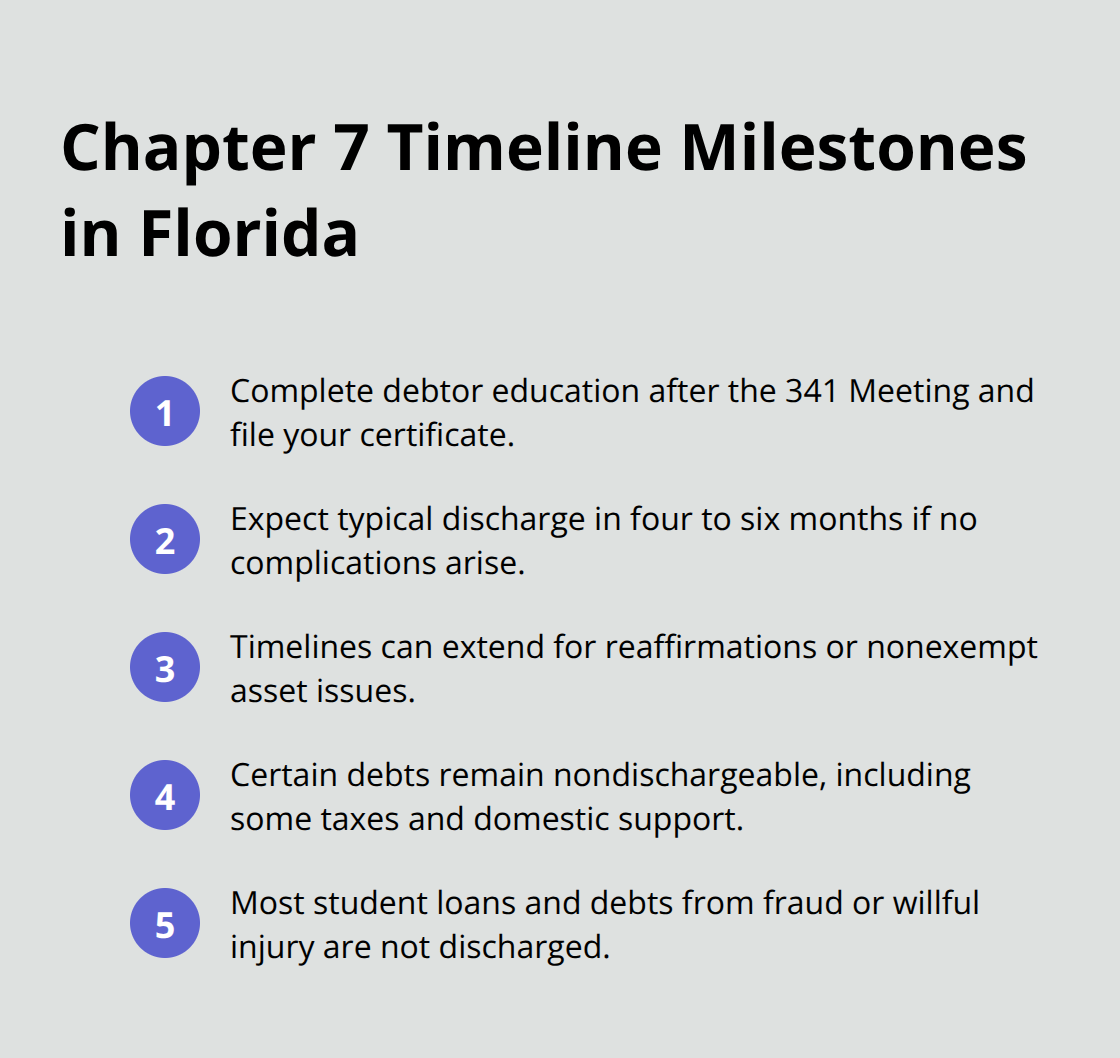
After the 341 Meeting concludes, you must complete your debtor education course and file the Certificate of Completion with the court to avoid discharge delays or denial. Most cases proceed to discharge within four to six months if no complications arise (though the timeline extends if you choose to reaffirm certain debts or if the trustee discovers nonexempt assets to liquidate). The discharge releases you from most debts, but several categories remain nondischargeable, including certain taxes, domestic support obligations, most student loans, and debts arising from fraud or willful injury.
Final Thoughts
Florida offers multiple pathways to Chapter 7 bankruptcy help, from court resources and nonprofit legal assistance to private attorneys with proven track records. The P.L.A.N. program, legal aid organizations, and the Pro Bono Initiative provide free or reduced-cost guidance for those who qualify. Credit counseling agencies approved by the U.S. Trustee serve as both mandatory prerequisites and reliable referral sources for Chapter 7 resources in Florida.
Working with a bankruptcy professional transforms your case from a confusing pile of paperwork into a structured plan with clear deadlines and predictable outcomes. An attorney handles means test calculations, ensures your petition meets court requirements, prepares you for the 341 Meeting, and manages creditor communications. They explain which debts discharge and which remain, whether reaffirmation makes sense for your situation, and what happens after discharge.
If you’re considering Chapter 7 bankruptcy in Florida, start by gathering your financial documents and contacting a local attorney for a free initial consultation. Call the P.L.A.N. hotline at 866-944-6421 if you need general information before committing to representation, or contact us at Harnage Law, PLLC to discuss your situation and explore whether Chapter 7 discharge cases offer the fresh financial start you need.