
The Chapter 7 bankruptcy meeting of creditors is one of the most important steps in your bankruptcy case. Many people feel anxious about this meeting because they don’t know what to expect.
We at Harnage Law, PLLC want to walk you through exactly what happens, who you’ll meet, and how to prepare so you can face this meeting with confidence.
What Happens at Your Meeting of Creditors in Florida
The Chapter 7 meeting of creditors occurs 21 to 40 days after you file your bankruptcy petition. The U.S. Trustee Program sets this timeline, and you will receive official notice in the mail showing your exact date, time, and location. Most meetings are scheduled in batches, meaning the trustee will see 8 to 10 debtors in the same hour block. Your actual questioning typically lasts only five minutes, though the full call may run 30 to 45 minutes depending on how many cases are scheduled. This compressed timeline means the trustee will focus on the most critical issues in your filing, not minor details. The meeting is not held in a courtroom and no judge presides over it.
Where Your Meeting Takes Place
Many courts now conduct these meetings virtually via Zoom rather than in person. The notice you receive will specify whether your meeting is in-person or virtual and provide exact instructions for attendance. If your meeting is in-person, you must bring two forms of identification: a government-issued photo ID and a document proving your Social Security number, such as your Social Security card or tax return. Virtual meetings follow similar identity verification procedures but conducted through your court’s specific platform. The U.S. Trustee Program offers resources on their website explaining how to join Zoom meetings and what to expect during virtual attendance. Some courts may require you to upload your ID documents in advance, so read your notice carefully for any special requirements your court has established.
Documents the Trustee Will Request Before Your Meeting
The trustee requires specific financial documents at least 14 days before your meeting. You must provide your most recent federal tax return or a transcript from the IRS, filed at least seven days before the meeting. Additionally, bring recent pay stubs showing your current income, bank statements for all checking, savings, and investment accounts covering the period around your filing date, and documentation of any monthly expenses you claimed on your bankruptcy forms. The U.S. Trustee Program specifies that if you claimed expenses under certain income provisions, you need receipts or written statements supporting those claims. If you cannot locate a document, provide a written statement explaining that it does not exist or is not in your possession. Many trustees now accept documents through secure email or online portals rather than requiring copies in person, so contact the trustee’s office listed on your notice to confirm their preferred method.
What the Trustee Will Focus On
The trustee will examine your bankruptcy petition and schedules with specific questions in mind. You will answer questions about your assets, income, and expenses under oath. The trustee may ask whether you listed all property you own, whether you have moved since filing, and whether anyone owes you money. These questions aim to verify that your filing is accurate and complete. The trustee will also ask about any transfers or gifts you made in the past four years, particularly those valued at $1,000 or more. Your honest answers during this examination form the foundation for your case moving forward.
The Role of the Trustee and Creditors in Your Florida Chapter 7 Meeting
Understanding the Trustee’s Position and Motivation
The Chapter 7 trustee is a private individual appointed by the U.S. Trustee Program to oversee your case, not a judge or government employee working in your favor. This distinction matters because the trustee’s job is to locate and liquidate non-exempt assets to pay creditors and the government, not to help you.
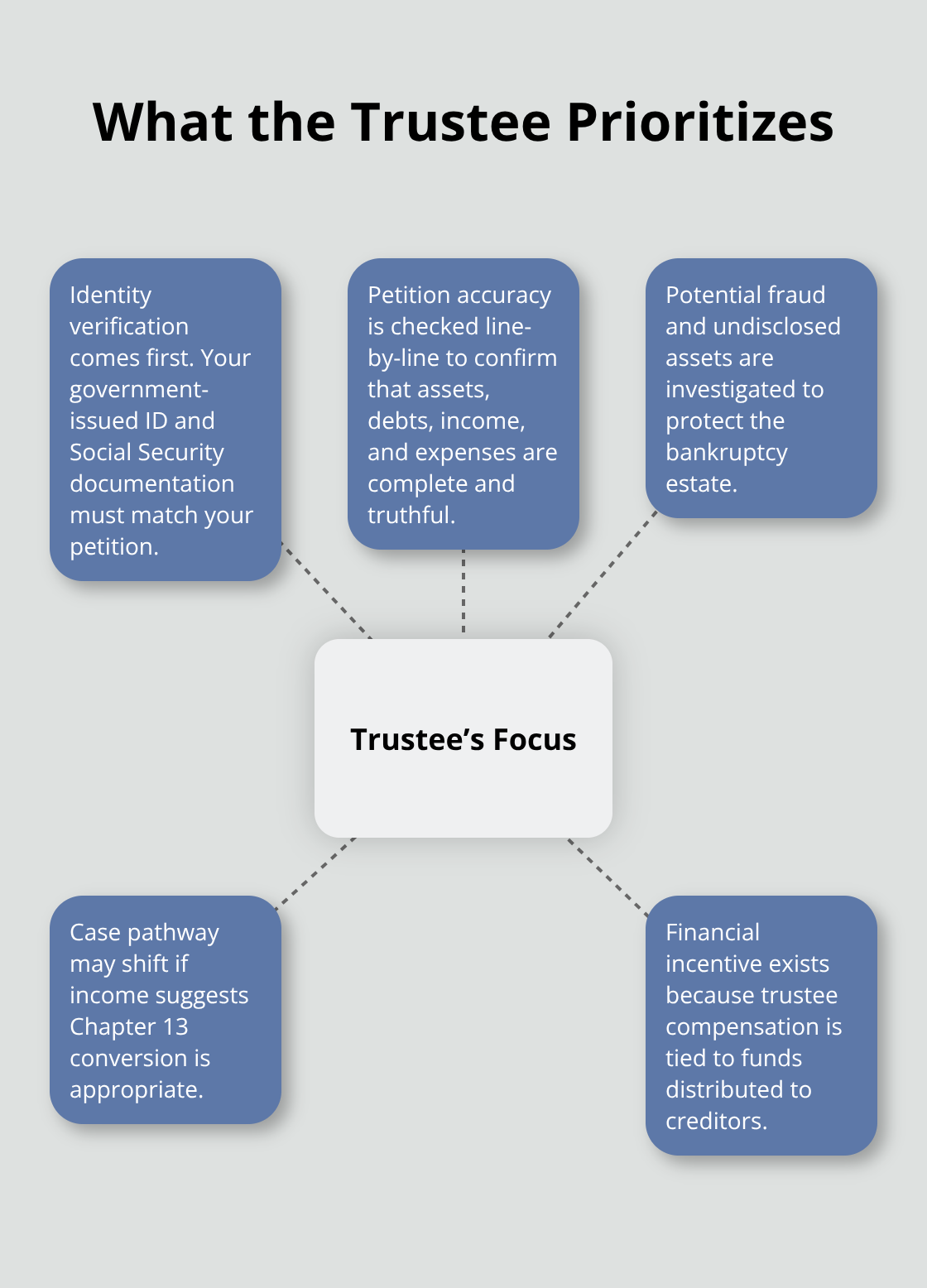
According to the U.S. Trustee Program, the trustee will focus on verifying your identity, reviewing your petition for accuracy, investigating potential fraud, and deciding whether to convert your case to Chapter 13 if your income qualifies. The trustee receives a percentage of distributed funds as compensation, which means they have financial incentive to find assets.
Your five-minute examination will center on questions derived directly from your bankruptcy schedules, so incomplete or inaccurate filings create problems. The trustee does not care about your personal circumstances or reasons for filing; they care only about whether your petition is accurate and whether assets exist for distribution.
Questions the Trustee Will Ask You
The trustee typically asks whether you reviewed the bankruptcy information sheet provided at filing, whether you have moved since filing, and whether all information on your schedules is truthful and correct. They will ask specifically whether you listed all assets, all debts, and whether anyone owes you money. Questions about credit card use, purchases or leases in the past 12 months, and transfers of property valued at $1,000 or more to family members within four years are standard.
Your answers must be brief and direct; long explanations or evasive responses complicate your case and signal dishonesty to the trustee. The trustee will verify your identity and examine your petition with specific questions in mind. You will answer questions about your assets, income, and expenses under oath.
How Creditors Participate (or Don’t)
Creditors rarely attend the meeting of creditors despite having the right to do so. The U.S. Trustee Program reports that most creditors do not show up because they have little financial incentive to question you. When creditors do attend, they are typically ex-spouses, former business partners, or secured creditors with collateral at stake. If a creditor appears and questions you, their questions are time-limited to about ten minutes total, and your testimony is recorded for use in future disputes. The trustee will not allow creditors to derail the meeting or ask irrelevant questions.
Common Issues the Trustee Raises
The trustee raises several issues during the examination. Discrepancies between your petition and your schedules, omissions of property or debts, unexplained transfers of money or assets, and changes in your living situation since filing all trigger scrutiny. If the trustee finds omissions, you can arrange amendments before the meeting concludes. Honesty and transparency are non-negotiable because misstatements can result in case dismissal or denial of discharge.
Understanding what the trustee expects from you sets the stage for your actual meeting preparation, which requires gathering specific documents and anticipating the exact questions you will face.
How to Prepare Your Documents and Answers for Your Florida Chapter 7 Meeting
Preparation separates those who breeze through the 341 meeting from those who face complications and delays. Start organizing your financial documents at least two weeks before your scheduled meeting. The trustee will have reviewed your tax returns, pay stubs, and bank statements before you arrive, so they will notice gaps or inconsistencies immediately.
Gather Your Financial Records
Pull your most recent federal tax return filed at least seven days before the meeting, along with your last two months of pay stubs showing your gross income and any deductions. The U.S. Trustee Program guidance specifies that the trustee examines these documents to verify that your income figures match what you listed on your bankruptcy schedules. If you are self-employed or receive irregular income, collect documentation for the past three to six months to show your average monthly earnings. For bank statements, collect copies of all checking, savings, and investment accounts for the month you filed and the two months prior. The trustee will ask whether you moved money between accounts or made large deposits, so prepare to explain any transactions over $500. If you claimed specific monthly expenses on your bankruptcy forms for items like childcare, education, or utilities, bring receipts or bills documenting those expenses. The U.S. Trustee Program requires written statements if documentation is unavailable, so a simple letter explaining that you no longer have receipts is acceptable if true.
Review Your Bankruptcy Schedules Thoroughly
The trustee’s questions follow a predictable pattern because they derive directly from your bankruptcy schedules, which means your best defense is reviewing those schedules thoroughly before the meeting. Read every line of your petition and schedules aloud to yourself, correcting any errors you discover. The trustee will ask whether you listed all assets, all debts, and whether anyone owes you money, so verify these sections with particular care. Prepare brief, one-sentence answers to common questions rather than lengthy explanations that signal evasiveness. When asked why you filed for bankruptcy, answer honestly with a single reason such as job loss, medical bills, or reduced income.
Prepare Specific Answers to Trustee Questions
If the trustee asks about transfers of money or property to family members in the past four years, have specific dollar amounts and dates ready rather than vague estimates. The U.S. Trustee Program reports that trustees ask about credit card use post-filing because some debtors attempt to run up charges before discharge, so if you have used credit since filing, explain the circumstances directly. Answer every question truthfully even if the answer seems unfavorable to your case, because the trustee will verify your statements through financial records and misrepresentations lead to dismissal or denial of discharge.
Bring Required Identification and Plan Your Virtual Setup
Bring your government-issued photo ID and a document proving your Social Security number such as a tax return or your Social Security card itself. If attending virtually, follow your court’s specific procedures for identity verification, which your notice will detail. Virtual meetings require a private location with reliable internet and no background distractions, so plan to attend from a quiet room where creditors cannot overhear your testimony.
Final Thoughts
The Chapter 7 bankruptcy meeting of creditors tests your preparation and honesty, not your ability to perform under pressure. After your five-minute examination concludes, you must complete a financial management course within 60 days through an approved agency listed by the U.S. Trustee Program. Once you file the required form with the court, you move toward discharge of your qualifying debts while the trustee liquidates non-exempt assets and distributes funds to creditors.
Your path forward depends on following deadlines, maintaining transparency throughout the process, and understanding that discharge brings genuine relief from unsecured debts. We at Harnage Law, PLLC help individuals and families navigate Chapter 7 bankruptcy by providing personalized legal guidance through every step, from initial filing through discharge. Our firm focuses on stopping creditor harassment, preventing wage garnishments, and halting lawsuits so you can move toward financial stability.
If you have questions about your specific situation or need representation during your bankruptcy case, contact Harnage Law, PLLC to discuss how we can assist you in achieving a fresh financial start.