Drowning in debt with creditors calling constantly? Chapter 7 bankruptcy might be the fresh start you need. We at Harnage Law, PLLC help Florida residents understand why filing for Chapter 7 bankruptcy could eliminate your unsecured debts and stop collection efforts.
This guide walks you through how Chapter 7 works, what assets you keep, and how to rebuild your financial life afterward.
When Chapter 7 Makes Financial Sense
Overwhelming Unsecured Debt
Unsecured debt spirals quickly when minimum payments barely cover interest. Credit cards, medical bills, and personal loans grow faster than your income increases, especially after a job loss or unexpected medical event. If you owe more than $10,000 in unsecured debt and your monthly income cannot realistically cover even minimum payments over the next few years, Chapter 7 becomes a practical option rather than a theoretical one.
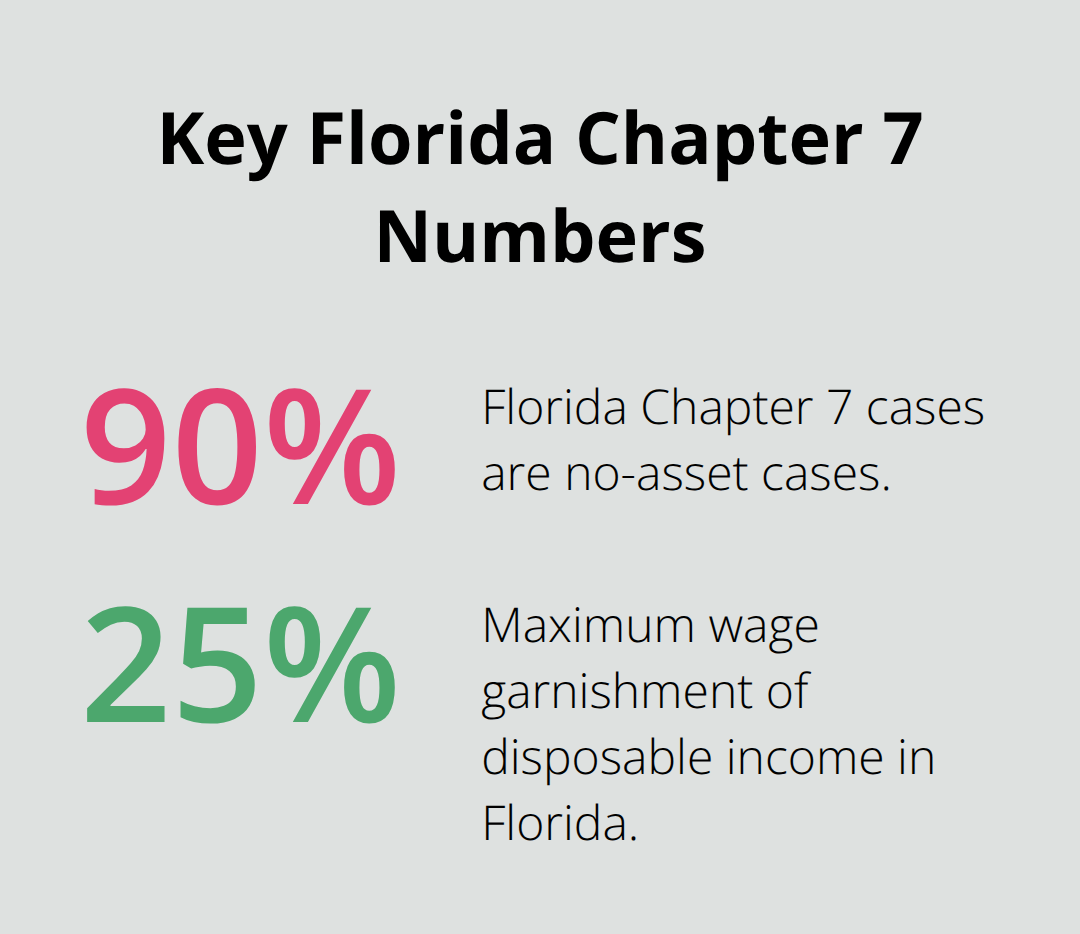
The U.S. Bankruptcy Court recognizes this reality. Over 90% of Chapter 7 cases in Florida are no-asset cases, meaning debtors have accumulated enough debt that liquidation of non-exempt assets provides minimal recovery for creditors anyway.
This statistic matters because it tells you that filing Chapter 7 when drowning in unsecured debt is a common, legitimate path forward, not an extreme measure.
Creditor Harassment and Collection Calls
Creditor harassment and wage garnishment represent tangible financial harm that Chapter 7 stops immediately. When you file, the automatic stay takes effect right away, halting collection calls, lawsuits, and wage garnishments in their tracks. A creditor calling you multiple times daily, threatening legal action, or already garnishing your paycheck creates stress that affects your ability to work and make sound financial decisions.
Wage garnishment in Florida can take up to 25% of your disposable income. A $3,000 monthly paycheck could lose $750 or more before you see it. If creditors have already filed suit, Chapter 7 stops the judgment process and prevents asset seizure.
The Automatic Stay Provides Immediate Relief
The automatic stay is not a suggestion or a temporary pause-it is a federal court order that creditors must obey. Filing Chapter 7 when you face active wage garnishment or imminent lawsuits transforms your financial situation from one of constant pressure to one where you can actually plan and breathe.
This immediate relief allows you to assess your financial position without the constant threat of collection actions. The stay remains in effect throughout your case, giving you the breathing room necessary to move forward with the bankruptcy process and understand what comes next in your financial recovery.
How Chapter 7 Works in Florida
The Automatic Stay Stops Creditor Actions Immediately
Filing Chapter 7 in Florida triggers three critical phases: the automatic stay that freezes creditor actions instantly, the means test that determines your eligibility, and the liquidation process that leads to debt discharge. The automatic stay takes effect the moment your petition reaches the court, not days or weeks later. This federal court order is legally binding and applies to all creditors simultaneously, whether they know about your filing or not.
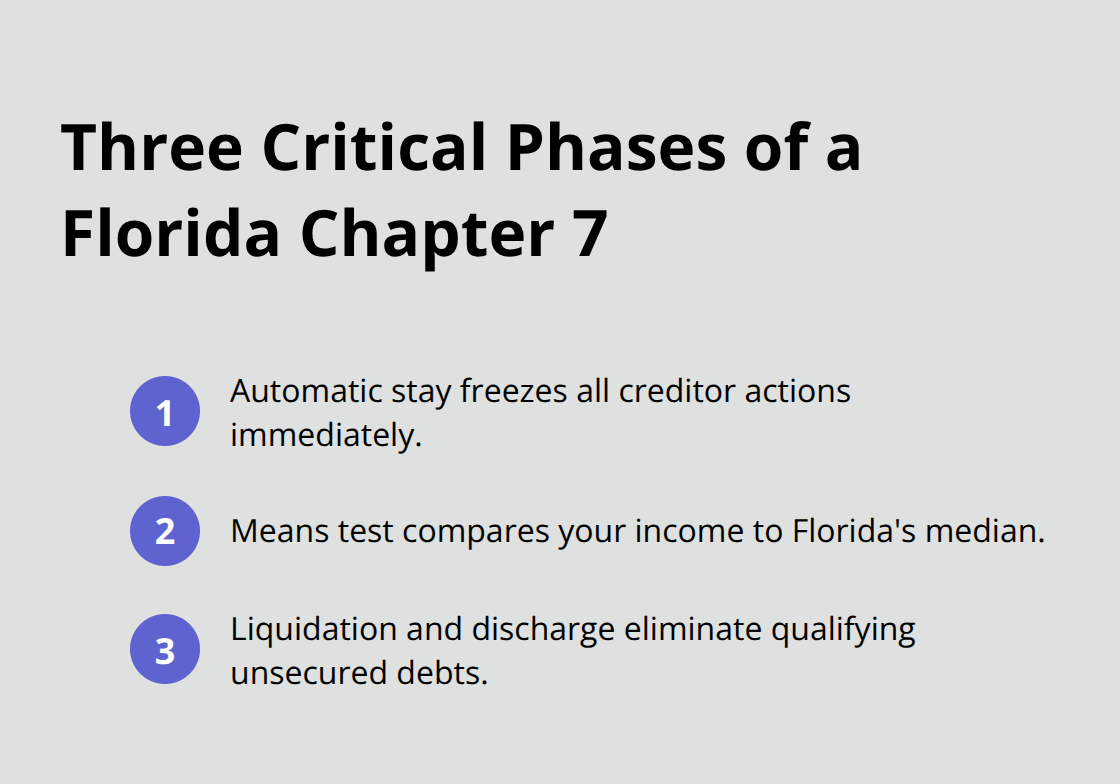
A creditor who continues collection calls after the stay is in place violates federal law and faces sanctions. The stay remains active throughout your entire case, typically lasting three to six months for Chapter 7 cases in Florida. During this time, wage garnishments stop, collection lawsuits pause, and creditors cannot seize assets or contact you about debts. This breathing room directly impacts your ability to work without losing a quarter of your paycheck and allows you to plan your next financial moves without constant harassment.
The Means Test Determines Your Chapter 7 Eligibility
Your eligibility for Chapter 7 hinges on the means test, a calculation that examines your income against Florida’s median household income. If you earn less than the state median for your household size (roughly $3,493 monthly for a single person according to current figures), you pass the means test automatically and qualify for Chapter 7. If your income exceeds the median, you must complete a more detailed calculation showing whether your disposable income after allowed expenses falls below specific thresholds.
The means test prevents high-income earners from using Chapter 7 to dodge debts they could realistically pay through a Chapter 13 repayment plan instead. Once you pass the means test, the liquidation process begins.
How Asset Liquidation Works Under Florida Law
A court-appointed trustee reviews your assets and identifies which ones are protected under Florida exemptions and which are non-exempt. Florida exemptions rank among the most generous in the nation-your primary residence receives unlimited protection regardless of equity as long as you owned it for at least 1,215 days before filing, your retirement accounts up to $1,711,975 per person remain fully protected, and household items, vehicles up to $5,000 in equity, and personal injury damages stay exempt.
Non-exempt assets like vacation homes, investment accounts beyond retirement plans, or a second vehicle may be sold by the trustee, but the proceeds go toward your unsecured debts. Over 90 percent of Chapter 7 cases in Florida involve no asset liquidation because debtors have structured their finances around protected assets or simply lack valuable non-exempt property.
Debt Discharge Eliminates Your Remaining Obligations
After the trustee completes their review and any asset sales, remaining unsecured debts-credit cards, medical bills, personal loans, and most deficiency judgments-are discharged permanently, meaning you owe nothing further. This discharge represents the core benefit of Chapter 7 and marks the beginning of your financial recovery. The next section examines which specific debts disappear through discharge and which assets you retain throughout the process.
What Gets Discharged and What You Keep
Debts That Disappear Through Chapter 7 Discharge
Chapter 7 discharge eliminates specific debts permanently while leaving others intact, and understanding this distinction prevents costly mistakes. Credit card balances, medical bills, personal loans, deficiency judgments from repossessed vehicles, and most unsecured debts vanish completely once the court grants your discharge. However, child support, alimony, most federal and state income taxes from the past three years, student loans (absent undue hardship), and criminal fines remain your obligation even after Chapter 7 concludes.
The distinction matters because filing Chapter 7 to escape $50,000 in credit card debt makes financial sense, while filing primarily to avoid $30,000 in back taxes typically fails because those debts survive discharge. Florida courts take this seriously-misrepresenting your debts on the petition can trigger fraud allegations carrying penalties up to $250,000 and 20 years in prison according to federal bankruptcy fraud statutes.
Protected Assets Under Florida’s Generous Exemption System
Florida’s exemption system protects far more assets than most states allow, which is why residents filing Chapter 7 often retain nearly everything they own. Your primary residence receives unlimited protection regardless of equity value as long as you owned it for at least 1,215 days before filing-this homestead exemption stands as one of the nation’s strongest asset protections. Your retirement accounts including 401(k)s and IRAs stay fully exempt up to $1,711,975 per person for filings between April 2025 and March 2028 according to current federal limits.
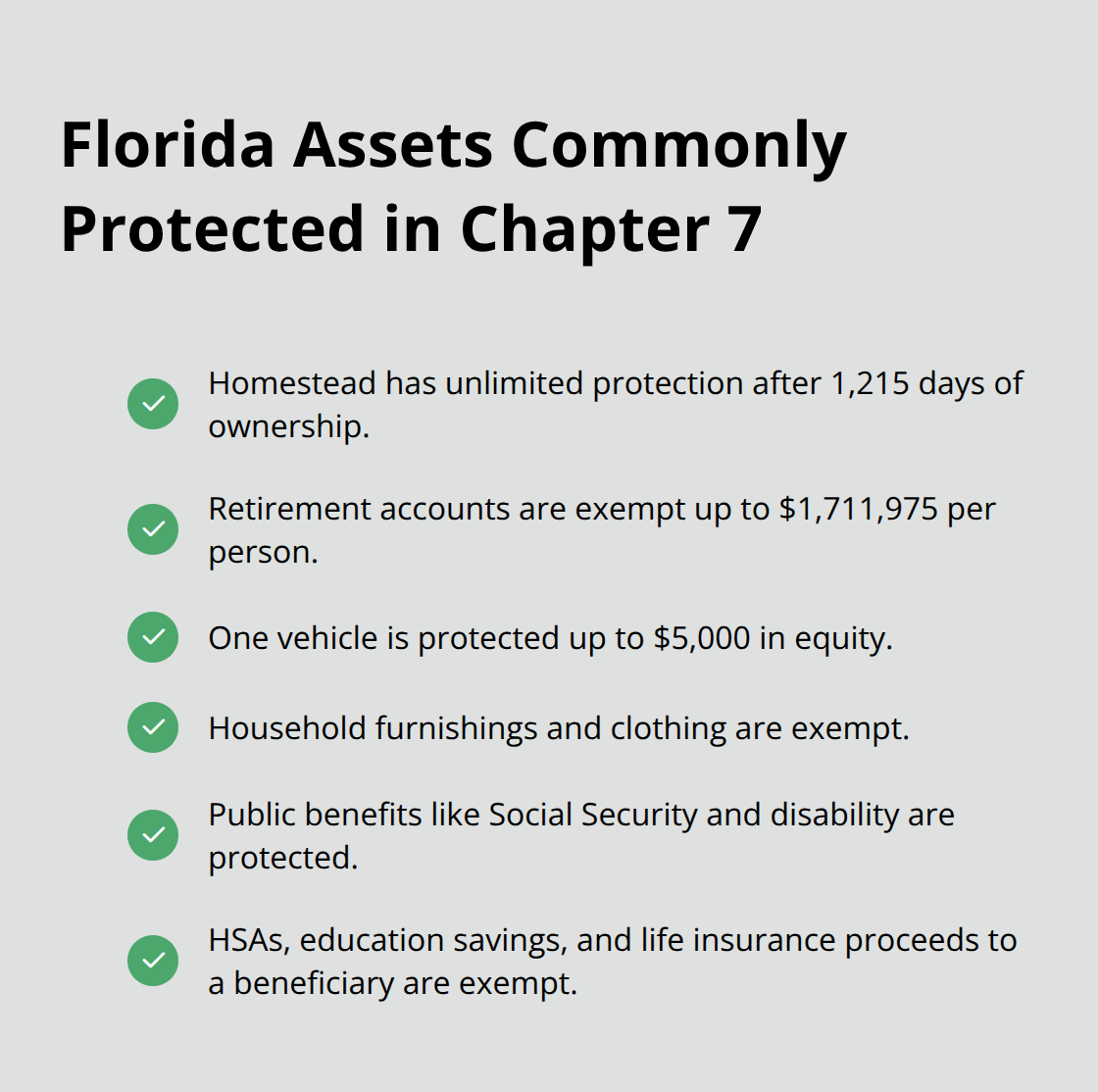
A single vehicle can retain up to $5,000 in equity, household furnishings and clothing remain protected, and public benefits like Social Security and disability income cannot be touched by creditors or the bankruptcy trustee. Even health savings accounts, education savings plans, and life insurance proceeds payable to a named beneficiary receive exemption protection under Florida law.
Why Most Florida Filers Keep Their Assets
The practical result: over 90 percent of Chapter 7 filers in Florida experience no asset liquidation whatsoever because their possessions fit within these generous protections. A court-appointed trustee reviews your assets and identifies which ones fall under Florida exemptions and which are non-exempt. Non-exempt assets like vacation homes, investment accounts beyond retirement plans, or a second vehicle may be sold by the trustee, but the proceeds go toward your unsecured debts.
Rebuilding Credit After Your Discharge
After discharge, rebuilding your credit starts immediately through secured credit cards, becoming an authorized user on someone else’s account, and making all new payments on time. Most filers see credit score recovery within three to four years, with significant improvement visible within 12 months of discharge according to credit monitoring data.
Final Thoughts
Chapter 7 bankruptcy stops wage garnishment, eliminates unsecured debt, and halts creditor harassment through the automatic stay that takes effect immediately upon filing. If you face overwhelming credit card balances, medical bills, or collection lawsuits, Chapter 7 offers a legitimate path to financial recovery rather than years of minimum payments that barely cover interest. Florida’s generous exemption system means you likely keep your home, retirement accounts, vehicle, and household possessions while discharging debts that would otherwise consume your income indefinitely.
The decision to file Chapter 7 depends on your specific financial situation, which is why understanding the means test, your eligible debts, and protected assets matters before you file. Starting with a free case review helps you determine whether Chapter 7 makes sense for your circumstances or whether alternatives like debt consolidation or credit counseling better fit your needs. We at Harnage Law, PLLC guide Florida residents through every step of the Chapter 7 process, from initial consultation through discharge and credit rebuilding.