
Filing Chapter 7 bankruptcy in Florida isn’t as difficult as many people think, especially when you understand what to expect. The process involves specific steps, required documents, and court appearances-but none of it is impossible to navigate.
At Harnage Law, PLLC, we’ve guided countless Floridians through this process and seen firsthand that proper preparation makes all the difference. This guide breaks down exactly what you’ll face and how to handle it.
What Documents and Steps You Need to File Chapter 7 in Florida
Filing Chapter 7 in Florida requires you to submit a specific packet of forms to the federal bankruptcy court. The Voluntary Petition for Individuals Filing for Bankruptcy (Form B101) serves as your starting document, paired with a Summary of Your Assets and Liabilities (Form B106Sum). These two forms tell the court who you are and what you own versus what you owe. Schedule A/B captures all your property, while Schedule C lists the exemptions you claim to keep-this distinction matters because non-exempt assets may be liquidated to pay creditors.
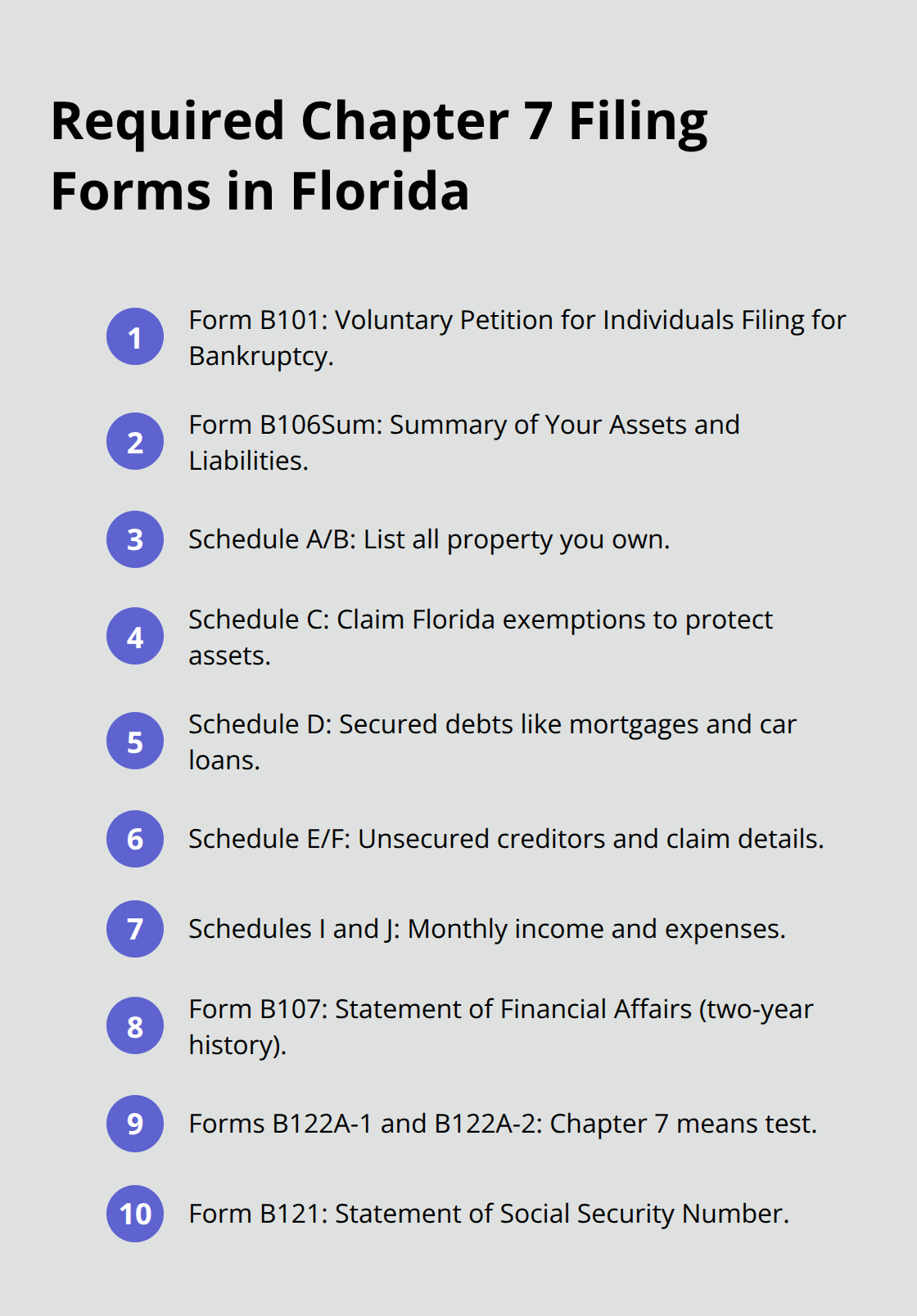
Schedule D covers secured debts like mortgages and car loans, Schedule E/F lists unsecured creditors, and Schedules I and J document your monthly income and expenses.
Financial Disclosure Forms That Reveal Your Complete Picture
You must file the Statement of Financial Affairs (Form B107), which requires disclosure of your financial history going back two years, including any transfers, sales, or unusual transactions. The means-test forms-B122A-1 and B122A-2-are mandatory if your income exceeds Florida’s median threshold for your household size. Florida median income ranges from $41,334 annually for a single person to $111,796 for a household of ten members according to current U.S. Trustee guidelines. You must also file a Declaration About Your Payment Advices, submit your Social Security Statement (Form B121), and prepare a creditor matrix listing every creditor’s name and address. Original wet signatures are required on the petition and supporting documents per local Administrative Order 2020-07. Accuracy here is non-negotiable-incomplete or incorrect filings lead to dismissal and additional costs.
Filing Fees and Payment Options
The filing fee in Florida is $338, payable within 14 days of filing. You can request installment payments with Form B103A or a fee waiver with Form B103B if your income falls below poverty guidelines. This flexibility removes a financial barrier for those who cannot pay the full amount upfront.
Credit Counseling Must Happen Before You File
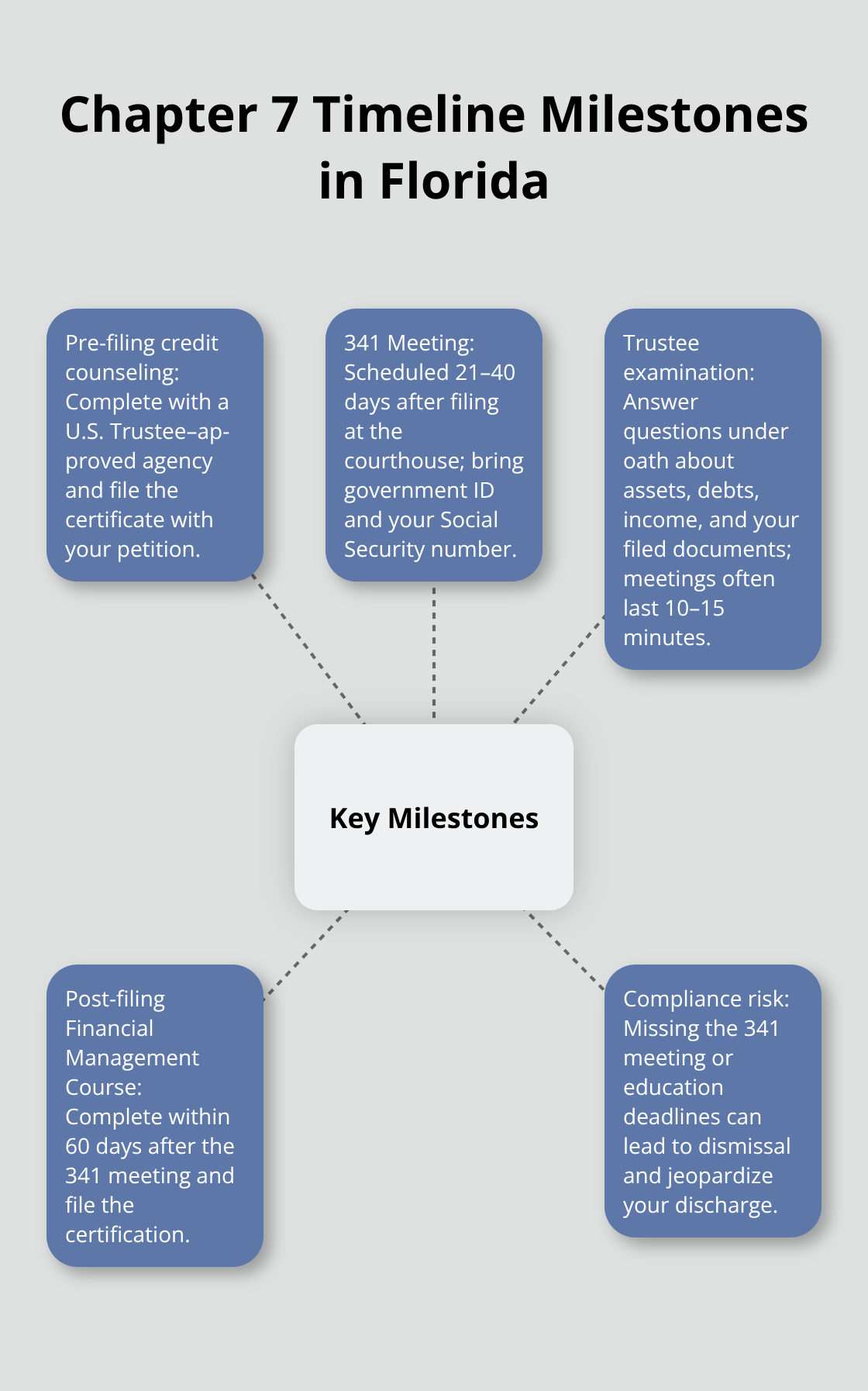
You cannot file Chapter 7 in Florida without first completing a credit counseling course from an agency approved by the U.S. Trustee. This is a mandatory hurdle, not optional. The approved agencies are listed on the U.S. Trustee’s website, and most courses can be completed online in under two hours at minimal cost. When you file your petition, you must attach your Certificate of Credit Counseling as proof. This certificate is your ticket into the bankruptcy system. Do not skip this step or use an unapproved agency-the court will reject your filing if the certificate is missing or invalid. Most people complete this course within days of deciding to file, which removes one barrier from your path forward.
The 341 Meeting: What Happens and Why It Matters
After filing, you receive notice of your Meeting of Creditors, commonly called the 341 meeting because it is governed by section 341 of the Bankruptcy Code. This meeting typically occurs 21 to 40 days after you file and takes place in the federal courthouse. The trustee assigned to your case will ask you questions about your assets, debts, income, and the accuracy of your filed documents under oath. Bring a government-issued photo ID and your Social Security number for verification. Most 341 meetings last ten to fifteen minutes. Creditors can attend and ask questions, but they rarely do in Chapter 7 cases. Missing this meeting is grounds for case dismissal, so mark it on your calendar.
Within 60 days after this meeting, you must complete a Financial Management Course and file the certification-failure to do this kills your discharge. The court takes these timelines seriously, and missing either deadline costs you the fresh start bankruptcy offers. Once you understand these requirements and timelines, the next challenge many filers face is whether their income qualifies them for Chapter 7 in the first place.
Common Challenges People Face When Filing Chapter 7 in Florida
The Means Test Creates a Financial Calculation Trap
The means test presents the first real obstacle for most Chapter 7 filers in Florida. If your household income exceeds Florida’s median for your family size, the court requires you to complete a detailed calculation that determines whether you have enough disposable income to repay debts. For a single filer in Florida, the median is $41,334 annually; for a family of four, it reaches $74,796. The calculation itself appears straightforward on paper but becomes brutal in practice because it uses national and IRS expense standards that often bear no resemblance to your actual living costs. You cannot deduct your real rent if the IRS allowance is higher, and you cannot claim your actual grocery bill if the national average is lower. This gap between what you actually spend and what the court permits you to deduct creates significant friction in your case.
If your disposable income over 60 months falls between $7,475 and $12,475 monthly, you enter a gray zone requiring additional calculations that can push your case toward Chapter 13 instead. Many filers discover mid-process that they barely failed the means test, forcing them to either accept a five-year repayment plan or wait several months for their income to drop below the median. Timing matters enormously here-if you expect your income to decrease soon due to job changes or reduced hours, filing later could save you from an unwanted Chapter 13.
Emotional and Psychological Stress Compounds Financial Pressure
Emotional strain often compounds these financial calculations in ways that paperwork alone cannot capture. You must disclose every debt, every asset, and two years of financial history to a court, creating stress that weighs heavily on most filers. You attend a public 341 meeting where a trustee questions you under oath about your finances, and creditors can attend to challenge your discharge. For people already struggling financially, this public accountability feels invasive and humiliating.
Creditor harassment typically stops once you file, which provides immediate relief. However, creditors sometimes file objections to discharge claiming you hid assets or committed fraud. These objections are rare in straightforward cases, but when they occur, they extend your case timeline and require additional court appearances.
Creditor Objections and Legal Disputes Extend Your Timeline
The combination of complex means-test calculations, mandatory court appearances, and the possibility of creditor disputes creates uncertainty that makes many filers question whether filing is worth the trouble. It absolutely is, but understanding these challenges upfront prevents surprises later. When creditors do object to your discharge, you face additional legal proceedings that require careful navigation of bankruptcy law and court procedures. These disputes can delay your fresh start by months and add stress to an already difficult process. The good news is that most Chapter 7 cases proceed without creditor objections, especially when you file accurate paperwork and fully disclose your financial situation. Working with a Florida Chapter 7 bankruptcy attorney helps you avoid the mistakes that trigger creditor challenges in the first place.
Why Working With a Florida Chapter 7 Bankruptcy Attorney Makes the Process Easier
You can technically file Chapter 7 without an attorney-the court permits pro se filers to proceed without counsel. However, this path introduces serious risks that most people underestimate. The federal bankruptcy court in Florida requires you to use only current forms from the clerk’s office or official court website, and using outdated forms results in immediate rejection and dismissal. You must comply with all federal rules and local Administrative Orders, including the wet signature requirement on your petition and supporting documents per Administrative Order 2020-07.
Court staff cannot provide legal advice, which means you navigate these requirements alone.
The Practical Barriers Pro Se Filers Face
Pro se filers in the Southern District of Florida cannot file electronically, forcing you to appear in person at the courthouse to submit your paperwork. This creates additional friction when you must coordinate time off work and manage the emotional weight of a public filing. Most importantly, mistakes on your forms-incomplete schedules, incorrect income calculations, missing creditor addresses on your matrix-trigger dismissals that cost you time, money, and delay your fresh start. The filing fee is nonrefundable, and you must refile to restart the process, paying another $338 and waiting another 21 to 40 days for your 341 meeting.
How an Attorney Protects Your Discharge
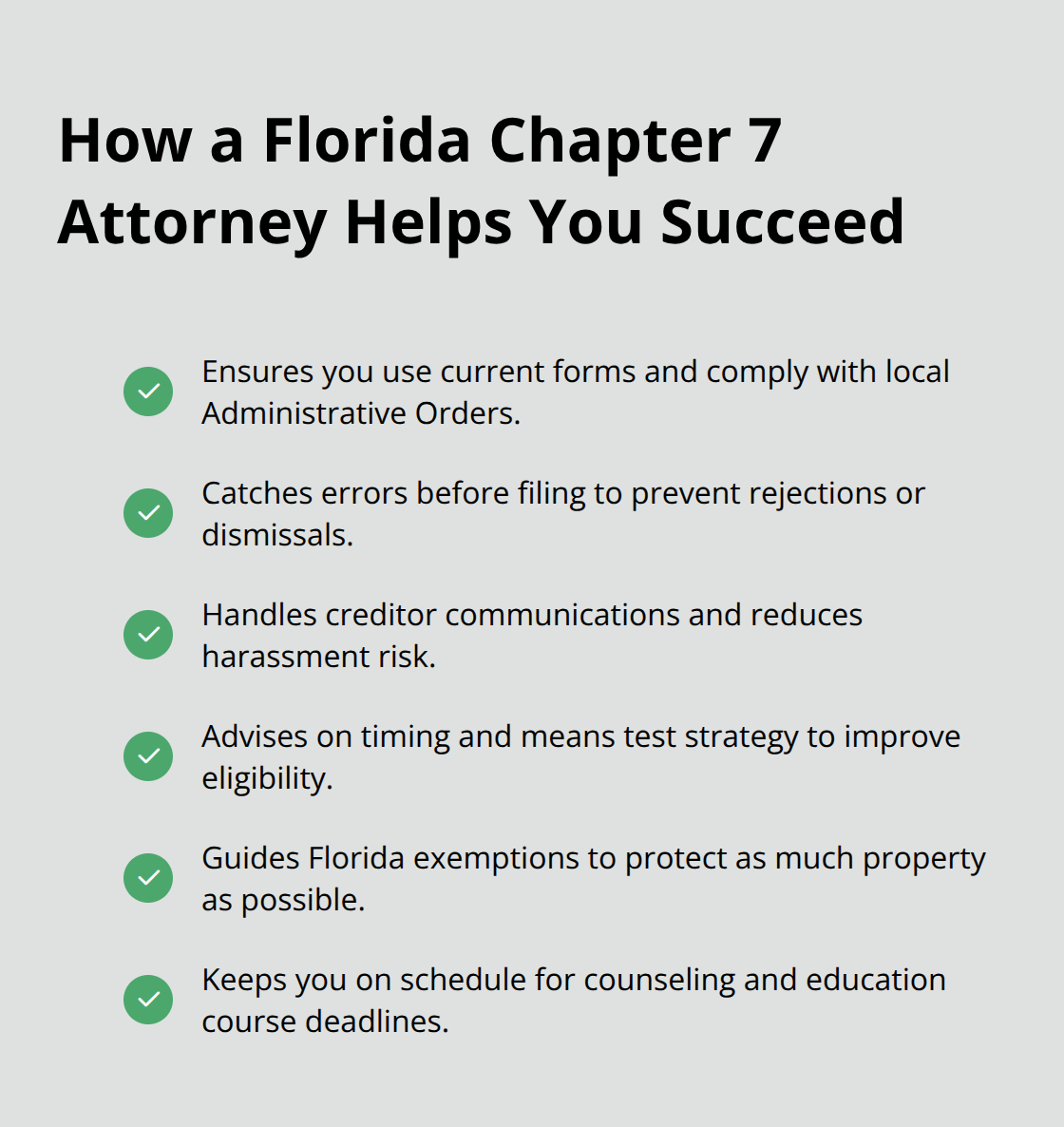
An attorney catches errors before filing and handles creditor communications so you avoid the harassment and legal disputes that extend your case timeline. When creditors object to your discharge claiming fraud or asset concealment, an attorney represents you in court and responds to these challenges, protecting your right to discharge. Most filers qualify for Chapter 7 discharge of unsecured debts like credit cards and medical bills, but non-dischargeable debts (including student loans, child support, and recent tax debt) remain your responsibility regardless. An attorney identifies which debts discharge and which persist, preventing false expectations about your fresh start.
Maximizing Your Means Test Results
The means test calculation determines your Chapter 7 eligibility, and attorneys know how to legitimately claim allowable expenses under IRS standards, maximizing your chances of passing the test. If your income barely exceeds the median, an attorney can advise whether waiting one or two months for income to drop below the threshold improves your filing position. An attorney also ensures you complete both the pre-filing credit counseling course and the post-filing financial management course on schedule, protecting your discharge from dismissal due to missed deadlines.
Understanding Florida Asset Protection
An attorney guides you through every decision point, from timing your filing to understanding which assets you protect under Florida exemptions. This knowledge prevents costly mistakes that could result in losing property you could have kept. The difference between filing alone and filing with representation is the difference between hoping you get it right and knowing you will.
Final Thoughts
Filing Chapter 7 bankruptcy in Florida is manageable when you understand what lies ahead and secure proper support. The process involves specific forms, financial disclosures, court appearances, and timelines-but none of these elements are insurmountable. How hard it is to file Chapter 7 bankruptcy depends largely on whether you navigate it alone or with professional guidance, and the difference between these two paths is substantial.
An attorney catches errors before they trigger dismissals, handles creditor communications so you avoid harassment, and ensures you meet every deadline that protects your discharge. When creditors object to your case, an attorney represents you in court. When the means test creates uncertainty about your eligibility, an attorney advises whether waiting a few months improves your filing position. When you need to understand which assets you protect under Florida exemptions, an attorney guides you through those decisions.
We at Harnage Law, PLLC assist individuals and families in overcoming financial challenges by providing legal guidance and representation throughout the Chapter 7 process. Contact us to discuss your situation and determine whether Chapter 7 fits your circumstances. Your path forward begins with a single conversation.