
Filing Chapter 7 bankruptcy in Florida stops your financial life in its tracks. The question most people ask us is when does Chapter 7 bankruptcy fall off your credit report, and the answer affects your entire financial recovery plan.
We at Harnage Law, PLLC know that understanding this 10-year timeline helps you rebuild with confidence. This guide walks you through exactly what happens to your credit and how to recover faster.
The 10-Year Clock: When Chapter 7 Finally Leaves Your Credit Report
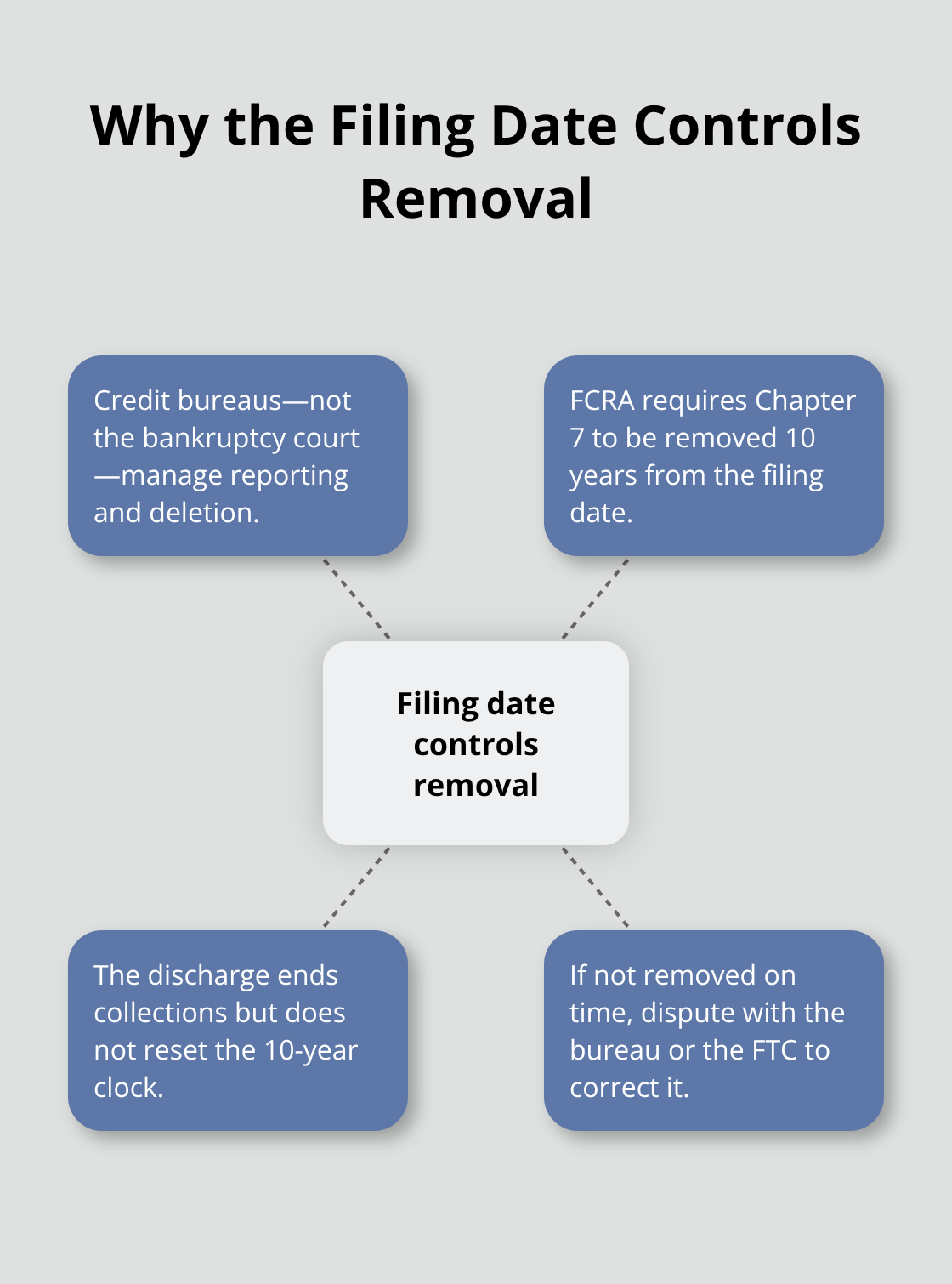
Chapter 7 bankruptcy stays on your credit report for exactly 10 years from the filing date, not the discharge date. According to Experian, this 10-year countdown begins the month you first file the petition, regardless of when the bankruptcy concludes. Many people assume the clock starts after their discharge, which typically happens three to six months later, but that misunderstanding costs them years of unnecessary worry. The filing date is what matters legally under the Fair Credit Reporting Act, so if you filed on March 15, 2024, the bankruptcy falls off March 15, 2034-period. This distinction is critical because it means your recovery timeline actually starts earlier than most people think.
Why the Filing Date Controls Everything
The bankruptcy court does not manage credit reporting or removal. That responsibility falls to the three major credit bureaus: Equifax, Experian, and TransUnion. These agencies follow FCRA rules, which mandate that Chapter 7 entries disappear after 10 years from the filing date. If a bureau fails to remove the entry after that deadline, you can file a dispute with the FTC or contact the bureau directly. The discharge order-the document that eliminates your personal liability for debts-is a separate legal event. It stops collection actions and wipes out qualifying debts, but it does not reset the credit reporting clock. Understanding this separation prevents false hope about early removal. Accurate bankruptcy entries cannot be removed before the 10-year window closes, even if you rebuild your credit perfectly during those years.
Planning Your Financial Recovery Around the Timeline
Knowing your exact removal date lets you build a realistic recovery strategy. Calculate your removal month by taking your filing date and adding 10 years. Write this date down and revisit it annually so you see tangible progress. The negative impact on your credit score diminishes significantly over time, even before the bankruptcy disappears from your report. Experian data shows that borrowers see meaningful score improvements within 12 to 24 months after discharge if they manage credit responsibly. This means you do not have to wait the full 10 years to access better loan terms or lower interest rates. Some lenders will work with you after 18 to 24 months of solid payment history post-discharge. Starting your rebuilding efforts immediately after discharge accelerates this timeline dramatically compared to waiting passively for the bankruptcy to age off.
What Happens When the 10 Years End
Once your 10-year period expires, the credit bureaus must remove the bankruptcy entry from your report. This removal happens automatically in most cases, though you can contact Equifax, Experian, or TransUnion to confirm the deletion. The removal does not erase other negative items tied to your bankruptcy (such as individual account closures or prior delinquencies), but the bankruptcy notation itself disappears. Your credit score typically improves after the entry falls off, though the exact boost depends on what else appears on your report. If you have built positive payment history during those 10 years, your score will likely be substantially higher than it was immediately after filing. The fresh start that Chapter 7 provides becomes fully realized once the bankruptcy record no longer influences lending decisions.
Moving Forward With Your Rebuilding Plan
The 10-year timeline should not discourage you from taking action today. Your credit score recovery does not depend on waiting for the bankruptcy to disappear; it depends on the habits you establish right now. Secured credit cards, on-time payments, and low credit utilization all work immediately to improve your standing with lenders. Many people rebuild their credit substantially within the first two to three years after discharge, positioning themselves for better rates and terms long before the bankruptcy falls off. The key is treating the filing date as your starting point and building momentum from that moment forward. Your next steps involve obtaining the right credit-building tools and establishing a payment routine that demonstrates financial responsibility to future lenders.
How Your Credit Score Drops and Recovers During Bankruptcy
Filing Chapter 7 causes an immediate and significant credit score decline. According to Experian, you lose at least 140 points after filing, though the exact drop depends on your starting score and how much debt you discharge. Someone with a 750 credit score before filing might fall to 610, while someone starting at 650 might drop to 510. This immediate hit feels devastating, but it reflects a mathematical reset rather than a permanent financial death sentence. The filing date triggers this drop because the bankruptcy petition becomes part of your credit history instantly, and the credit bureaus report it within days. The discharge that follows three to six months later does not cause another major drop; the damage happens upfront when you file the petition.
The Score Rebound Starts Sooner Than You Think
Your credit score begins recovering almost immediately after your discharge is finalized. Within 12 to 24 months of discharge, borrowers who manage their credit responsibly typically see meaningful improvements, according to Experian data. This means you could potentially recover 50 to 100 points during this period if you execute the right strategy. The key difference between someone who recovers quickly and someone who stalls is action taken right after discharge. Lenders see the bankruptcy on your report, but they also see what you have done since that filing date. If your credit report shows 18 months of on-time payments after discharge, lenders view you as lower risk than someone with the same bankruptcy but no positive activity. The recovery timeline is not passive; it rewards immediate financial discipline. Some borrowers rebuild enough credit within two to three years to qualify for unsecured credit cards or auto loans at reasonable rates, even though the bankruptcy remains on their report for another seven years.
What Actually Controls Your Recovery Speed
Three factors determine how fast your score climbs after discharge. First, payment history accounts for 35 percent of your credit score, making it the single largest factor. Every on-time payment after discharge strengthens your profile, while any missed payment sets you back months of progress.
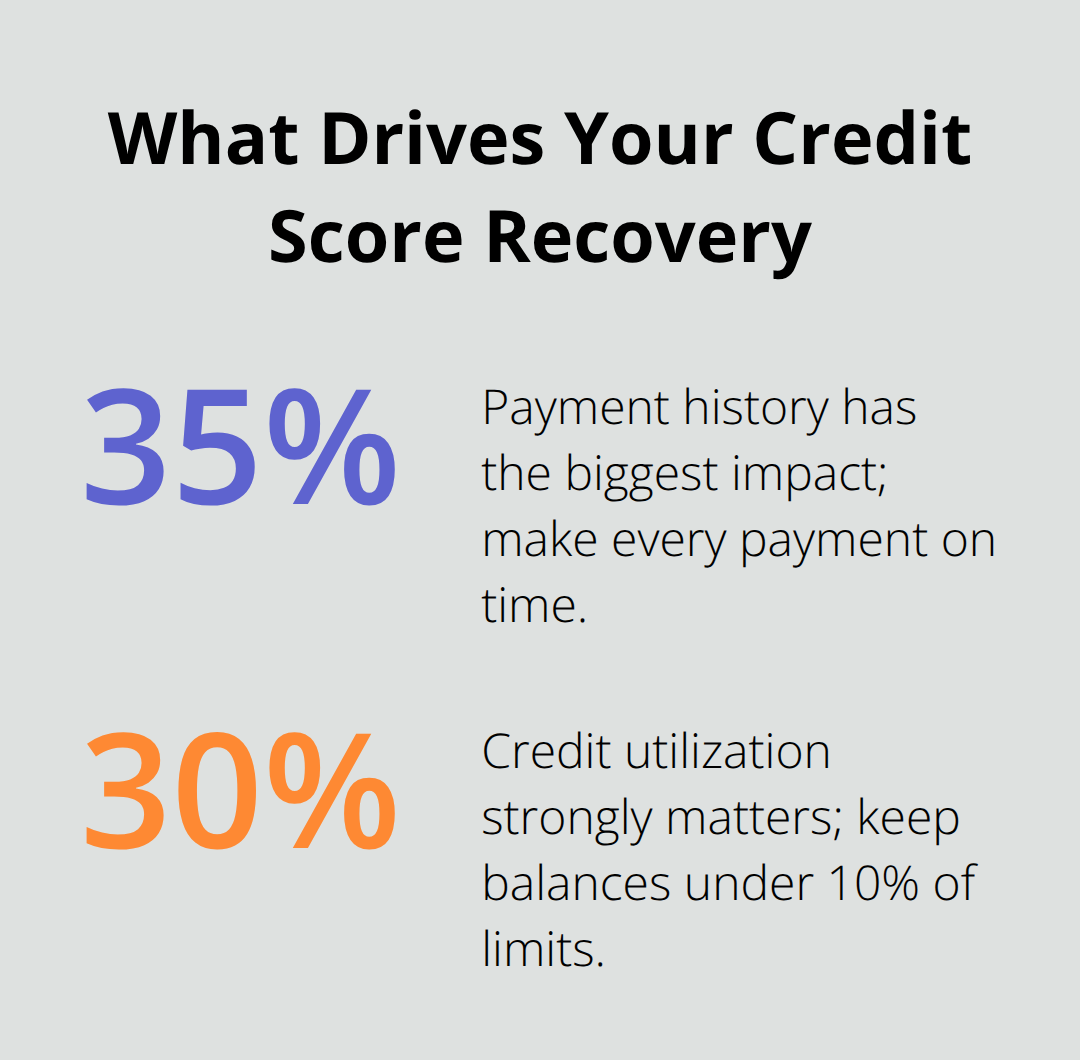
Set up automatic payments for all bills or use phone reminders to eliminate late payments entirely during your rebuilding phase. Second, credit utilization accounts for 30 percent of your score. Keeping balances below 10 percent of your available credit limit accelerates recovery far more than staying under 30 percent. If you obtain a secured credit card with a 1,000 dollar deposit, charge only 50 to 100 dollars monthly and pay it in full. This demonstrates restraint and responsibility simultaneously. Third, the age of your accounts and credit mix matter less immediately but still influence lenders’ decisions. Adding a credit-builder loan from your bank or credit union within the first three to four months after discharge gives you a second positive account reporting to the bureaus, strengthening your overall profile. The combination of these three actions (on-time payments, low utilization, and diverse credit types) separates borrowers who recover in two years from those stuck in slow recovery for five years.
Why Immediate Action Matters More Than Waiting
The months following your discharge represent your greatest opportunity to shift lender perception. Lenders cannot ignore the bankruptcy on your report, but they can see whether you have built positive momentum since that filing date. A borrower with six months of perfect payment history and a secured credit card looks substantially different to a lender than someone with the same bankruptcy and no new accounts. This is why waiting passively for the bankruptcy to age off your report costs you years of better loan terms and lower interest rates. You do not need the bankruptcy to disappear to access credit; you need to demonstrate that you have changed your financial behavior. The next chapter covers the specific tools and strategies that accelerate this recovery process and position you for better lending opportunities long before the 10-year mark arrives.
Rebuilding Credit After Chapter 7 Discharge in Florida
Secured Credit Cards and Credit-Builder Loans
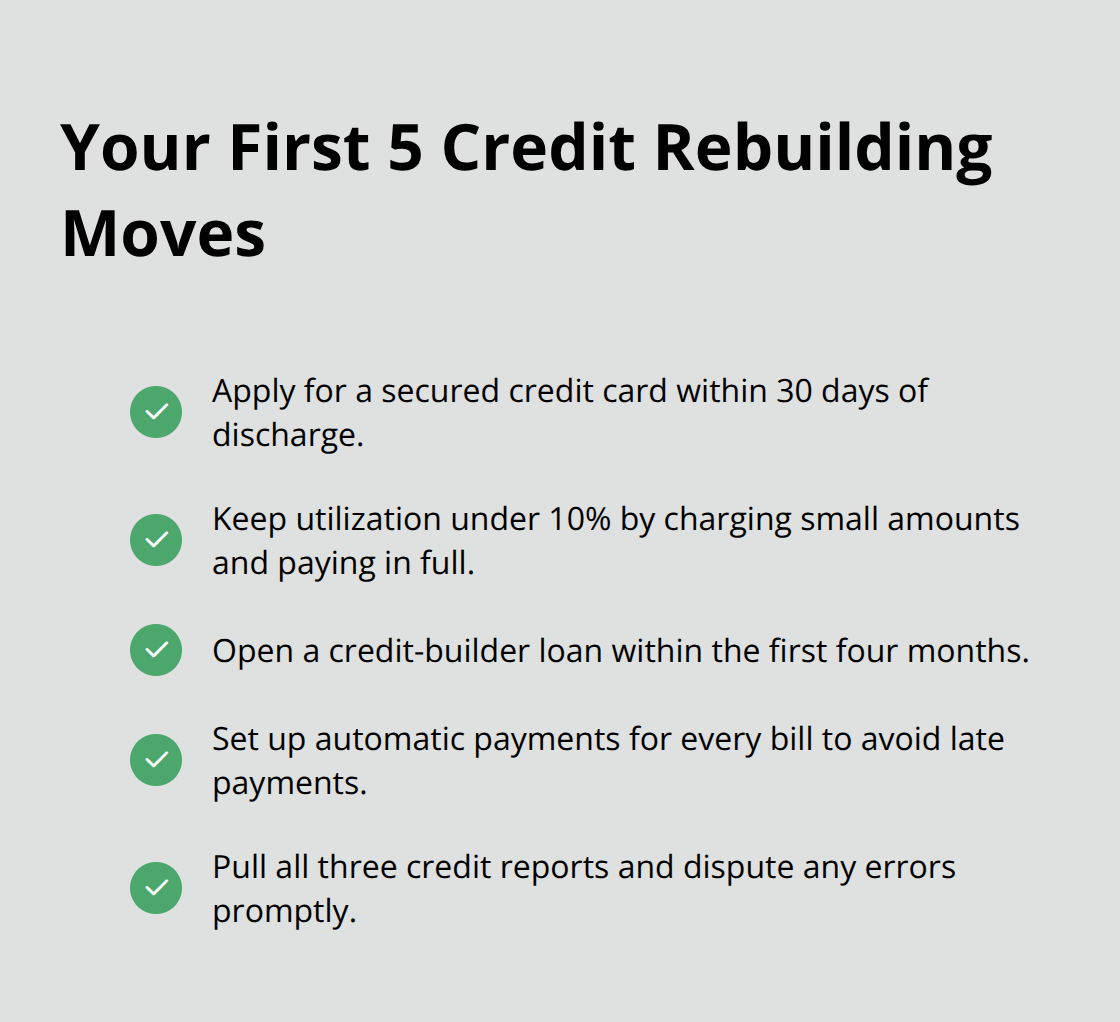
The three months after your discharge represent the most critical window for credit recovery, and the tools you choose during this period determine whether you rebuild in two years or five years. Secured credit cards form your foundation because they work differently than unsecured cards: you deposit cash as collateral, typically between 500 and 2,500 dollars, and that deposit becomes your credit limit. According to Experian, using a secured card responsibly demonstrates to lenders that you have changed your financial behavior. Apply for one within 30 days of discharge while your momentum is highest. Charge only small purchases you would make anyway, like groceries or gas, then pay the balance in full each month. This approach keeps your utilization below 10 percent, which accelerates score recovery far faster than staying under 30 percent.
After 12 to 18 months of perfect payments, most issuers upgrade your account to unsecured status and return your deposit, effectively giving you access to unsecured credit without the bankruptcy affecting approval odds. Simultaneously, open a credit-builder loan from your bank or credit union within the first four months after discharge. These loans work backward: you borrow 500 to 1,500 dollars that the lender holds in a savings account, then you repay it over 12 to 24 months with monthly payments. Every payment reports to all three bureaus, and since these loans are designed for rebuilding credit, approval is nearly guaranteed even with recent bankruptcy. This second account diversifies your credit mix and provides a second source of positive payment history reporting to lenders.
Verify Your Credit Reports and Dispute Errors
Pull your credit reports from all three bureaus within 60 days of discharge and verify that all discharged debts show zero balance. If your report lists any account as still owing money after discharge, dispute it immediately with the bureau. These errors happen frequently when creditors fail to update accounts properly after bankruptcy concludes. Inaccurate reporting can slow your recovery significantly, so catching these mistakes early matters tremendously. The credit bureaus must investigate your dispute within 30 days and correct any errors they find.
Establish Automatic Payments for All Bills
Your payment system determines everything about your recovery speed, which is why setting up automatic payments for all bills is non-negotiable. Late payments destroy rebuilding progress far more than bankruptcy itself, and even one 30-day late payment sets your score recovery back months. Set automatic payments for at least the minimum amount due on every account, then pay credit cards in full from your checking account on the same day each month. This eliminates the human error that derails most people’s recovery plans. Experian data confirms that borrowers who maintain 24 months of consecutive on-time payments after discharge see score improvements of 50 to 100 points or more, positioning them to qualify for unsecured credit cards and better loan terms long before the bankruptcy falls off their report.
Monitor Progress and Use Credit-Building Tools
Monitor your credit report quarterly rather than obsessively checking monthly, since hard inquiries temporarily lower your score. Use free tools like Experian Boost, which allows you to add utility and rent payments to your credit history retroactively, providing immediate score improvements for bills you already pay. This tool alone can boost your score by up to 35 points if you have a strong history of on-time utility and rent payments. Avoid payday loans, title loans, and other predatory lending products marketed to bankruptcy filers, since these trap you in worse debt without meaningfully improving your credit profile. Instead, focus on the secured card and credit-builder loan strategy, which cost nothing beyond the deposit and actually rebuild your credit legitimately.
Final Thoughts
The 10-year timeline for when Chapter 7 bankruptcy falls off your credit report marks your starting point, not your finish line. Your filing date controls the removal date, and this distinction shifts how you approach the entire rebuilding process. Meaningful credit score improvements happen within 12 to 24 months after discharge, long before the bankruptcy disappears from your report, which means your financial future depends on actions you take immediately, not on waiting passively for time to pass.
Your recovery in Florida starts with three concrete steps executed right after discharge: obtain a secured credit card within 30 days, set up automatic payments for every bill, and open a credit-builder loan within four months. These tools work together to show lenders that you have fundamentally changed your financial behavior. Within two years of consistent on-time payments and low credit utilization, you will likely qualify for unsecured credit cards and better loan terms, positioning yourself for a substantially improved financial life before the bankruptcy even falls off your report.
The bankruptcy discharge eliminates your personal liability for qualifying debts and stops creditor harassment immediately, giving you a real and powerful fresh start. This fresh start only becomes transformative when you pair it with disciplined financial habits moving forward. Contact Harnage Law, PLLC to discuss how we can help you protect your assets and rebuild your financial future with confidence.