Chapter 7 bankruptcy stops creditor calls and wipes out most unsecured debts, but the consequences of Chapter 7 bankruptcy extend far beyond discharge day. Your credit score will drop, loans become harder to get, and some assets may be liquidated to pay creditors.
We at Harnage Law, PLLC help Florida residents understand what happens before, during, and after filing. This guide walks you through the real financial impact and shows you how to rebuild.
How Your Credit Score Changes After Chapter 7
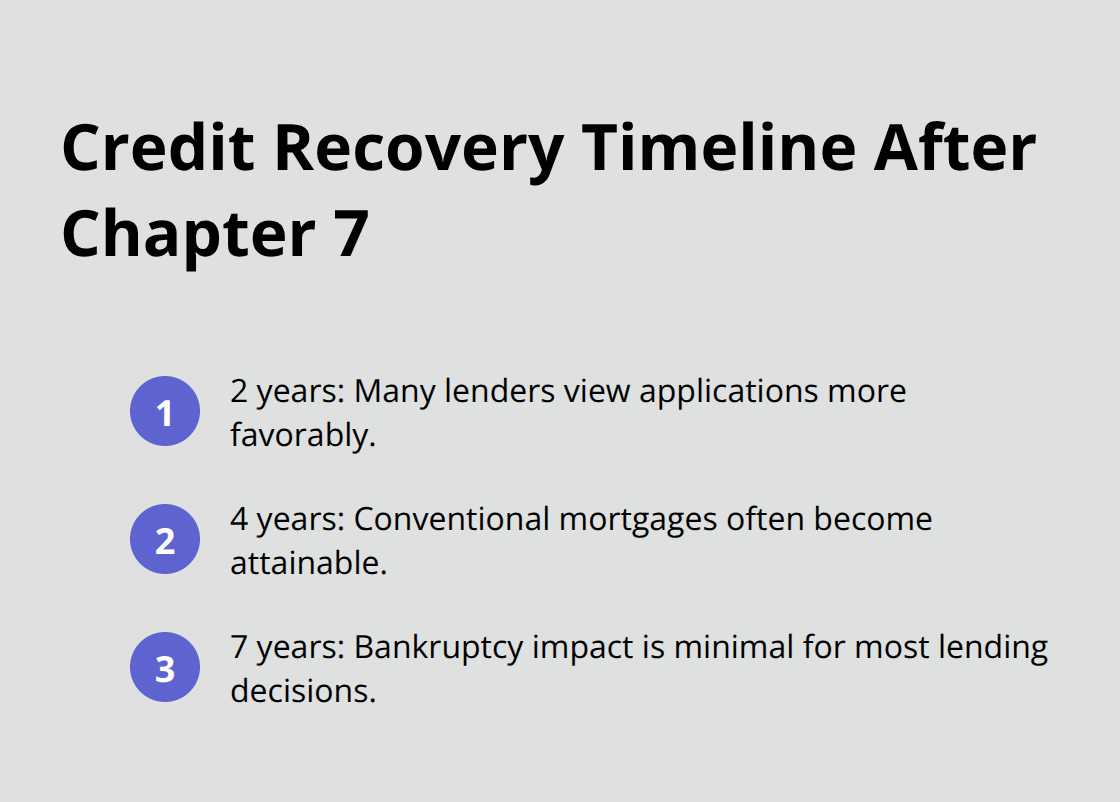
Your credit score drops immediately when you file Chapter 7, typically falling 130–200 points depending on your starting score, according to data from credit monitoring services. If you had a strong score before filing, the damage is steeper than for someone already struggling with debt. The filing itself appears on your credit report and stays there for ten years, making this the longest-lasting consequence of bankruptcy. However, the impact weakens significantly over time. After two years, many lenders view your application more favorably because the bankruptcy becomes less recent. After four years, you can qualify for conventional mortgages in many cases, and after seven years, the damage to your creditworthiness is minimal for most lending decisions.
Rebuilding Credit Starts Immediately After Discharge
You can start rebuilding immediately after discharge, which typically occurs within four to six months of filing. Secured credit cards are your fastest tool here-you deposit $500 to $2,500 as collateral, receive a card with that limit, and build positive payment history. Make small purchases and pay the full balance monthly. After twelve months of perfect payments, many issuers convert your secured card to an unsecured card and return your deposit. Authorized user status on someone else’s account also helps, though this requires trust and cooperation.
How Lenders View Your Bankruptcy Resolution
Your credit report will show that you paid off all discharged debts in full through bankruptcy, which actually demonstrates responsible debt resolution to future lenders. This distinction matters more than many people realize. Creditors see bankruptcy discharge as evidence that you followed through on a legal obligation, not that you simply walked away from your debts. Within three years of discharge, rebuilding to a 650–700 credit score is realistic for most filers who stay disciplined with payments and keep credit card balances low.
What Happens to Your Borrowing Power
Lenders become more willing to work with you as time passes since your filing date. The two-year mark represents a turning point where your application receives serious consideration from mainstream lenders. At the four-year mark, conventional mortgage lenders typically welcome your applications, and FHA loans become available even sooner. This progression means your ability to borrow for major purchases improves steadily, even while the bankruptcy remains on your report. Your next challenge involves understanding which debts actually disappear in Chapter 7 and which ones survive the discharge process.
How Chapter 7 Affects Your Access to Credit and Housing in Florida
Credit Becomes Expensive Immediately After Discharge
Lenders treat Chapter 7 filers differently depending on how much time has passed since discharge, and this affects every major purchase you’ll make for the next decade. Immediately after discharge, traditional lenders reject most applications-banks view fresh bankruptcies as high-risk propositions. Credit card companies that do approve you will charge interest rates 8–12 percentage points higher than someone with a 750 credit score, meaning a $5,000 balance costs you an extra $400–$600 annually in interest charges. Auto loans become available at the two-year mark, but expect rates around 12–18%, compared to 5–7% for borrowers without bankruptcy histories according to lending data from Experian.
Mortgages and Homeownership Timelines
The gap in mortgage rates narrows after four years when conventional mortgage lenders begin accepting applications again, though you’ll still pay 0.5–1.5 percentage points higher rates than prime borrowers. This matters substantially on a $300,000 mortgage-the difference between 6.5% and 7.5% costs you roughly $30,000 extra over thirty years. FHA loans present a faster path to homeownership, becoming available after two years with 10% down, or three years with 3.5% down, making them a realistic option when traditional mortgages remain out of reach.
Landlords and Rental Applications
Housing applications introduce another barrier that many filers don’t anticipate. Landlords and property management companies run credit checks as part of their screening process, and a Chapter 7 discharge appears prominently on your report. Some landlords automatically reject applicants with recent bankruptcies, while others require larger deposits or co-signers to offset perceived risk. Your best strategy involves transparency about the filing, explanation of what triggered it, and demonstration of financial stability through current employment and on-time rent payments at your existing address.
Employment Screening and Background Checks
Employment screening varies significantly by industry and position. Federal law prohibits most employers from using bankruptcy as a hiring criterion, but some sectors-particularly finance, security, and positions requiring bonding-conduct thorough background checks that reveal your filing. Government contractors face stricter scrutiny. The practical reality is that bankruptcy rarely prevents employment outright, but it may disqualify you from certain roles or require explanation during interviews. If you’re job hunting, anticipate this question and prepare a straightforward response focused on what you’ve learned and how you’ve moved forward. Understanding these barriers helps you plan your financial recovery, but the real question becomes what assets you actually lose in the process.
What Assets Disappear and What You Keep
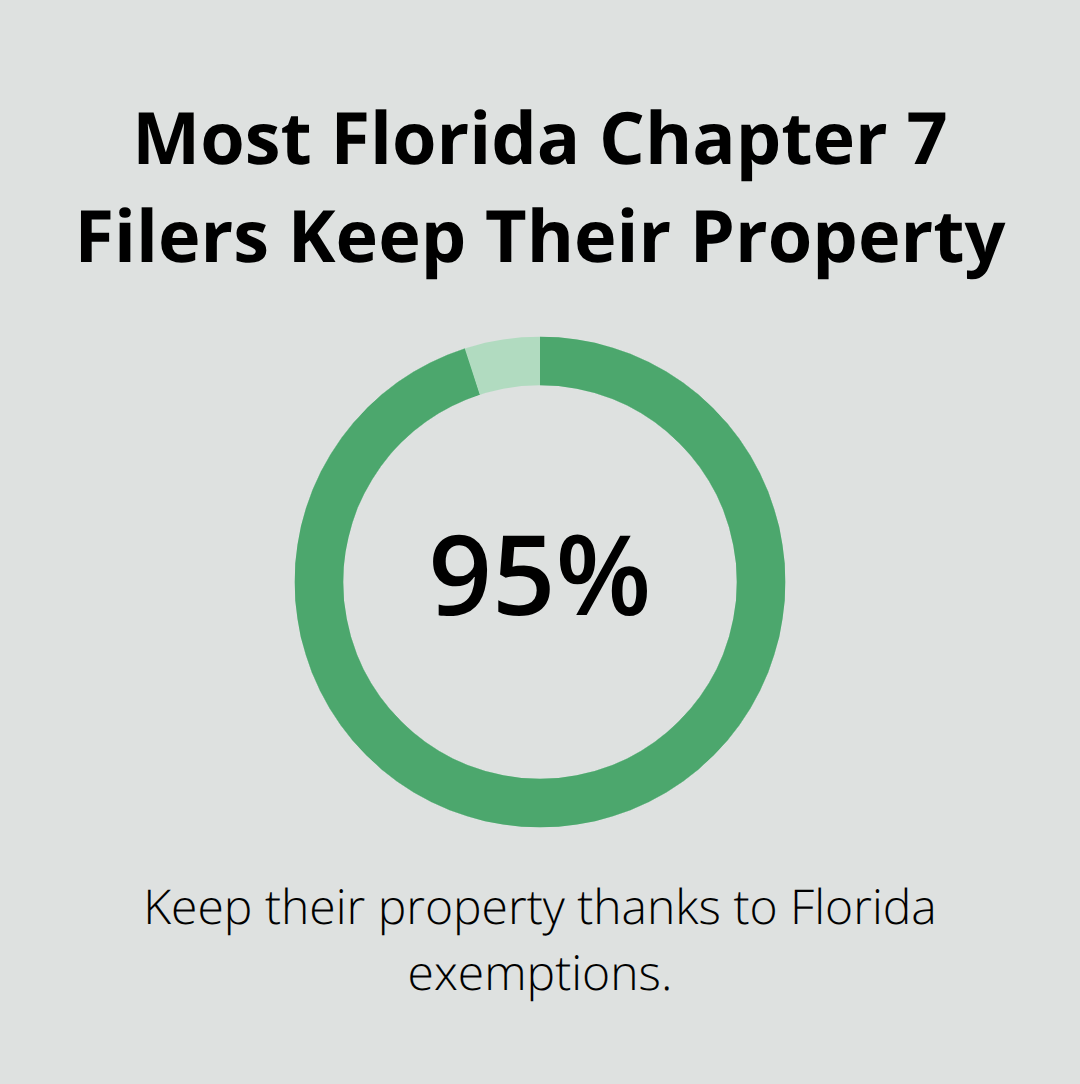
Chapter 7 liquidation sounds scary until you understand how exemptions work in Florida. The reality is that approximately 95% of Chapter 7 filers keep their property because state exemptions shield most everyday assets from the trustee. Florida exemptions are among the most generous in the nation, protecting your primary residence with unlimited homestead exemption if you own it, which means your home equity stays protected regardless of amount.
You keep your vehicle if you’re current on payments, household furnishings, personal items, tools needed for work, and retirement accounts like 401(k)s and IRAs under federal law. Social Security benefits, disability payments, and unemployment compensation are fully protected. The trustee only liquidates nonexempt assets, and in most cases, you won’t have any nonexempt property to sell. According to U.S. Courts data, the vast majority of Chapter 7 cases are no-asset cases where creditors receive nothing from liquidation because everything you own falls under exemptions.
Debts That Disappear Through Discharge
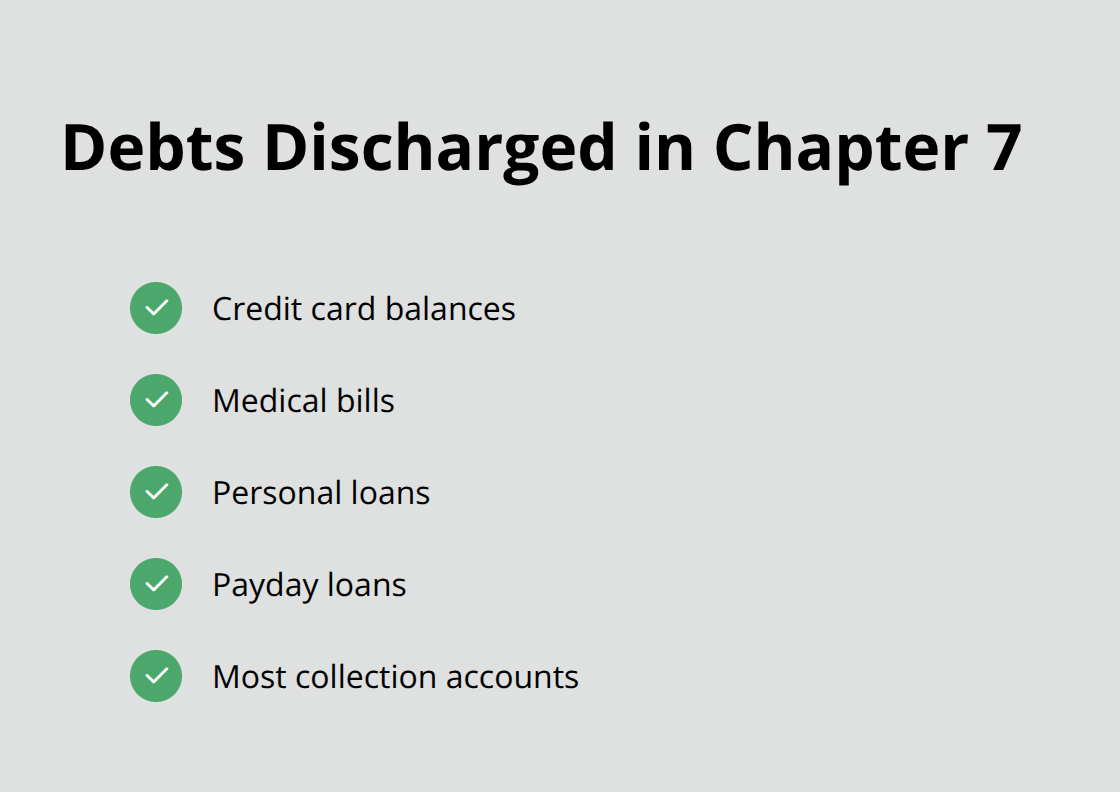
The debts that actually disappear in Chapter 7 include credit card balances, medical bills, personal loans, payday loans, and most collection accounts. These unsecured debts vanish completely through discharge, which typically occurs within four to six months of filing. Your credit report will show that you paid off all discharged debts in full through bankruptcy, which actually demonstrates responsible debt resolution to future lenders.
This distinction matters more than many people realize.
Debts That Survive Bankruptcy
Certain debts survive bankruptcy no matter what happens in court. Student loans almost never discharge in Chapter 7 unless you prove undue hardship, a legal standard the Department of Justice tightened significantly in 2022, making discharge extremely difficult. Recent tax debts don’t discharge, though older taxes may qualify depending on timing and circumstances. Child support and alimony obligations survive bankruptcy permanently and continue as legal obligations. Criminal restitution orders cannot be discharged. Court fines and penalties remain your responsibility.
The Cosigner Problem
If you cosigned a loan or someone cosigned for you, understand that Chapter 7 only affects your obligation, not the cosigner’s liability. A cosigner remains fully responsible for any debt you discharge, which creates real consequences for whoever guaranteed your loans. This distinction matters tremendously when deciding whether to file, particularly if family members are involved as cosigners on significant debts.
Moving Forward After Chapter 7 in Florida
The consequences of Chapter 7 bankruptcy fade faster than most people expect, but only if you take deliberate action during the first months after discharge. Start by building a small emergency fund immediately after discharge, even if it’s just $500–$1,000, because this prevents you from returning to credit cards when unexpected expenses hit. Set aside money from each paycheck before paying other bills, and once you reach three months of essential expenses in savings, you’ve created genuine financial stability that protects your fresh start.
Your budget after bankruptcy should reflect what you actually earn, not what you wish you earned. Track every dollar for sixty days to understand your real spending patterns, and separate needs from wants ruthlessly (housing, utilities, food, transportation, and insurance are non-negotiable). Many filers discover they can live on 60–70% of their income once they eliminate debt payments, which means your post-bankruptcy budget often feels less restrictive than expected despite the filing.
Federal law imposes strict waiting periods before you can file Chapter 7 again-you must wait eight years from your previous discharge, while Chapter 13 requires a six-year wait. These timelines exist to prevent abuse of the bankruptcy system, but they also mean you need to protect the fresh start you’ve earned. If your situation changes and you need to explore bankruptcy again, contact us at Harnage Law, PLLC to discuss whether Chapter 7 remains available or whether Chapter 13 makes more sense for your circumstances.